Employencer = Employee + Influencer
We Can All Become 'Employencers'
Employencer. A portmanteau of Employee + Influencer. It refers to employees who authentically communicate their company's brand, image, and accurate information.
I believe the employencer role is especially vital in the travel industry — more so than in other sectors — because brand and corporate image are absolutely everything here. Anyone working in hospitality can share a stunning night view of their hotel, a perfectly turned-out room, or how they serve guests on a daily basis via social media.
You don't need a conference stage or a formal presentation. You can share professional insights in everyday moments — without compromising your employer.
The result? A virtuous cycle. The company's reputation improves. And so does your personal credibility as a professional.
The most iconic example from this year: the Everland Amazon ride operator whose addictive catchphrase became the top YouTube meme of H1 2022. The brand value this generated for Everland was incalculable — no need to quantify the economic impact or ad equivalency. Everyone knows it was enormous.
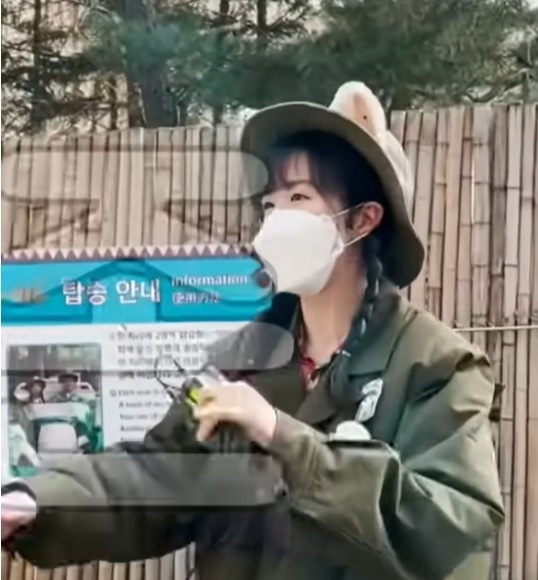
But not everyone can become the next 'Amazon Soulless Guy.' That kind of viral breakout requires content that's hilarious, perfectly timed, and incredibly mass-appeal — a convergence of rare conditions.
What I want to share in this post is a more sustainable path: how to build a solid career, improve your company's brand reputation, and grow your own influence — all at once.
Which platform should you use?
When most people hear "influencer," YouTube probably comes to mind first. It's where marketing teams pour most of their ad budgets.
But for working professionals trying to be employencers, YouTube is punishingly difficult. You can put in all the work and still get zero results.
YouTube's competition is so intense now that production quality matters more than ever. It's become nearly impossible for new channels to break through. Even 귀곰 (Gwigom), a tech reviewer I really admire, recently posted a video saying he quit his day job because balancing YouTube and work had become untenable.

Unless you're already famous or willing to invest massive time and capital, I don't recommend YouTube. It's become a medium that demands full-time commitment and upfront investment just to have a shot.
On the flip side, Facebook, Instagram, and LinkedIn let you share thoughts quickly in text and images. They're not ad-revenue platforms for personal accounts — they're social media in the truest sense: spaces where you, as an individual, can operate as media within society.
That said, the three platforms have very different DNA.
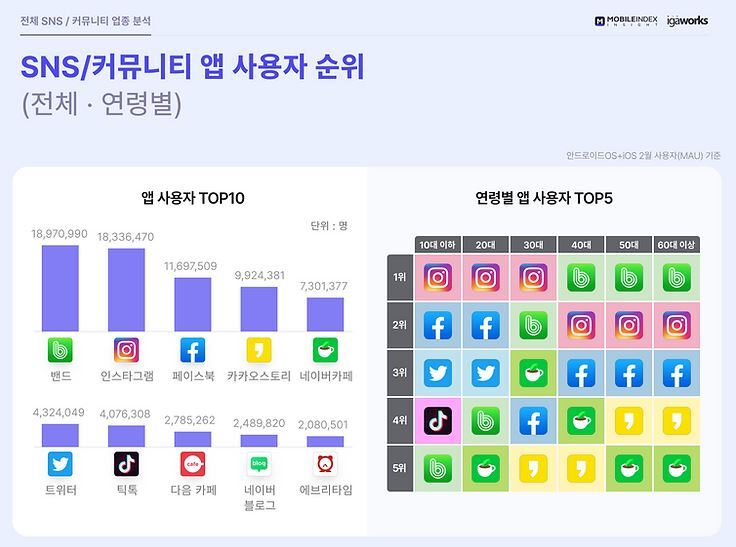
According to IGAWorks data from April 2022, Instagram is Korea's most-used SNS. It's all about aesthetic content — photos, personal leisure experiences, vibes.
If you're a hotelier, pension/pool villa operator, or restaurateur who can regularly share stunning visuals of your work, Instagram could be a fit.
Next is Facebook. Personal anecdote: before joining ONDA, I worked at Outstanding, an IT media outlet. As a startup publication, 80–90% of our early traffic came from Facebook.
I spent 3–4 hours a day on Facebook — sharing articles, liking posts, commenting on others' content. Our first investor even reached out via Facebook DM.
That was seven years ago. At the time, I witnessed firsthand the power and potential of social media. But now? Facebook's been around for over a decade. It's saturated with veterans. Breaking in as a newcomer is tough.
Worse, the feed is clogged with ads, and political rants are everywhere. Platform fatigue is real. People increasingly love or hate Facebook — there's no middle ground.
The emerging alternative? LinkedIn. I joined two months ago — still a LinkedIn newbie — and I'm getting vibes reminiscent of Facebook circa 2015.
People in my industry (hospitality and travel tech) actively exchange information. Just looking at this blog's traffic stats: after our newsletter, LinkedIn drives the second-highest external referral volume.
ONDA's most recent SNS experiment? LinkedIn. We started in earnest around March 2022.
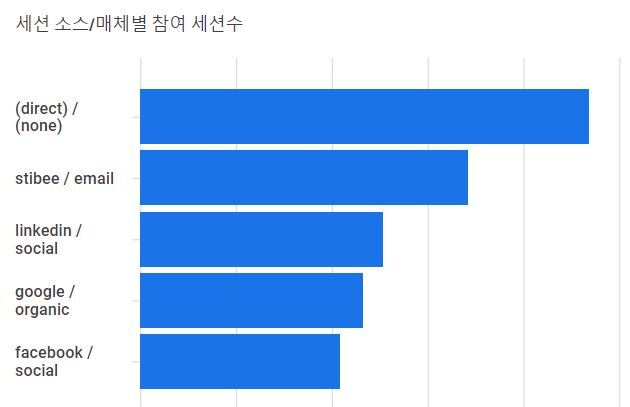
LinkedIn leans professional. Work insights and industry info dominate — less personal fluff. Unlike Facebook, LinkedIn shows you how many people saw your post, giving indirect feedback on reach.
Best of all, the stigma is gone. It used to be that if you joined LinkedIn, coworkers assumed you were job hunting. Now it's seen as a space to track industry trends and exchange knowledge.
Yes, Korea's LinkedIn user base is still relatively small. But for employencers? LinkedIn is hands-down the best fit.
Finally, there's TikTok. If you're more comfortable speaking on camera than writing polished essays, and you don't need YouTube-level production, TikTok could work. But honestly, I don't know TikTok well enough to advise. Sorry.
How to live as an employencer
One of the most famous pieces of social media wisdom comes from legendary soccer manager Sir Alex Ferguson:
[Implied paraphrase: "Social media is a waste of time."]
If you're already famous and using social media just to vent or flaunt your lifestyle, then yes — it's probably a waste of time.
But what if you're an average working professional who shares honest thoughts, professional know-how, company pride, or customer wins on social media? What if you express gratitude and spread positive influence? You can grow into a model employencer.
Over the past decade, I've seen countless people steadily build their careers while cultivating employencer personas. Some are PR managers who share company wins, CSR initiatives, press clips, and industry insights on Facebook. Others are startup engineers documenting their daily learnings, venture capitalists promoting portfolio companies, or hobbyists (cars, hiking, tennis) who analyze entire markets.
More recently, I'm seeing talent acquisition folks who post lovingly about their companies and celebrate colleagues' achievements — and it's working.
The most impactful employencers share six traits:
- Work comes first. They're serious about their day job. Social media is secondary.
- Genuine affection for their company and work shines through.
- Consistent but bounded activity. Quick breaks during work hours, 30–60 minutes during commutes/lunch/before bed.
- They're generous with likes and thoughtful comments on others' posts.
- Confident but humble. They express expertise without arrogance.
- They avoid extremes — no politics, religion, hate speech, or profanity. And if they slip up? They apologize immediately.
This should be obvious, but you need to be a strong employee before you can be an employencer. You need real expertise in your work. That said, being junior doesn't disqualify you.
If you document what you learn each day, express gratitude for good advice you encounter online, and keep at it for 2–3 years, you'll look up and realize you've built real influence.
You can't become an employencer overnight. Like a fine wine that deepens with age, reputation builds slowly through accumulated credibility.
But why bother? What's in it for you personally — not just your employer?
In the past, your work was only evaluated inside your company — by your boss and peers. If politics got in the way, you might never get fair recognition.
Now? You can showcase your work and results to the entire industry. The most objective way to have your skills, character, and potential recognized is to become an employencer.
I'm wrapping this up exactly 10 minutes before lunch. Time for me to hop on LinkedIn and drop some likes and comments.
I'm still a LinkedIn newbie myself. So if you're on there, I'd love to connect. Here's my profile (link). Hit me up! ;)