Living accommodation deregulation — how will it impact your region?
The Korean lodging market just got hit with a supply bomb. On January 5, the Ministry of Land, Infrastructure and Transport announced sweeping deregulation of living accommodations (saengsuk) — and this is no minor policy tweak. Tens of thousands of rooms that have operated in legal gray zones can now legally enter the market.
You've probably seen headlines like "Living accommodation rules eased." But do you actually understand what changed — and what it means for your business? In this piece, we break down the Ministry's announcement, analyze what it really means, and offer concrete strategies for both existing accommodation operators and those considering saengsuk entry.
What Changed? Three Core Shifts
1. Legal operation with just one room
Previously, to register as saengsuk, you needed at least 30 rooms or ownership of at least a third of the building's floor area. That effectively locked out individual owners. Under the new regulatory sandbox approval, you can legally operate lodging with as few as one room — if you use an approved online platform.
2. No front desk required
You used to need a fixed reception desk. That meant upfront costs and the logistical nightmare of 24-hour staffing. Now, if you deploy contactless systems like mobile ID verification or facial recognition, you're exempt from the desk requirement. Technology is officially replacing people.
3. The platform becomes your manager
To prevent unregulated chaos, the government added guardrails. Real-time monitoring via online platforms and mandatory periodic safety and hygiene inspections are now required. Translation: You can't just go rogue. Legal operation means going through a vetted platform.
How Will the Market Change?
The real story here isn't "individuals can now run lodging businesses." It's that the government has officially recognized a new model where platforms function as front desks.
Legitimizing the gray market
Countless saengsuk properties operating under the radar will now step into the light. They'll pay taxes and meet safety standards — creating a more transparent, competitive environment. Long-term, that builds trust. Short-term, expect a supply surge and intensified price competition.
Idle inventory comes online
Thousands of urban rooms that couldn't meet registration thresholds have sat empty. Now they can list. Industry estimates suggest up to 100,000 rooms could enter the market. Expect the biggest influx in convenient, transit-accessible urban zones — especially at the budget and mid-range price points.
Strategy by Operator Type
Market shifts demand strategy shifts. Here's how to respond based on where you sit.
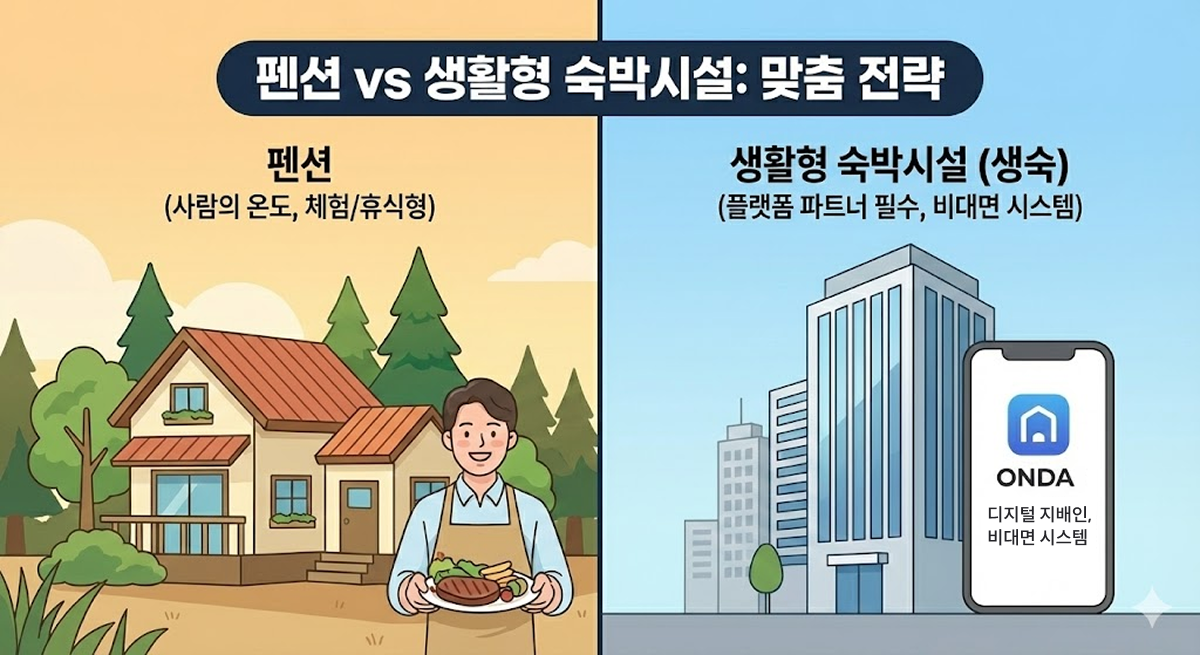
Existing Pension/Motel Owners: "Let Platforms Handle Systems. You Handle Soul."
New saengsuk entrants will come armed with cutting-edge contactless tech: 24/7 unmanned operation, mobile check-in, smart locks. They're already ahead on tech-driven convenience. So how do you compete?
Your Edge: Human Touch
Saengsuk is inherently contactless and impersonal. Go the opposite direction. Make warmth your weapon. A genuine greeting when guests arrive. Local restaurant recommendations. A home-cooked breakfast. These are things a cold app can never replicate — and they're powerful competitive advantages.
Post-COVID travel trends aren't just about value. Demand for healing, local experiences, and authentic travel has steadily grown. To those travelers, unmanned systems can feel sterile.
Segment Your Market: Sleep vs. Experience
Saengsuk will inevitably cluster in the "urban / budget / short-stay" niche. You need to own "experiential / retreat / mid-to-long stay." Position yourself not as "a place to crash" but as "a place to make memories" or "a place to truly rest." That way, you're not competing for the same guest.
If you run a pension, elevate your amenities — BBQ facilities, sports courts, pools. If you're a guesthouse, lean into local culture programs or communal meals. If you're a motel, emphasize practical perks: parking, breakfast service, spotless rooms.
(Aspiring) Saengsuk Operators: "Going Solo? A Platform Partner Is Non-Negotiable."
This deregulation may tempt you to think, "I can finally run my own lodging business." But the core message is not "you can do this alone." It's "you must go through a certified platform."
Why Platforms Matter
Even if you register as an individual operator, you'll likely break the law if you don't use a government-approved online platform. Mobile ID verification, real-time monitoring, and periodic inspections require technical infrastructure you can't easily build yourself.
And even with one room, you'll face reservation management, channel distribution, pricing optimization, guest communication. Platforms aren't just "places that take bookings." They're your digital concierge.
Success Checklist
If you're considering saengsuk, run through this list first:
- Confirm government-approved platforms: Not just any platform will do. Make sure it's sandbox-certified.
- Budget for contactless systems: Smart locks, mobile check-in, CCTV — calculate upfront costs.
- Multi-channel distribution strategy: Don't rely on one channel. List on Naver, Google, major OTAs — aim for 40+ channels. Minimizing vacancy is how you win.
- Tax and accounting readiness: Legalization means tax obligations. Register as a business. Prepare for VAT and income tax reporting.
- Differentiation beyond clean rooms: Location, design, and price won't be enough. Find your unique edge.
The Shift Has Already Begun
This isn't just policy adjustment. It's a structural transformation of the lodging market. A new model where technology replaces labor and platforms replace managers has earned government approval.
For existing operators, this is both threat and opportunity. Supply growth and tougher competition are inevitable — but the value of authentic hospitality and differentiated experiences will only become more precious. For aspiring saengsuk operators, preparation is everything. From platform selection to system deployment, rushing in unprepared is a recipe for failure.