A husband-and-wife team left the Philippines to open a four-room pension in Yangyang's surf town. Small scale, big ocean views, and guests who keep coming back.
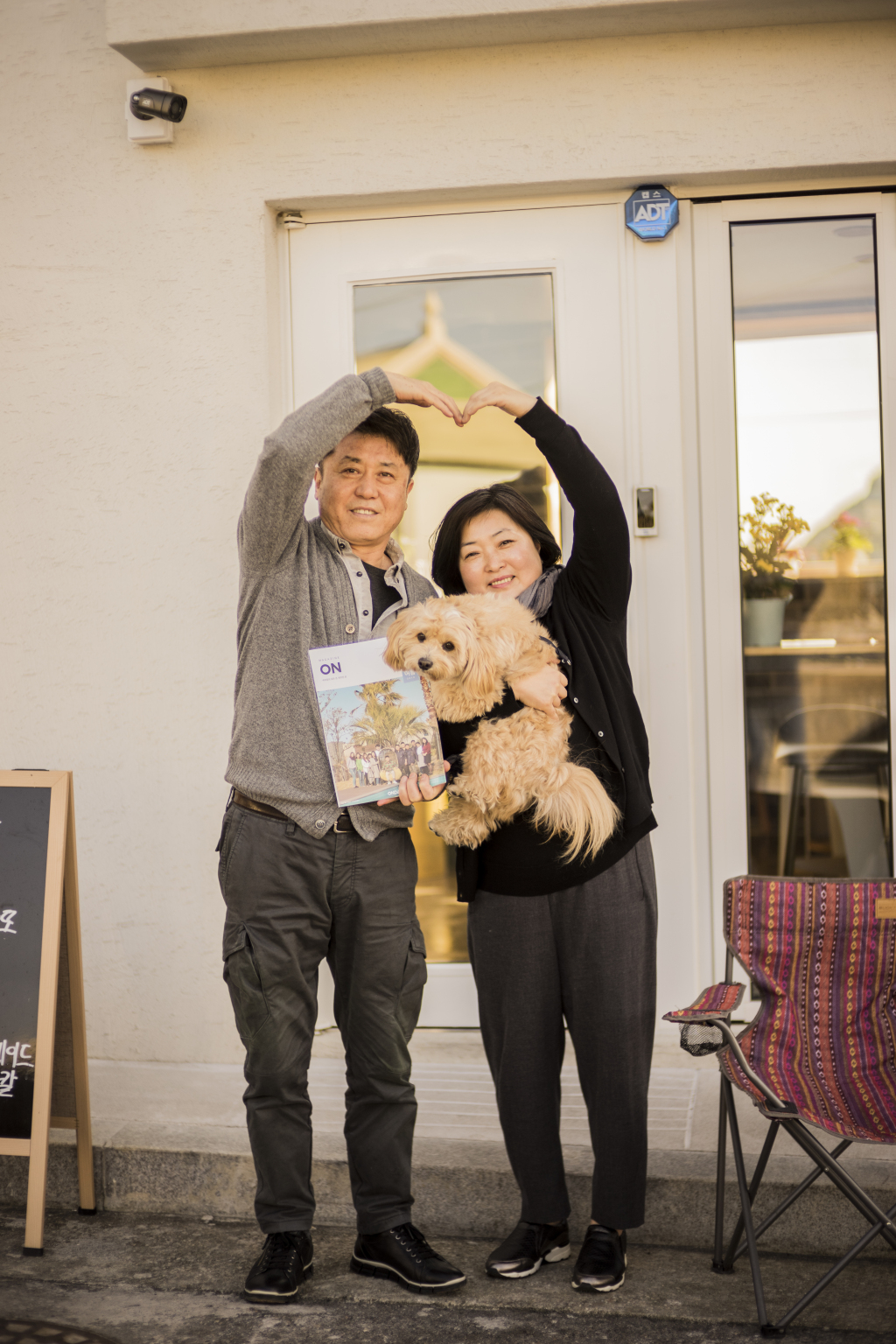
Property type: Pension
Address: 16 Saenaru-gil, Hyeonnam-myeon, Yangyang-gun, Gangwon-do
Room types: Double (max 3–4 guests), Quad (max 8 guests)
Amenities: Cafe Jagumaan, rooftop, charcoal BBQ grill, gas grill, partner surf lessons, etc.
Nearby attractions: Jukdo Pavilion, Jukdo Breakwater, Jukdo Beach, Ingu Beach, Gwangjin Beach, Hyuhyuam, Namae Port, Hajodae, etc.
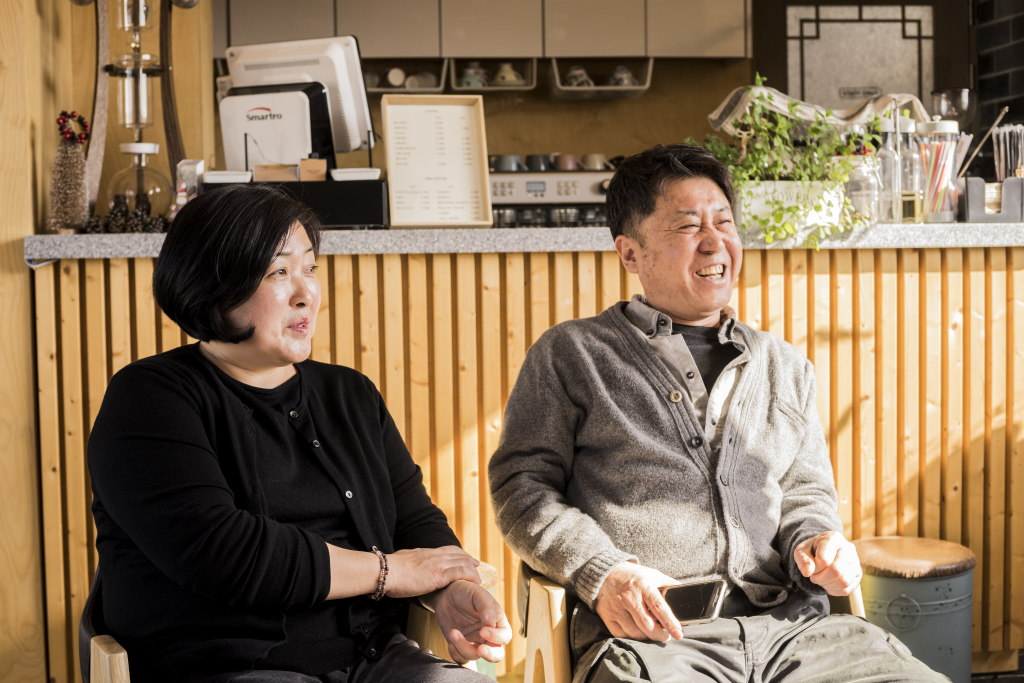
Q: Nice to meet you. Please introduce the property and yourselves.
Husband) Hi, we're Timmy House — perched right in front of Jukdo Beach with the ocean on both sides. I'm Kim Ju-hyung, and this is my wife, Kim Hwa-jin. We run this place together.
Timmy House opened in June 2018. We've only got four rooms total — two doubles and two quads. The scale is small, so we figured the two of us could handle it without hiring staff. We've been running the place just the two of us since day one.
Wife) We opened right before peak season, so my husband dropped 5 kg in the chaos! But we picked up our rhythm fast, and honestly, it's been fun. We host all kinds of guests — surfers, young couples, families. The energy keeps us going.
Q: Why Yangyang?
Husband) We lived in Cebu, Philippines, for about 10 years while our kids were growing up. When they graduated and we returned to Korea, we settled in Gangwon-do. We'd always vacationed here as a family — we loved it. So moving back, we thought: This is where we want to live.
We knew we wanted to run a guesthouse. But after a decade abroad, we weren't up to speed on the Korean market. We spent over a year driving around Sokcho, Goseong, and Yangyang looking for the right spot. Then we heard that Yangyang was booming — young surfers flocking in, highway access improving. You can get here from Seoul in under two and a half hours now. That sealed it.
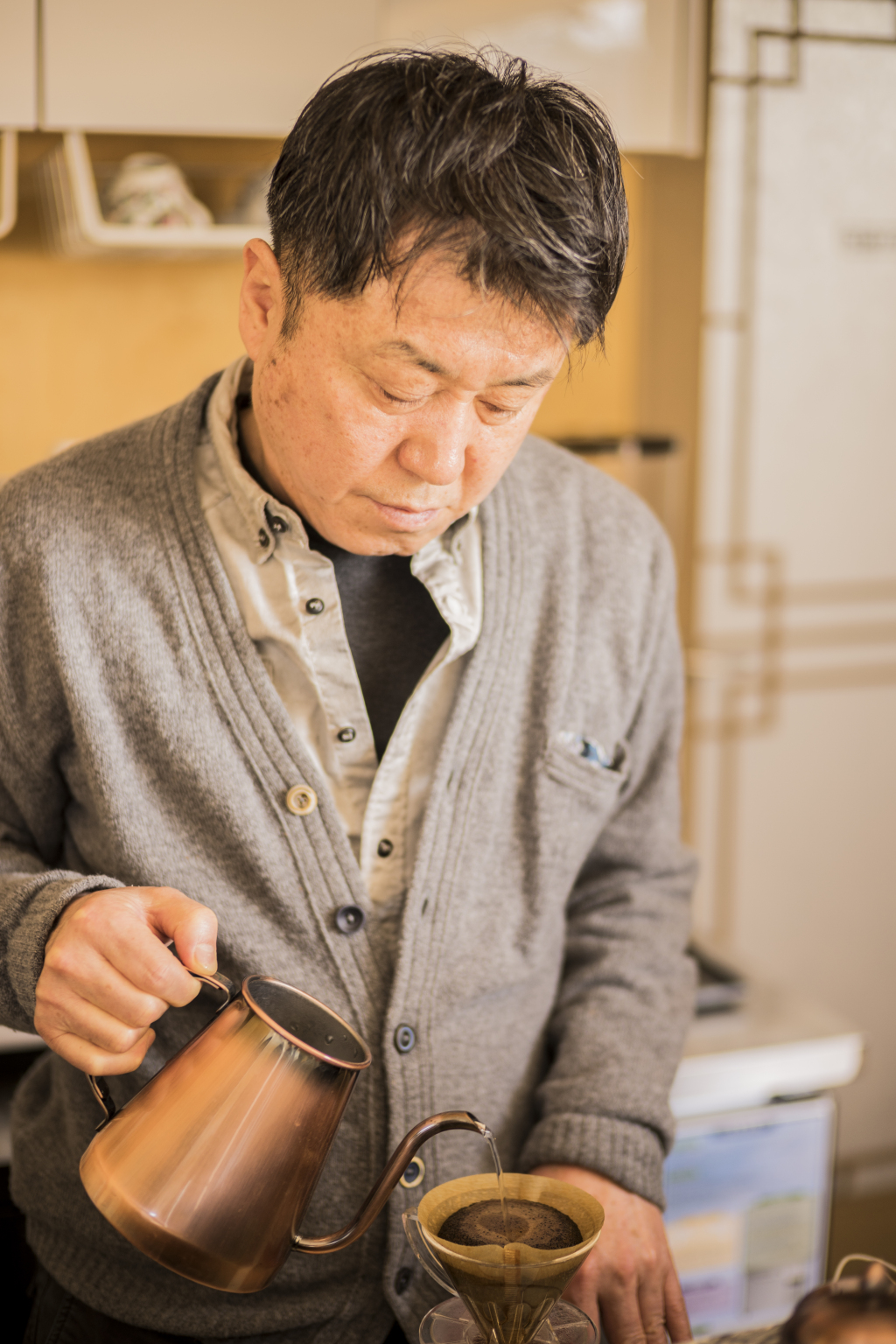
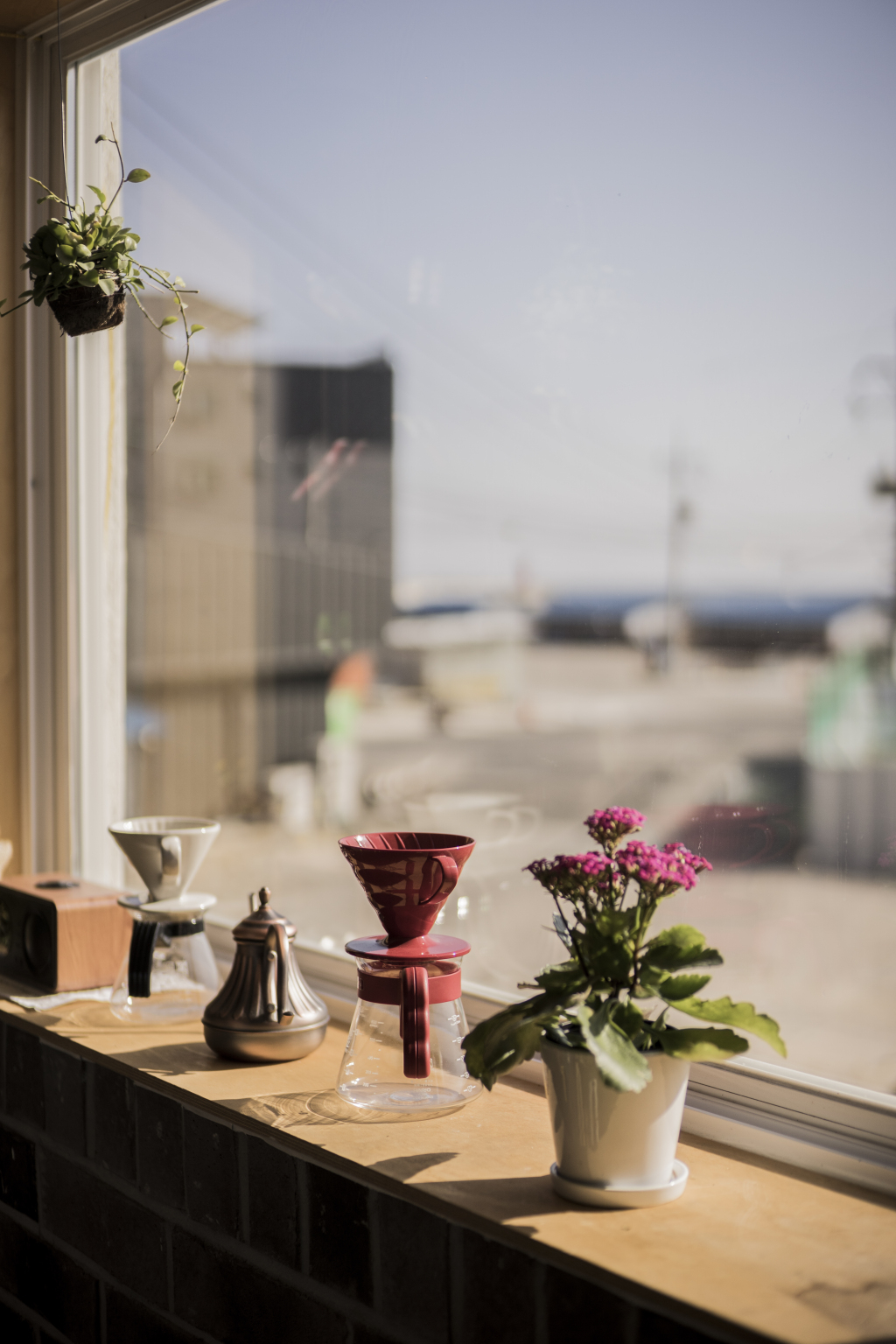
Q: You also run Cafe Jagumaan on the first floor — hand-drip coffee isn't something you see much in Yangyang!
Wife) Before we left for the Philippines, I ran a steakhouse café in Seoul. That's when I got into coffee. I took a specialty coffee course at a community education center — this was early days in Korea's coffee culture, before barista certifications were a thing. I learned directly from two legends: Park Yi-chu and Jeon Gwang-su.
Those connections stuck. When we came back to Korea, my husband enrolled in a hand-drip barista course. Now, the beans we serve at Jagumaan are roasted by Jeon Gwang-su himself. He even helped us open and stayed overnight once.
Yangyang doesn't have a developed specialty coffee scene yet. But we hope people come try it — my husband's hand-drip is seriously good. (Laughs)
Husband) When we first built this place, the architects wanted us to make the first floor a guest room. We said no. We'd rather earn less and create a proper rest space.
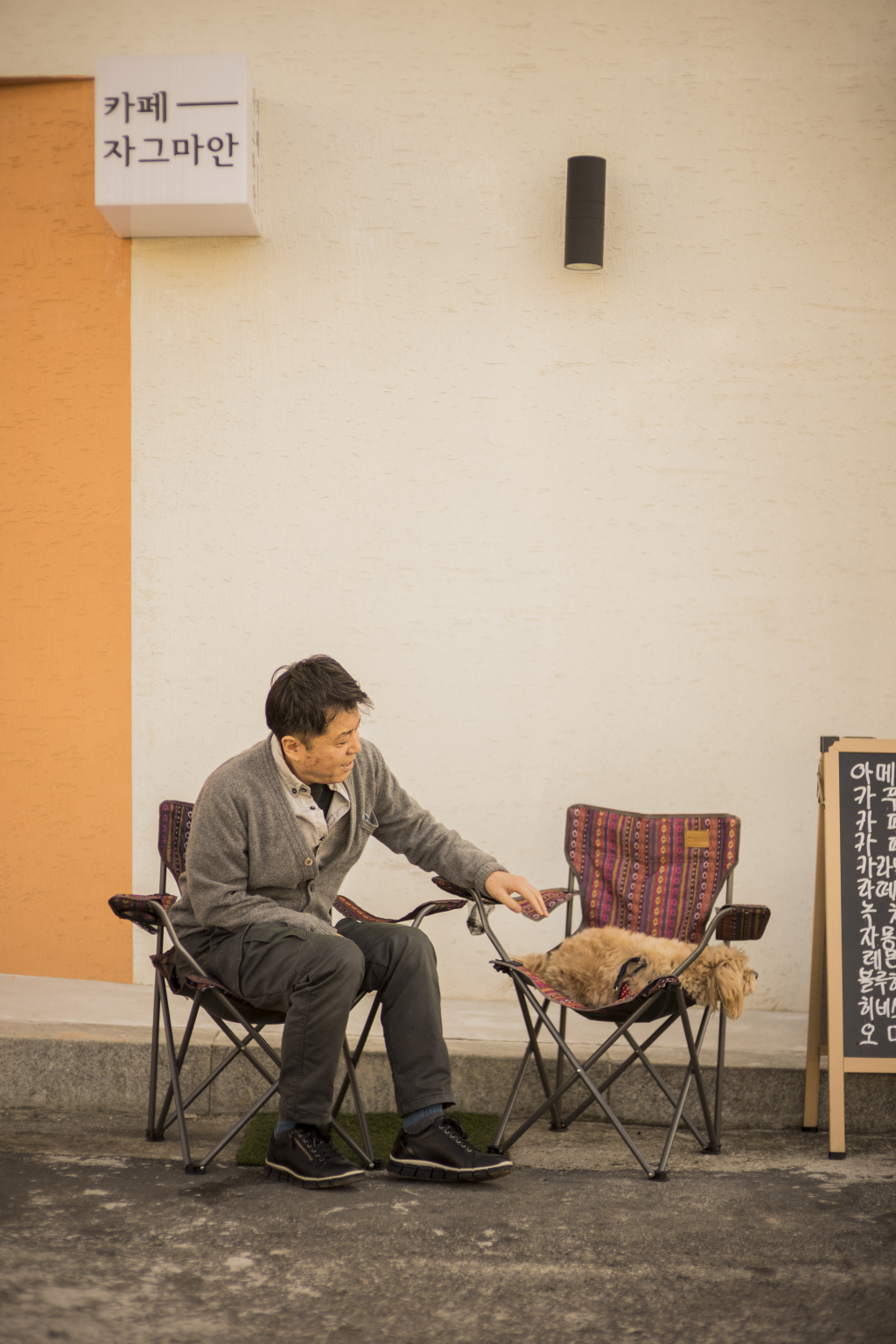
So Cafe Jagumaan became a lounge for guests — and a space where we can do what we love. The size keeps it intimate. We chat with guests, hear their stories, and get real feedback. Some are fellow small-business owners who share tips. It's a net positive for us. Not a revenue line — a joy line.
Q: What's the story behind the names — Timmy House and Cafe Jagumaan?
Wife) I wanted to name both after my kids. My older son's English name is Fred, my younger son is Timmy. The idea was to make guests feel like they're visiting their aunt's house — familiar, comfortable. So we went with Timmy House.
Then I wanted to name the café after Fred. But he said no. He's a chef now, and he's planning to open a restaurant under his own name someday — he didn't want us "wasting" it. Fair enough. So I thought, What fits this space? It's tiny and cozy, so we landed on "Jagumaan" — Korean for "small and charming."
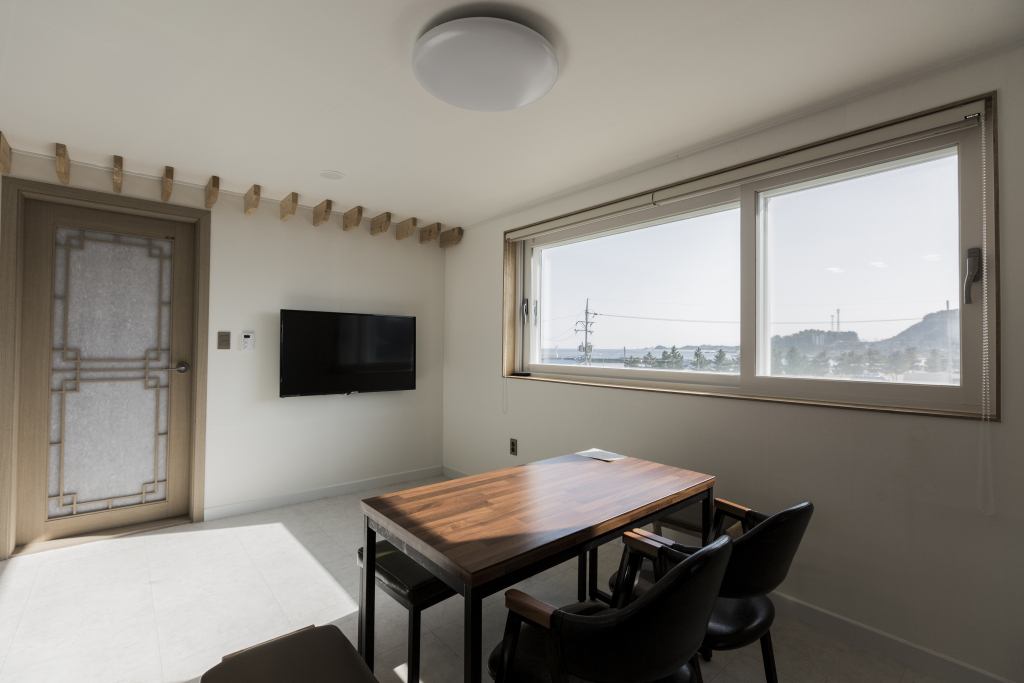
Q: The hanok-inspired interiors, color palette, and rooftop room really stand out. How did you design this place?
Wife) They say living abroad makes you a patriot. (Laughs) I love the warmth of hanok, so I wanted to weave that into the property. We found a well-known local architect and asked him to lean into traditional Korean design. He suggested blending it with modern aesthetics instead of going full-on traditional.
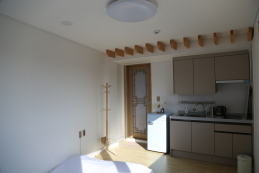
We gutted a 20-year-old building down to the frame and rebuilt it. The result: clean, modern lines with hanok details throughout — lattice windows, eaves-inspired trim. It came out beautifully.
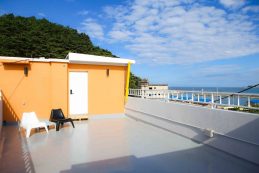
Husband) The orange exterior is actually Yangyang's official color. The architect applied it as an accent. We were skeptical at first, but passersby and guests love it. People stop to take photos, which makes us proud.
The rooftop room is mostly original structure with light renovation. We thought about turning the roof into a full lounge, but the coastal winds are brutal — safety won out. We left tables and chairs up there for guests to use freely, even if it's not Instagram-perfect.
Q: Any guests who left a lasting impression?
Wife) A couple with a little girl — they stayed in the rooftop room. They had dinner and wine up there and loved it. The mom said it reminded her of childhood trips to seaside villages. Timmy House wasn't exactly that, but being this close to the ocean brought those memories back.
She wrote a blog post afterward. Turns out she's a well-known blogger. She didn't mention the property name or location — just posted photos and her story. But three groups found us through the comments section alone, asking where it was.
We're older, so we don't do much on social media. We thought we were terrible at promotion. That post proved us wrong. One photo even had the café name faintly visible in the corner, and someone zoomed in, tracked us down, and booked.
Husband) There's a national surf competition here every summer. A guesthouse owner from Jeju came with her son, who was competing. We hosted them for three days. Surfing culture emphasizes respect, and that kid had it. He ended up winning first in the junior division. I think his character played a part.
His mom also gave us a ton of advice as a fellow operator. It stopped being a host–guest thing and just became a conversation. I learned a lot from her.
Q: What's your operating philosophy or any tips you'd share?
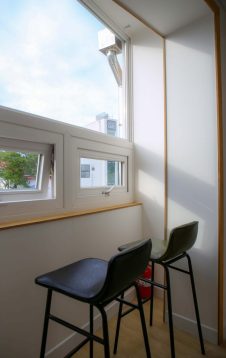
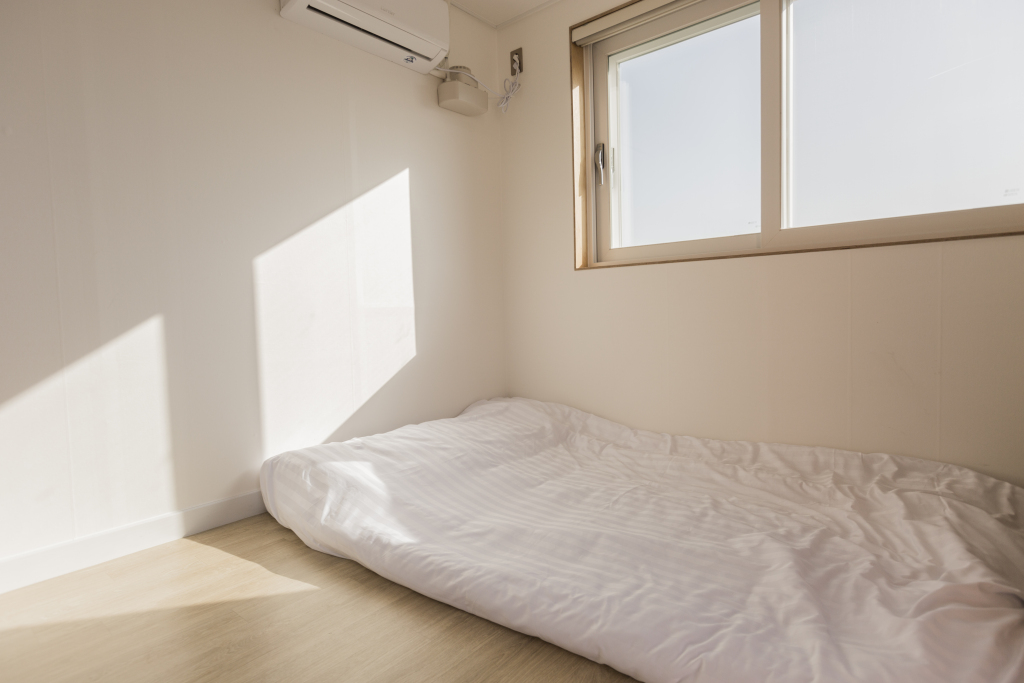
Husband) We've stayed at a lot of places. The most important thing is cleanliness. No matter how beautiful the exterior, if the inside is dirty, the whole trip is ruined.
We thought about outsourcing laundry and cleaning but couldn't trust it. Now we do everything ourselves — wash, dry, iron, inspect. It's only feasible because we have four rooms and I still have the energy. Timmy House isn't fancy, but it's spotless.
Wife) We treat guests like family, not revenue sources. When we opened, we ran a promo offering free coffee and drinks to all guests.
We also pay attention to what people want. At first, we didn't have BBQ facilities. Guests kept asking, so we added two options: a free gas grill and a paid charcoal grill.
In summer, we set up seating outside the café. Some guests brought their own projectors to watch movies or soccer. We're thinking of getting one ourselves. We're still learning, but we're iterating fast.
Q: Yangyang is seeing a wave of new properties. Any advice for aspiring operators?
Husband) Yangyang's economy is ocean-driven, and the gap between peak and off-season is stark. Off-season is long. Don't jump in thinking you'll make it overnight. Do your homework. Analyze the market. Take your time.
This isn't Seoul, where demand is year-round. People come here to travel, and Gangwon-do still feels remote to many. You need to be mentally prepared for slow months and steady operations. If you're running a small place like ours, don't expect high margins.
Q: How did you start using ONDA, and what's your experience been like?
Wife) When we were building our website, the developer introduced us to ONDA. They recommended a few booking systems, and after comparing features and pricing, ONDA felt like the best fit.
They notify us with pop-ups and announcements whenever there's an update. Feature requests get implemented. I haven't had any issues. The mobile app is convenient too.
I'd been wondering if there was a discount feature for multi-night stays — and sure enough, it got added in a recent update. Looking forward to using it!
Q: Finally — any hidden food or sightseeing gems nearby?
Husband) Jumunjin Fish Market is 10–15 minutes by car. You can buy fresh raw fish and have it packed for around ₩50,000 — enough for 3–4 adults. Great value.
Close by is Samgyori Dongchimi Makguksu, a buckwheat noodle spot. No MSG, clean flavors. Not sure if young people would love it, but it's always packed.
And Yangyang is perfectly positioned between Sokcho and Gangneung — both under 30 minutes now. You can base yourself here and explore both.
Wife) There's a traditional market every 4th and 9th of the month. Yangyang is famous for pine mushrooms, so the festival is fun.
Jukdo Beach and Ingu Beach are both a five-minute walk. You can see both from the property! Jukdo Pavilion is small, but from the observation deck, you can watch surfers in action.
The vibe here shifts completely in summer. It's energetic and active on the surface, but there's also this patient, slow rhythm to surf culture. The contrast is harmonious.
View full magazine >>
⚠️ All rights reserved. Cite this piece as 'ONDA' when quoting.