A Gapyeong resort operator shares expansion plans, lessons from OTA dependency, and why building direct sales infrastructure matters more than chasing platform traffic.
Property type: Resort
Address: 18-16, Jajam-ro 282beon-gil, Seorak-myeon, Gapyeong-gun, Gyeonggi-do
Room types: Spa rooms, family rooms, standalone villa
Amenities: BBQ, outdoor pool, shop & café, garden, seminar room, table tennis, whirlpool spa, etc.
Nearby attractions: Petite France, Nami Island, The Garden of Morning Calm, Eobi Valley, water sports, Camp Tong Island, etc.
Q Hello! Could you introduce yourself and the property?
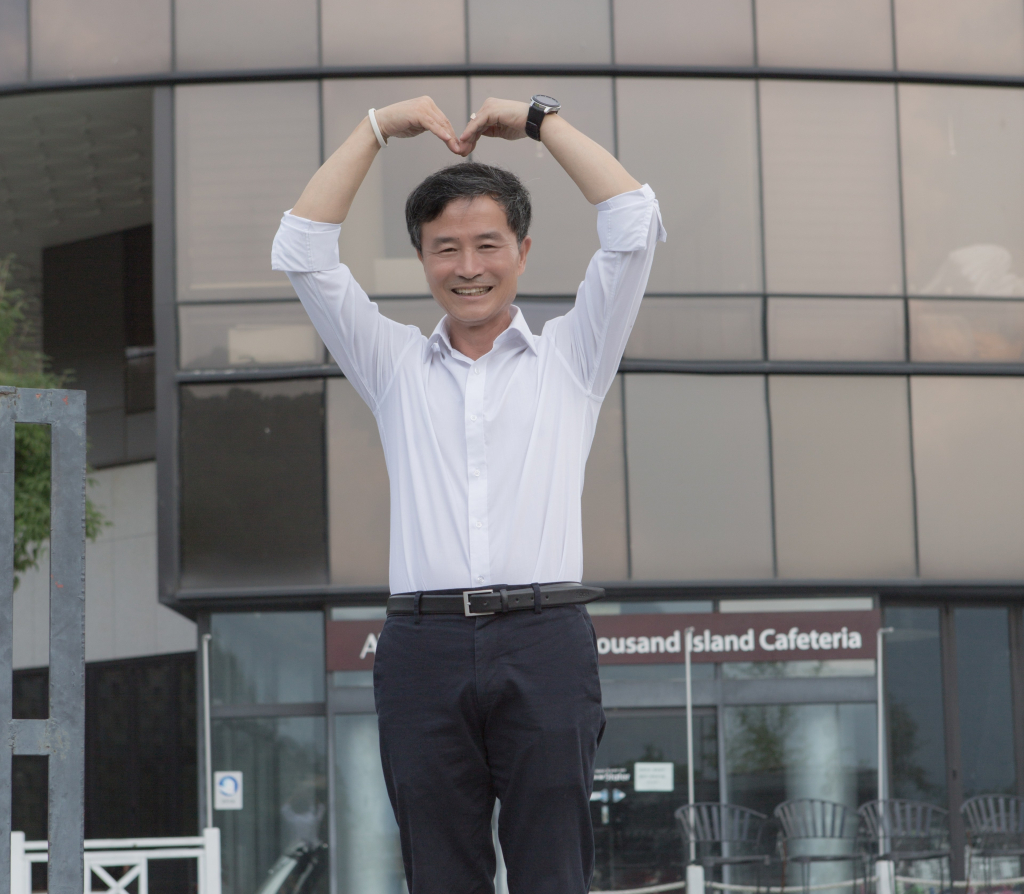
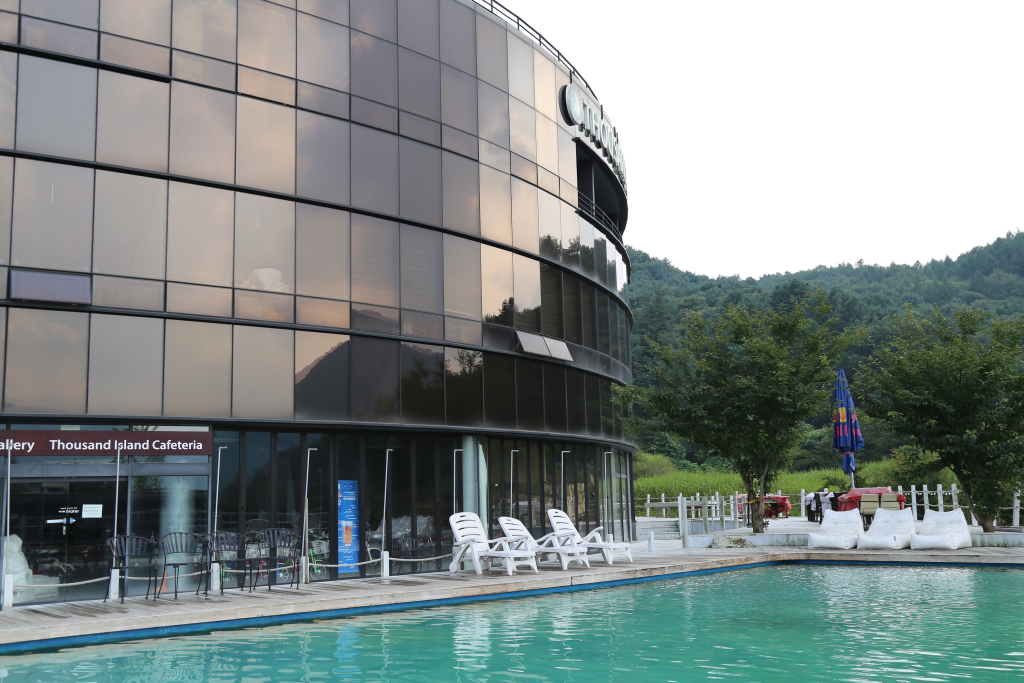
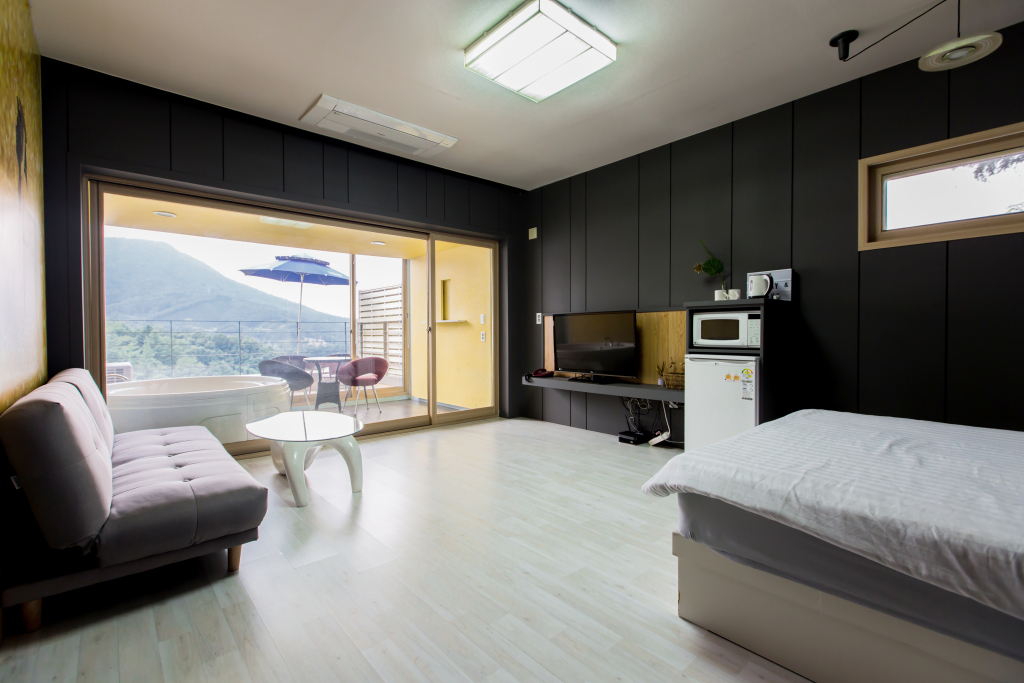
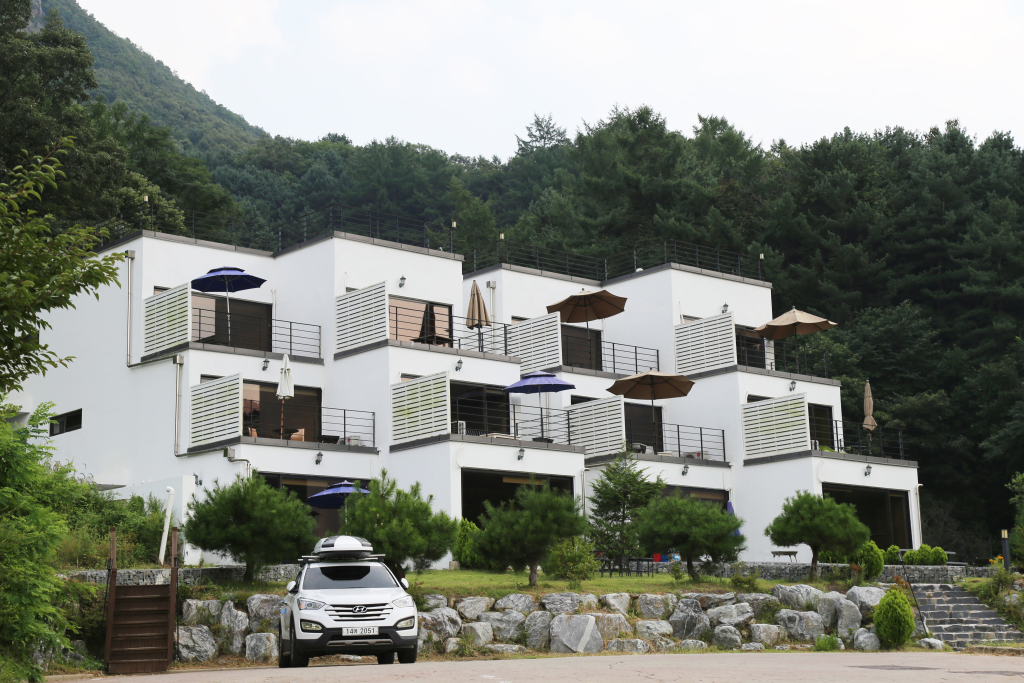
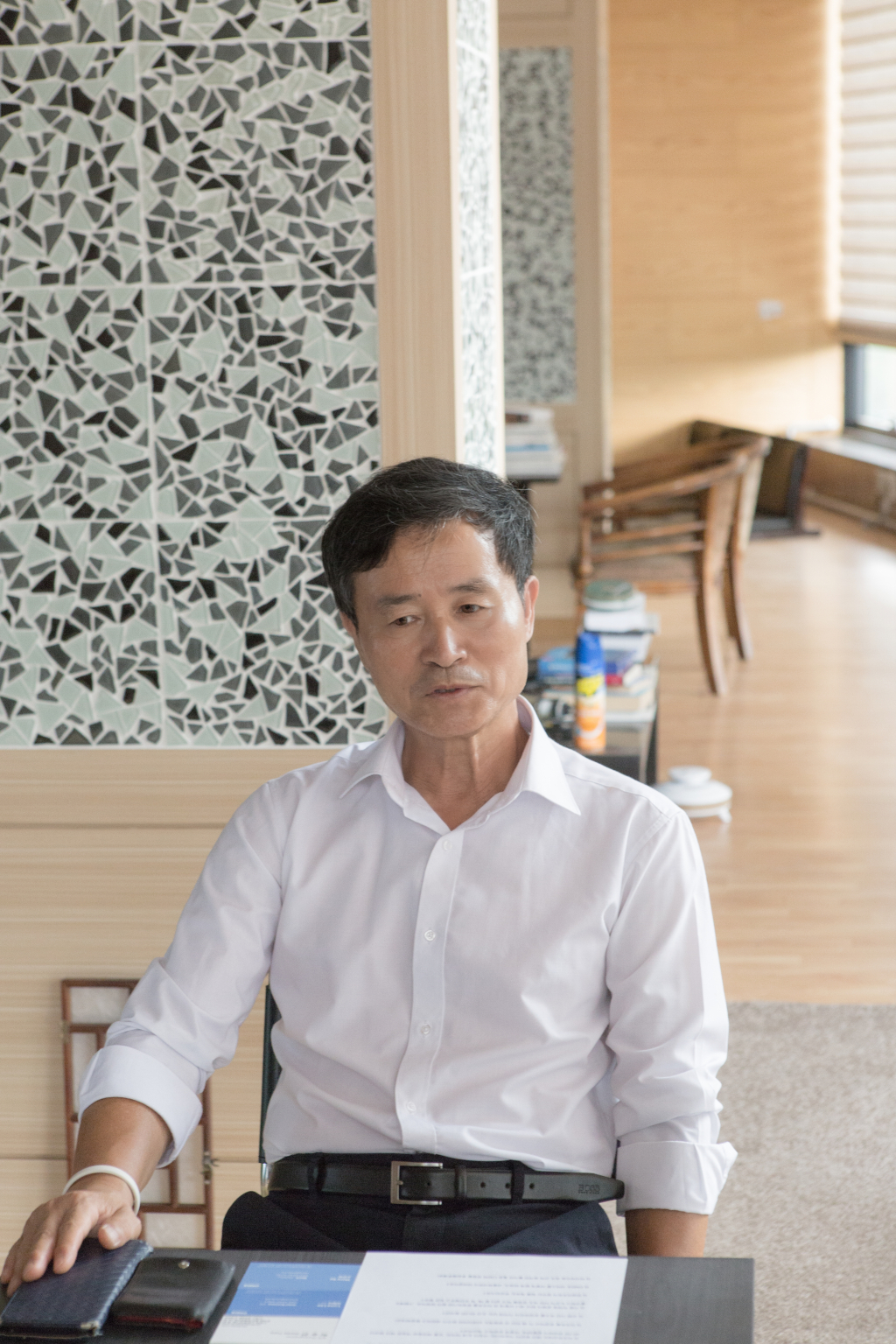
Hi, I'm Lee Geon-hyeok, the operator of Cheonseom Resort in Gapyeong. We're called a "resort," but we're actually licensed as a hotel — which means we offer hotel-grade facilities and service. Right now we have one standalone villa, 12 spa pension rooms, and 5 group rooms that are mainly used as family units.
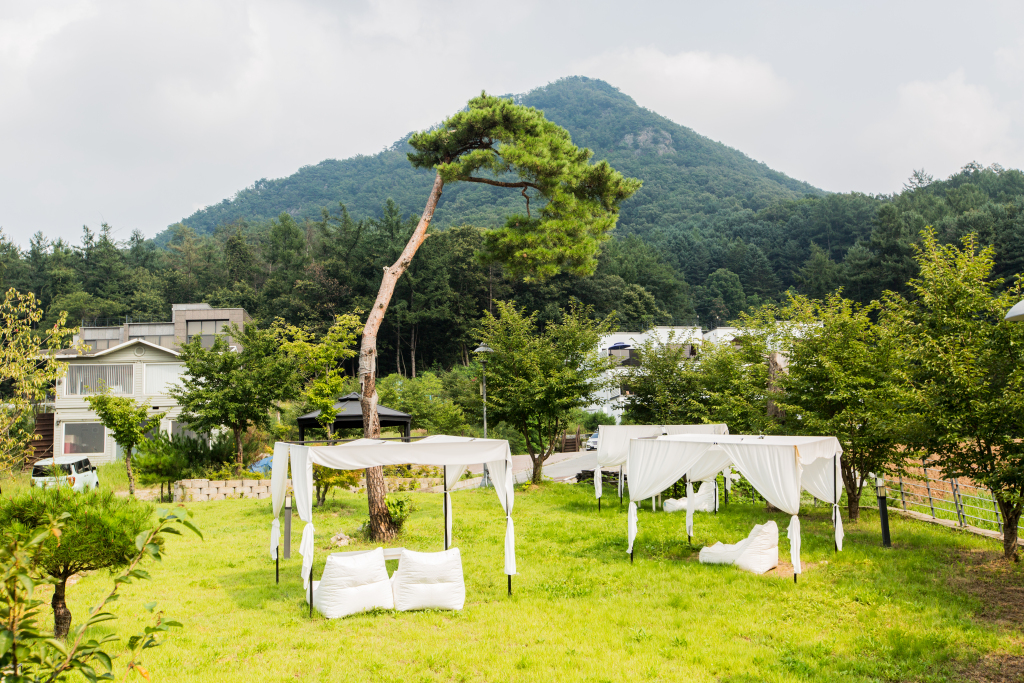
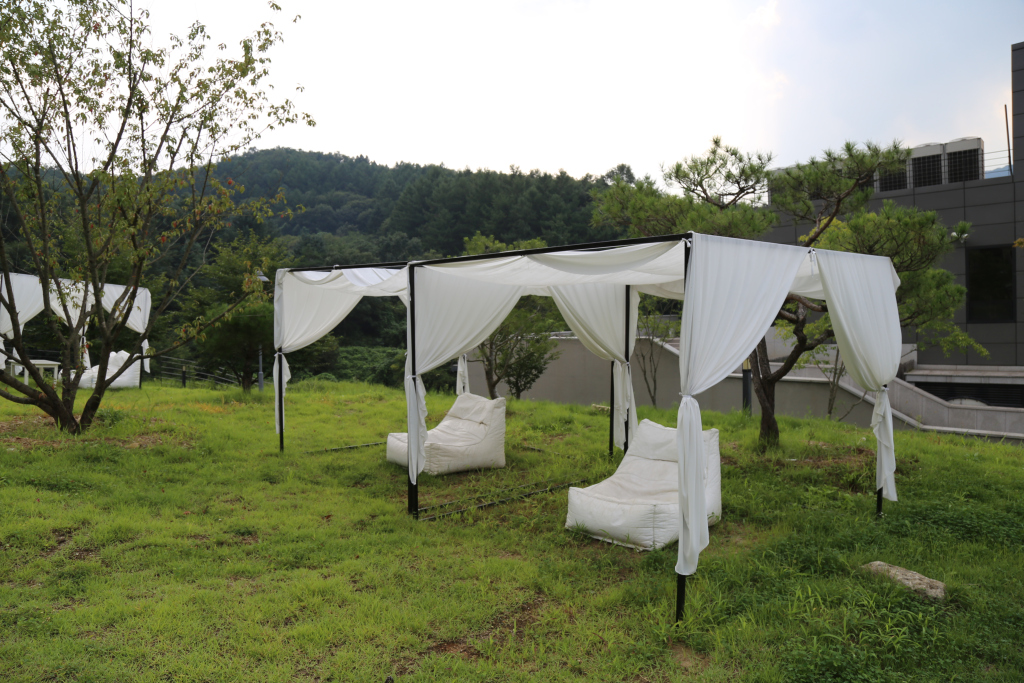
Our grounds are quite large, so room count doesn't tell the whole story. Our garden alone can accommodate 70 to 80 guests at a time. With 18 rooms right now, that's relatively few for our scale — which is why we're planning to build an additional hotel and townhouses on the vacant land starting late autumn off-season. Once the expansion is complete, we'll be one of the better-equipped properties in Gapyeong, both in size and facilities.
We've got a garden, table tennis, a seminar room, a shop, a café, an outdoor pool — plus access to nearby soccer fields and more. Gapyeong is famous for water sports, so we're looking to expand our water-themed landscaping and leisure offerings. I also run an e-bike company, and we used to rent them here — we paused that due to damage and safety issues, but we plan to bring it back in a safer, improved form.
To be honest, with new construction and renovations underway, the landscaping and amenities aren't in their final polished state yet — so we haven't been promoting heavily. But once the remodel is done, we want to get Cheonseom out there in the media and transform it into a tasteful, stylish destination.
Q What does "Cheonseom" mean, and how did you get into the hospitality business?
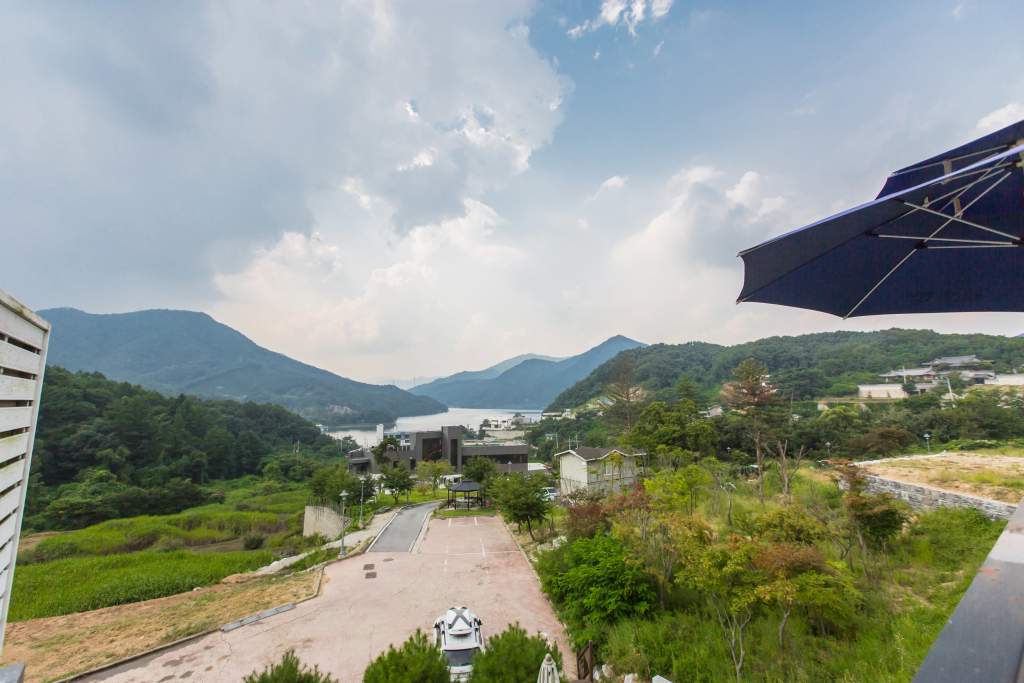
"Cheonseom" — literally "Thousand Islands" — is inspired by the Thousand Islands region between the U.S. and Canada, which was named for the thousand islands discovered there. The scenery here reminded us of that, so we translated the name into Korean. If you look at the resort from below, it doesn't feel like an island — but if you climb up to about two-thirds of the way up Sinseombong mountain behind us and look down, you'll see three sides of the resort surrounded by the river. The property looks like an island in the water, and the view is stunning.
The name works beautifully in Korean — it has multiple nice interpretations. We recommend guests hike up Sinseombong at least once to see Cheonseom surrounded by that gorgeous scenery, no matter the season. (Laughs)
I originally studied chemical engineering and worked for a long time in fashion at a large corporation. Later I ran an e-bike design and manufacturing business. After years in corporate life, I wanted to try something new — and I happened to own a piece of land here in Gapyeong, my hometown, that I'd bought a long time ago. The site really has one of the best locations in Gapyeong: great climate, great views overlooking Cheongpyeong Lake.
I thought about how to use this place, and the idea came to me to create a town — a space I could share with guests and turn into a landmark for Gapyeong. It also seemed like a smart tourism investment for the future. That's how I got into running a property here.
Q With so many amenities and such a large site, management must be tough. What do you focus on most when running the property?
Guests want their accommodations to be clean and comfortable — that's obvious. We put cleanliness and convenience at the top of our priorities too, so we work hard to keep things spotless. But since we're surrounded by forest and nature, bugs are unavoidable — especially flying insects, which are hard to control directly. That's a particularly sensitive issue for us.
Even just opening and closing a door for a second lets insects in. They can show up at times we don't anticipate. Some guests are understanding — "It's nature, after all" — but not everyone is, so pest control and cleanliness are areas we have to be extra careful about. It's still one of our biggest challenges.
Beyond cleanliness, safety is non-negotiable. We designed the property from the start to avoid fire hazards — for example, we use electric cooktops instead of gas in room kitchens. No open flames. That helps prevent fire risk.
Lastly, while the pension building doesn't have an elevator due to its structure, we installed one in the family building — even though it's not high-rise — for guest convenience.
Q It's unusual for a resort to allow pets. How do you manage pet-friendly rooms?
More and more people live with pets these days. I grew up in a household with dogs — my parents always had them — and I have dogs both at my home in Seoul and here. But whenever I travel, almost no hotels or resorts allow pets, which becomes a real constraint.
So I thought: why not offer that convenience at Cheonseom? As a fellow pet owner, I wanted to create pet-friendly rooms.
Not everyone loves animals, so we didn't open all rooms to pets. To balance things out, we designated two rooms on the far left and two on the far right of the resort building as pet-friendly.
Dogs require extra care — dealing with shedding, bathroom issues, etc. — so we're especially meticulous about cleanliness in those rooms. The response has been great, so next year we're planning to open a separate pool for dogs, like other pet pensions do, so guests can swim with their pets.
Q Even though you've been operating for a while, the interiors and bedding still look fresh and clean!
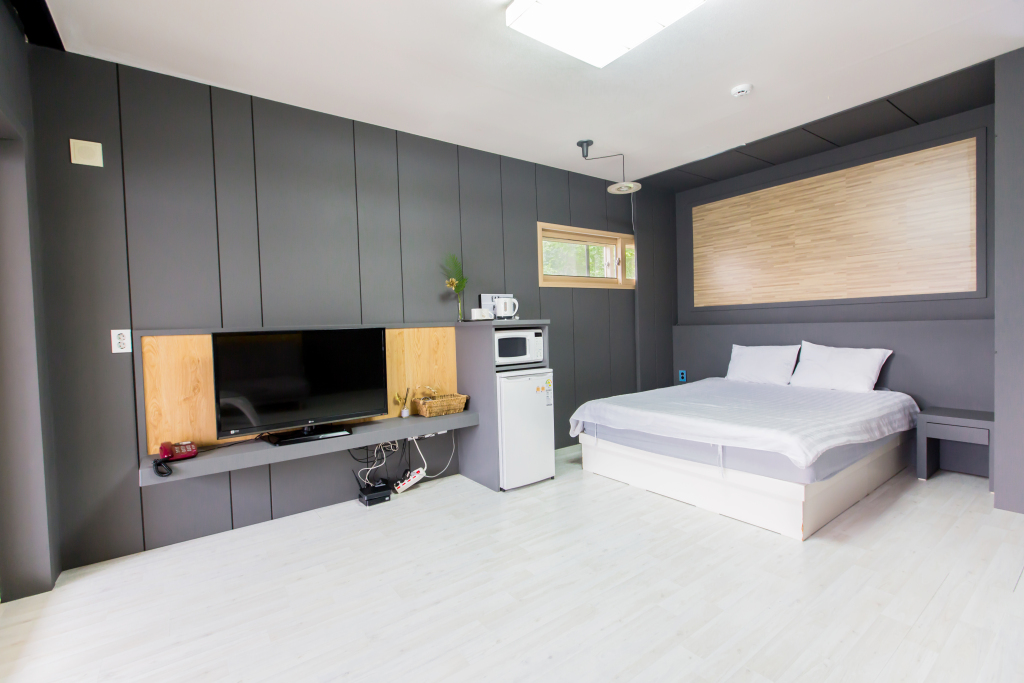
We remodel three to four rooms per year at Cheonseom, rotating through the entire property over a three-year cycle. This spring alone we remodeled six rooms. As for bedding, most regular pensions don't use hotel-type linens, which makes guests question hygiene and cleanliness. So from the start, we decided to use hotel-style bedding. The family rooms without beds use clean mattress-style futons, but all other rooms are fully hotel-spec with sheets.
One regret: when we first opened, we stocked every room with premium bathrobes, towels, and amenities. Within a few months, everything had been stolen. So now we provide good-quality, cost-effective products — enough to keep guests comfortable — but we had to walk back that initial luxury strategy. It's a bit disappointing.
If the hospitality industry continues to mature and guests treat properties with more respect, I'd love to go back to that premium approach.
Q What's one memorable moment from running this property?
There are good memories and bad ones, but I'll stick to the good. (Laughs)
Earlier this year, a couple came with their two young kids. They looked familiar, so I made a point of going to their room in the evening to light their BBQ charcoal myself. I casually mentioned they looked familiar and asked if we'd met. Turns out, they'd visited Cheonseom three years ago — before they got married. Now they were back as parents of two.
They came as a boyfriend and girlfriend, got married, had two kids, and chose to come back to our resort as a family. I was so grateful and moved that I gave them a complimentary cake and wine. It was a really heartwarming memory. Actually, we get quite a few repeat guests like that — those moments are always the most memorable.
Q Competition in Gapyeong is fierce. Running a large resort isn't easy. What advice would you give someone thinking about this business?
It's not just Gapyeong — Donghae, Yangpyeong, all these areas are seeing a flood of new pensions. If you count unofficial properties, Gapyeong alone has over ten thousand accommodations. Just like rising national income leads to polarization and squeezes the middle class, the hospitality industry is seeing the same thing: as properties multiply, some do better, some do worse. The middle tier is getting squeezed.
I don't think mid-range pensions can sustain themselves much longer. On top of that, minimum wage hikes have made labor costs a burden for larger operations like ours, making outsourcing tougher.
To stay profitable in hospitality, I think there are two paths: either run a family-operated property and use your own labor to cut personnel costs, or go fully corporate — make a big investment and extract economies of scale. But even family-run places are struggling now. Unless you have capital, a clear investment plan, and confidence in your operation — and unless you can quickly build a foundation for corporate-scale operation — I'd say don't jump into hospitality lightly right now.
I always say that any business needs a clear identity. That's even more true for pensions now. Without a strong differentiator, you'll get left behind. If you're thinking about entering this industry, keep that in mind and prepare thoroughly.
Q What's the ultimate goal for Cheonseom Resort?
I think resorts generally have two paths: become a space full of activities and things to do, or become a space for rest and relaxation. The activity-focused model — water parks, ski resorts — tends to be dominated by big corporations like Everland or Vivaldi Park. Mid-sized properties like ours can't match their scale or capital.
So our direction is rest and relaxation. That doesn't mean zero activities — guests still want some entertainment options — but the focus is on creating a customized space where people can eat, drink, and sleep comfortably. That's our goal and our future direction.
Q How did you discover ONDA, and what's your experience been like?
We used to work with a similar reservation management system, but the sales and settlement process was really opaque. We had to double-check everything ourselves, and trust was low.
Even though it was supposedly an "integrated" service, reservations were only partially consolidated — we couldn't manage the full picture. The system was clunky and had frequent issues. So my daughters went looking for alternatives and suggested ONDA. Since my main office is in Jamsil, it's close to ONDA's office, which made coordination easy. And ONDA seemed like a more established company, which gave us more confidence. That's how we made the switch.
The biggest convenience since switching to ONDA has been the true integration. Managing reservations from multiple sites in one place isn't easy — but ONDA's GDS system connects us to over 10 sales channels seamlessly, with no errors. That's cut down our workload significantly. Settlement is transparent and quick, too. Going forward, I'd love to see more active community engagement with channel managers — faster price adjustments, coordinated promotions, that kind of thing.
Q Finally, any hidden gems or personal restaurant recommendations near the resort?
The area around Cheonseom is a mecca for water sports. You can find cruise boats on the Han River too, but for water sports, Gapyeong is the most developed spot in the greater Seoul area. Check out Camp Tong Island or Naru Water Leisure — tons of fun water sports experiences nearby.
Petite France, a famous K-drama filming location, is a 5–6 minute drive. Nami Island, hugely popular, is 15 minutes by car. Jarasum, right next to Nami, hosts jazz festivals, camping festivals, and more. Yumyeongsan and Eobi Valley are great for both hiking and valley streams — especially Eobi Valley, which has abundant water, beautiful scenery, and a Forest Service recreation area. Perfect for a day trip.
As for food, Gapyeong's signature dishes are dakgalbi (spicy stir-fried chicken) and makguksu (buckwheat noodles). There are tons of famous dakgalbi spots around here. If I had to pick one, I'd recommend Goraeok — it opened recently, but the owner ran a dakgalbi restaurant before, so the chicken quality is excellent.
For makguksu, try Geumgang Makguksu in Wigok-ri, Seorak-myeon. It's been running for 30 or 40 years in a converted house. It's so popular that parking is tough on weekends.
View full magazine >>
Subscribe to the magazine >>
⚠️ All rights reserved. Cite this piece as 'ONDA (온다)' when quoting.