A Gyeongju pension owner who spent five years pursuing beachfront land and built rooms named after Silla royalty. Inside the lumber-to-hospitality pivot and why ocean views beat occupancy math.
Property Type: Pension
Address: 1533-11 Donghae-an-ro, Gampo-eup, Gyeongju-si, Gyeongsangbuk-do
Room Types: Munmu the Great Room (double bedroom), Queen Seondeok Room (ondol), General Kim Yu-sin Room (ondol), Villa Room
Amenities: Private terraces, ocean-view rooms, outdoor terrace, beam projector, karaoke machine, and more
Nearby Attractions: Bonggil Beach, King Munmu's Underwater Tomb, Najeong Fine Sand Beach, columnar joints, and more
Q. Hello! Please introduce yourself and your property.
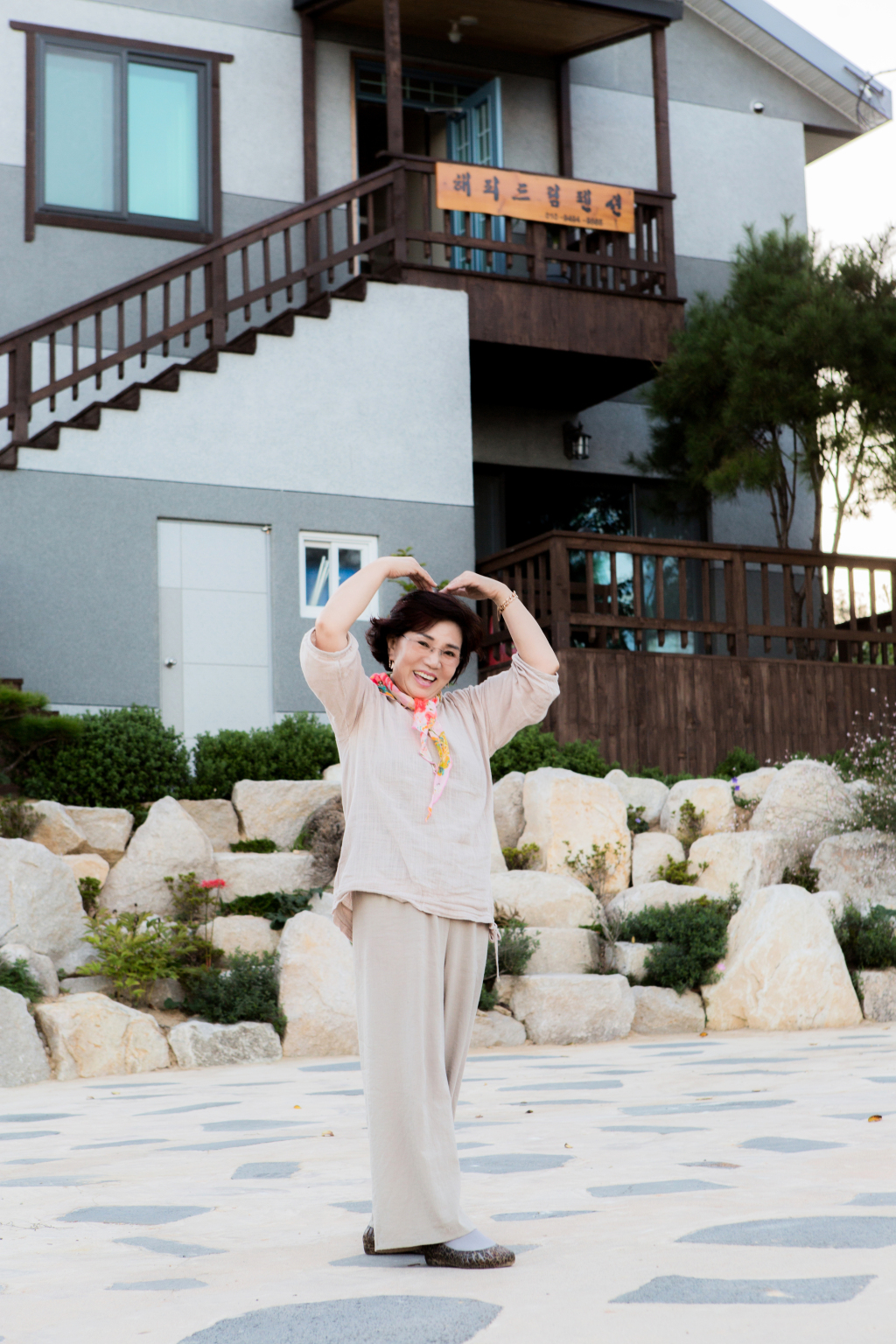
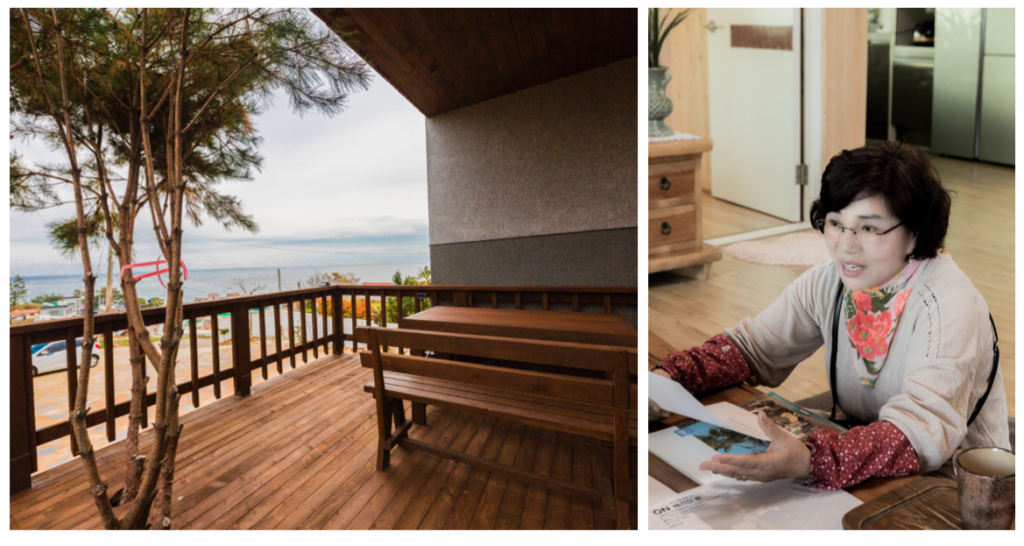
Hello, I'm Jeong In-sook, owner of Happy Dream Pension in Gyeongju. I've been running a lumber mill for 15 years, and about a year ago I stumbled upon this location and decided to open a pension alongside my main business. About six years ago, when I was president of the Gyeongsan chapter of the Korea Women Leaders Association, I accompanied the head of our federation on a trip to Gyeongju during a presidential campaign. The federation president had a small vacation home on what is now Happy Dream's land, and our group visited together. When I came up here and looked out for just a few minutes, I fell in love with the view — the scenery was stunning. So for the next five years, I kept trying to convince the president to sell me the land (laughs), and finally last May I bought it and built this pension.
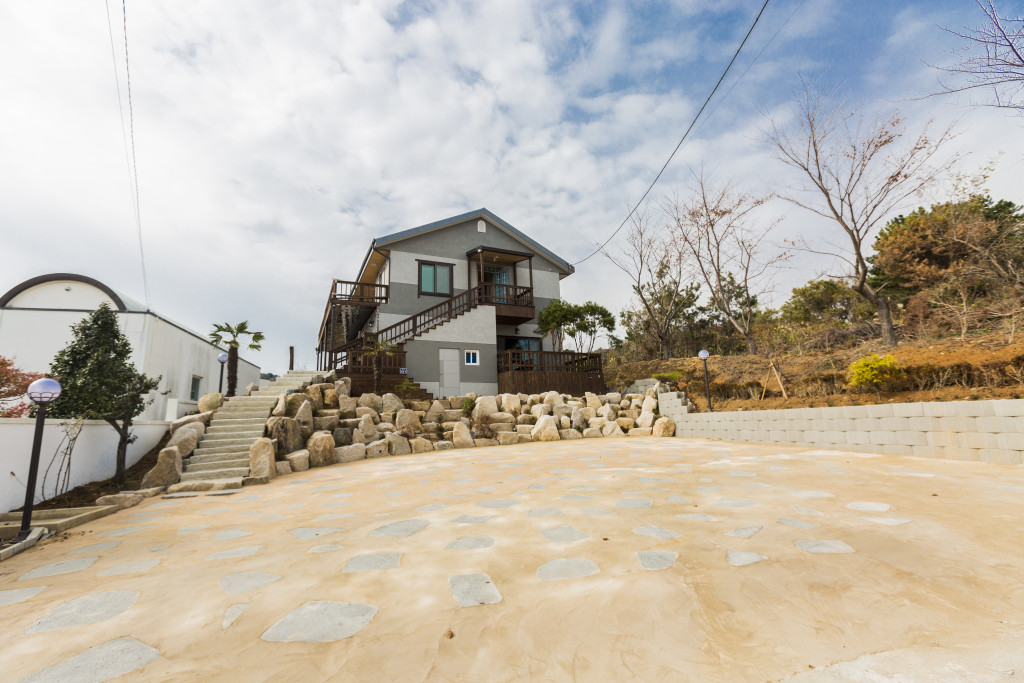
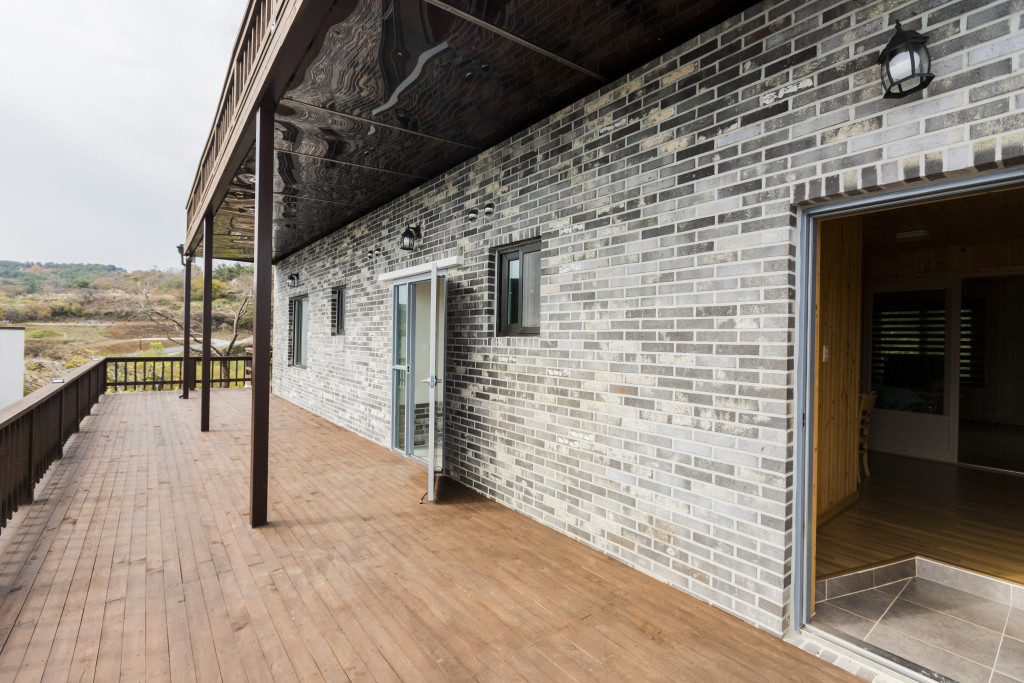
Happy Dream Pension is a single duplex building with four rooms total: Munmu the Great Room, Queen Seondeok Room, and General Kim Yu-sin Room on the first floor, plus the Villa Room on the second floor. Each room has a different name and can accommodate different numbers of guests. They're all quite spacious — standard occupancy ranges from 2 to 4 people, but we can fit up to 8 with extra guests. The Villa Room in particular is 35 pyeong (about 1,200 sq ft) and can handle groups of up to 20. We've actually had 25 people stay there once, so we keep plenty of extra bedding on hand just in case. (Laughs)
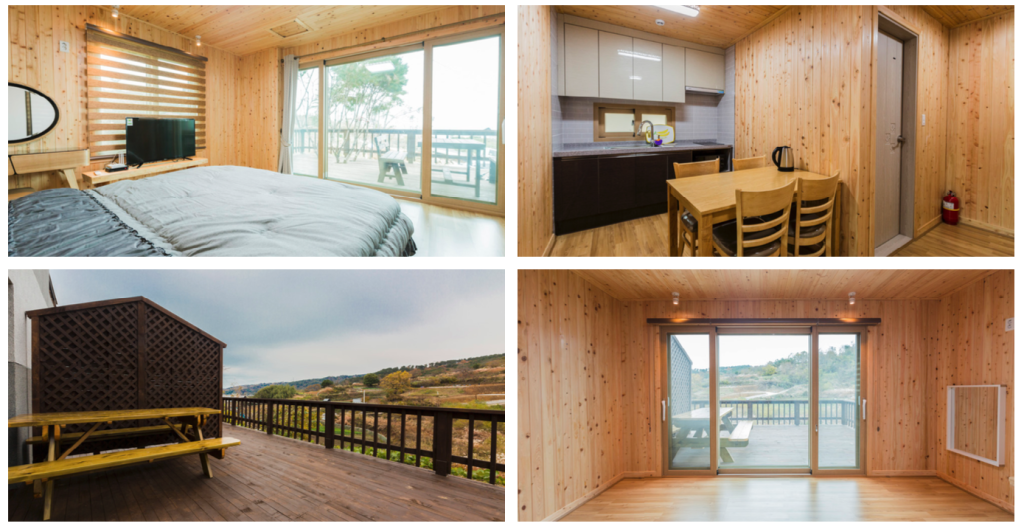
Because I run a lumber mill, I was able to build the entire pension with hinoki cypress. The scent doesn't come through in photos, so it looks even better in person. Guests who visit once are often so satisfied they return — we've already had about five repeat customers this year alone. We offer big discounts on weekdays, too.
Q. You have a full-time business and other commitments — what made you start running a pension?
I never imagined I'd be in the lodging business. But I'm president of a volunteer organization, and as a businesswoman I've noticed how stressed many female entrepreneurs are these days due to the economic downturn. When I came to this spot, I realized it could wash all that stress away. So instead of keeping it to myself, I wanted to create a space where people could come heal and decompress — share it with friends and colleagues. Before I knew it, it had turned into a pension business. (Laughs)
I named it "Happy Dream" because I want everyone who comes here to look at the ocean, forget everything else, and dream happy dreams. We used hinoki cypress throughout, checked every raw material for eco-friendliness, sourced organic cotton bedding, and even used eco-certified insulation. Money wasn't the point — I invested everything to make sure people could relax here without stress. (Laughs) I wanted to create an affordable space where anyone could come and unwind comfortably.
Running the pension isn't really my main source of income. From the start, I didn't intend to make big money. Any modest profit I do make, I try to give back to the community. I've been chair of the Social Security Council for five years and serve on the Daegu-Gyeongbuk Red Cross, so I do a lot of charitable work. This year we used Happy Dream's proceeds to throw birthday parties for elderly people living alone before Chuseok, and to prepare holiday gifts for them. If guests feel happy here and the small income can fund good causes — isn't that a win-win?
Q. What kind of guests typically visit Happy Dream Pension?
Because our rooms are so spacious, families make up the biggest share — both the first-floor and second-floor rooms get a lot of family bookings. We used to run a kids' room, but demand tapered off so we've put those items away for now. Families love having all that extra space.
We also get a lot of group bookings — company executives, associations, clubs, universities, you name it. When groups come, they don't usually book rooms separately; they rent out all four rooms on both floors and take over the whole building. It's great when it's full like that, but cleaning all the rooms at once after they leave is... intense. (Laughs)
Since many guests bring kids and there's a beach nearby, we've set out large basins so parents can easily bathe their children after swimming. We also provide a washer and dryer for anyone whose clothes get wet and need cleaning. People ask why I go to all this trouble, but many of the students who visit are young, so I end up treating them like my own kids and wanting to take extra care of them.
Q. You really emphasize the hinoki cypress scent in a condo-style setup, which stands out from typical pensions.
Exactly. When we built the place, I first wanted it to blend with the surrounding landscape. People spend most of their time in homes and apartments breathing in environmental hormones and greenhouse gases, so I wanted guests to detox — body and mind — and rest comfortably, even if just briefly. That's why we went with hinoki construction. I read a paper by Dr. Lee Si-young, a leading expert in architecture, about how the phytoncide in hinoki stabilizes the mind and body. I believe the air we breathe — even if we can't see it — is incredibly important. The calming and clarifying effects sealed the deal for me. Health comes before money, right? (Laughs)
Korea does have hinoki cypress, but the trees are still young and not usable yet. Like people, trees need to mature before they're stable — ideally around 100 years old. So we imported the hinoki we used at Happy Dream directly from Daemado (Tsushima), Japan. Because the cypress is so high-quality, it naturally disinfects and deodorizes. Even though we've been open for over a year, you can still smell the hinoki as soon as you approach the entrance. Step inside and the deep phytoncide aroma envelops you.
The way we designed the windows is intentional too: full glass facing the ocean and a mountain-side window opposite, creating cross-ventilation. Mountain breeze from the back meets sea breeze from below and mixes inside the rooms, purifying the indoor air and amplifying the hinoki scent. Normally, seaside air feels sticky and salty, but inside Happy Dream, the air is crisp and refreshing. Hinoki really does work wonders.
Q. What's the most important principle behind Happy Dream Pension?
Comfortable rest, fun memories, and health. At first, I didn't even think about running a pension — I just wanted people to have a comfortable place to stay. So we built with hinoki, prioritizing health. When you only see Happy Dream in photos, it's just pictures of wood. You can't smell it, so you don't know what it's like. But when you actually come here, the hinoki scent hits you before you even open the door.
We also have full ocean-view windows and made sure every room has a window. This side faces east, so you can watch the sunrise from the living room or any bedroom. I wanted guests to heal by looking at the ocean no matter where they are or when they wake up.
The interior details aren't extravagant, but I picked each item carefully to give a premium feel. Female guests often notice and appreciate those touches. We recently installed a beam projector and karaoke machine — originally we didn't have them. This area is by the beach and there's not much around, so if guests drink and go out, it can be dangerous. I added these amenities free of charge so people can have fun indoors and not risk accidents outside. Lastly, because I originally thought friends would be staying here, I made sure each room is soundproofed and thermally insulated so no one disturbs the others. The soundproofing and temperature control work incredibly well.
Q. As a new property, there must be pros and cons. What do guests say, and what challenges do you face as an operator?
Because Happy Dream is brand-new, the rooms feel like a regular home — no warning signs plastered on the walls like in typical accommodations. I avoid mentioning rules or notices upfront in case it stresses guests out, so I just let them use the space comfortably. But a lot of people still think paying money means they can do anything. For example, extra guests cost more, but when I ask how many people are coming, some lie and I can't really do anything about it. (Laughs) If I get too calculating, both the guests and I feel stressed, so instead I just ask happy guests to leave nice reviews or comments — that's where I leave it.
To keep costs down for guests, if someone asks for rice or kimchi, I just give it to them. I installed a water purifier on purpose and tell people not to bring bottled water except individual bottles. If someone's hosting a parent's birthday party, I've even prepared cakes for them. Even when I put in all this effort, not everyone will appreciate it the same way — but there are always good people everywhere, so I take comfort in that.
Even though I didn't start this to make money, human nature is tricky, right? Part of me wants to advertise more, wants more bookings. (Laughs) So now I'm letting go of profit motives and emptying my mind — I just use the modest income from this place for good causes like birthday meals for elderly people living alone. That's where I find meaning.
Q. Guests rave about how clean and welcoming the place is — word of mouth is strong! What's your vision for Happy Dream's future?
Our property has a lot of furniture like sofas, tables, and dining sets — very much like a home — so cleaning underneath everything is trickier than in other places. Even if dust settles the moment I turn around, I clean thoroughly enough that there's not a single spot visible when I look up from below.
Guests are paying, so I believe cleanliness has to come first — that's always my priority. Second is friendly service, which I keep at the front of my mind. Going forward, I want to keep improving the environment here and offer guests even better experiences. I also want to share eco-friendly construction methods so guests can take those ideas home with them. That's how the world gets healthier, right? (Laughs)
Q. If you could rebuild the pension, what would you add or remove?
Back then, I didn't realize this space could accommodate so many people, so the second-floor Villa Room only has one bathroom. But when a lot of people are here, one bathroom isn't enough. So by the end of this year, we've gotten approval to build a log cabin on the extra land above the parking area — we're planning to add a second bathroom there instead of a laundry room, for a total of two bathrooms.
Actually, I planned to live in that log cabin myself. It'll be two stories: I'll live on the second floor, and the first floor will be a guesthouse-style communal dining area where guests can eat together comfortably. We're also building a storage shed to expand the guest space.
Lastly, I think Happy Dream Pension has a story — "giving people happy dreams," just like the name suggests. Once the log cabin is built, we'll not only welcome guests but also share eco-friendly construction know-how with frequent visitors or anyone interested in this approach. I want to create a space where people can experience what invisible air quality really means.
Q. How did you discover ONDA, and what's it been like using the service?
I didn't know much about ONDA at first. About a week after our pension got its occupancy permit and business registration, a manager from ONDA called me. Of course, other companies had been reaching out asking us to use their systems, but I'm from Busan, so the sound of "ONDA" felt familiar — kind of dialectical, you know? It just stuck in my ear, and the manager explained everything so kindly that I was sold. (Laughs) I happened to be going to Seoul anyway, so I visited the ONDA office in person, met the manager, got the full explanation, and signed up.
What I loved about ONDA Plus is that it matches my skill level. The platform isn't overly complicated, so I can manage it on my own. Whenever I have questions or don't know something, I call the ARS line and the staff always answer kindly. They also post clear notices whenever something comes up, which is really helpful. They send info about weekday or holiday discount events, pricing tips — I've gotten tons of support without any major inconvenience. Using the GDS distribution service to sync bookings across sales channels and linking ONDA's real-time booking widget to various ads made it easy for guests to reserve directly. Thanks to that, even during a tough summer, I was pretty satisfied with how things went.
One thing I'd like to see: it would be great if the system could automatically highlight each property's unique selling points. For example, we're a condo-style property using eco-friendly construction. If features like that were emphasized for easy comparison, guests searching online could discover us more easily, right?
Q. Finally, can you recommend any hidden gems or personal favorite restaurants near the property?
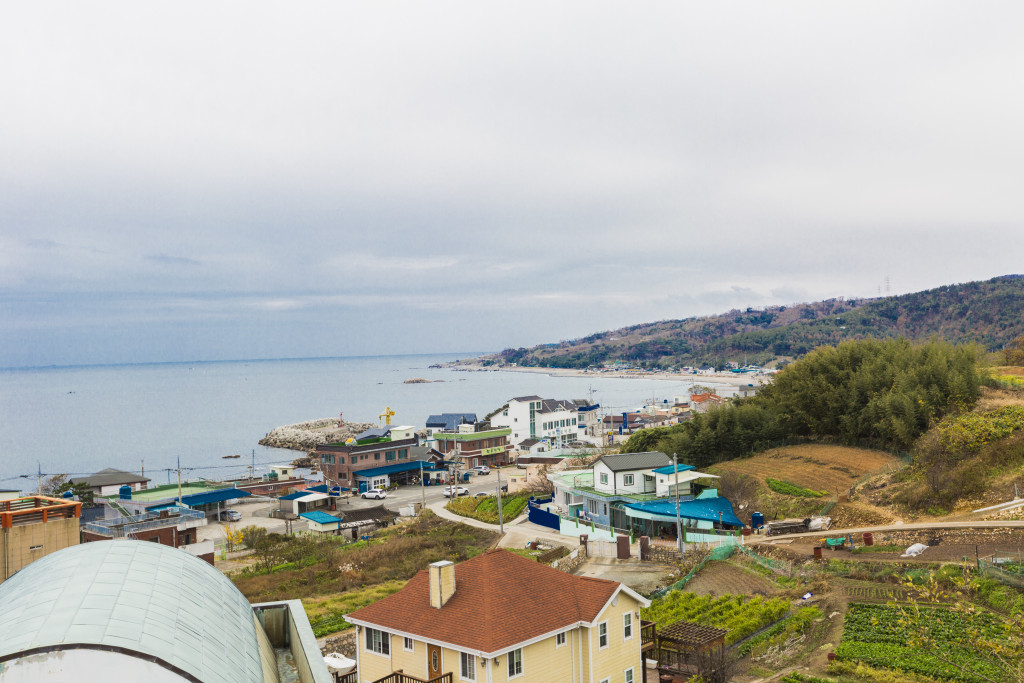
There are so many attractions near Happy Dream Pension — King Munmu's Underwater Tomb, columnar joints, Najeong Fine Sand Beach, Bonggil Beach — all within a 5-minute drive or walk. The Gampo area has absolutely stunning sunrises, and the ocean view from our property is incredible.
Guests here usually don't hunt for restaurants — they either bring their own food or order delivery. Luckily, there's a cluster of raw fish centers right below our place, so delivery comes straight to the property. Guests can also walk down and pick out fresh seafood themselves. These days, delivery apps are so developed that a lot of people just browse and order easily from their phones.
These fish centers aren't part of a chain — they're all independently run. There are over 30 of them, so it's hard to single out just one. (Laughs) They're all direct from the source, so quality is pretty consistent. We usually rotate and recommend different spots. I'd say your best bet is to go down and choose for yourself!