A 25-room Myeongdong guesthouse built by a 10-year hotel vet who saw overseas booking sites favoring budget stays. Lower labor costs, private rooms only, 17th-floor views.
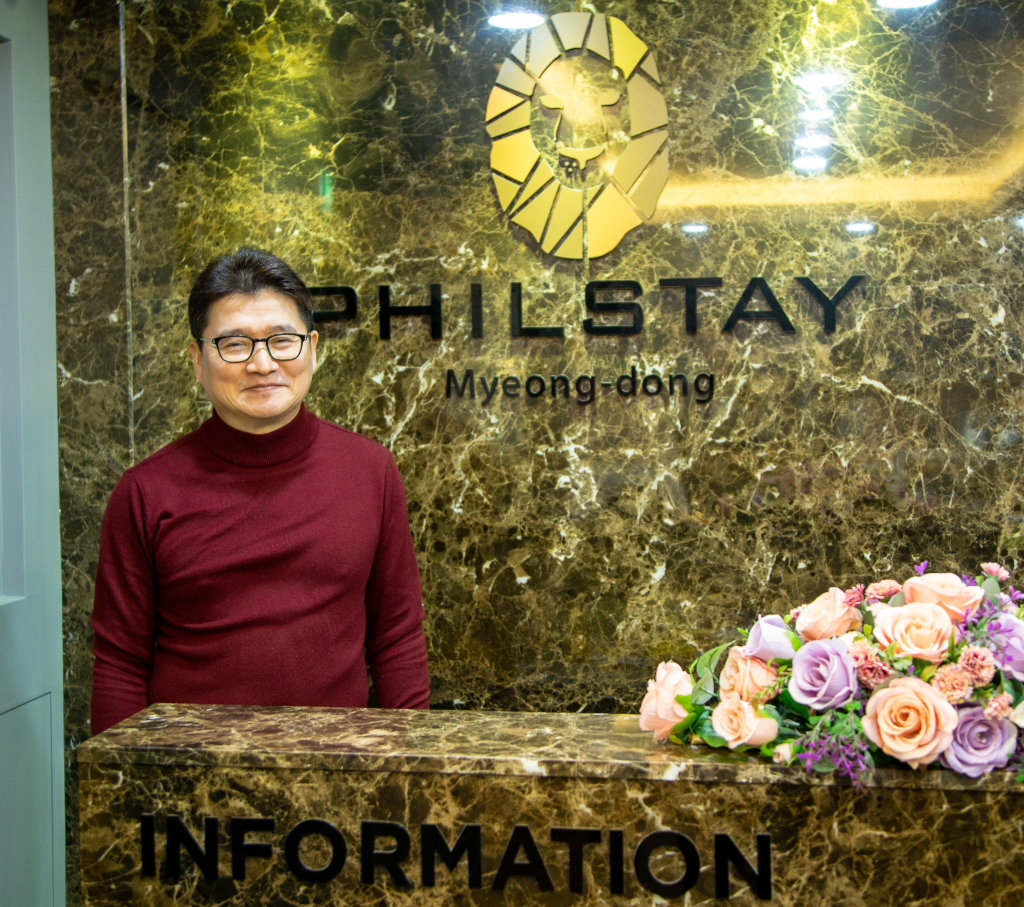
Property type: Guesthouse
Address: 55 Myeongdong-gil, Jung-gu, Seoul, 17F
Room types: Single, Double, Twin, Triple
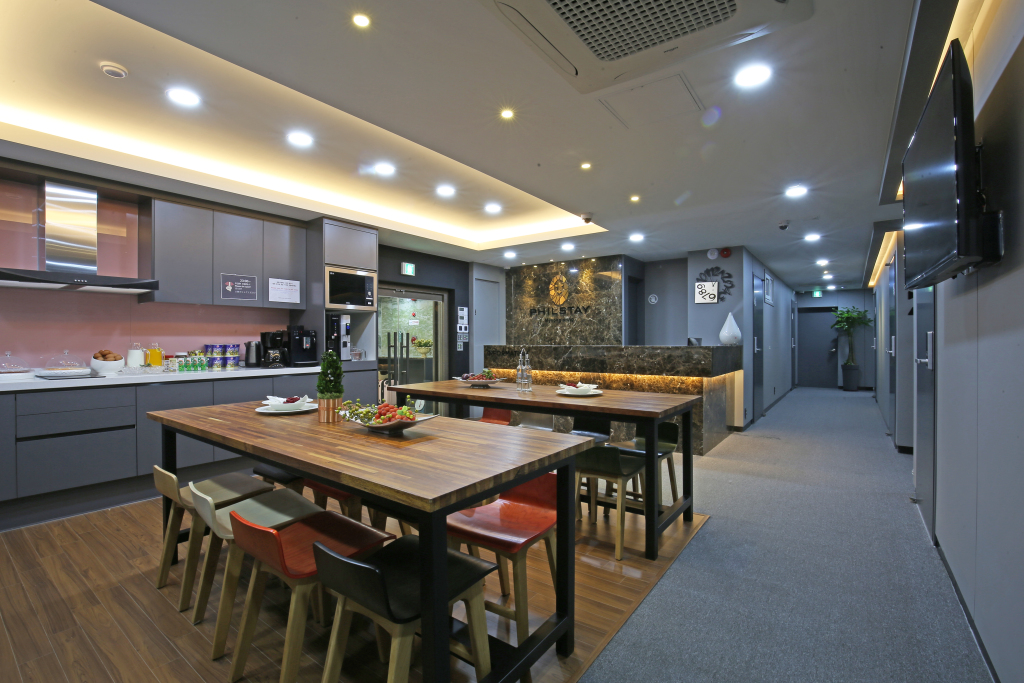
Amenities: Lounge, shared kitchen, free laundry facilities, complimentary breakfast, tour desk
Nearby attractions: Myeongdong Arts Theater, Noon Square, Namsan, Myeongdong Cathedral, Cheonggyecheon Stream, Namdaemun Market, Seoul Plaza, and more
Q Hello! Please introduce yourself and the property.
Hello, I'm Kim Kyung-won, Operations Director at Philstay Myeongdong. Philstay Myeongdong is a mini-hotel-grade guesthouse that opened in March 2017. We're on the 17th floor of a building very close to both Euljiro 1-ga Station (Line 2) and Myeongdong Station (Line 4). Thanks to this location, we have stunning views overlooking Namsan and downtown Myeongdong. We have 25 rooms in total, which comfortably accommodate around 60 guests.
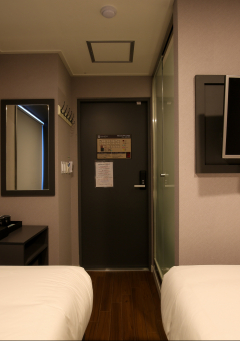
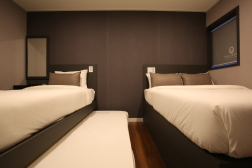
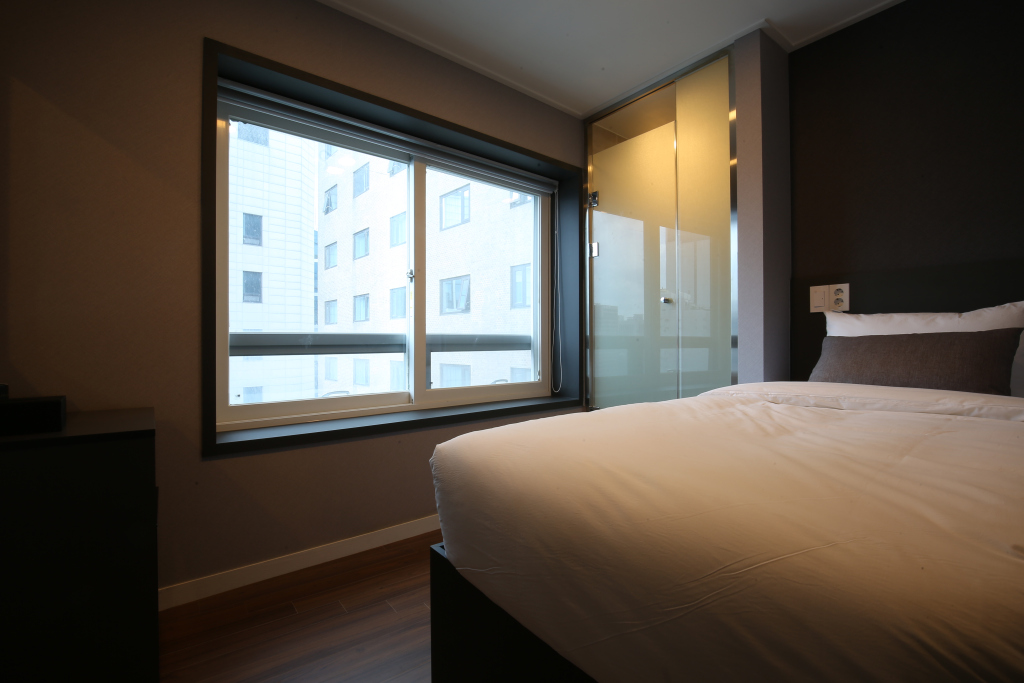
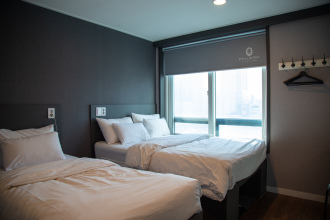
Our rooms come in four types: Single, Double, Twin, and Triple. For those looking for a budget-friendly option, we also offer economy rooms without windows. What sets us apart from other guesthouses is that we don't have dormitories—all rooms are private with en-suite bathrooms.
Q How did you get into running Philstay Myeongdong?
Before running Philstay Myeongdong, I worked in hotels for about 10 years. Managing reservations, I noticed that overseas booking sites like Agoda featured guesthouses much more prominently than traditional hotels. I had a friend who ran a guesthouse, and after visiting by chance, I found the operational model fascinating—very different from hotels, with its own unique advantages.
Hotels require massive upfront investment and ongoing maintenance costs. Guesthouses, on the other hand, have much lower operating expenses after the initial setup. Specifically, hotels can spend 30–40% of revenue on labor and maintenance, but guesthouses have significantly lower labor costs, making them viable even with lower room rates.
That convinced me to try running a guesthouse. I got involved early on—helping with the interior design and overall setup—and we opened in early 2017. It's been two years already.
Q What's the most important value in running a property?
The most important value is hospitality—and the key to maintaining hospitality is your staff. Hospitality is a service business. Even if you have the best facilities, they're meaningless if your staff isn't friendly. That's why you need people who can greet guests with a smile and treat them warmly. This is especially critical for us because our layout is single-floor, so guests pass by the front desk constantly. Unlike hotels, where you only see the front desk at check-in, we're always face-to-face with guests, creating many opportunities for connection.
Of course, language skills are essential—our international guest ratio is high. But when hiring, what I value most is whether someone can make guests feel at ease. You can be efficient at tasks without smiling, but that won't create real satisfaction. Being friendly and proactive with guests is the foundation of our operation—and the core value we uphold.
Q You get a lot of reviews praising your hospitality and cleanliness! What's the secret?
First, we try to address feedback quickly. When guests leave reviews across various platforms, I read them frequently. Aside from major facility issues we can't fix immediately, we implement changes right away for everything within our control.
Platforms like Yanolja and Yeogi Eottae emphasize the importance of responding to reviews, so we make sure to reply personally. I think if a guest takes the time to write a detailed review and we don't respond, it signals we're not reading them—and eventually, guests will stop writing altogether.
Reading reviews gives us valuable feedback to improve the property, and replying shows potential guests that we care and are actively managing the place. Even when negative reviews come in, responding is better than staying silent—it shows we're working to fix things. I make sure our staff understands this too.
Q You mentioned Philstay Myeongdong doesn't have dormitories. How does that differentiate you from typical guesthouses?
Most people think "dorm beds" when they hear "guesthouse," but given Myeongdong's profile—lots of Southeast Asian shoppers—many guests, especially from China, Singapore, and Malaysia, prefer privacy. These travelers don't typically like open-layout accommodations. And guesthouses can get noisy; with dormitories, guests can end up disturbing each other.
So we eliminated dorms entirely and made every room private, with en-suite bathrooms, to better protect privacy and allow guests to relax comfortably. As a result, we attract a lot of female travelers who appreciate quiet spaces. By nationality, roughly 30% of our guests are Chinese and another 30% are Japanese.
Q Your occupancy rate is reportedly very high. What's the secret, and how do you manage reservations?
Our location helps a lot—close to subway stations and right in the heart of a busy shopping district. Many guests return multiple times. Japanese travelers, in particular, are often young women interested in beauty products, and they keep coming back.
As I mentioned earlier, we focus on being friendly, quiet, and comfortable. Japanese guests especially value these qualities. Our location and facilities are solid, and being inside a building (not a standalone property) with professional security and maintenance teams gives guests an added sense of safety.
We typically fill up about three months in advance. One tip I'd share: I stay in close contact with our OTA account managers at Booking.com, Agoda, etc. They give me advice on pricing adjustments during peak and off-peak seasons, and insights into broader market trends.
Room rates across the Myeongdong hospitality market tend to follow hotel pricing. When group tourism drops, hotel rates fall—and if guesthouse prices don't adjust accordingly, occupancy plummets. So we stay on top of market shifts and adjust pricing proactively.
Q Why did you choose a franchise guesthouse brand? What are the pros and cons?
If you lack experience or knowledge about running a property, getting started is the hardest part. A franchise guesthouse offers support across the board—interior design, site selection, initial operations, reservation system setup, legal procedures, tax issues. It makes the startup process much more manageable. Plus, there's an established brand identity, so you don't have to build that from scratch.
The flip side? Your reputation is tied to the brand. We're all "Philstay," but each location has different owners and operations. If one location underperforms, it can hurt the others. Also, there are multiple Philstay properties in Myeongdong alone, so guests sometimes go to the wrong one, or leave reviews for another branch on our listing. It can get confusing.
Q You offer free laundry, complimentary breakfast, and tour assistance. Where did these ideas come from?
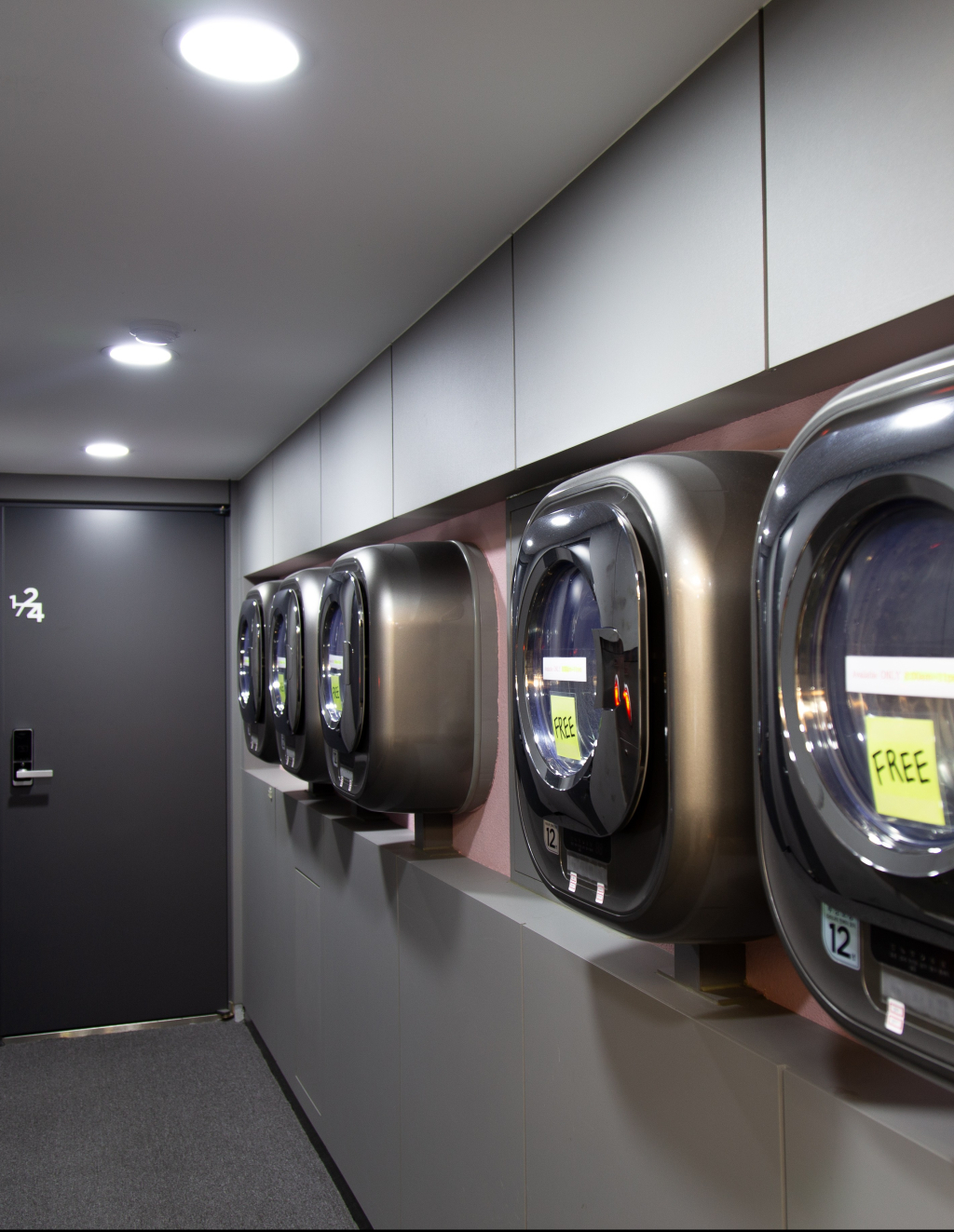
Many guests visiting Myeongdong stay for a week or more, so laundry is essential. Hotels provide basics like shampoo or drinks, but we don't stock rooms as heavily. So we thought about what else we could offer—and landed on free laundry. We installed one large washer and dryer in the common area, plus several mini washers in the hallway. Given our room count, multiple machines prevent long wait times. Guests love it. Machines are running constantly except late at night.
Breakfast is free so guests can fuel up before sightseeing. We keep brochures at the entrance and around the property for trip planning. And since language barriers can be tough for tourists—especially with transportation—we help book taxis and tours. Many tour operators pick guests up directly from our property, which makes it super convenient.
Q How did you start using ONDA, and what's your experience been like?
ONDA was set up as our initial reservation management system when we opened the franchise. I learned how to manage bookings efficiently through ONDA. We don't have a standalone website—we use Naver's free MODOO mobile site builder—but we embedded ONDA's real-time booking widget on that page to take direct reservations. We also use ONDA's channel manager to connect our inventory to multiple overseas OTAs, which has been very helpful.
That said, I do have a couple of requests. Recently, some OTAs asked us to open our calendar up to two years in advance, but ONDA only allows one year. Also, the Ctrip integration was a bit unstable at times. Still, I know the team is working on system improvements, and I'm optimistic about ONDA's future.
Q Finally, any hidden gems or restaurants you'd recommend near the property?
Myeongdong is touristy, so there are plenty of restaurants—but prices are steep. The real affordable, delicious spots are in the Euljiro underground shopping arcade. You can get home-style Korean meals for around ₩5,000. That's where local office workers go.
Most international guests, though, research restaurants in advance. They usually just ask for directions to places like samgyeopsal spots or Myeongdong Kyoja.
For sightseeing, I recommend Namsan Tower or Gyeongbokgung Palace. But if guests are open to going farther, I suggest tours. In winter, ski tours are super popular. DMZ tours are also a big hit—international guests see it as a unique, once-in-a-lifetime destination.
View full article in magazine format <<
⚠️ All rights reserved. Cite this piece as 'ONDA (온다)' when quoting.