The pandemic didn't create the need for hotel digital transformation — it just made ignoring it impossible. From mobile check-in to multilingual guest service, here's where to focus in 2022.
"Gen Z is digital-native — they text, they don't call. If we want to keep the guests who define our present and future, we need to rethink what hospitality actually means to them."
Even before COVID, ONDA argued the hospitality industry would get left behind without digital transformation. The pandemic accelerated contactless culture everywhere — and hotels need to keep up. (We've got work to do, too.)
Here's a simple example.
Room service still happens by phone in most hotels. If you speak Korean or English, fine. But if you need help in a language the hotel doesn't support? You're stuck. The guest has a terrible experience. The hotel loses revenue.
Does that bedside phone still feel natural to you? If so — and we hate to say it — you're already behind.
So what are the key digital shifts hotels should focus on this year?
1. Travelers want high tech and low touch
According to Consumer Insight's recent Leisure Activity Report, interest in travel and tourism is surging fast.
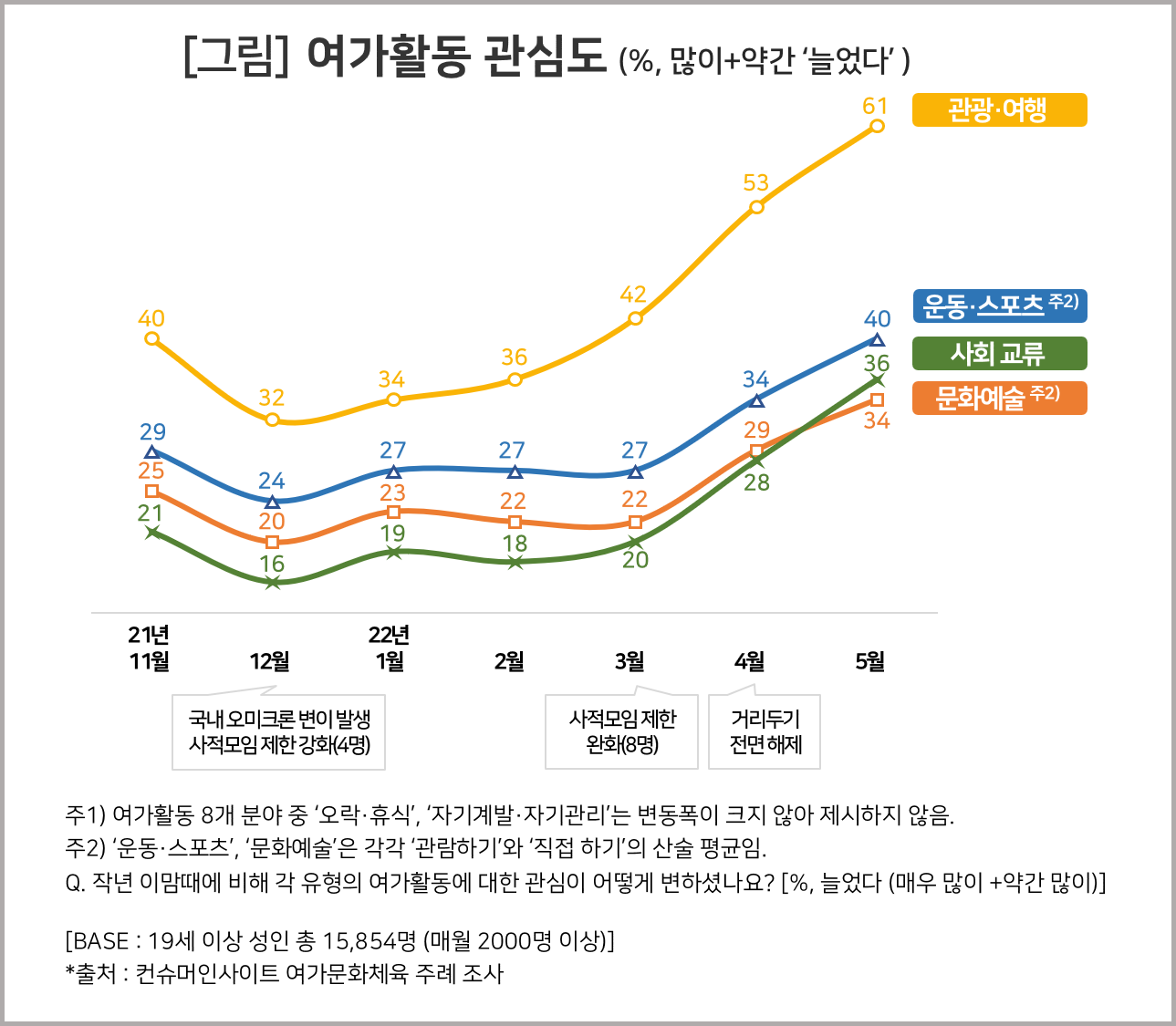
In June, Oracle Hospitality and Skift released a fascinating survey: 95% of respondents plan to travel within six months.
We know COVID anxiety is fading. But what kind of travel experience do guests actually want now?
The Oracle-Skift survey found 73% of travelers want to check in and out using their phones — and handle room service and payments the same way. They don't want unnecessary run-ins with other guests or staff.
So should hotels go fully contactless? Not quite. 38% prefer contactless service with the option to request staff when needed. In other words: let guests control the entire journey from their phones, but keep a lean service layer ready when needed.
The same survey revealed 54% of hotels have made it a top priority to improve or eliminate the front desk by 2025.
Travelers want personalized, tech-enabled experiences. Hotels are rethinking — or removing — the front desk, once the symbol of hospitality. Instead of bellhops, you might see robots delivering luggage and room service.
Is your hotel preparing for this?
2. Gen Z actually prefers hotels to Airbnb
What does Gen Z book when they travel? At Korea Hotel Show 2022, ONDA CEO Oh Hyun-seok shared a surprising finding from Vision Critical.
You'd think Gen Z would choose Airbnb over Hotels.com, right? Not so fast.

"Gen Z prefers hotels more than any other generation. While other age groups lean toward camping, pool villas, or pensions, Gen Z clearly favors hotels."
"Gen Z is digital-native — they text, they don't call. If we want to keep the guests who define our present and future, we need to rethink what hospitality actually means to them."
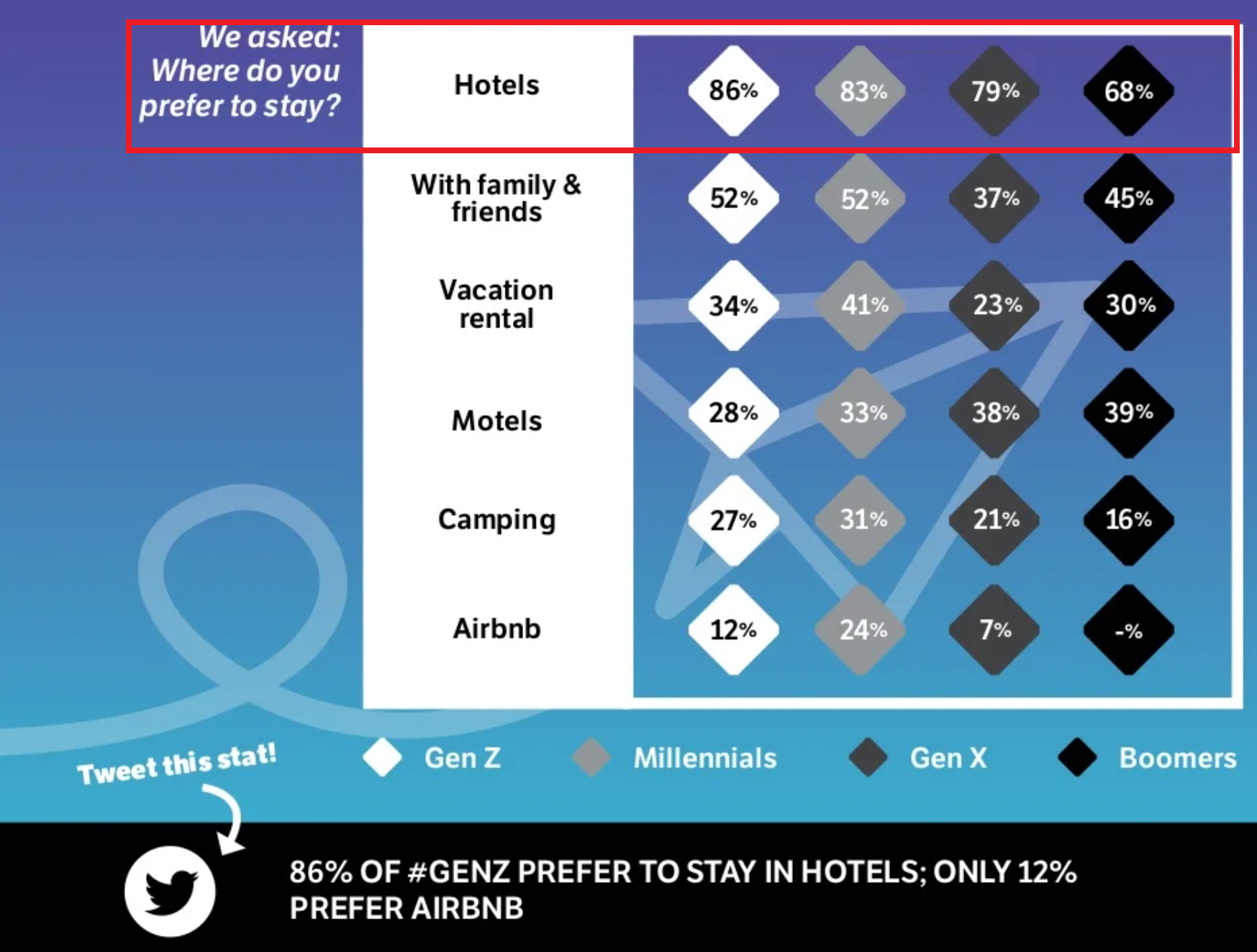
The chart shows hotels lead across all generations. But here's the kicker: 24% of Millennials prefer Airbnb, but only 12% of Gen Z do — half as many.
So hotels remain the most popular lodging format across the board. And Airbnb? Maybe not as cool as we thought.
CEO Oh also discussed why hotel workers who left during COVID aren't coming back — and how to work with Gen Z employees.
Hospitality has long been a "dream job" industry — but also low-pay, high-stress. Meanwhile, other industries have digitized: lighter workloads, SaaS collaboration tools instead of verbal handoffs. Why should hotels be any different?
With smarter ops, hotels can deliver better guest experiences with fewer people. And they can become the kind of workplace Gen Z actually wants to join. Read the full talk here.
3. Why D2C is gaining momentum
In our May 11 newsletter (Weekly ON vol. 63), we noted traffic to hotel websites via Google Hotels is spiking. Google lets travelers book directly from search results — skipping OTAs and metasearch engines — which makes the journey simpler.
For hotels, there's a bonus: Google doesn't (yet) charge a commission on direct bookings. That's why Google is aggressively pitching hotels to advertise on Google Hotels instead of OTAs.
Google's share is still small in Korea. But when inbound travel rebounds later this year, that could change fast.
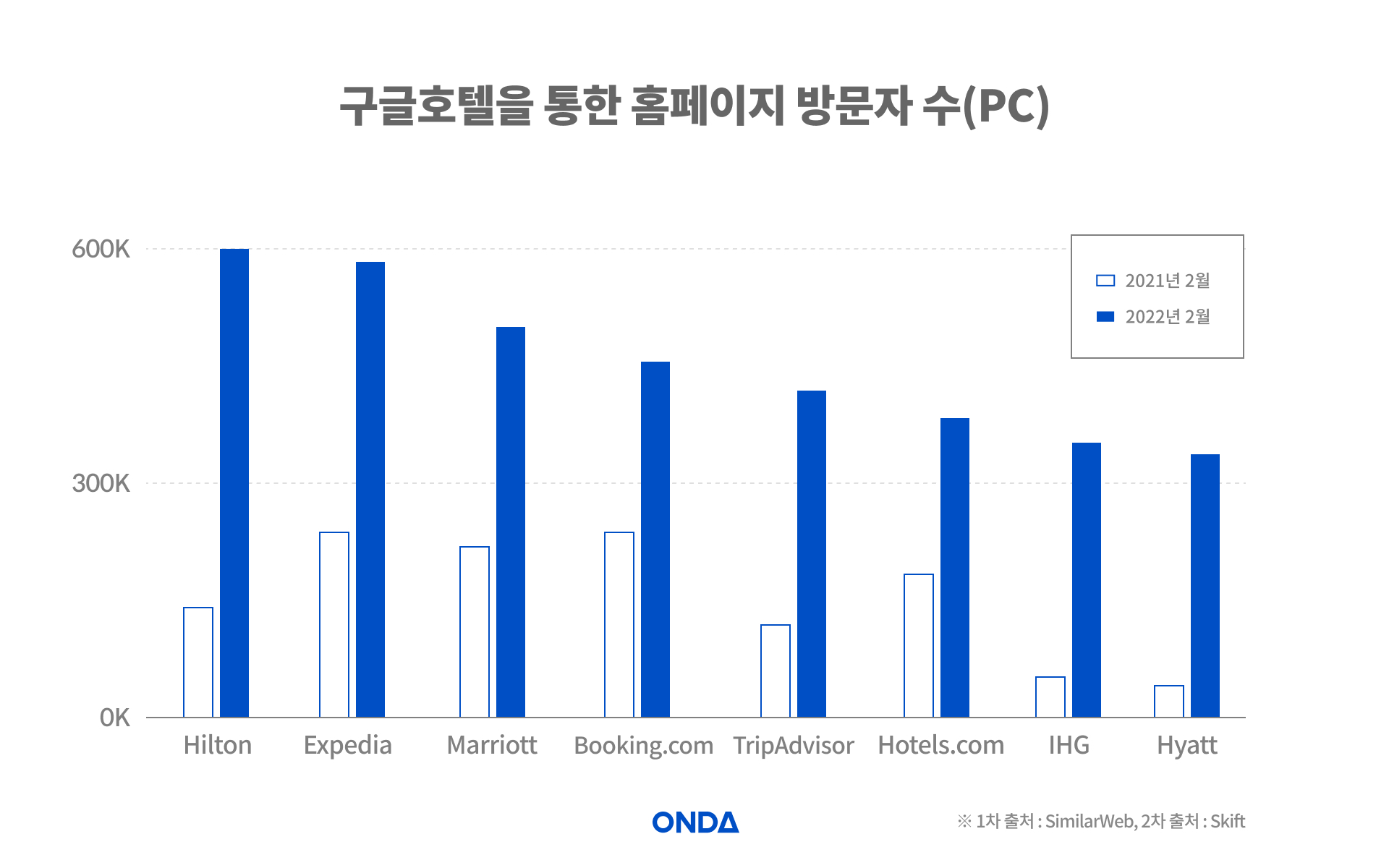
What about Korea? ONDA became the first domestic company to partner with Google Hotels last year. Since launching our dedicated "Hotel Biz" team this year, we've seen D2C (direct-to-customer) revenue climb sharply month over month.
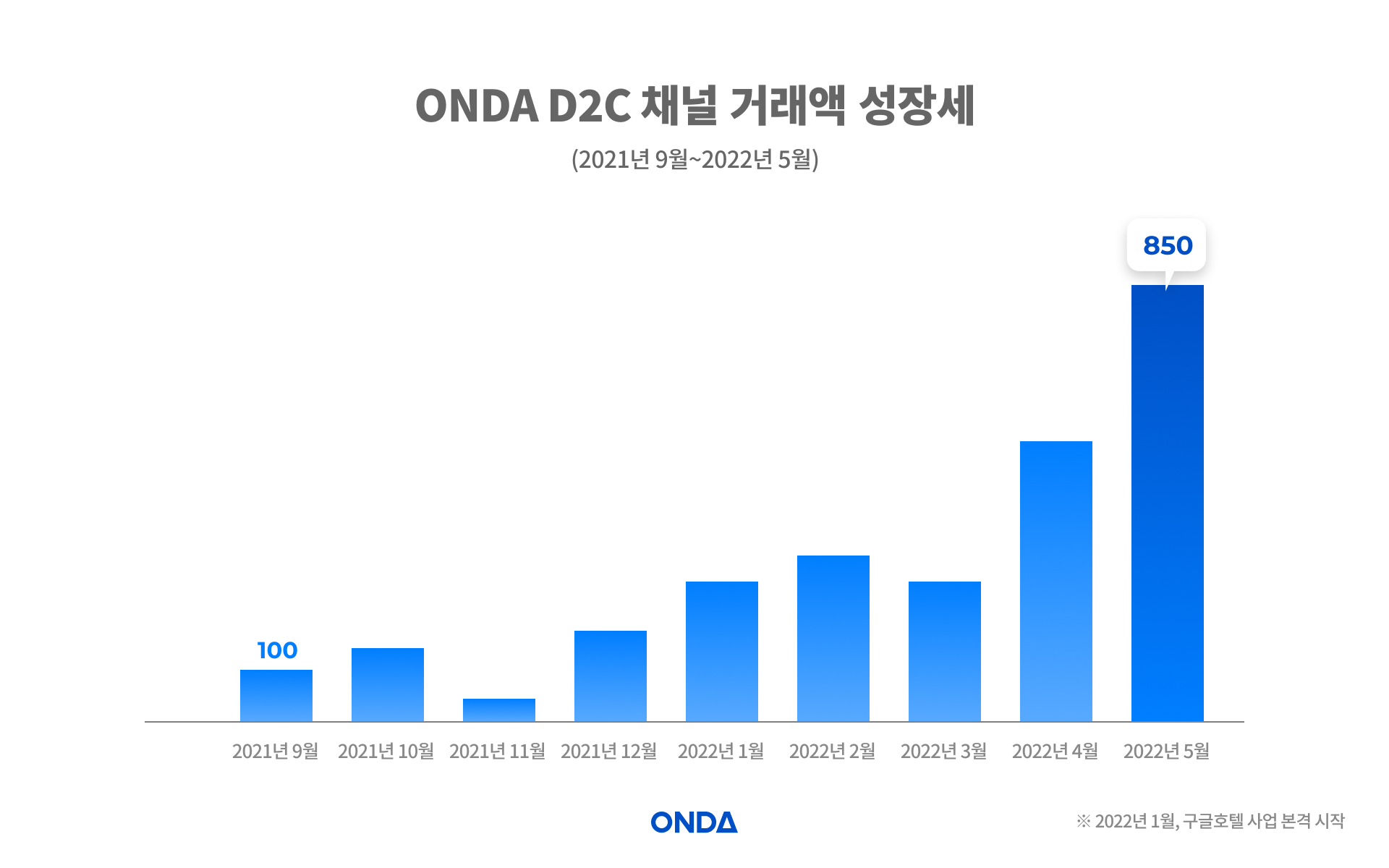
D2C means guests book directly on the hotel website — bypassing OTAs, portals, or marketplaces. This includes traffic from Google Hotels, paid ads that drive users to the site, and content marketing that converts browsers into bookers.
Hotels save on commissions. They own the guest data. And guests can talk directly to the hotel before arrival.
Yes, OTAs still offer perks that make them valuable. But if you want repeat guests, invest in your website experience. Make a great first impression. Then keep the relationship alive with post-stay CRM (customer relationship management).
It's far more effective than competing on price across a dozen OTAs — and hoping they come back.
🗞 More hospitality insights in our newsletter
⚠️ All rights reserved. Cite this piece as 'ONDA (온다)' when quoting.