ONDA surveyed domestic hospitality professionals this November. Ahead of the full report in January, we're sharing early findings: How do people in the industry view the current state — and the road ahead?
Hey there — we've had a week of unseasonably warm weather, running 5–10°C above normal. It's nice while it lasts, but the climate shift is real. Temps are set to drop below freezing this weekend, so take care in the swing 😷
⚠️ All rights reserved. Cite this piece as 'ONDA (온다)' when quoting.
In this week's Weekly ON
🏨 63% of hospitality operators call 2023 'positive'
💡 Shorter trips, closer destinations — and pensions over hotels
⌨️ #GlobalTourismRecovery #SeniorPremium #OverseasTravelTrends #HotelAmenities #TravelAgencyOffseason
🏨 Industry story
63% of hospitality operators
call 2023 'positive'
Travel bounced back fast in 2023. UNWTO data shows 975 million tourists traveled internationally between January and September. By Q3, arrivals hit 91% of pre-pandemic levels.
Global market size reached $1.4 trillion — nearly matching 2019's $1.5 trillion. The industry is past COVID.
So how do Korean hospitality professionals feel? ONDA surveyed 319 domestic operators this November for our 'Hospitality Data & Trends Report,' out in January. Here's an early look.
63.3% of respondents said 2023 improved versus 2022 — rating it 'very positive' or 'positive.' Only 26.6% called it negative.
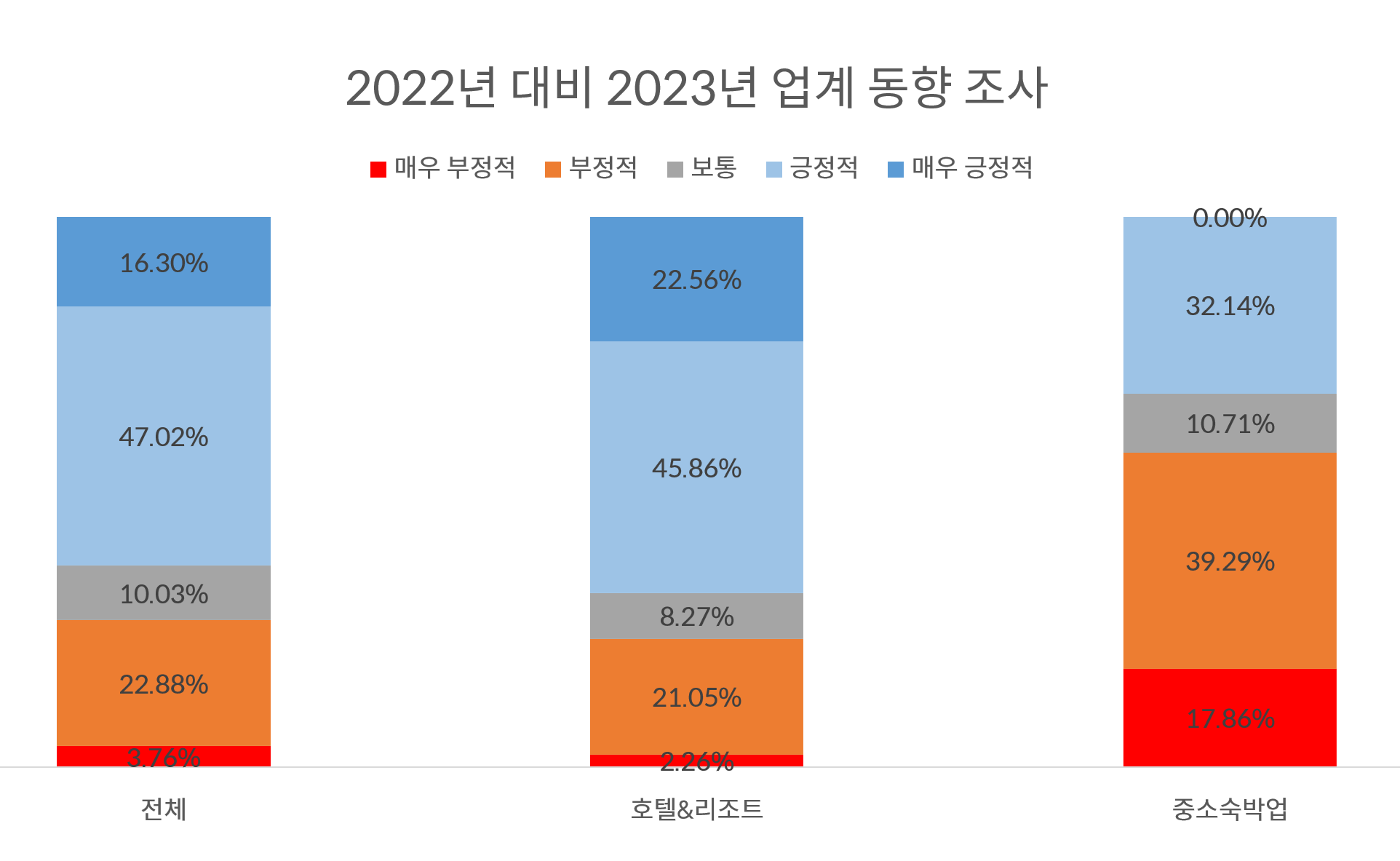
The mood is better than last year. But how does it feel? Operators gave the industry 6.9 out of 10 on average. That's up from 6.1 in last year's survey. Momentum is real.
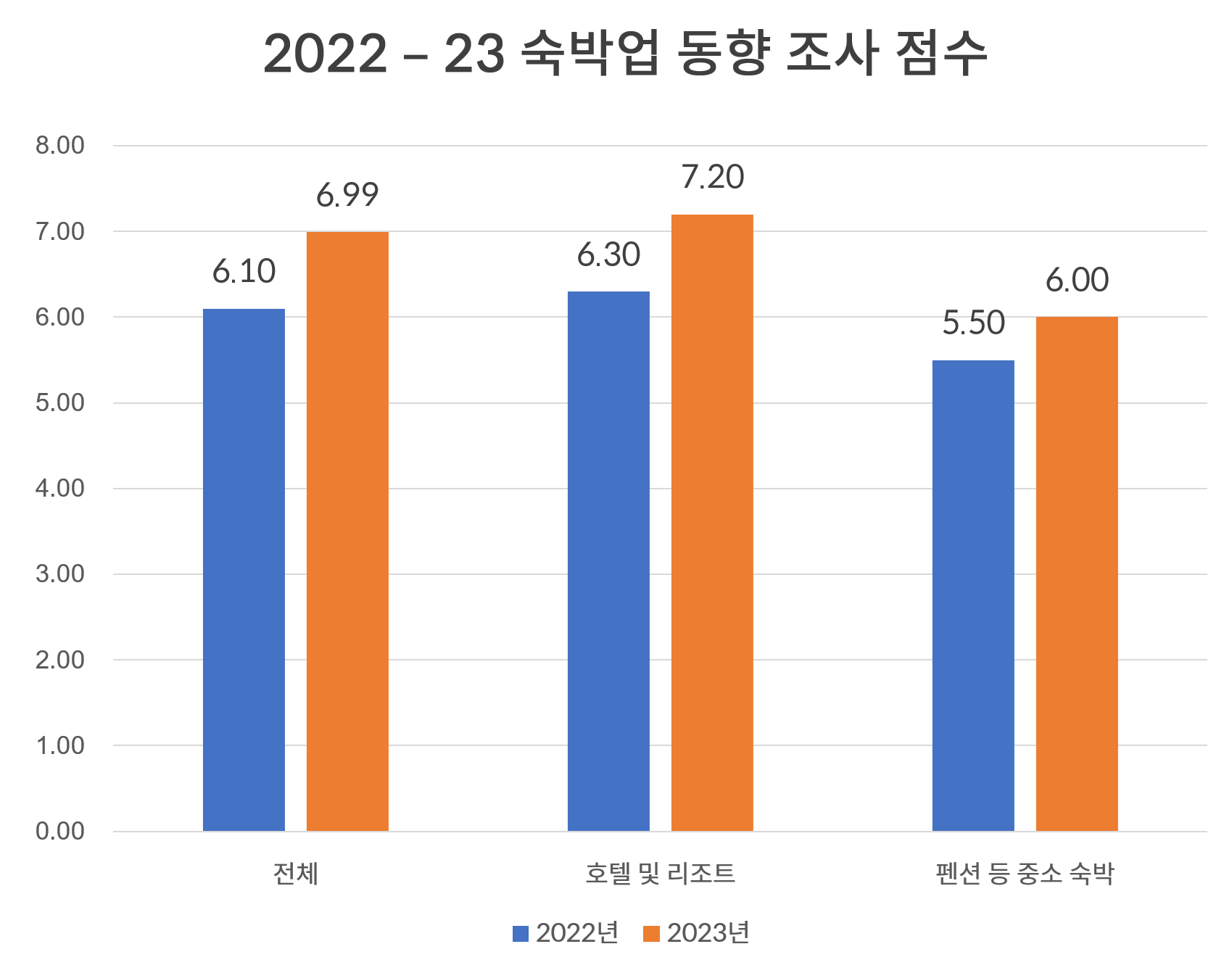
But there's a split. Hotels scored 7.2 out of 10. Pensions and smaller properties: 6.0. Hotels credit the endemic shift and surging interest in Korea (K-pop, K-drama). Foreign arrivals are up — and that matters.
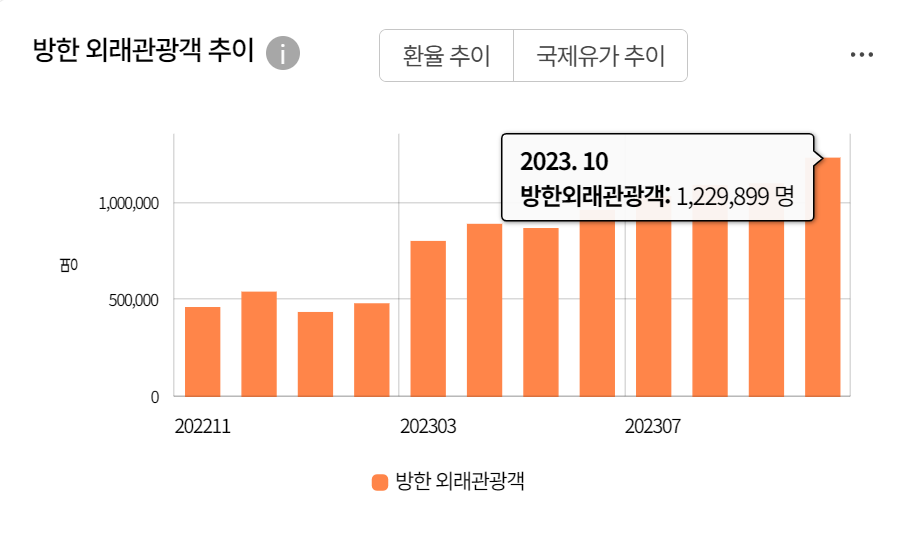
Korea Tourism Data Lab numbers back this up. In November 2022, Korea saw 400,000 foreign visitors. By October 2023? 1.23 million — a 3× jump. That's 73% of October 2019's 1.65 million.
Meanwhile, pension operators rated 2023 at 6.0 — nearly a full point lower than hotels. Why? Prolonged economic uncertainty. And demand still clusters around a few hot zones — leaving other regions stuck.
One worry spans the industry: Korean travelers are flooding overseas. Yonhap reports that 5.52 million Koreans visited Japan through October alone, driven by a historic weak yen.
Attracting foreign tourists is critical. But so is revitalizing domestic regional tourism — before more locals fly out instead.
This is a preview of the full 'Hospitality Industry Outlook Survey,' out in January. Note: we're still collecting additional responses from smaller operators, so final numbers may shift slightly.
See the full story:
👉 View the 2022-23 Industry Outlook Survey
💡 Hospitality trends
Shorter trips, closer destinations—
and pensions over hotels
Consumer Insight research shows Gangwon-do led domestic travel in October, capturing 20.9% of overnight visitors.
But here's the shift: Gangwon-do and Jeju both dropped 2% year-over-year. Gyeonggi-do gained 2%. More travelers are staying close to home.
The driver? Cost. Average per-person domestic travel spending fell 10%+ year-over-year — from ₩259,000 in October 2022 to ₩231,000 in 2023. And travelers are favoring quick 1–2 night trips over longer stays.
This shows up in accommodation choices too. Since March, hotel usage has been declining as travelers shift to lower-priced alternatives.
Price is the top factor in lodging decisions — expect more travelers to skip hotels and save on pensions and other properties.
See the full story:
👉 Read the full article
⌨️ Keyword news
1️⃣ Global tourism recovery 👉 [full story]
TL;DR: International tourism on track to hit 90% of pre-COVID levels by year-end 2023
The story: UNWTO data shows Q3 2023 international arrivals reached 87% of pre-pandemic levels. The year should close around 90%.
Asia? Still lagging at 62%. Northeast Asia hit only 50%, dragged down by slower-than-expected Chinese outbound recovery.
2️⃣ Senior residences 👉 [full story]
TL;DR: Major Korean retailers launch premium senior living ventures
The story: Lotte, Shinsegae, and other retail giants are entering the senior residence market — not as nursing facilities, but lifestyle brands targeting active seniors.
The silver economy? Korea becomes a super-aged society in 2025. The senior market, currently worth ₩100 trillion, is projected to hit ₩165 trillion by 2030.
3️⃣ Overseas travel trends 👉 [full story]
TL;DR: Korean travelers favor short trips (under 3 days) to nearby countries
The story: Search trends show a shift from 4–7 day trips (2022) to 1–3 day getaways (2023). Proximity and convenience win.
Hotels? 3-star hotels top searches, followed by 4-star and 5-star. Travelers want value-driven premium stays.
4️⃣ Hotel amenities 👉 [full story]
TL;DR: Single-use amenity ban reshapes hotel offerings
The story: Starting March 2024, Korean hotels can't offer single-use shampoo, conditioner, toothbrushes, toothpaste, or razors for free — even at the front desk. Major hotels are switching to refillable dispensers, eco-friendly products, or paid sales.
The regulation? Smaller properties are pushing for relief, citing cost and operational burdens.
5️⃣ Travel agency off-season 👉 [full story]
TL;DR: Korean travel agencies post strong results — even in off-season November
The story: Hanatour, Modetour, and others matched or exceeded summer peak volumes in November, traditionally an off-season month.
Destinations? Warm Southeast Asia led the way (54% for Modetour), followed by Japan (24%), China (8%), and South Pacific/Americas (7%). Winter means tropical demand.