How AI answer engines differ from traditional search
Hey there — ONDA here.
Today I want to talk about a search tool I've been using more than Google or Naver lately.
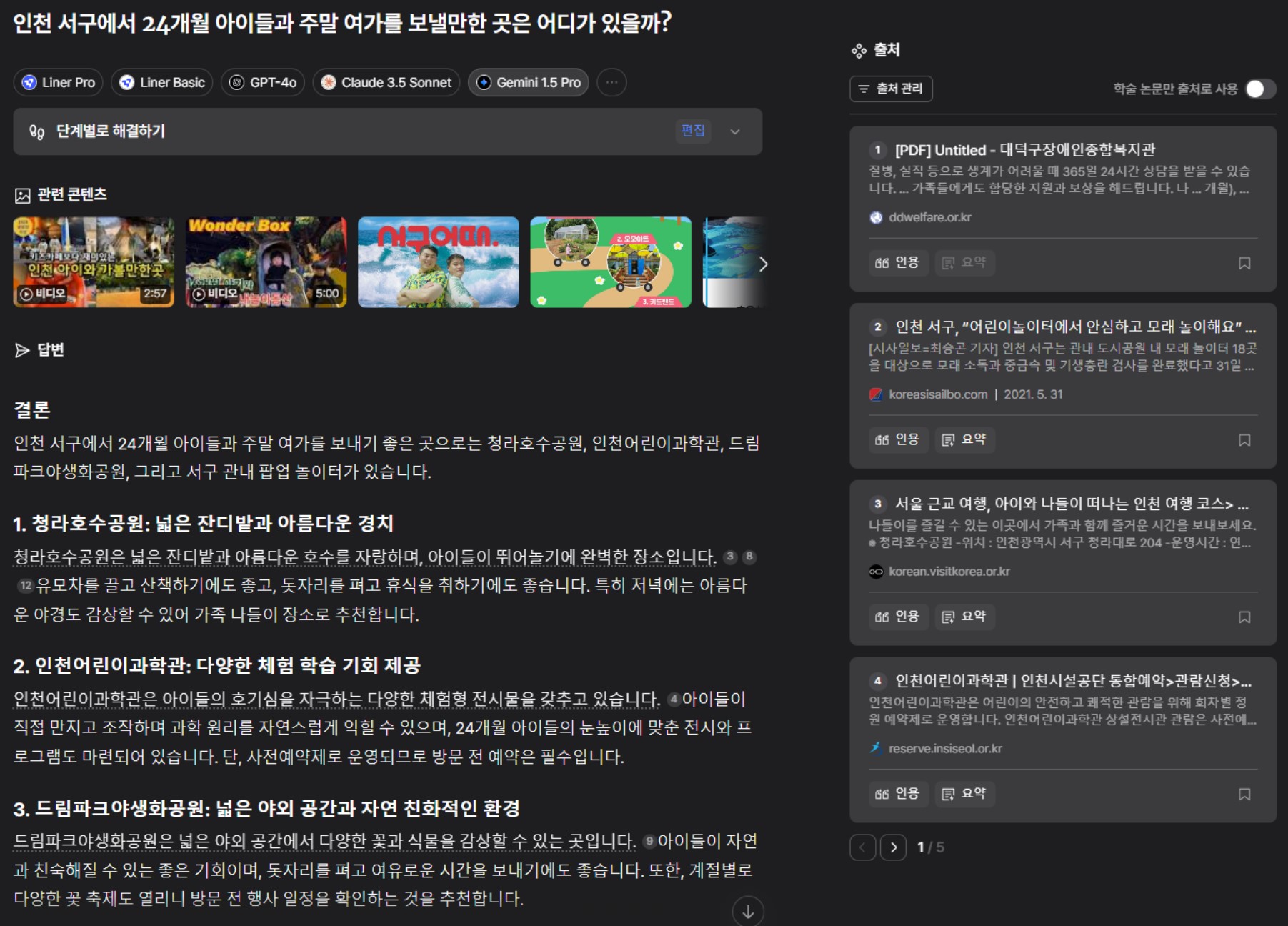
This screenshot shows what happened when I asked Liner — an AI-powered answer engine — "Where can I take a 24-month-old to play?" It wrote me an answer based on web sources and cited them.
In some domains, the results rival expert-level responses. Naturally, there's cautious speculation that this could disrupt the search market itself — the one Google and Naver have dominated for the past two decades.
How AI Answer Engines Differ from Traditional Search
I mainly use Liner and Perplexity. I started with Perplexity, but lately I've leaned toward Liner — it just feels more reliable to me. I ended up paying for Liner's premium tier.
These services don't just surface links. They answer your question directly by pulling information from the web and synthesizing it. You skip the tab-hopping ritual entirely.
Say a guest asks, "Recommend me a five-star hotel in Gangnam-gu, Seoul." An AI answer engine will scan booking sites, travel blogs, review platforms, aggregate the data, and hand you a shortlist — no additional clicks required.
Here's how traditional search stacks up against AI-powered answer engines:
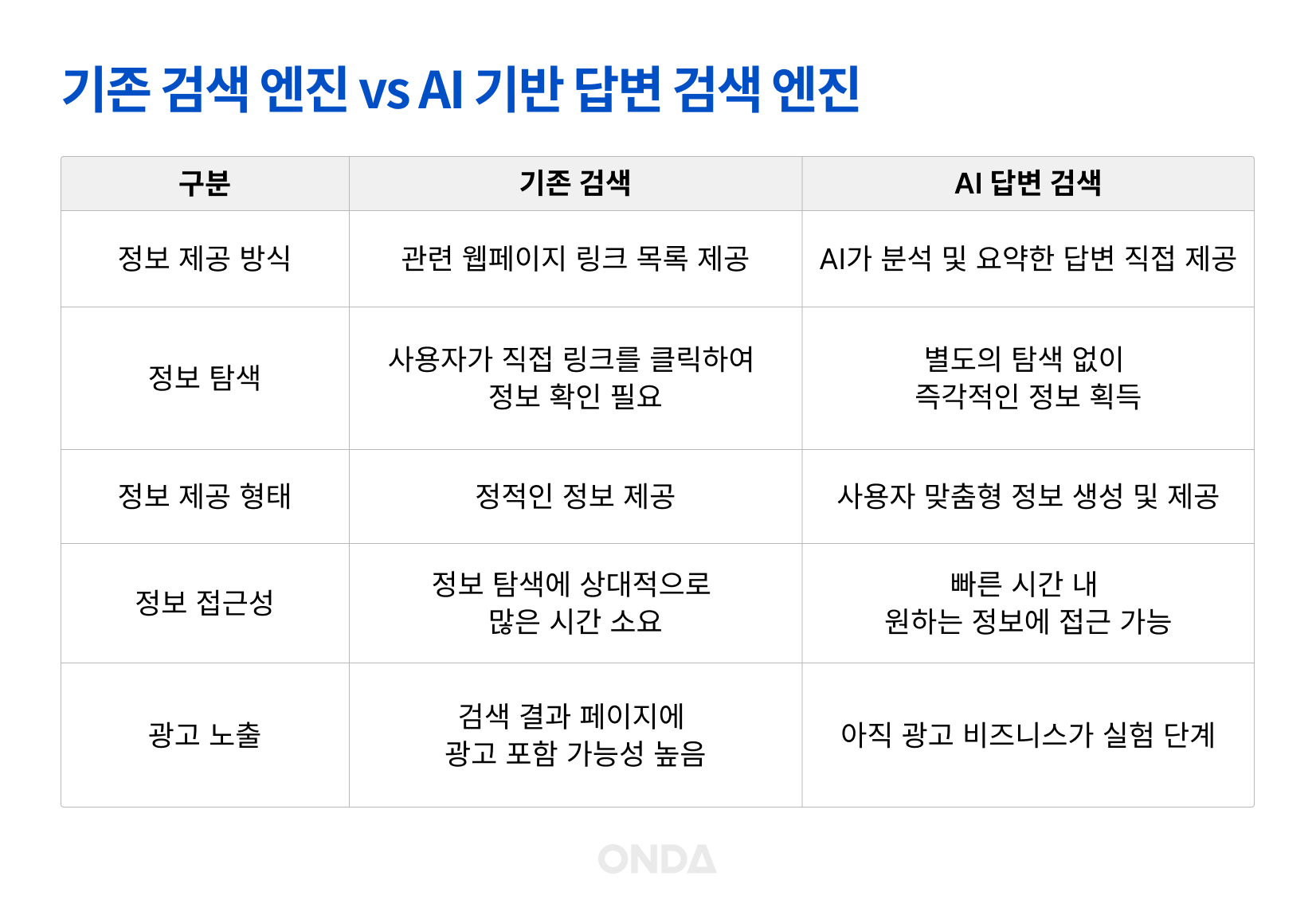
The core difference is how information is delivered. Classic search engines give you a ranked list of links based on relevance — you still have to click through and hunt.
AI answer engines use natural language processing and machine learning to understand your intent, analyze sources, and serve you a tailored response.
This dramatically cuts the time spent on search and writing.
AI Answer Engines Aren't Perfect Yet
Of course, they're not flawless — and it's unclear whether they'll achieve mainstream adoption. Here's why:
Limited scope: They don't yet match the sheer volume of information Google or Naver can surface.
Stale data: AI models aren't real-time. The latest info might lag.
Paywall: You need a paid subscription to unlock the full experience. That's a tough sell when free search engines own the market.
Over-reliance risk: If you lean on AI answers too heavily, you might lose the habit of critically evaluating information yourself.
I've laid out the basics of AI answer engines, but honestly — the best way to understand them is to try one. Both Liner and Perplexity offer limited free access to premium features.
I strongly recommend giving them a shot.