What ONDA data reveals about Korea's accommodation market from January to April 2024
Hi — ONDA here.
How did Korea's tourism and hospitality market perform in the first four months of 2024? Let's start with the big picture.
Below is visitor data from the Korea Tourism Data Lab. January through April saw a 3% year-over-year increase in domestic tourists. Given the sluggish economy, that's actually a decent showing. The government's Accommodation Sale Festa in February and March — which subsidized room rates — likely helped prop up those numbers.
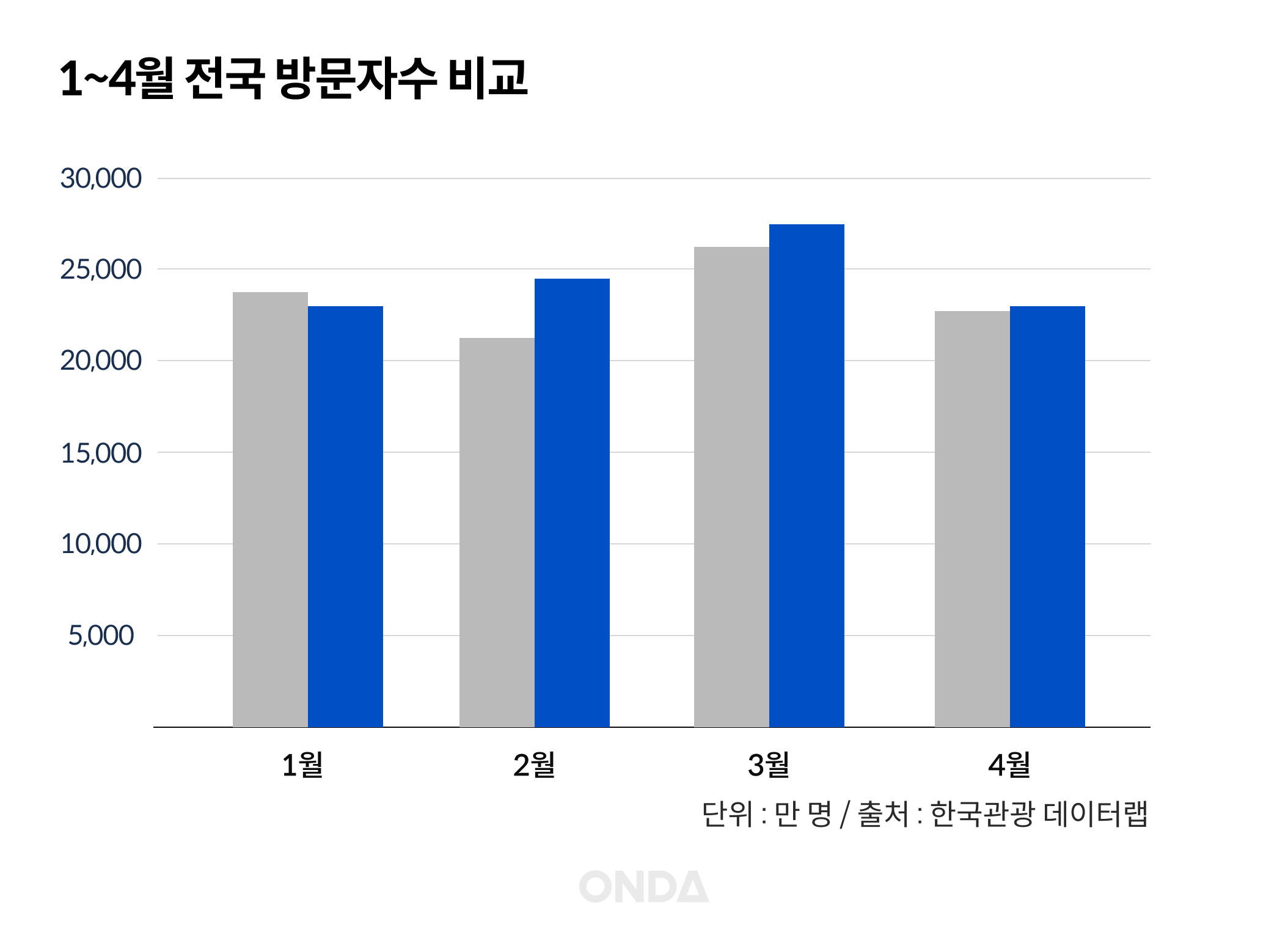
While overall tourist numbers ticked up slightly, Korea's three major tourism regions showed diverging trends. Gangwon-do dropped 6%, Jeju Island fell 1.5%, while Gyeonggi-do rose 3.9%.
Gangwon-do is still the country's most-visited destination. The fact that national numbers stayed positive despite its decline suggests tourism is decentralizing — other regions are picking up the slack.
Pool villas and hotels still riding high
Now let's break down performance by property type. One important note: while national tourist traffic grew around 3%, bookings and GMV through ONDA jumped over 30% year-over-year. That means more operators are choosing us as their distribution partner.
As a result, ONDA's data may not perfectly mirror national averages from the Korea Tourism Organization or other sources.
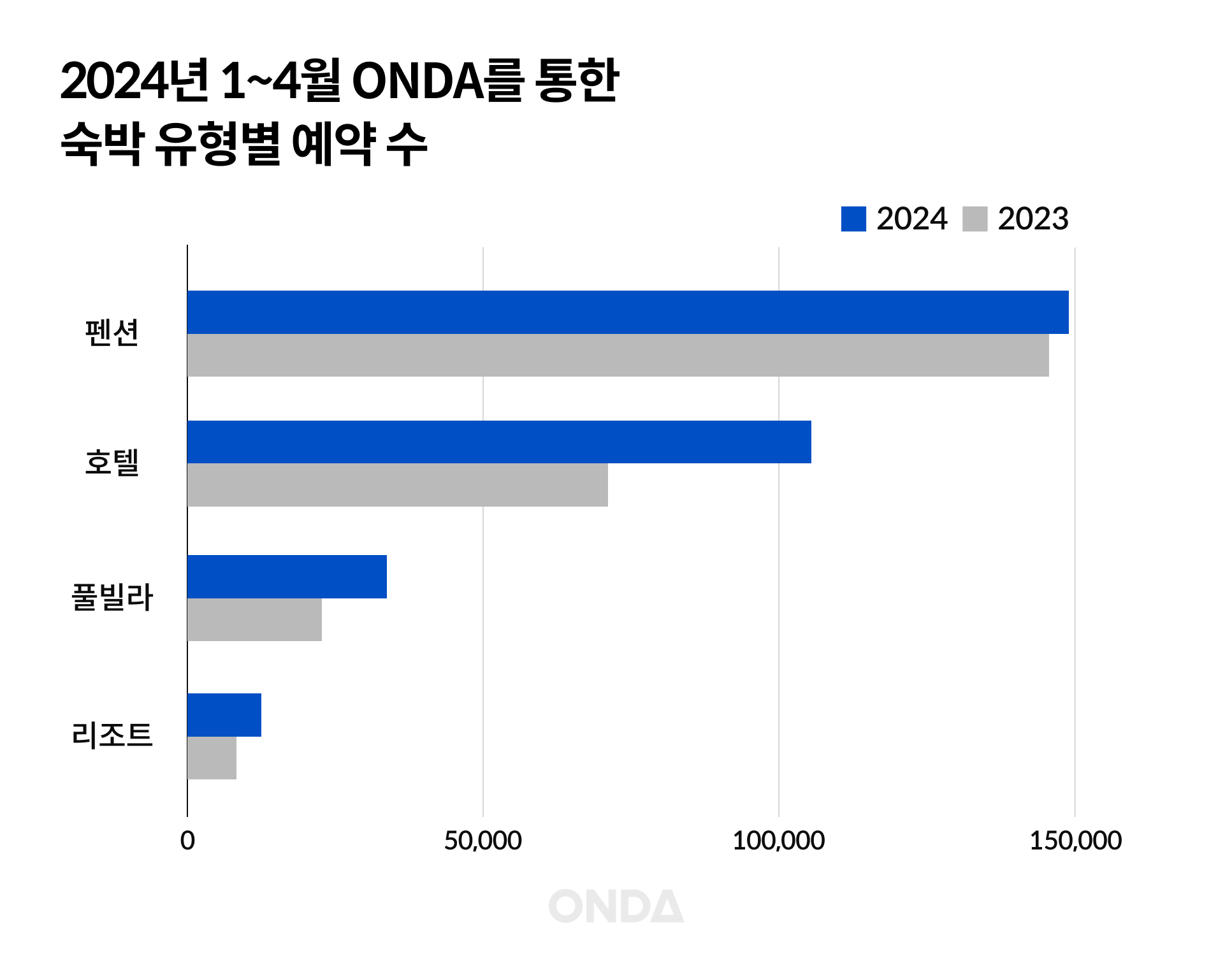
Pension bookings on ONDA grew modestly, while hotels, pool villas, and resorts saw strong, sustained growth. Part of that is supply — we've onboarded more hotels and pool villas. But it also reflects real demand shifts.
Post-COVID, "family trip = pool villa" has become the default in Korea. Hotels, meanwhile, are reaping the rewards of service upgrades and digital transformation they invested in during the pandemic just to survive.
OTAs — domestic and global — are booming. So is direct booking.
Finally, let's look at channel growth. These are growth rates, not absolute volumes, so think of them as a directional signal: "these channels are gaining traction."
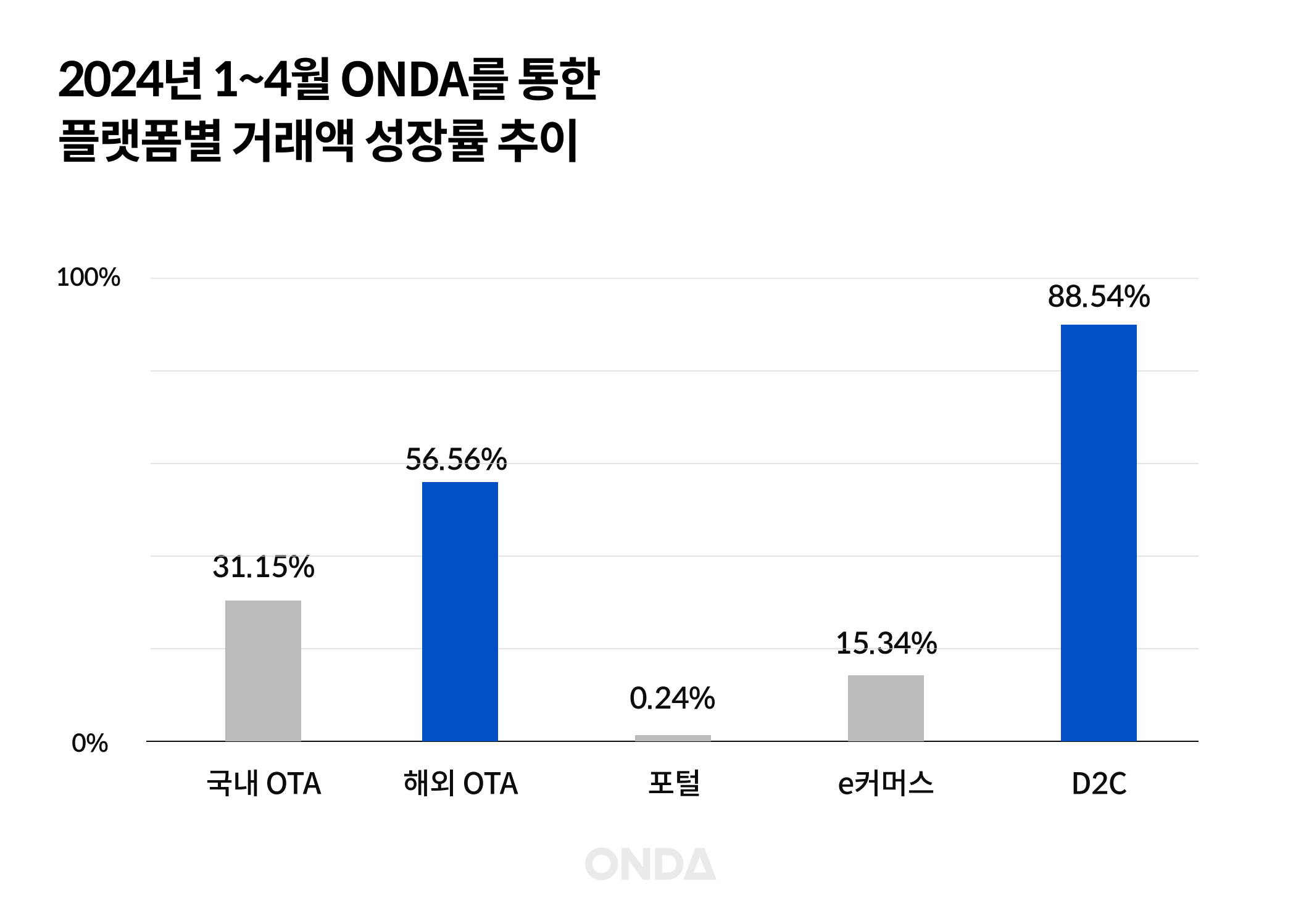
Two standouts: international OTAs continue their steady climb, and D2C (Direct to Customer) bookings surged.
Global OTAs are strong in hotels, so their growth tracks with the hotel category boom we covered earlier.
D2C on ONDA comes mainly from two channels: property websites and KakaoTalk direct booking. Last year, ONDA's hotel category and KakaoTalk integration created strong synergy — and the results show.
Why are channel growth rates so much higher than visitor growth? As we covered in [The global independent accommodation market enters a boom phase], inflation has pushed global independent property rates up ~20% since pre-COVID.
ONDA hotel ADR (average daily rate) in 2024 is up 27% versus 2022. Tourist volumes stayed flat, but premiumization and higher rates drove strong GMV growth across channels.