Most Korean guesthouses benchmark their neighbors when setting prices, but few can explain the logic behind peak vs. off-peak gaps or depreciation math. Minimal Sincerity breaks down the variables hosts actually need to price with intention.
essay
A question for anyone running a lodging business.
05. Is There a Reason Behind Your Room Rates?
Writer Minimal Sincerity hosts Ryu Ha-yoon & Choi Hyun-woo
Editor ONDA Manager Lee Chae-eun
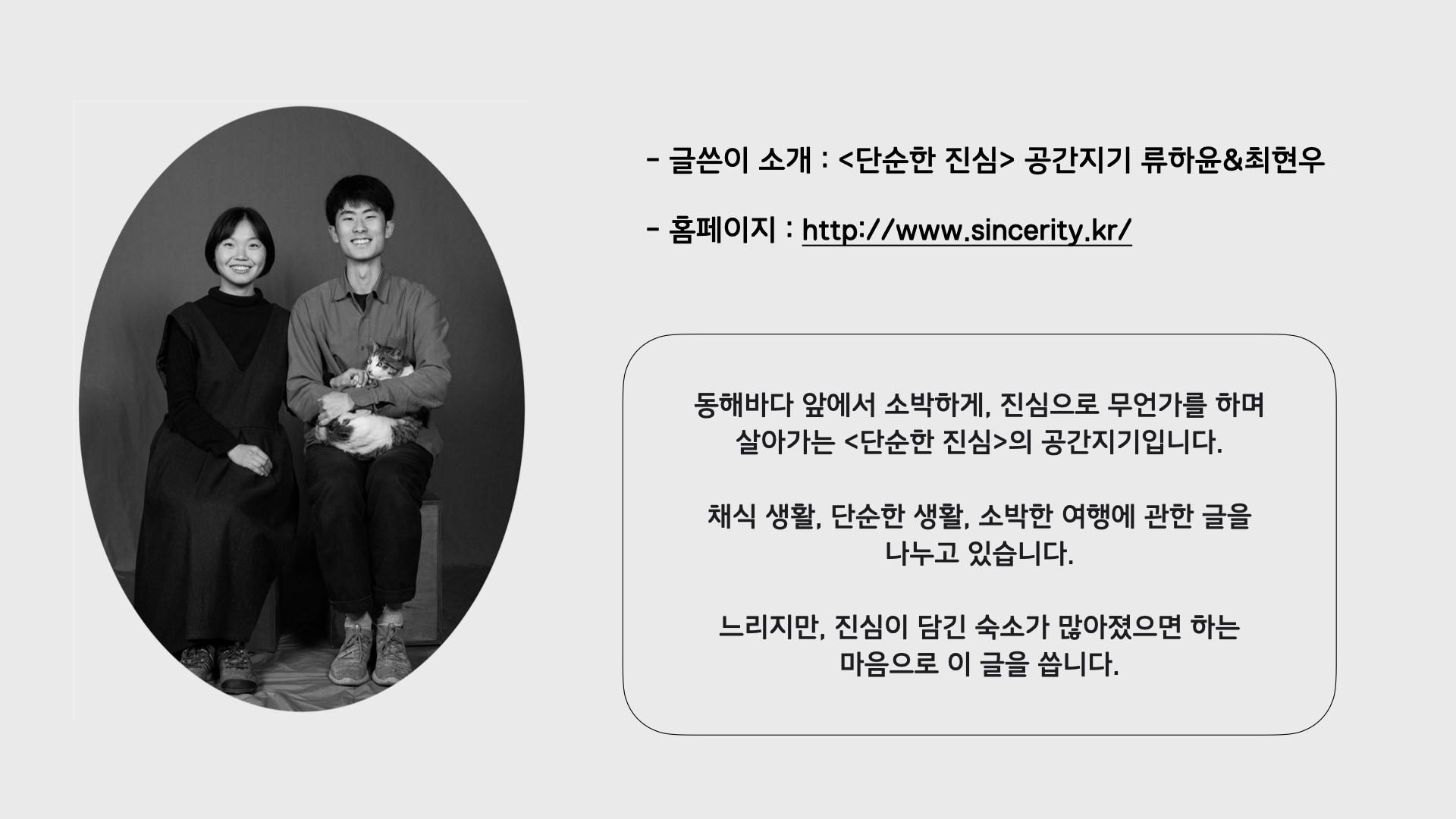
Hello, we're Minimal Sincerity.
Hi, we're Ha-yoon and Hyun-woo, hosts of Minimal Sincerity — a one-room guesthouse facing the East Sea. This is the piece we needed most two years ago. It's what we desperately searched for when we were starting out, so we wrote it hoping it might reach someone who needs it now — and help something grow. If you have questions, thoughts, or your own answers to the questions we raise, we'd love to hear from you at the link below.
Website: http://www.sincerity.kr/
On Setting Prices
One of the biggest challenges while preparing Minimal Sincerity was setting room rates. Pricing involves so many variables. You need to identify the labor you do for guests and assign it a value. For instance: cleaning the night before someone checks in, tidying the yard, swapping in sun-disinfected bedding, waking up early to prepare a warm breakfast, scrubbing the bathroom spotless.
Then there's depreciation. Mattresses, linens, furniture — nothing lasts forever. You have to factor in replacement cycles and subtract depreciation costs accordingly.
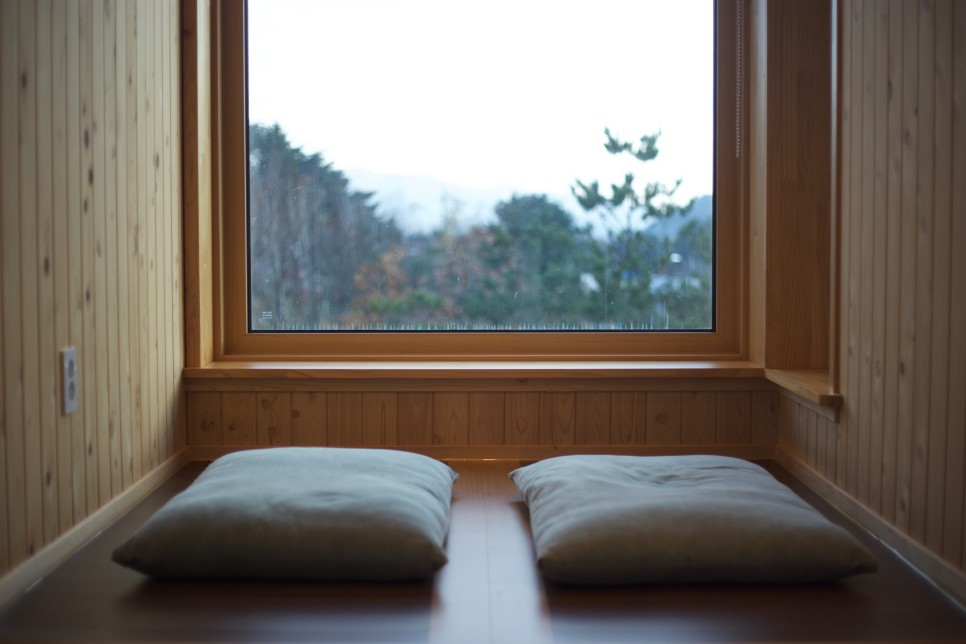
So we accounted for labor and depreciation — but mostly, we benchmarked similar properties. As we looked around, the part that puzzled us most was the gap between peak and off-peak rates, and between weekday and weekend rates.
We're not just hosts at Minimal Sincerity. We're travelers too. And from a traveler's perspective, you don't get better service or more space just because it's a weekend or high season. If anything, crowds during peak times can make the experience worse. Yet the norm is to charge more on weekends and in summer — sometimes double — even though the room and service are identical to the day before. We couldn't make sense of it.
"Does it really have to be this way?"
Supply and Demand
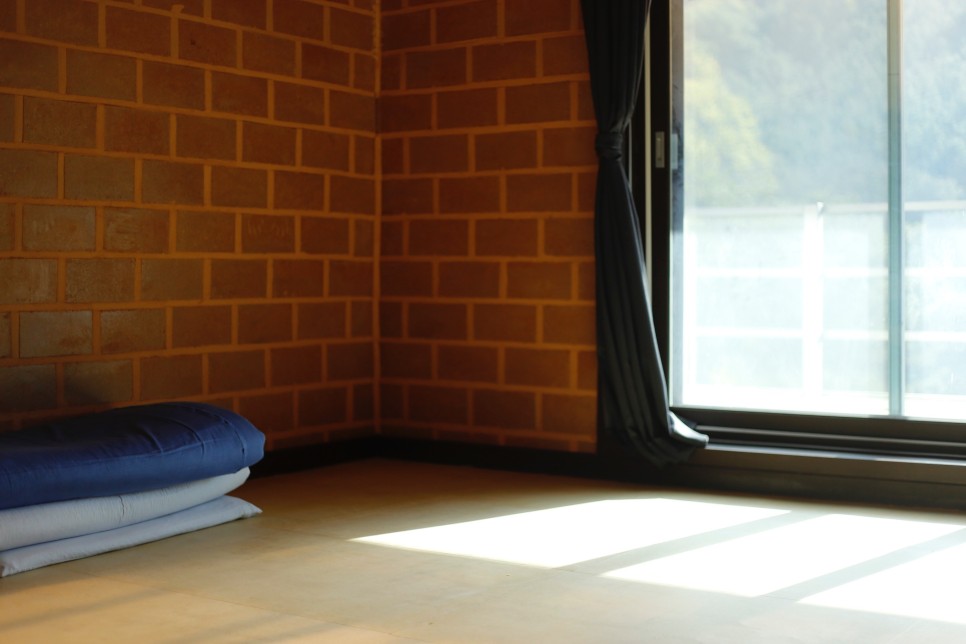
Of course, the reason is supply and demand. Most Korean office workers take vacation in July and August. During those months, Gangwon-do properties jack up rates. In Donghae City, where Minimal Sincerity is located, there's a "room rate linkage system" that recommends limiting peak rates to double the off-season price. If that's the recommendation, you can imagine how much higher rates actually climb.
Popular properties are limited. When everyone descends at once, rooms fill up even at inflated prices. If demand is guaranteed, why not charge as much as the market will bear?
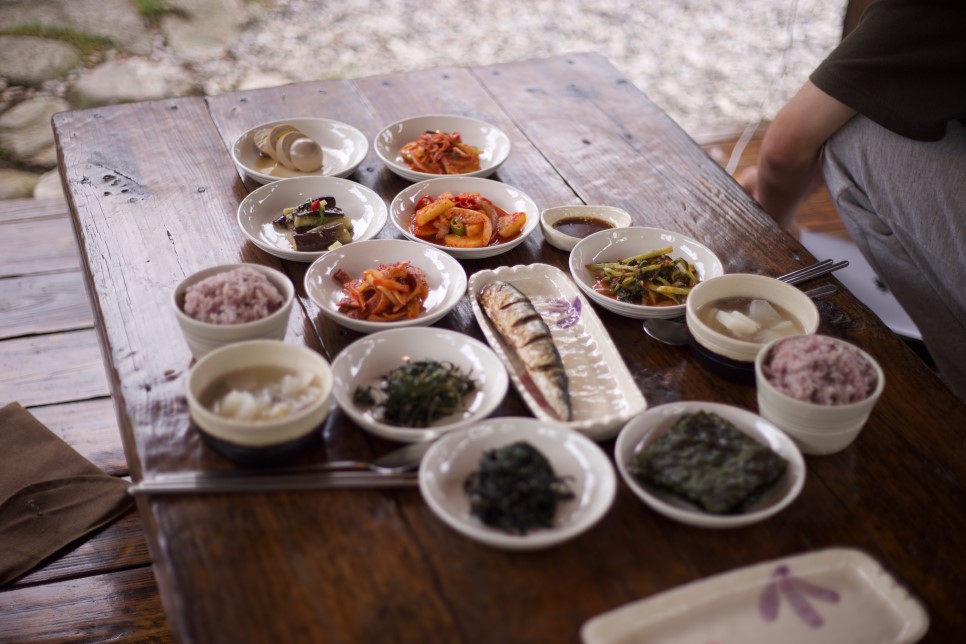
Off-peak and weekdays are the opposite: demand drops, so hosts slash prices to attract anyone. One key trait of lodging as a "product" — like airline seats — is that if you don't sell it today, its value goes to zero. That's why last-minute "fire sale" rooms pop up on Yanolja. For larger properties, selling even one more room matters for revenue. But when pricing becomes this elastic, guests start to question what they're really paying for.
Below is a September rate chart from a property. Same room, same service — but the nightly rate swings from ₩75,000 to ₩100,000.
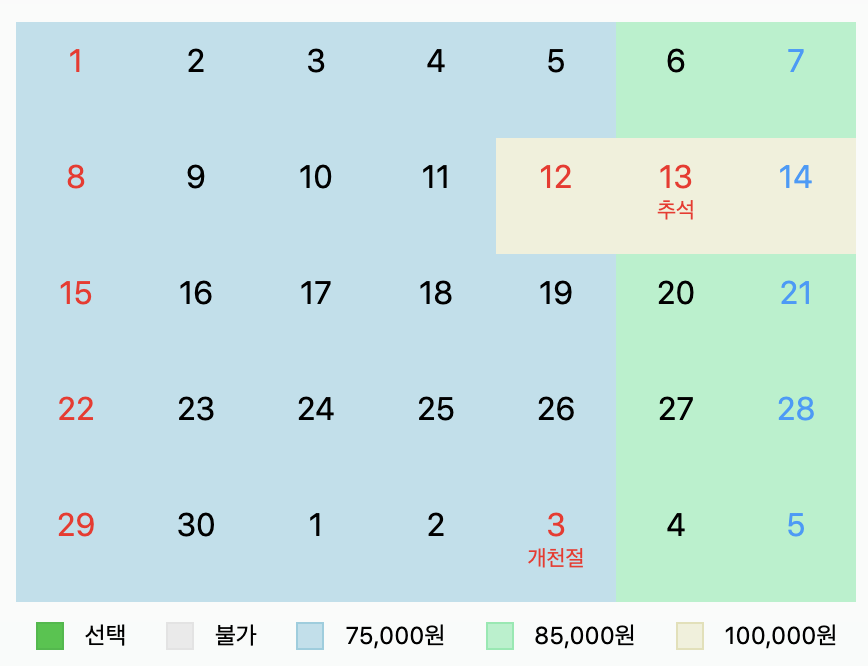
We found this kind of elastic pricing troubling — so at Minimal Sincerity, we charge the same rate regardless of weekday, weekend, off-peak, or peak season. The only exception: returning guests get a 20% discount as a thank-you. What if the price were simply the price, no matter when you visit? You might think, "That's more expensive than I expected" — but at least you wouldn't feel cheated.
Prices You Can't Trust
It's not just lodging. Lots of brands use discounting strategies. But here's an example: imagine a bag brand you love. The quality and design are great — but if they run sales too often, with steep discounts, your trust in the brand starts to erode.
From the business side, clearing unsold inventory keeps cash flowing — totally reasonable. But if you bought a bag for ₩100,000 and two days later it's ₩50,000, how would you feel? Would you ever pay full price again?
Most people think: "I'll just wait for the next sale. No way I'm paying full price." When price trust collapses, fewer and fewer people are willing to pay the stated rate.
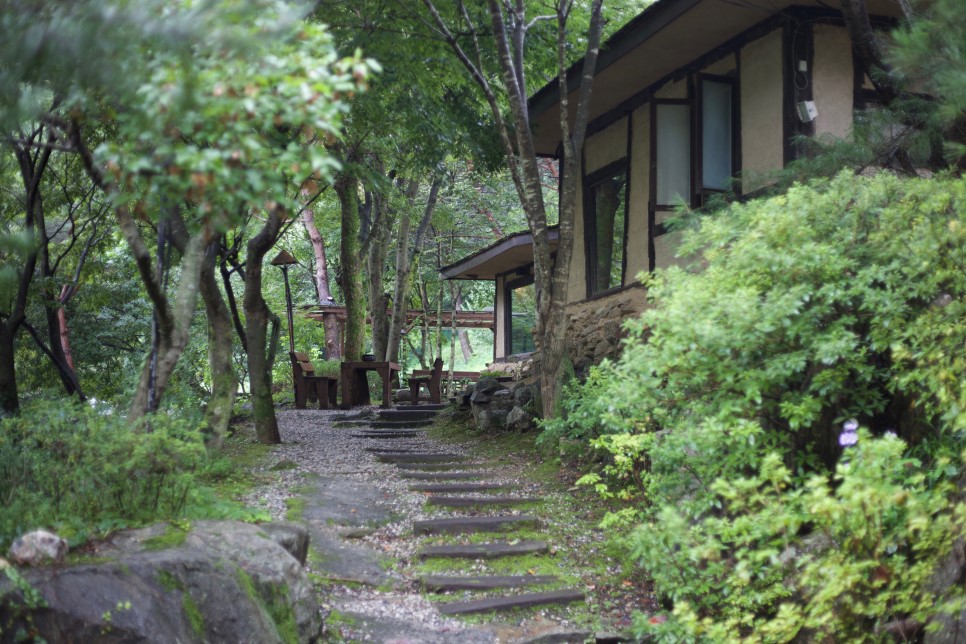
"How can we help guests have a great stay?"
The logic behind raising prices when demand spikes and lowering them when it dips is simple: maximize occupancy and profit. It answers the question: "How do we sell as many rooms as possible?" But we need to flip the starting question.
Not "How do we sell more rooms?" but "How do we help guests have a great stay?"
If guests have a great stay, they're likely to return. At minimum, they'll tell friends or leave reviews online — which leads to more bookings anyway. Instead of luring people with pricing games, building a base of returning guests matters more in the long run.
A few months ago, Minimal Sincerity switched from flat pricing (same rate every day) to a pay-what-you-want model. It's an experiment. The guideline has two parts: "What you can afford" and "What it was worth to you."
We made the switch because everyone earns differently, and everyone's satisfaction with Minimal Sincerity will differ. So we asked ourselves: Should we really charge everyone the same? Sure, some people might take advantage — but we believed most guests would respect the policy.
Closing Thoughts
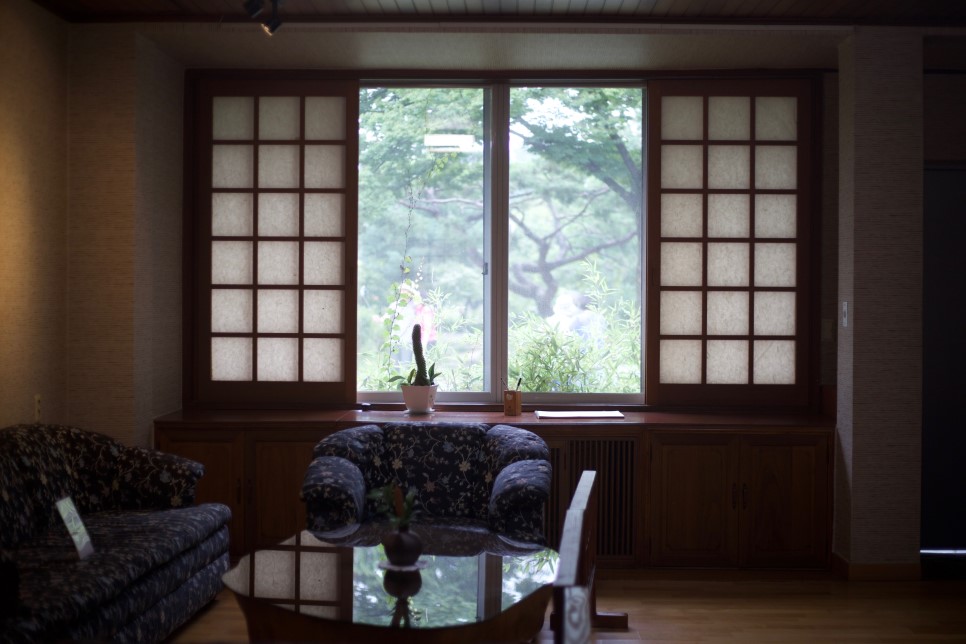
At Minimal Sincerity, we've tried guest-centric flat rates and pay-what-you-want. We're experimenting, trying to find what works best for us. Like everything else, there's no single right answer in hospitality. It's just the process of finding what fits your property.
"Are your rates trustworthy?"
"Is there a real reason behind your pricing?"
That wraps up Minimal Sincerity's fifth piece, "Is There a Reason Behind Your Room Rates?" Questions or thoughts? Leave them at the link below. Next time, we'll be back with question six: "How much rest do you need?"
[Series Index]
1. "Do you have a real reason to run a lodging business?"
2. "Can you imagine a space that makes you happy just thinking about it?"
3. "Who are you?"
4. "Can you define the fundamentals of hospitality?"
5. "Is there a reason behind your room rates?"
6. "How much rest do you need?"
7. "Do you know your limits?"
8. "What kind of interior are you envisioning?"
9. "What's the best way to handle reservations?"
10. "What did you think of the questions Minimal Sincerity asked?"