Two-player board games thrive on reading your opponent's mind. Ahger Games CEO unpacks deduction, bluffing, and psychological warfare—explaining which work best in hospitality settings.
03. Two Players: Psychological Warfare
Writer: Ahn Min-woo, CEO, Ahger Games
Editor: ONDA Manager So Mo-ra
Photo: Yuhwa Garang & Studio Sio

Hello, Magazine ON readers! Ahn Min-woo from Ahger Games here. Spring is finally here — the winter chill is melting away! At Ahger Games, we're deep into a project promoting D.Analog (our workspace-slash-board game café) and showcasing what we stand for. It's chaotic and exhausting, but writing this column? Still my favorite part.
So in that spirit, this edition is all about mind-game board games perfect for two people — ideal for hospitality spaces. And even if you don't stock them yourself, I highly recommend trying them at a nearby board café with a friend. 🙂
What Makes a Psychological Warfare Game?
Last time, we covered "abstract strategy" — a genre tailored for two players. But "psychological warfare" games are actually the most requested category we get, even more than abstract strategy. I'm not sure if it's the influence of Detective Conan, Sherlock, or board games like Clue, but tons of people ask for games where they can play mind games or do some detective work. Usually, "deduction" games satisfy that craving… except we've already stumbled into a terminology minefield.
Psychological warfare – Deduction – Mystery — these three terms overlap and each one is pretty broad. So to keep us sane (and to explain things clearly), I've drawn some personal boundaries. Bear with me as I untangle the jargon — it's for your mental health and mine. 🙂
01.
First, "psychological warfare" is the broadest term. It refers to the intense mental chess match happening in your head before you make your move. It's not unique to board games — any competitive game (or sport, or life itself) involves psychological warfare. It's just fundamental human competition. But in this essay, I'm treating it as a genre — games where the mental game carries serious weight.
In psychological warfare games, the better you know your opponent, the better your strategy. And if you can figure out how your opponent thinks you think, you're golden. Each turn reveals new information, new choices — and your job is to read their reactions, sniff out their hidden cards, and reverse-engineer their plan. That's the fun (and the tip).
02.
"Mystery" in the dictionary sense means reasoning from the known to the unknown — it includes both deductive and inductive thinking. But when we talk about mystery as a genre, we mean something more specific: finding clues and tricks within a story, spotting contradictions, and proving the truth. Mystery games are story-driven, so they're inherently legacy games (once you've solved the case, you can't replay it). A good example is the recently localized Watson & Holmes.
03.
"Deduction," which the dictionary treats as a synonym for mystery, is about using logic (deductive and inductive reasoning) to infer information. Every game uses deduction to some extent, but in games that belong to the deduction genre, the deduction itself is the win condition (Clue, P.I., etc.).
Many games blend all three elements, but whichever one dominates determines the genre. This is obviously subjective. So when I recommend a game to guests, I don't ask what genre they want — I ask what games they've enjoyed before. Then I map that to my framework and suggest something that fits.
If they haven't played much, I usually recommend a deduction game (outside of two-player games) — deduction games tend to be broadly appealing. But they're not great for two players. Deduction games shine with more people, because the information gets distributed and each player's strategy adds texture.
That's why today's two-player recommendations focus on psychological warfare, not deduction. Yes, these games work better when you know your opponent — but if two people are visiting a place together, they probably already get along, right? 🙂
1. Da Vinci Code The Game
01_Game Overview
Da Vinci Code is a game where you draw numbered tiles, and you have to guess your opponent's numbers without seeing them. Most people classify it as a "deduction" game — after all, all you do on your turn is deduce. But I'm putting it first in the psychological warfare lineup. The rules are simple, you grasp the game fast, and counting the remaining possibilities isn't hard. Once that happens, the psychological warfare element becomes just as important as deduction. And with only two players, the mind games intensify even more.
Player feedback confirms this — people perceive Da Vinci Code as psychological warfare, especially experienced gamers. For guests, it's a great appetizer game to ease into. For me, it's a chance to teach the basics of deduction. Plus, it plays 2–4, so I can confidently recommend it as a solid leadoff game.
02_Da Vinci Code Rules
Da Vinci Code consists of 13 white tiles and 13 black tiles. Each color has numbers 0–11 plus one joker (marked with a dash, "-"). To start, flip all 26 tiles facedown and shuffle. Each player draws 4 tiles (in a 2-player game; 3 tiles if playing with 3–4 people). Stand your tiles in a row in front of you, hidden from opponents, sorted smallest to largest. If you draw a black and white tile with the same number, black counts as smaller. The joker can go anywhere.
On your turn, draw a tile from the center and stand it (visible only to you) in front of you. Technically you should immediately sort it into your row, but I recommend keeping it slightly forward — you might forget what you just drew. Then, you must try to guess at least one of your opponent's tile numbers.
If you guess correctly, that tile gets laid flat (faceup). You can then either integrate your newly drawn tile into your row, or take another guess at your opponent's tiles. If you guess wrong, you must lay your newly drawn tile faceup — revealing not just the number, but its position in your row. That's a lot more information leaking out.
As tiles get revealed, what starts as guesswork becomes real deduction. Eventually, someone guesses all their opponent's tiles and wins. Or if all your tiles get knocked down first, you lose.
03_Strategy
The core strategy in Da Vinci Code is understanding deduction. Use what you know about the full set of tiles to make logical inferences. You can never have the tiles your opponent has. And you know your opponent's tiles are sorted by size, so use that.
Oh, and use your joker wisely. It's incredibly strong — you can place it anywhere, and if your opponent wants to guess it, they have to say "joker" (not a number). Even if it gets revealed mid-game because you guessed wrong, it doesn't give away positional info about your number tiles. Zero downside.
04_Visuals
Simple game, simple visuals — monochrome black and white. I wish the pieces were wood instead of plastic, but the material doesn't look cheap, so I'm satisfied. Personally, I think the German edition has the prettiest font.
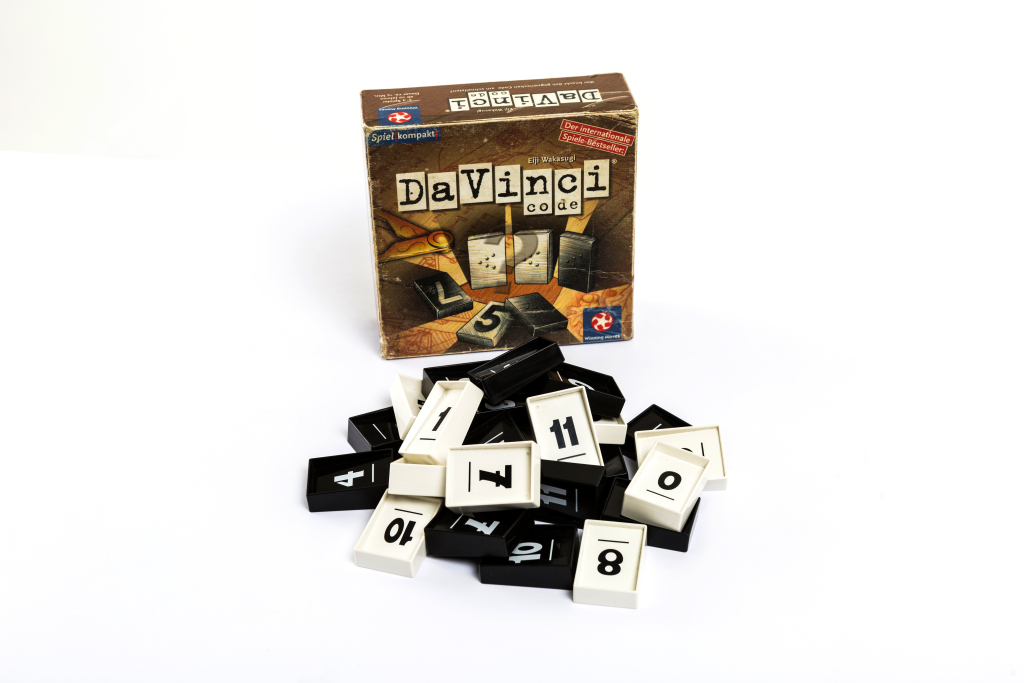
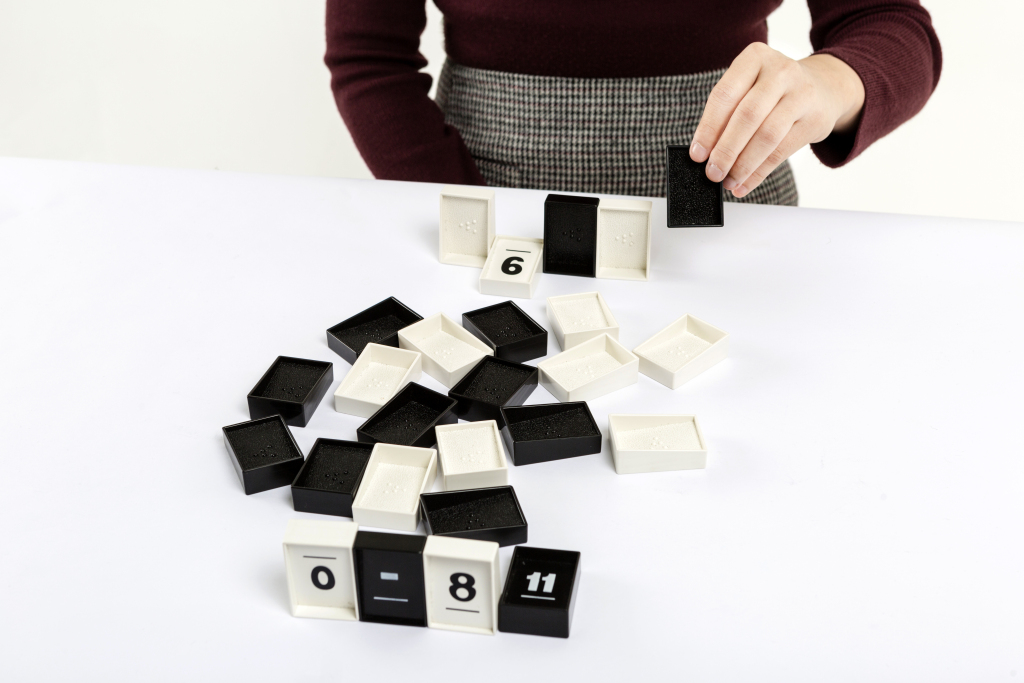
A great appetizer game — 'Da Vinci Code The Game'
2. Good & Bad Ghosts (Geister)
01_Game Overview
Also called "Geister" in German, Good & Bad Ghosts is a two-player psychological warfare game. If you enjoyed the mind games in Da Vinci Code, this is a good next step. But unlike Da Vinci Code (where luck can help by drawing tiles that leak less info), Good & Bad Ghosts plays more like chess — pure abstract strategy. Luck plays almost no role. The psychological warfare runs deeper.
02_Good & Bad Ghosts Rules
The game has two types of ghost pieces: good ghosts (blue) and bad ghosts (red), 8 of each. Each player starts with 4 good ghosts and 4 bad ghosts. You arrange your ghosts on your side of the board with the colored markers facing you — so your opponent can't see which is which.
On your turn, move one ghost one space horizontally or vertically (no diagonals). You can't move onto a space with your own ghost, but if there's an opponent's ghost, you capture it. Captured ghosts get pulled to your side, so you finally see their color.
The basic win conditions are simple: get any one of your good ghosts to the opposite corner (your opponent's exit spaces), or capture all of your opponent's good ghosts. If you capture all their good ghosts, they can't win by exiting one.
So what are the red ghosts for? That's where the mind games kick in. If your opponent captures all your red ghosts, you win. So you can deliberately bait your opponent into capturing your red ghosts — and if they take the bait and capture all four, you win the game.
03_Strategy
This twist makes Good & Bad Ghosts deliciously devious. You have to deploy all the psychological tactics from the intro: read your opponent's moves, their words, their facial expressions. Every time you make a choice — capturing, moving — watch how they react. Try to decode their strategy. Aside from reading your opponent and maintaining a poker face, nothing else matters. That's why at my board café, Good & Bad Ghosts sees the highest rate of rematches and betting. One side always demands "one more round!"
04_Visuals
Despite the intense psychological warfare, the ghosts themselves are adorable. The colored pin stuck in each ghost's belly is oddly tempting to pull out. I always want to wear the ghost like a finger puppet, but the pin blocks the hole, so your finger won't fit. The cute visuals and simple rules make it popular with kids, but I'd recommend it to adults even more.
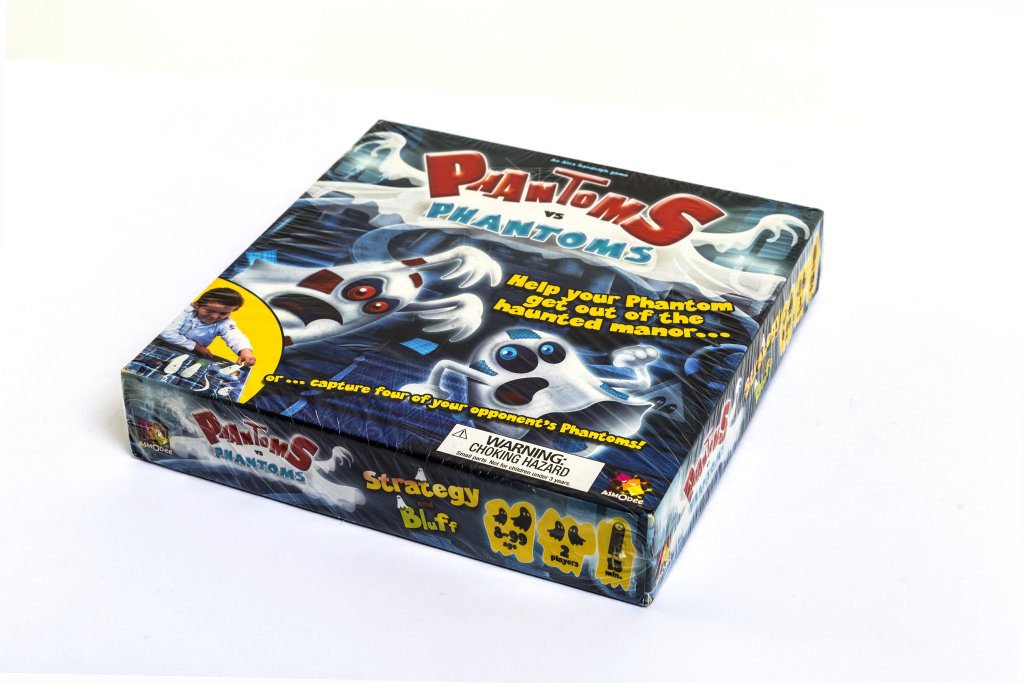
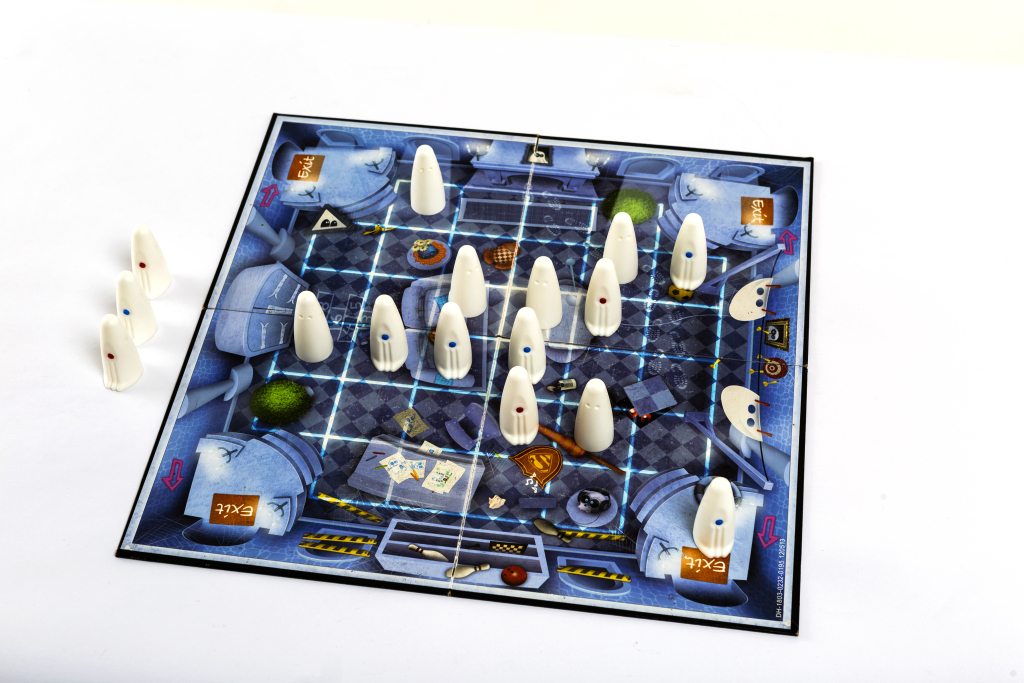
Psychological warfare over luck — 'Good & Bad Ghosts (Geister)'
3. Do Eat
01_Game Overview
Do Eat is a Korean-made psychological warfare game — collaboration between a local game designer and illustrator. It promises "learn in 5 minutes, play in 10," and it delivers: a quick, simple two-player game. The version I own is the indie edition made by the designers themselves, but it's since been published by Board M (a major Korean publisher), so it's easy to find. For brevity, I'll refer to it as "Do Eat" (no space) from here on.
02_Do Eat Rules (Official Published Version)
Do Eat includes 10 game cards (featuring a raccoon and a fox), 1 First Player card, 3 food tokens, and 5 round tokens. Pick your character (fox or raccoon), take all 5 matching cards, and you're ready. Determine the first player, then start the round. You must use all five cards in a single round.
Each card has one of four abilities: take a food token from the table, steal a food token from your opponent, return your opponent's food token to the table, or cancel your opponent's card effect. If both players play the same ability, the first player's ability resolves first — so you might not get to use your card at all. Whoever collects the most food tokens wins. The First Player card passes to the other player after each ability resolves.
Sounds simple, right? But here's the twist: you play in three sequences (acts). You must distribute your 5 cards as 1 card, 2 cards, 2 cards across the three sequences. So you need to watch which cards your opponent plays first, then adjust your next move. And remember: the first player switches between sequences, so timing matters. If you need your ability to resolve first, you'd better be the first player when you play that card.
If no one wins after all 5 cards are played, the round ends. Mark the round with a round token. After five rounds, whoever has more food tokens wins. But if you ever collect all 3 food tokens during the game, you win immediately.
03_Strategy
The rules feel simple at first, but compared to the first two games, it takes a bit longer to internalize and execute. Both players have the same information, but when you play each card turns the game into high-stakes chicken.
Deduction and psychological warfare are essential. To keep the game from dragging, you're limited to 5 cards and 4 abilities, so the pace stays brisk. After one playthrough, you'll realize games that pack this much psychological depth into such a short timeframe are rare. If you enjoyed Do Eat, I'd recommend stepping up to Hanamikoji — it's a deeper psychological warfare game in the same vein.
04_Visuals
Your protagonists are a fox and a raccoon! The illustrations are charming, the components are delightful — everything fits together beautifully. This is indie game design at its best: pure focus on craft and artistry.
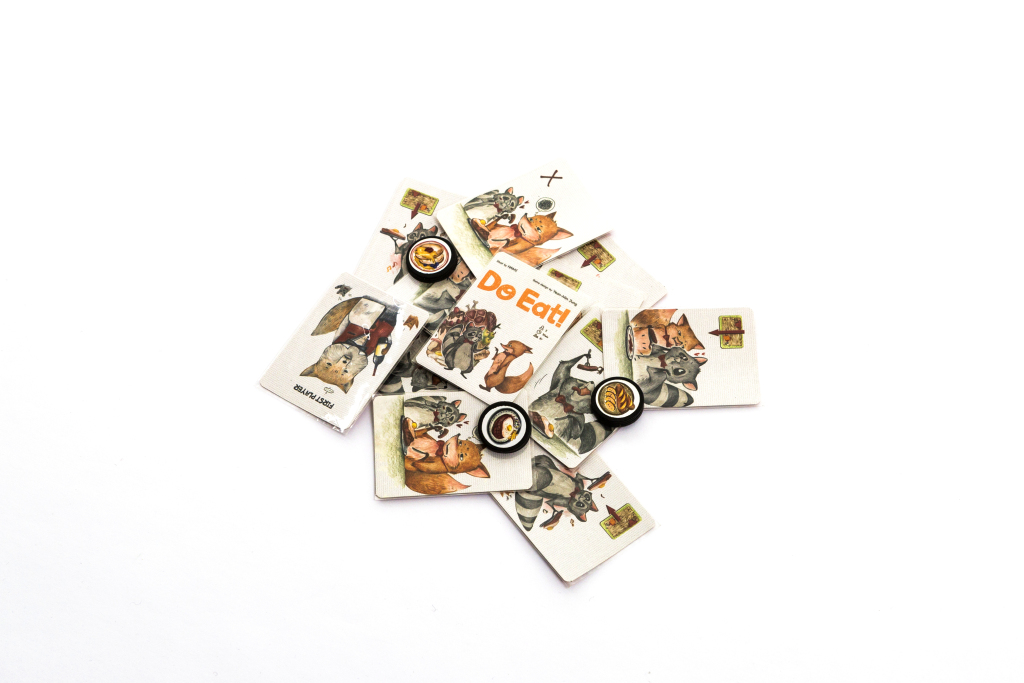
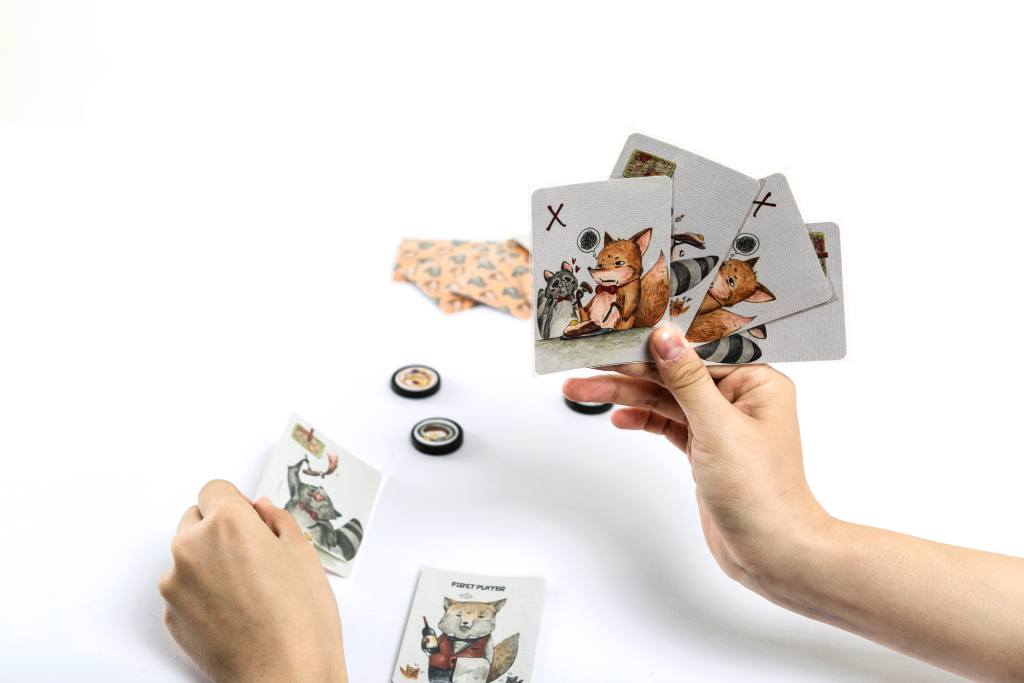
A Korean collaboration between game designer and illustrator — 'Do Eat'
Fine.
Da Vinci Code, Good & Bad Ghosts, Do Eat — today's lineup is my top-tested two-player psychological warfare curriculum, refined over 5 years and thousands of guests. For detailed rules, I recommend checking each publisher's official rulebook on their website or community hubs (Boardlife, BoardGameGeek).
Next time, we'll wrap up the two-player series with card games focused on strategy and resource management. Thanks for reading!
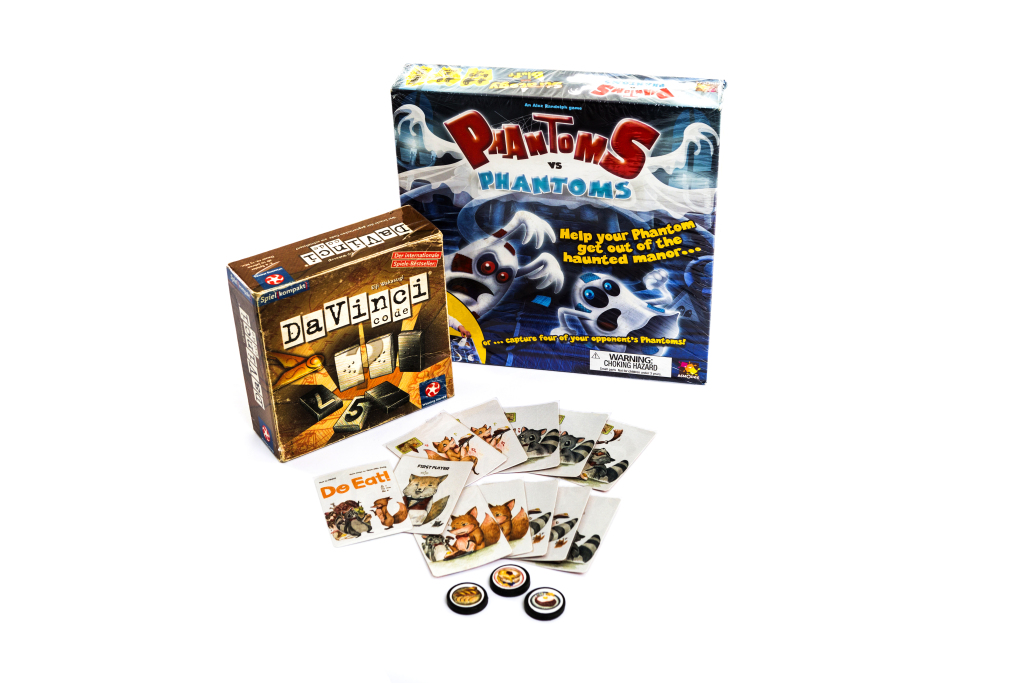
Grateful to photographer Yuhwa Garang for these beautiful shots @siostudio, http://studiosio.co.kr
[Series Index]
2019.01 Introduction 紹介 2019.02 Two Players: Abstract Strategy 2019.03 Two Players: Psychological Warfare 2019.04 Two Players: Cards 2019.05 Special Edition: Big Games 2019.06 Three to Four Players: Placement 2019.07 Three to Four Players: Deduction 2019.08 Three to Four Players: Cards 2019.09 Many Players: Bluffing 2019.10 Many Players: Negotiation 2019.11 Many Players: Mafia 2019.12 Reflections 所懷
View full magazine >>
⚠️ All rights reserved. Cite this piece as 'ONDA (온다)' when quoting.