Card games compress complex strategy into hand management—and these three two-player designs (Lost Cities, Battle Line, Schotten Totten) prove density equals depth. Tight decisions, rich theming, elegant tug-of-war mechanics.
04. Two Players: Cards
Writer: Ahn Min-woo, CEO, Arguer Games
Editor: Somora, ONDA Manager
Photo: Yuhwa Garang & Studio Sio


Hello, I'm Ahn Min-woo, CEO of Arguer Games. How was March for you? Now that the spring semester's kicked off, my space has quieted down a bit—which gave me time to dig into some research. Based on that work, I've arrived at the final installment of our two-player board game series: Cards. We've moved through abstract strategy and psychological games in order of accessibility, and now we're at card games. This time, I'll cover two-player card games where both players compete across a central line using hands of cards.
What Makes Card Games Unique
Let me narrow down the scope of "cards" for this piece. Among two-player games where you hold cards in your hand, I'll introduce three that involve a tug-of-war across a middle line. Content-wise, these are strategy games. And because card games demand smart hand management to score points, they're denser than anything we've covered so far. You've got more rules to absorb. But that density translates directly into richer decision-making—more levers to pull on your way to victory. Which makes them more fun. Let's jump in.
1. Lost Cities
01 — Game Overview
I want to lead with Lost Cities because it teaches the fundamentals of strategy games better than anything else in today's lineup. The theme and mechanics harmonize beautifully, making it easy to teach and easy to grasp. Strong theming doubles immersion—and doubles fun—so I lean toward games with standout flavor. Lost Cities nails it.
In Lost Cities, you're an expedition team racing to ancient ruins—Pompeii, the Amazon, the Himalayas, Atlantis, Egypt—to collect as many artifacts as you can. Components are simple: an ancient map board, five sets of expedition cards (numbered 2–10) matching the five sites, and three "handshake" (investment) cards per color.
02 — Rules
Lost Cities has the simplest rules of the three I'm covering today. Shuffle the deck, deal eight cards to each player, and form a draw pile with the rest. On your turn, you must play one card from your hand—either onto your side of one of the five expedition tracks (matching its color) or discard it to the center. Then you draw one card, either from the deck or from the top of any center discard pile. In short: always keep exactly eight cards in hand.
Now, three thematic twists make it interesting:
First: Cards must be played in a specific order. Handshake cards (the investment multipliers) must come before numbered cards, and numbered cards must ascend. You're on an expedition—you can't backtrack. This means you'll sometimes have to discard playable cards because the timing isn't right. To rack up big points, you need to wait for the right cards to arrive, then stack them deliberately.
Second: Opening any expedition track costs you –20 points right off the bat. You can't dig barehanded—think of it as upfront investment. This makes selective play critical. You don't need all five tracks. Go deep on the ones that'll pay off.
Third: Handshake cards amplify that calculation. If you play handshake cards first (per rule one), then start laying down numbered cards, your final score on that track gets multiplied. Zero handshakes = ×1, one handshake = ×2, two = ×3, three = ×4. High-risk, high-reward. If you profit, you profit big. If you miscalculate, you lose big. (Example: If you play 2, 5, 8, 9 on a track, that's 2+5+8+9–20 = 4 points. With handshakes, that becomes 4, 8, 12, or 16 points. But if your sum is negative, the multiplier works against you.)
Also: play 8+ cards on a single track and score a +20 bonus.
Once someone draws the last card from the deck, the game ends immediately. You don't play your remaining eight cards—they're discarded. Add up each player's track scores. Highest total wins.
03 — Strategy
I put this game at the front of the two-player card strategy canon because it teaches focus, selective investment, and risk management with zero fluff. Board games have a real barrier to entry, and overcoming that barrier through fun requires the right gateway game. After five years running a board game café, I've never found a better intro to strategy than Lost Cities. It's textbook high-risk, high-return design, laid bare in the core rules. That transparency makes it addictive. If you take on more risk and play well, you reap big rewards—so you keep pushing. It's fundamentals at their best. You assess your opening hand, watch your opponent's moves, decide which tracks to pursue and which to abandon. If prospects look good, it's worth waiting for handshake cards to maximize return—but you only have eight cards in hand, so don't wait so long you miss other opportunities.
04 — Visuals
The standout visual feature: the oversized cards whose illustrations connect in ascending order. The art brings the theme to life. The board's gorgeous. There's almost no text on components. When you set it up, it evokes Indiana Jones. Perfect.
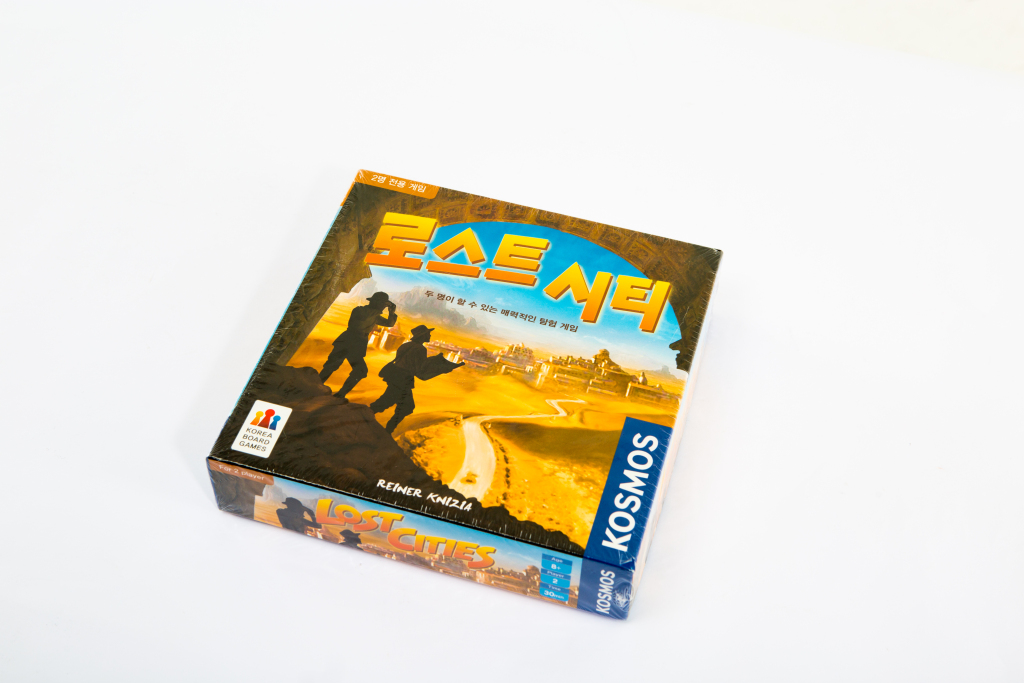
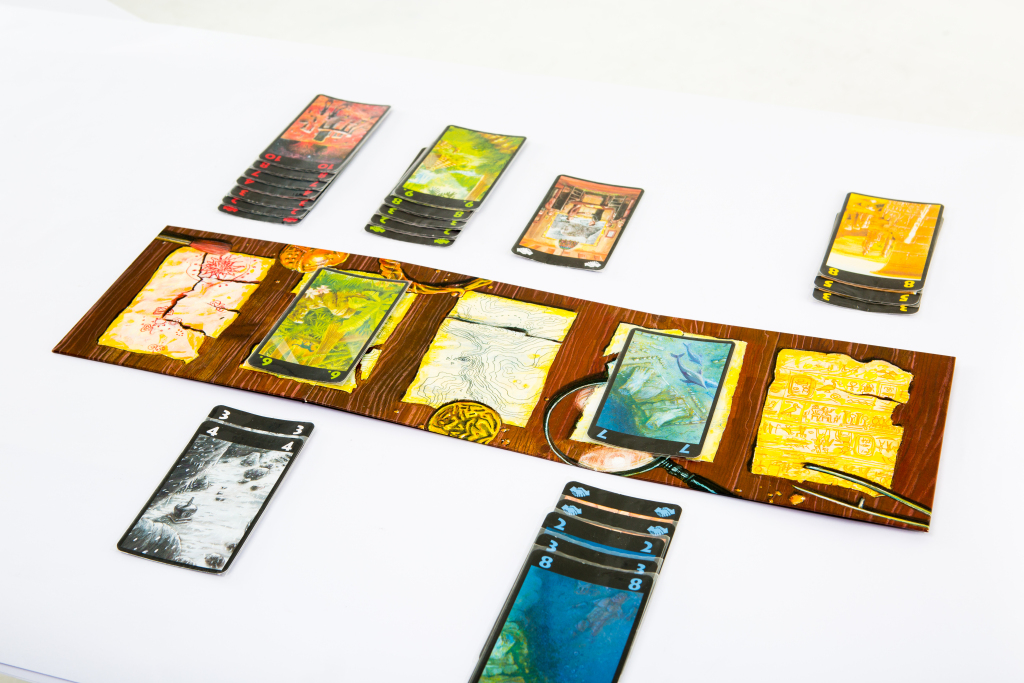
Lost Cities teaches the fundamentals of strategy and wraps them in a standout theme.
2. Piñata
01 — Game Overview
Piñata is a deeper card strategy game that builds on Lost Cities. If Lost Cities taught you focus and risk management, Piñata teaches you opponent disruption and tighter hand management. I originally played this as Balloon Cup, but the theme was recently reworked into Piñata—a change I find more intuitive.
Quick context: In Latin American festivals, a blindfolded child swings a stick at a paper figure hanging from a tree. When it breaks, kids rush to grab the candy and chocolates inside. That figure is called a piñata.
In Balloon Cup, you cared whether your hot-air balloon flew over high mountains or low plains. In Piñata, you care whether the piñata hangs high or low. After explaining both versions dozens of times, I find Piñata clicks faster.
Piñata includes four game boards, a bag of 45 colorful candy tokens, five medal cards, 45 colored play cards, and nine wild cards—54 cards total. Your goal: smash piñatas with your cards to win medals.
02 — Rules
Each of the four boards is double-sided, numbered 1 through 4. Lay them out in the center in order, shuffle the deck, then randomly draw candy tokens from the bag and place them on each board according to its number. Players start with eight cards each. On your turn, play one card, then draw one—just like Lost Cities.
Three thematic rules define Piñata:
First: Unlike Lost Cities, you're not restricted to specific colors per board. You can only play cards that match the colors of the candy tokens on that board. So a board with three tokens lets both players play up to three cards each—six total. When the board fills up, whichever player wins that line takes all the tokens.
Second: Victory conditions are unique. Each board is double-sided. The blue side shows the piñata hanging high (arrow pointing up)—highest total card value wins. The red side shows it hanging low (arrow pointing down)—lowest total wins. Big numbers aren't always better.
Third: Unlike Lost Cities, you can play cards onto your opponent's side of any line. You can throw bad cards at them, not just lay good cards for yourself. That's when the tug-of-war gets real.
Win a line, flip the board to swap the victory condition, refill it with new random candies, and repeat. Candies come in five colors: red, pink, yellow, green, purple. Collect enough of a color to trade for a medal. First to collect three of the five medals wins.
03 — Strategy
Now you have an attack option. You can sabotage your opponent's lines directly. But here's the catch: you can't discard cards. If your hand is stuck and every play helps your opponent, you still have to play something. That's threatening.
If you're completely locked out—unable to play on any line—your opponent inspects your hand, you discard as many cards as you want, redraw, but your turn is skipped and your opponent plays twice in a row. In a turn-based game, that's brutal. So hand management matters even more. Piñata raises the complexity ceiling above Lost Cities.
04 — Visuals
Personally, I preferred the old Balloon Cup art—whimsical, storybook style, thematically coherent. But it depicted hot-air balloon races, which most people have never experienced, so it felt less intuitive. Oddly, I found that disconnect imaginative—it pulled me into the world.
But… I lost a few tokens, so I replaced it with Piñata. Surprisingly, my customers prefer Piñata. The candy tokens are adorable wooden pieces shaped like actual candies. The colors are brighter and more vibrant. The art style is cute, almost like an American cartoon. It works.
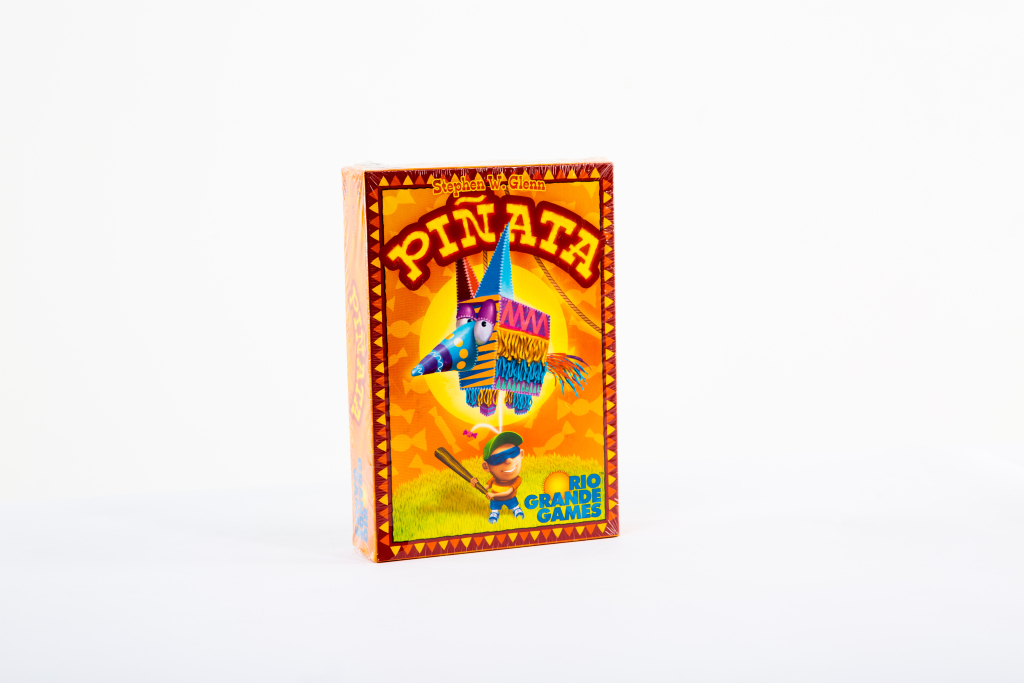
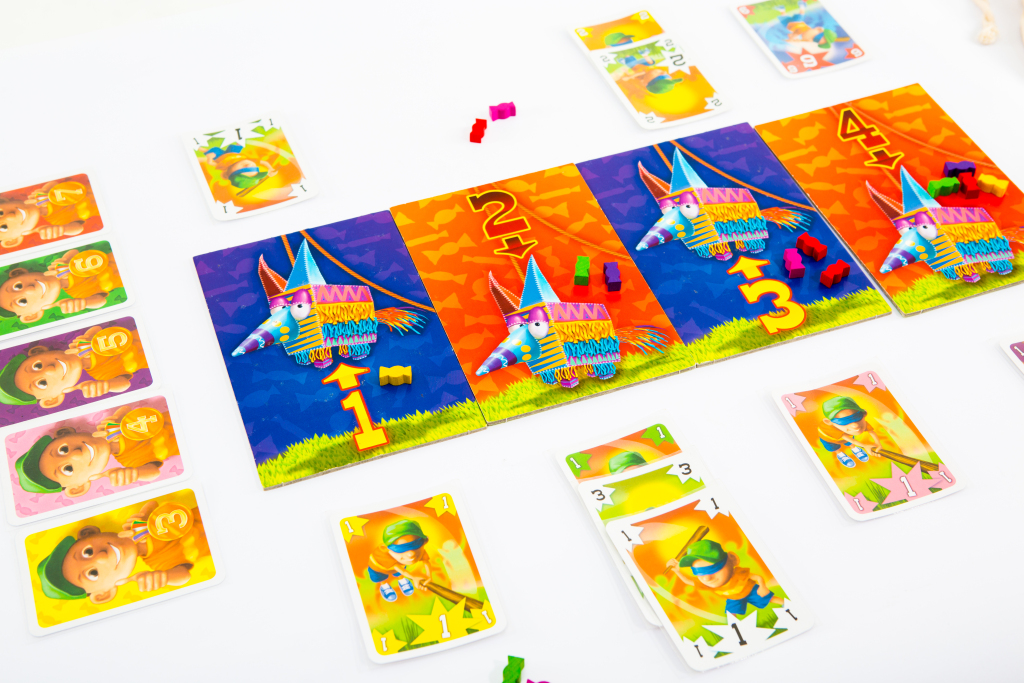
Piñata teaches opponent disruption and tight hand management.
3. Battle Line
01 — Game Overview
Here's the most interesting two-player card strategy game with a central line: Battle Line. If you've learned management and attack from the first two games, you're ready for something more layered. Battle Line is themed around medieval warfare. The center line represents the front—a border where war rages. Your hand holds troop cards: numbers 1–10 across six colors, each representing a military unit. You deploy formations line by line and clash with your opponent. The original designer, Reiner Knizia, is a legend in board games. Battle Line evolved from his earlier game Schotten Totten, with the addition of tactics cards and a medieval retheme.
02 — Rules (Official Published Version)
Set nine flag tokens in a row down the center—that's the front line. Each player starts with seven cards. On your turn, play one card and draw one to replenish. No discard action exists. Each line holds a maximum of three cards per side.
Three defining rules:
First: When a line fills (three cards per side), determine the winner by formation strength, not raw numerical value. It's like poker. Three cards of the same color in sequence (straight flush) is strongest. Then three of a kind, flush (same color), straight (consecutive numbers), and finally unmatched cards. If formations tie, highest total wins.
Second: Unlike Piñata, you can't play cards on your opponent's side. But if your opponent stops playing on a line because they've already lost, the game would stall. Enter Battle Line's signature mechanic: Proof. Even if a line isn't full, if you can prove you've won based on all remaining variables—like your opponent can no longer form a stronger combination because you've already played the cards they need—you can claim the flag immediately.
Win five of nine flags total, or three adjacent flags, and you win the game.

"Proof" injects tension and makes you eager to see what cards come next in Battle Line.
Third: Unlike Schotten Totten, Battle Line adds ten tactics cards that inject unpredictable variables. Tactics form a separate deck. You start with only troop cards, but when you draw to replenish, you can draw from the tactics deck instead. Tactics cards have a different back, so you know how many your opponent holds. All ten have powerful effects that amplify variety and surprise.
03 — Strategy
First off: you start with one fewer card than the other games—only seven. That shrinks your option set. The formation hierarchy is easy to learn, but leading the game without being able to attack your opponent's lines directly is tough for many players.
You can't discard. Even useless cards must go onto lines. And "proof" relies on played cards, not cards in hand—so line management is a grind.
If your opponent fills a line with three cards and proves victory, it's a double whammy. You lose the flag and you lose the ability to play further cards on that line. Meanwhile, your opponent used three cards to secure it—so you effectively have fewer slots to play cards than they do. That's devastating in a turn-based game.
Complexity just went way up. But if you've worked through Lost Cities and Piñata in order, the depth translates directly into fun. Customers at my café follow this curriculum, and Battle Line always gets repeat requests. Player reactions are passionate, likely because Battle Line is a deeply logical game. "Proof" adds tension and makes every draw exciting. The win condition—either five flags total or three adjacent—forces you to think strategically about where to concentrate firepower. Clean, smart design.
Personally, I don't recommend using tactics cards for first-time players. They can muddy the experience. The basic mode—troop cards only—showcases "proof," the game's standout feature, most clearly. That alone is hard enough to digest. I strongly suggest playing without tactics first, then adding them once you're comfortable.
04 — Visuals
Compared to the previous two, Battle Line's visuals are rough. The art looks like Egyptian hieroglyphs. Troop cards share identical illustrations across colors—only the color changes. But somehow, that roughness evokes an ancient game and fits the medieval warfare theme perfectly. When the gameplay's this good, everything looks good.
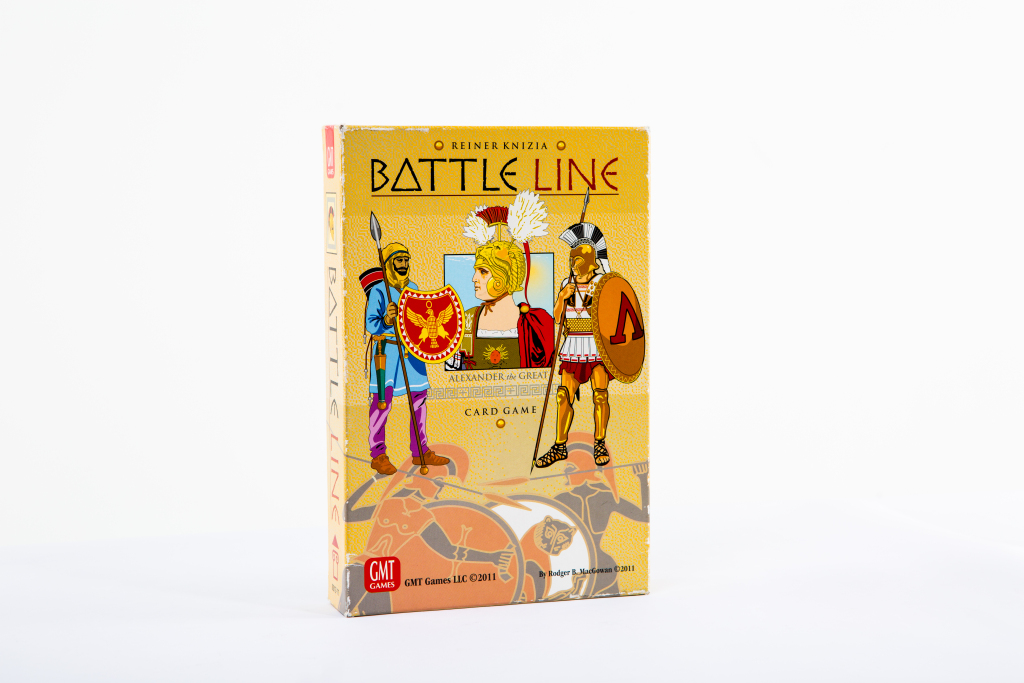
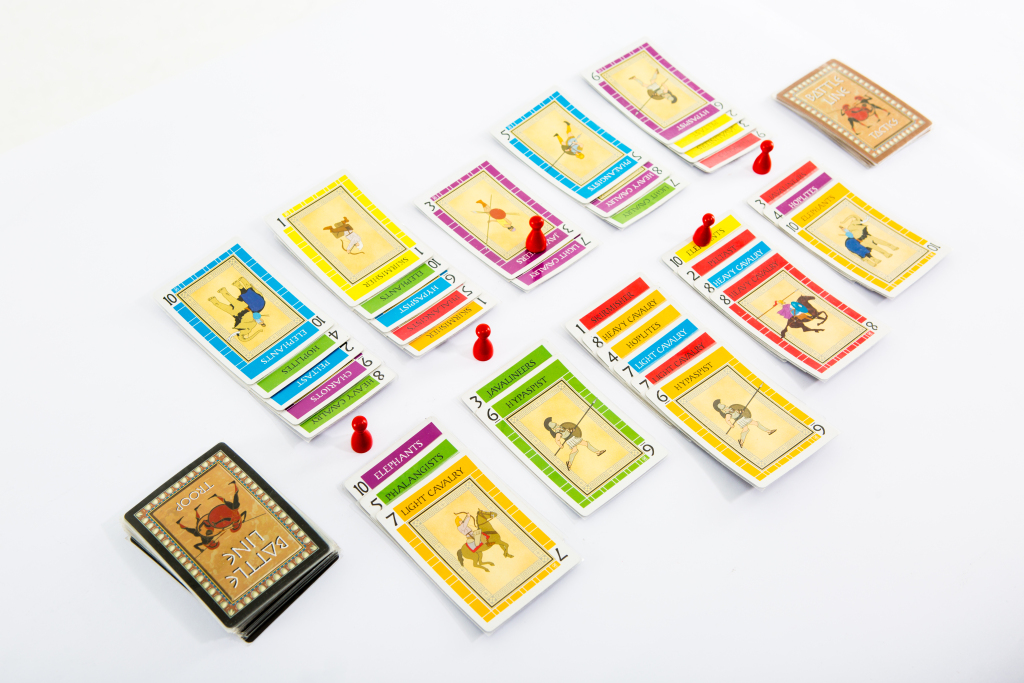
Battle Line's Egyptian-hieroglyph style and rough illustrations give it an ancient-game feel.
Fin.
From Lost Cities to Piñata to Battle Line—that's the two-player card game curriculum that's resonated most with thousands of customers over five years. For detailed rules, check each publisher's official rulebook or community sites like Boardlife and BoardGameGeek. Next time, I'll do a special edition: a look at the new game culture I'm building and the first game in that lineup. Thank you.
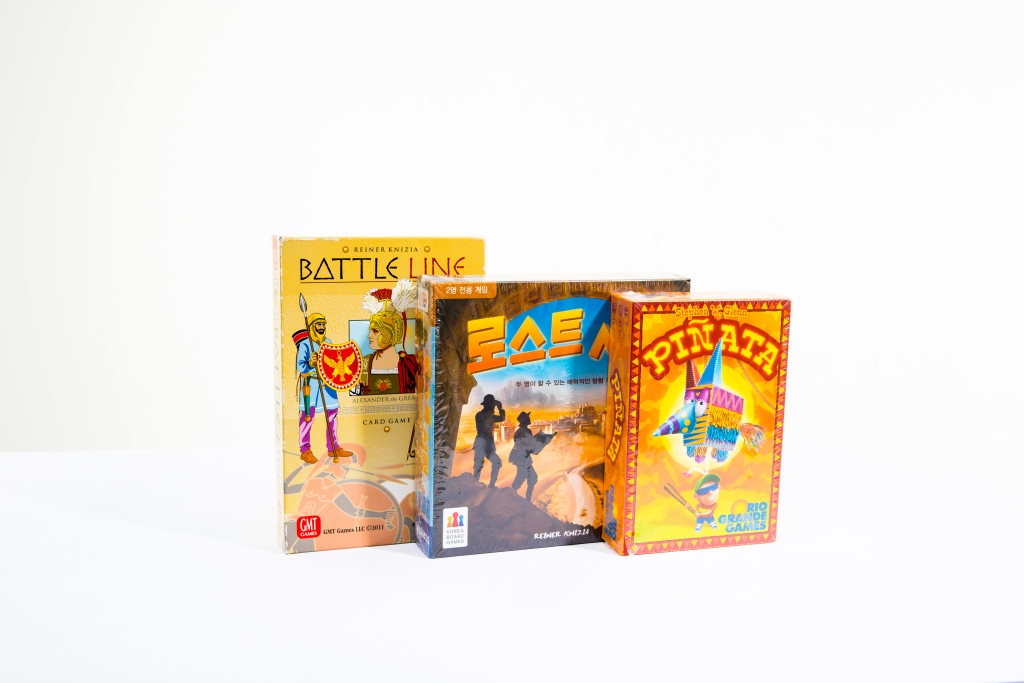
Huge thanks to the photographer who captured these beautiful shots: @siostudio, http://studiosio.co.kr/
[Series Index]
2019.01 Introduction 2019.02 Two Players: Abstract Strategy 2019.03 Two Players: Psychological Games 2019.04 Two Players: Cards 2019.05 Special Edition: Big Games 2019.06 Three or Four: Placement 2019.07 Three or Four: Deduction 2019.08 Three or Four: Cards 2019.09 Many Players: Bluffing 2019.10 Many Players: Negotiation 2019.11 Many Players: Mafia 2019.12 Closing Thoughts