Indie developer Ahn Min-woo on "Big Games" — live, theme-driven experiences mixing physical props with smartphone tech to force real-world collaboration, not just screen-staring.
05. Special Edition: Big Games
Writer: Ahn Min-woo, CEO, Ager Games
Editor: Somora, ONDA Manager

Hello! I'm Ahn Min-woo, CEO of Ager Games. For this May issue, I brought something a little different. Have you heard of "Big Games"? I originally started making board games because I love bringing people together. That evolved into collaborations with other designers, and we began experimenting with different ways to gather people — one of which is this emerging genre called "Big Games." Let's dive in.
What Makes Big Games Special
A Big Game is a live, theme-driven game that brings a large group together in real time. It's a new genre, so the definition varies depending on who you ask — but think of it like the games from the Korean TV show The Genius. That's the ballpark.
The way I approach Big Games: rent a dedicated venue, gather 20+ people, run the game for about two hours. Instead of pen and paper, players use their smartphones via custom software we build. This shifts the focus away from busywork and onto collaborating with other humans. The app handles score tracking, hand management, point trading, deals — all the tedious stuff that tech can solve.
But here's the key: you still need tangible objects. NFC cards that act as digital wallets. Physical voting boxes or neutral stations where you tap your ID card. We learned this the hard way through testing — if everything lives on a screen, interactions flatten out. People stare at their phones against the wall instead of talking to each other. You end up playing a mobile game in a room full of strangers. Not the point.
So the trickiest part of design is balancing convenience with necessary friction. You want tech to smooth out logistics — not strip away the human element.
To win at a Big Game, raw strategy and quick thinking aren't enough. You need social savvy and the ability to cooperate. Think of it as a networking event gamified. That's the vibe I'm after, especially as coworking and hobby-based communities become mainstream. A Big Game needs a host to steer the energy. You need a projector, a sound system, and ideally a venue with multiple rooms or zones.
My hope is that Big Games become a culture where dozens of strangers can have a great time together — whether at companies, schools, or any organization. I love talking to people and getting to know them. If Big Games can turn "connection" into a form of play, that would make me very happy.
Minority Rules
The first Big Game I built is called Minority Rules. The concept is simple: after each vote, if you're in the minority, you score points. So everyone's trying to be the minority — which creates fascinating dynamics. We recently held a live event for it. My co-creators had mostly finished the game mechanics; I helped direct the overall experience. It was my first time running a Big Game, and it was exhilarating.
The game doesn't have a full thematic skin yet, but we're leaning toward politics as the setting. The name is a nod to the "iron law of oligarchy" — sociologist Robert Michels' theory that power always ends up in the hands of a few. In our game, the minority always scores, so the parallel fits perfectly.
Below is a photo from our most recent playtest. We recruited about twenty beta testers — people who'd never played before — to see if Minority Rules worked for newcomers.

A playtest session of Minority Rules
Here's how Minority Rules works (high level):
1. Players log into the game server via their smartphones.
2. The game runs for 6 rounds. Each round lasts 10 minutes of free interaction, during which you can submit Opinion Cards.
3. Opinion Cards come in three types: Progressive (3 cards), Conservative (3 cards), Moderate (1 card). Everyone starts with this hand.
4. When you submit a card, you choose one of four voting zones. Once the round timer ends, submissions close.
5. At round end, scoring happens. If you're in the minority opinion in a zone, you score points equal to the total number of people who voted in that zone.
Players use their phones to follow this flow.
Each voting zone is marked like a ballot box in the venue.
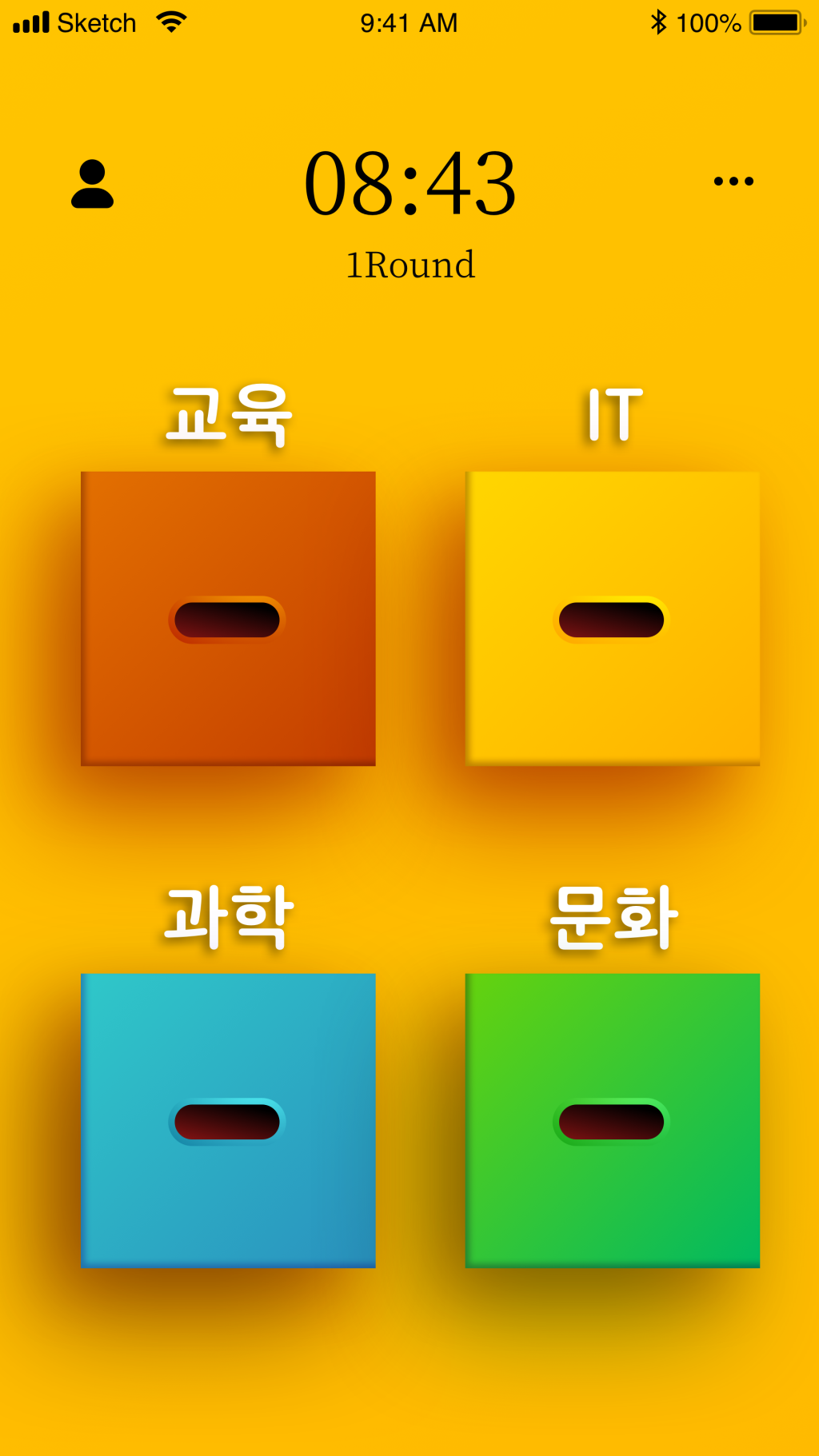
On-screen voting interface for each issue zone
Because the app handles voting and calculation, players can spend their time negotiating, gathering intel, forming alliances. After each round, the host projects a scoreboard and recap on the main screen, giving players info to inform their next move.
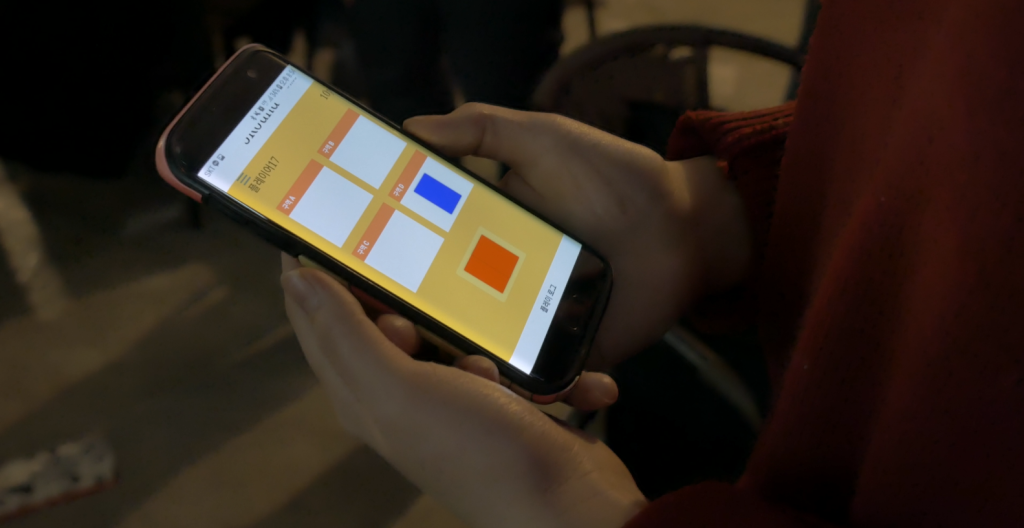
Minority Rules in action via smartphone app
The basic high-score strategy: gather intel on where most players will cluster, then vote minority in that zone. But tracking 20+ players alone is nearly impossible. So players form coalitions — sharing card info, dividing roles, spreading disinformation to rival groups, and courting independents. Watching this unfold is genuinely thrilling.
That's why our design team treasures the game logs. They show how rule tweaks amplify certain strategies, how player behavior shifts. That data becomes the foundation for making the game more fun and social. Big Games get better through iteration informed by real player interaction.
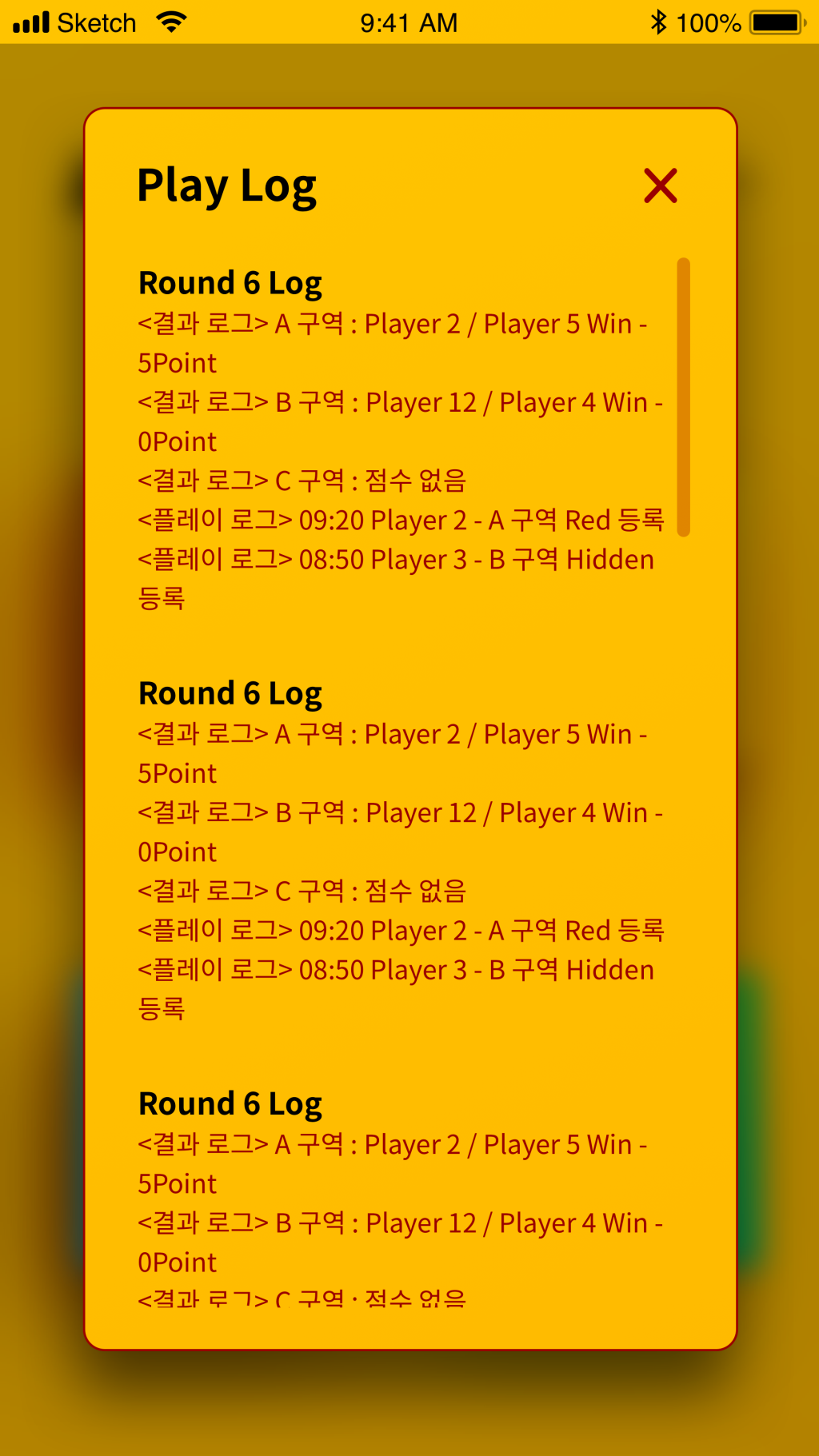
Game logs that track rule changes and player choices
After two intense hours, something magical happens: an organic debrief session. No one needs to facilitate it. Players naturally start dissecting each other's strategies, swapping stories, laughing about near-misses. Rival coalitions and solo players mix freely. It's the perfect ending — not just for Minority Rules, but for any Big Game. Like board games, Big Games use fun as connective tissue between strangers.

Post-game debrief session
Fine.
That's a wrap on today's topic — a fresh look at Big Games and the first game we built together. Next time, we'll return to familiar territory: board games. I'm planning a lineup of titles for three or four players.
May is full of family gatherings in Korea. I hope you spend it playing great games with people you care about.
[Series Index]
2019.01 Introduction 紹介 2019.02 Two Players: Abstract Strategy 2019.03 Two Players: Psychological Warfare 2019.04 Two Players: Cards 2019.05 Special Edition: Big Games 2019.06 Three or Four: Placement 2019.07 Three or Four: Deduction 2019.08 Three or Four: Cards 2019.09 Many Players: Bluffing 2019.10 Many Players: Negotiation 2019.11 Many Players: Mafia 2019.12 Reflections 所懷