Korean indie game designer Ahn Min-woo breaks down why 3–4 player deduction games work in shared spaces—and why most "mystery" games aren't actually mysteries at all.
07. Three or Four Players: Deduction
Writer: Ahn Min-woo, CEO, Ager Games
Editor: Somora Manager, ONDA
Photo: Yuhwagallang & Studio Sio


Hello, I'm Ahn Min-woo, CEO of Ager Games. We're past the heavy rain and deep into sweltering summer now. On hot, humid days like these, you end up spending a lot of time indoors. Perfect time to break out a board game. So for this installment, I'm recommending deduction games that work beautifully in living rooms / lobbies / meeting rooms / common areas / lounges — spaces where people gather. Here's a curated collection of board games that three or four players can enjoy with just the right amount of tension.
Feature: Deduction
Back in the March issue, I covered deduction, mystery-solving, and psychological gameplay in detail. Here's the TL;DR in three points:
-
"Psychological gameplay" is a broad concept, but there are games focused purely on mind games.
-
Games marketed as "mystery" often don't match the genre definition — they're really about game-mechanical deduction.
-
"Deduction" means inferring hidden information from visible information. "Card counting" — a mechanic I've covered before — is the foundation of deduction. It underlies every strategic choice in these games.
Last time I focused on two-player games. Even if those games had strong deduction elements, the 1v1 setup naturally amplified the psychological warfare. But when you add players, the deduction layer deepens. Take Da Vinci Code (a two-player psychological game I've mentioned before). With 3–4 players, you suddenly have multiple sources of information. People start bluffing, misdirecting, manipulating group opinion. The only thing you can trust is deduction — and that makes the table come alive. People talk more. They laugh harder.
So this time, I'm bringing you 3–4 player deduction games. Most of these get mislabeled as "mystery" games because of their artwork and theme. But don't be fooled. They're not narrative mysteries. Winning comes down to card counting. You connect the visible pieces and predict the variables. That means you can play them dry and silent, focused purely on logic — or you can banter, bluff, and roleplay within the rules to mess with opponents' counting. It's a spectrum. Know your group. Now let's dive in.
1. Sherlock 13
01 — Game Overview
Sherlock 13 is exactly what it sounds like: a deduction game featuring 13 characters from the Sherlock Holmes universe. You combine what you know with what you can learn from others to find the answer. Sherlock 13 preserves the core deduction mechanic while keeping players in constant conversation. This makes people talk, which raises the difficulty in a fun way. When guests at our space ask for a 3–4 player deduction game — or when they want to learn Clue — I start them here. You stack Da Vinci Code, then Sherlock 13, then Clue. That's the safe progression.
02 — How to Play Sherlock 13
Shuffle the 13 character cards and deal them evenly to all players. One card will always be left over. Whoever guesses that card on their turn wins. Each character has a combination of icons — badges, skulls, necklaces, etc. These are your clues. On your turn, you can take one of three actions:
A) Ask all other players if they have a specific icon. · Each player checks all their character cards. If they have that icon on any card, they raise their hand — no matter how many they have.
B) Ask one specific player how many of a specific icon they have. · That player counts the icon across all their cards and tells you the exact number, out loud. Everyone hears this.
C) Make a final guess. · If you're right, you win instantly. · If you're wrong, you're out — but you still have to answer questions when other players ask you.
For a pure deduction game (based on elimination), Sherlock 13 could easily turn overly serious. But the lightweight rules soften that. When you take action A or B, everyone hears the result. That means every turn feeds information to all players, not just you. It fragments downtime, keeps the pace snappy, and keeps the energy high.
03 — Strategy
Each character has a complex spread of icons, so your player sheet is crucial. It's what makes this game feel light. Imagine playing without it… yikes.
Sherlock 13 reveals a lot of info between your turns, so you need to organize it well to win. Once you get the hang of it, games can end fast. Always be aware of turn order — sometimes it's smart to make an early guess a full round before you "should." But if everyone guesses recklessly, the game turns into a coin flip. You've been warned.
04 — Visual Design
Victorian Europe, rough paper stock, watercolor illustrations. Game design by Hwang So-mang, a Korean designer. Art by Vincent Dutrait, a legendary French board game illustrator. Nice touch: if you line up all the player screens, they form one continuous panorama.
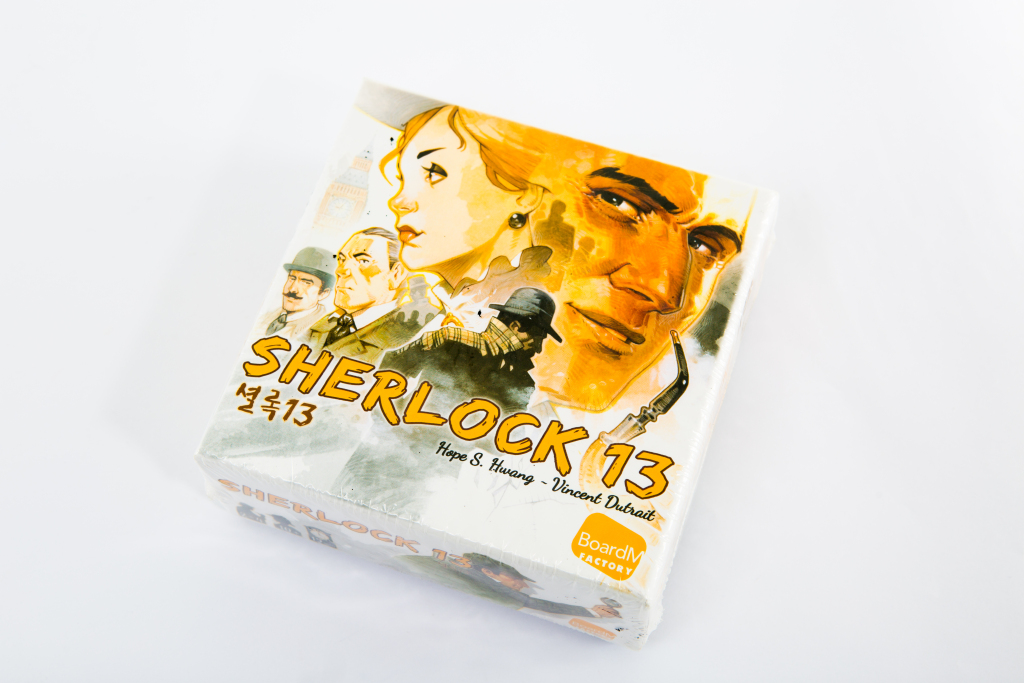
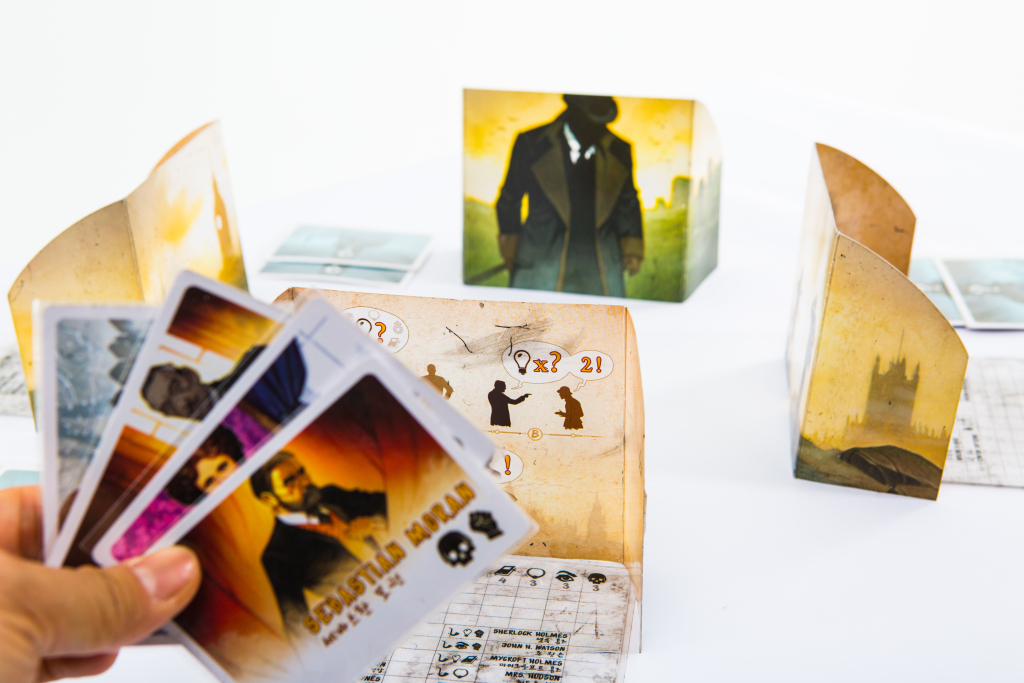
A deduction game using 13 characters from the Sherlock Holmes universe: 'Sherlock 13'
2. Clue
01 — Game Overview
Ah yes. The game. I've played hundreds of rounds of Clue. It was the first board game I truly obsessed over. Looking back, I played most of those rounds wrong — but even that was fun. This game lived in our car trunk. I played it in tents by lantern light. Strange thing is, my first and second games of Clue weren't fun at all. It was the only game we owned, so I kept playing. Eventually, it clicked.
Clue is famously hard to teach. The rules aren't complicated, but conveying the whole of the game — what you need to focus on, what matters on your turn and others' turns — that's tough. At a board game café, explaining Clue is risky. But once a table finishes one round? You don't need to check on them again. Replay value and immersion are off the charts. Now let me walk you through the rules of this maddening, addictive game.
02 — How to Play Clue
Rules are simple. You have three types of cards: weapon, suspect, location. Shuffle each deck, pull one card from each, and place them unseen into the secret case file. These three cards are "the answer." Deal out the rest of the cards to all players. On your turn, you can take three types of actions:
A) Roll dice and move. · Move orthogonally (no diagonals). You can't enter an occupied space. Once you enter a room, your movement stops.
B) Make a suggestion. · If you're in a room, you suggest who committed the murder in that room, and with what weapon. · Move that weapon and suspect token into the room. · Starting with the next player, each opponent must disprove your suggestion if they can. · If they have any of those cards, they show you one card privately. · If they can't disprove, move to the next player. · If no one can disprove, you may accuse immediately or end your turn.
C) Make an accusation. · If you know what's in the case file, you can accuse on your turn. · State the location, suspect, and weapon — then open the case file. · If correct, you win instantly. · If wrong, you're eliminated. But if someone makes a suggestion, you still have to disprove it if you can.
More rules, right? That's why beginners struggle at first. Experienced players can jump straight from Da Vinci Code to Clue. After Sherlock 13, most people get it. But 70% of people who start with Clue cold don't fully understand it — that's my experience. One rule to remember: on your turn, you can only gain one card of information, no matter what. Keep that straight and you'll be fine.
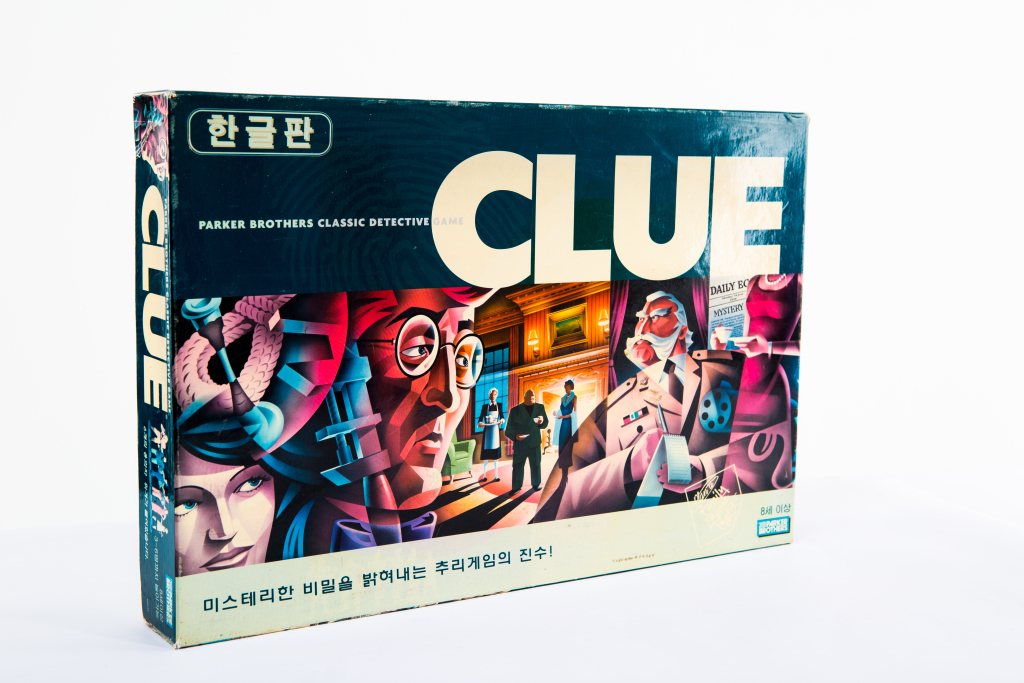
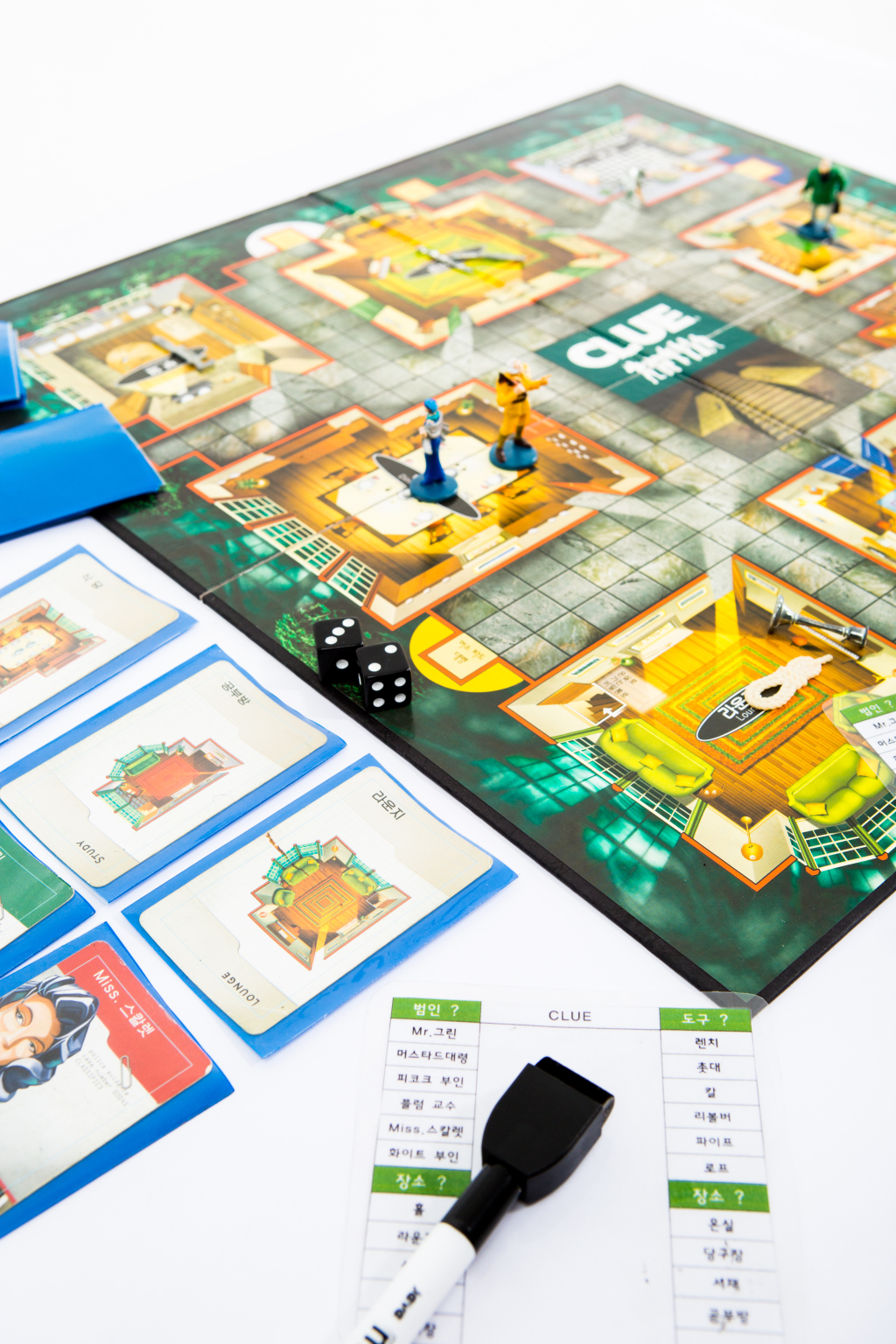
The legendary classic 'Clue,' original edition.
03 — Strategy
Bigger game now. You can play with up to six, but I don't recommend it. Sweet spot is 3–5 players. More players, tighter rules — so instead of trying to pinpoint the three cards in one shot, your goal is to eliminate possibilities broadly. Ask smart questions. To play Clue with real tension and drama, you need to follow a few often-overlooked sub-rules:
A) No one can pass through a space you occupy. You can block doorways. Players inside can't leave until you move. (But you can't skip your movement, and you can't backtrack immediately, so you'll have to move next turn.)
B) If cards don't divide evenly, the remainder is dealt in order — and the player with the most cards goes first. Later turn order isn't a penalty, because you see others' plays before yours. If you think that's unfair, reverse the card distribution next game.
C) When you make a suggestion, you physically move the suspect token into the room. This can mess up someone's path — or yours. If your token gets moved, you can skip movement on your turn and suggest from that room immediately.
Bottom line: unlike Sherlock 13, you don't get clear hints from other players' turns in Clue. You know what they asked. You know who showed them something. But the only thing you trust 100% is what's in your own hand. Best strategy: subtly include your own cards in suggestions to extract info on the card types you care about. Keep a poker face. Read your opponents. Figure out what info they want.
To really enjoy Clue, you need this level of understanding. That's why I don't recommend it to beginners. The worst situation at my café: a group arrives, one person's played Clue before and loved it, tells me it's easy, and wants me to teach their friends. That person won't touch Da Vinci Code or Sherlock 13 because they're here for Clue. But if the friends are total newbies — or it's a 5-player group so I can't even warm them up with Sherlock 13 — I'm stuck. The veteran says "what's so hard about this?" while I'm mourning all the depth I can't convey. If you've read this far, I trust you'll play Clue the way it deserves.
04 — Visual Design
We have the new Clue at our café, but when the photographer came, I rushed to grab my old edition. Nostalgia flooding back. The art style is so much more striking than the modern photorealistic version. The miniatures are perfect. There are also Harry Potter and Simpsons editions if you want to explore. The murder mystery setup always gets great reactions from guests.
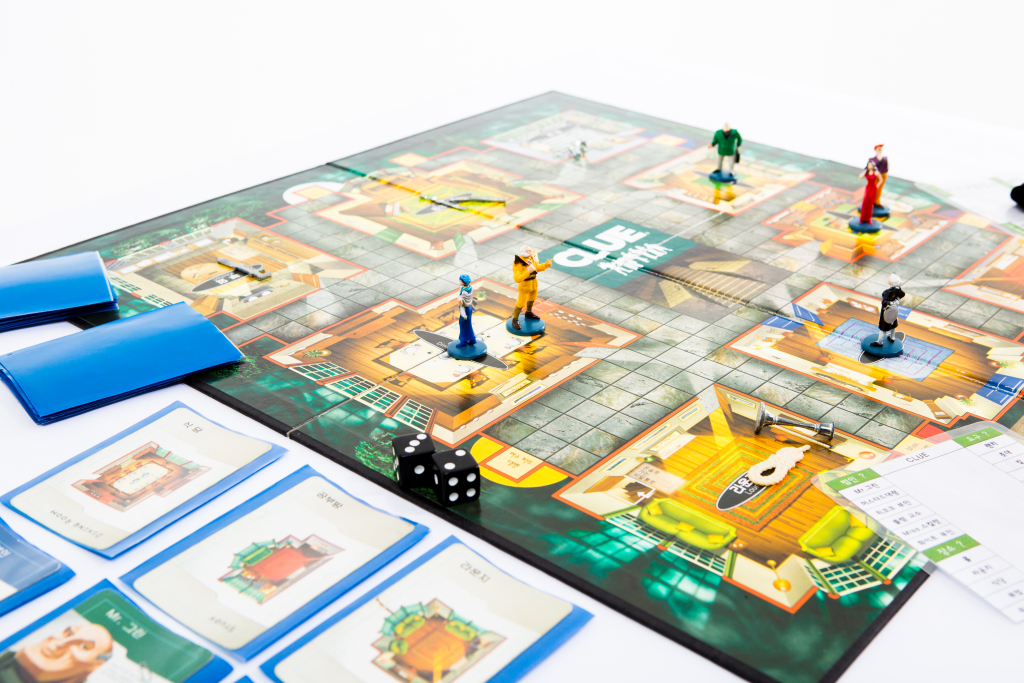
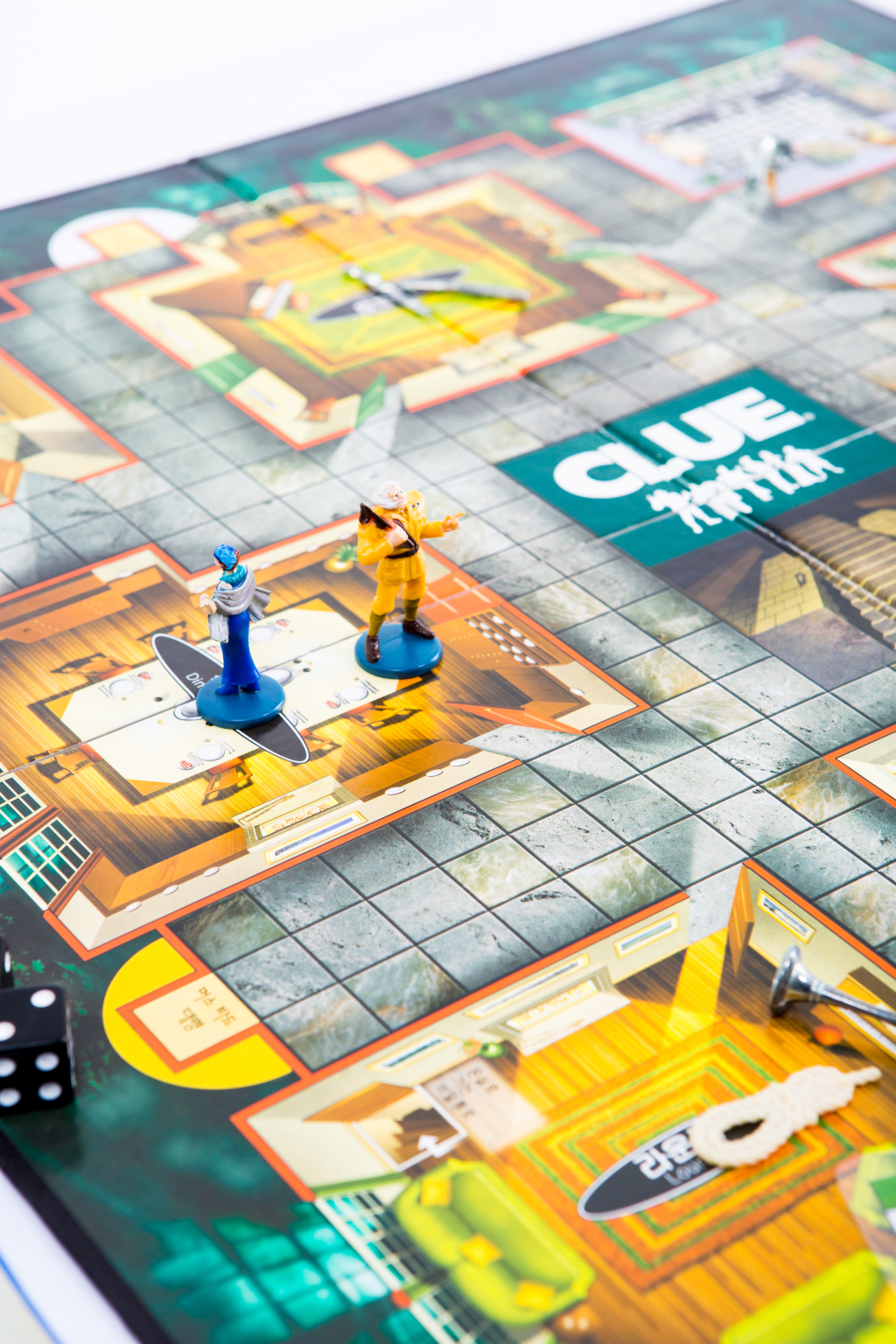
If you want to enjoy elimination-based pure deduction, follow the detailed rules closely.
3. In a Groove (Yabu no Naka)
01 — Game Overview
If Sherlock 13 and Clue are pure elimination-based deduction, In a Groove (also called Yabu no Naka, "In the Thicket") is a deduction game with a twist of psychological warfare — and it's my personal favorite. You start with half the information (4 out of 8 suspects in a 4-player game), so deduction could feel tight. But bluffing and mind games ramp up dramatically, giving the game a unique tension. Despite its depth, the box is tiny and the components minimal. Maximum depth from minimal parts. Upper-tier minimalism. That's what I aim for.
02 — How to Play In a Groove
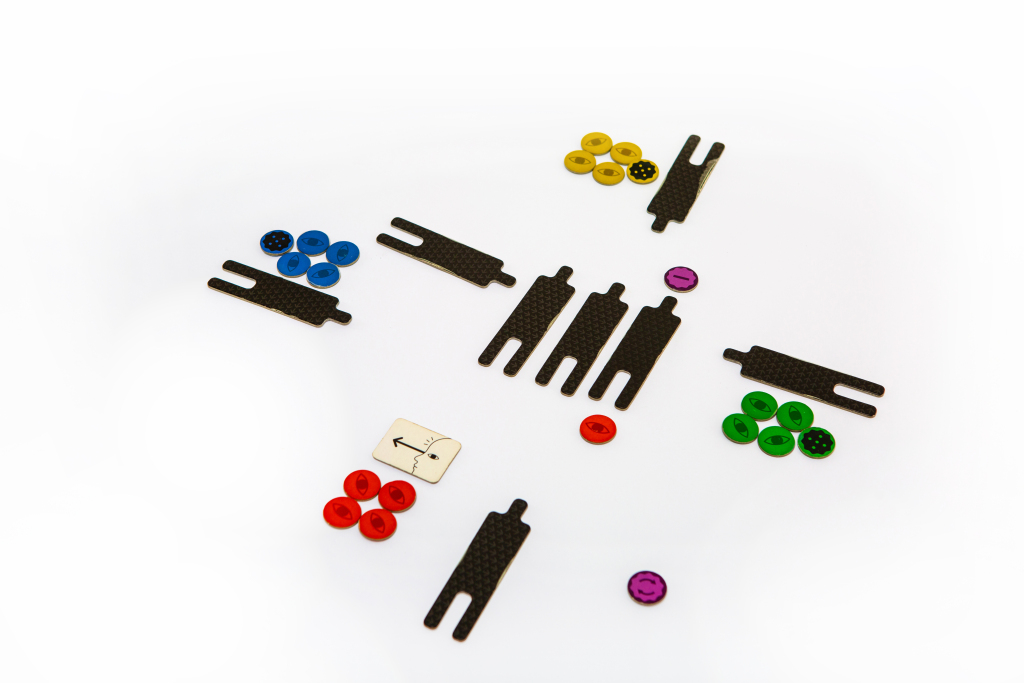
Each player takes five chips in their color (officially "suspicion chips," but I'll just say "chips"). Chips have a front and back. There are eight suspect tiles: numbers 2 through 8, plus one blank. In a 4-player game, use all eight. Shuffle and deal one to each player. Everyone looks at theirs, then passes it clockwise to the next player. Look at the card you received. Now you've seen two tiles.
Place the remaining four tiles face-down in the center. Turn one tile sideways — this is excluded from the game. Among the other three, the highest number is the culprit. But if red number 5 is present among the three suspects, the lowest number is the culprit instead. (The blank tile can never be the culprit.) On your turn:
A) Examine suspects. · The first player checks two of the three suspects (excluding one), then returns them face-down. · Place an "unchecked" marker under the tile you didn't look at.
B) Deduce the culprit. · Place your chip under the suspect you think is guilty. · The next player can only check the two suspects the previous player didn't accuse. · Then they place their chip. If chips are already there, stack yours on top. Order matters.
C) Scoring. · After the last player places their chip, reveal all three suspects. · If you guessed correctly, your chip returns to you face-up (safe). · If you guessed wrong, flip your chip face-down — it's now a penalty. Whoever placed their chip last on the wrong suspect takes all the penalty chips from that stack. If you're the only one wrong, you take your own chip.
Repeat for multiple rounds, rotating the first player. The game ends when someone has zero face-up chips or five face-down chips. That player loses. Fewest penalty chips = 1st place.
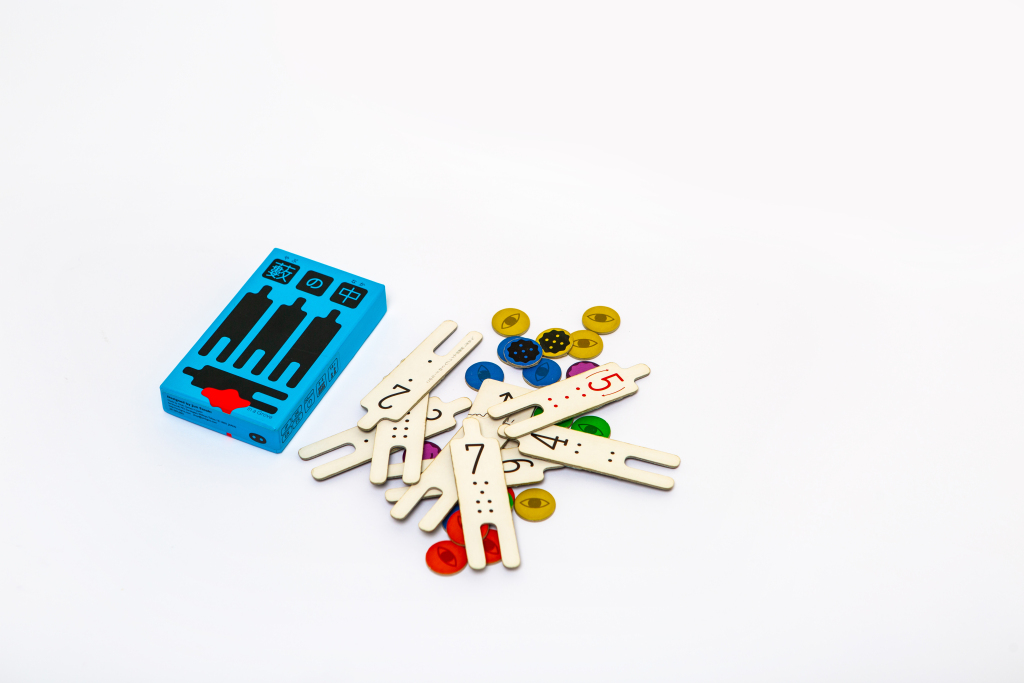
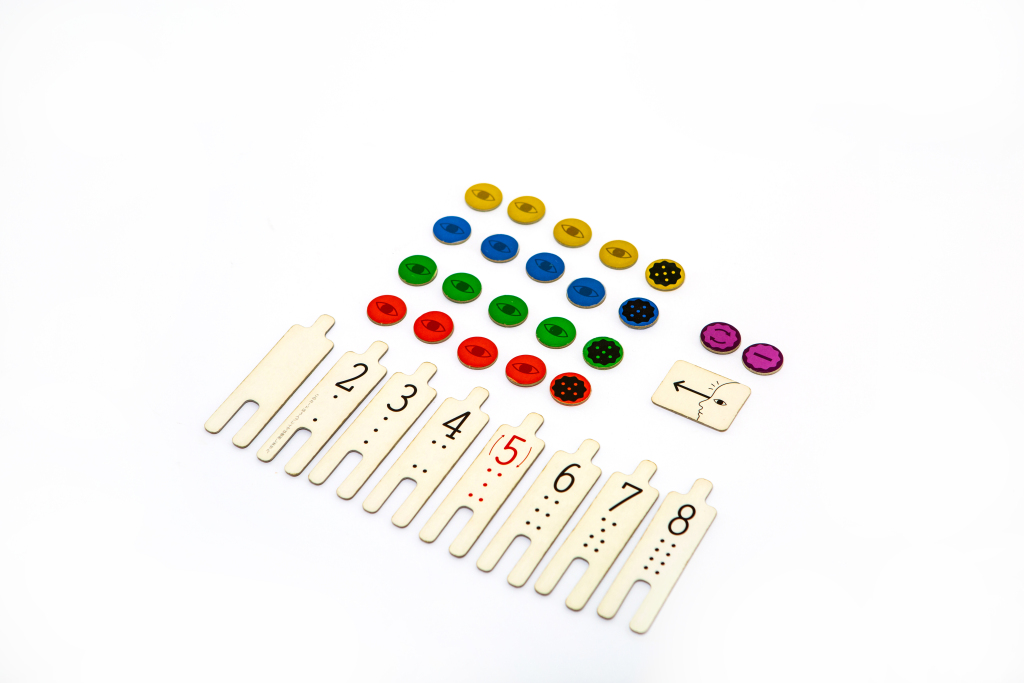
A deduction game with psychological warfare elements: 'In a Groove'
03 — Strategy
Split-second dilemmas dominate the entire game. Your goal isn't just to find the culprit — you want to saddle opponents with penalty chips. If you're early in turn order, you can intentionally choose wrong and bait others into following you. Sometimes it works. Sometimes you get lucky and someone falls for it. But you only have five lives. Don't gamble recklessly.
Here's the kicker: even if you successfully dump your chips on opponents, you're now vulnerable — fewer chips means higher risk of elimination. It's a constant dilemma. Turn order shifts the risk/reward calculation. Playing early feels aggressive. Playing late feels defensive. The game tilts depending on where you sit, and that asymmetry is fascinating. You can outsmart yourself. The elegant power shift is something I rarely see in games, and In a Groove nails it. Of course, this high-wire act can be polarizing — some people love it, some don't. But for me, if the group composition is right, this is an instant go-to. (And yes, my copy is very worn.)
04 — Visual Design
A murder in the thicket. Three suspects. We are the witnesses. Everyone's testimony conflicts — find the truth. The theme fits the mechanics perfectly. In a Groove is published by Oink Games, a Japanese company that always nails my aesthetic. Japanese minimalism through and through — in the visuals and the design. Only downside: the components are fragile and wear out fast from heavy play. So I actually replaced the suspect tiles with standard playing cards (Bicycle deck). If the tiles show wear during play, the game breaks — you can spot tells.
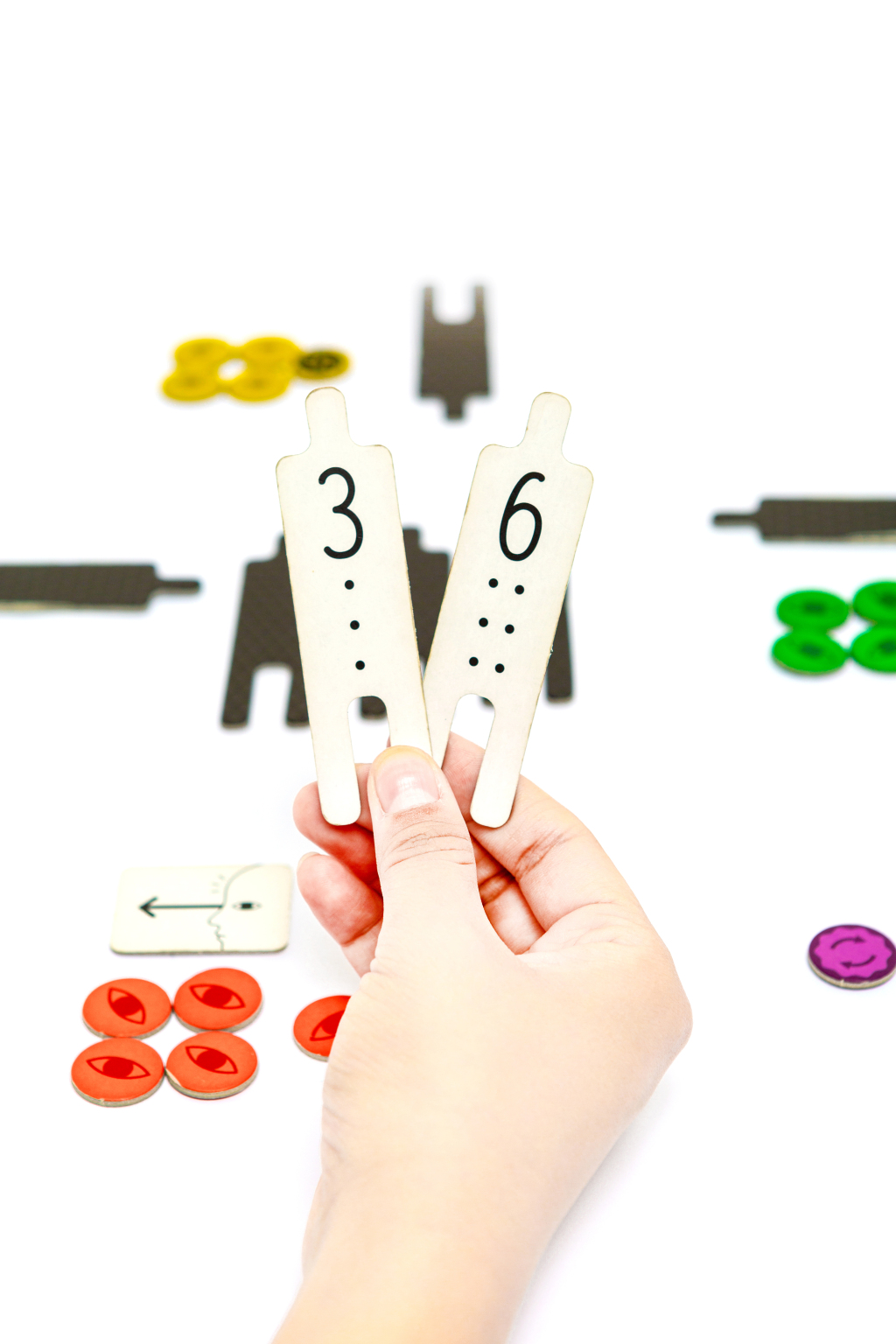
Split-second dilemmas rule this game — make your calls wisely.
Fine.
From Sherlock 13 to In a Groove to Clue. That's the curriculum. Five years, thousands of guests — these are the 3–4 player deduction games that hit hardest. Deduction games are tricky to grasp at first, but the rules themselves are usually simple. Ramp up the difficulty gradually and you'll have a blast. For detailed rules, check each publisher's site or community hubs like Board Life or BoardGameGeek.
Next time: light, fun card games for three or four. Stay cool this summer.
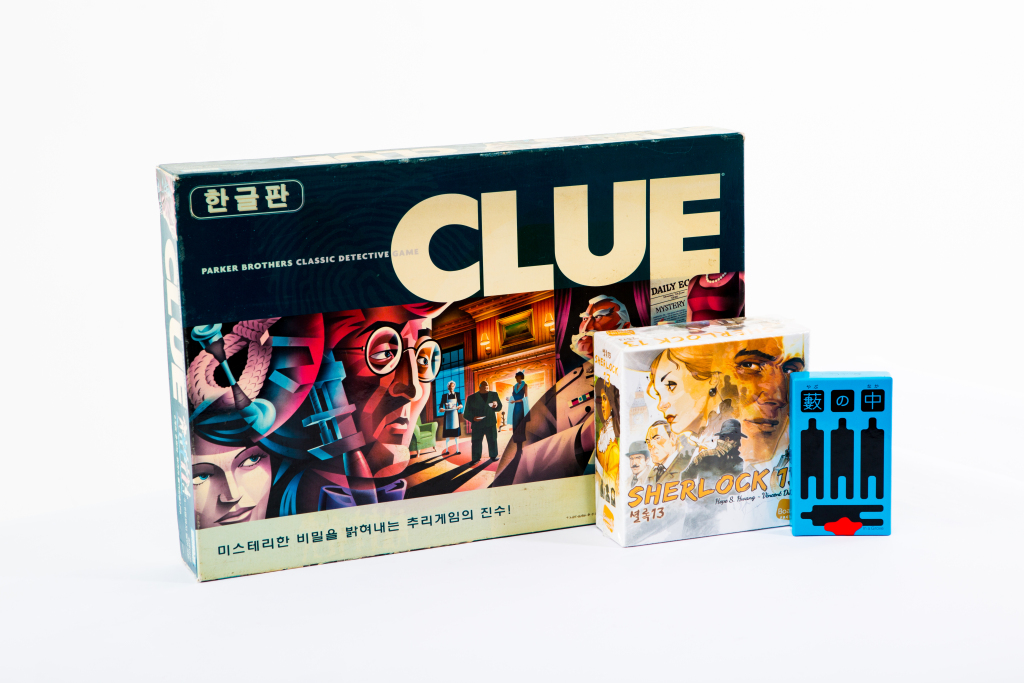
Thank you to the amazing photographer
@siostudio http://studiosio.co.kr/
[Series Index]
2019.01 Introduction 2019.02 Two Players: Abstract Strategy 2019.03 Two Players: Psychological 2019.04 Two Players: Card Games 2019.05 Special: Big Games 2019.06 Three or Four: Placement 2019.07 Three or Four: Deduction 2019.08 Three or Four: Card Games 2019.09 Many Players: Bluffing 2019.10 Many Players: Negotiation 2019.11 Many Players: Mafia 2019.12 Closing Thoughts
View Full Issue in Magazine Viewer <<
Subscribe to the Magazine <<
⚠️ All rights reserved. Cite this piece as 'ONDA' when quoting.