Indie game designer An Min-woo breaks down why bluffing games—like Skull and Cockroach Poker—thrive at the table: you're not staring at screens, you're reading faces and seizing momentum in real time.
09. Multiplayer: Bluffing
Writer: An Min-woo, CEO, Auger Games
Editor: ONDA Somora, Manager
Photo: Yuhwa Garang & Studio Sio


What do you usually do when a bunch of you get together? Sure, you can just talk, but once you hit six people, don't conversations naturally split into twos and fours? After all, dialogue is communication between speaker and listener. But what if everyone could play and communicate at the same time? And what if you could keep these tools in your space and enjoy them with whoever walks in? Today, as always, I've brought games that make face-to-face time fly.
Hi, I'm An Min-woo, CEO of Auger Games. We've finally reached the point where I can introduce games for quite a few people. Over the next three installments, I'll cover multiplayer board games, and I believe they showcase what board games have over PC, console, and mobile games: you're not looking at a screen — you're looking at your opponent, firing off instant reactions, constantly interacting. So when picking games for groups of five or more, I focused on ones that are loud, raucous, and thrive in a crowd. Ready to meet the first lineup?
Theme: Bluffing
Games mean bluffing. Deceiving and being deceived — the kind of fun we're too nice to have anywhere but in a game. Trickery. Isn't that what games are all about? You could translate "bluffing" as lying or bluster, but in games, bluffing carries a subtle nuance that's hard to pin down. It's really about seizing the initiative — controlling the vibe and momentum. You either confidently charge ahead with a bold-faced lie, or you deliberately show weakness to lull opponents into a false sense of security. It's high-level psychological warfare.
Not just lying — strategic posturing. Bluffing is less a genre than a playstyle you can deploy in any game. Like deduction, which I mentioned before, bluffing is a universal element of psychological play. So once again, I've curated games where bluffing is especially prominent, and I've ordered them by accessibility.
1. Cockroach Poker
01_Game Overview
First up: Cockroach Poker. I love pulling this one out for groups of five or more at my space. I've tested it with hundreds of groups, and only once or twice has the response been lukewarm. When you have more players, the vibe can get scattered, so it takes extra effort to pull everyone into board game culture. That's where quick, light icebreakers like Cockroach Poker shine — they shorten that onboarding time. Let's dive in.
02_Gameplay
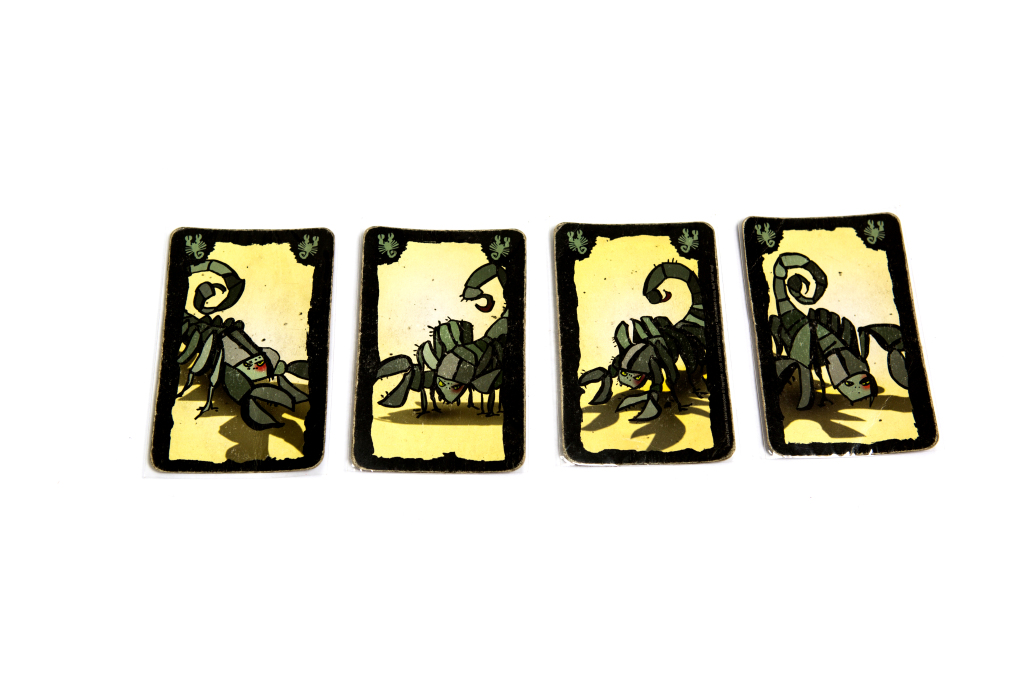
Let's start with the components. Sixty-four cards: eight types of critters, eight of each. And they're all… creatures you don't really want to get friendly with. Even identical card types have different art and appearances, so once your brain starts melting mid-game, you might mix up the critter types.
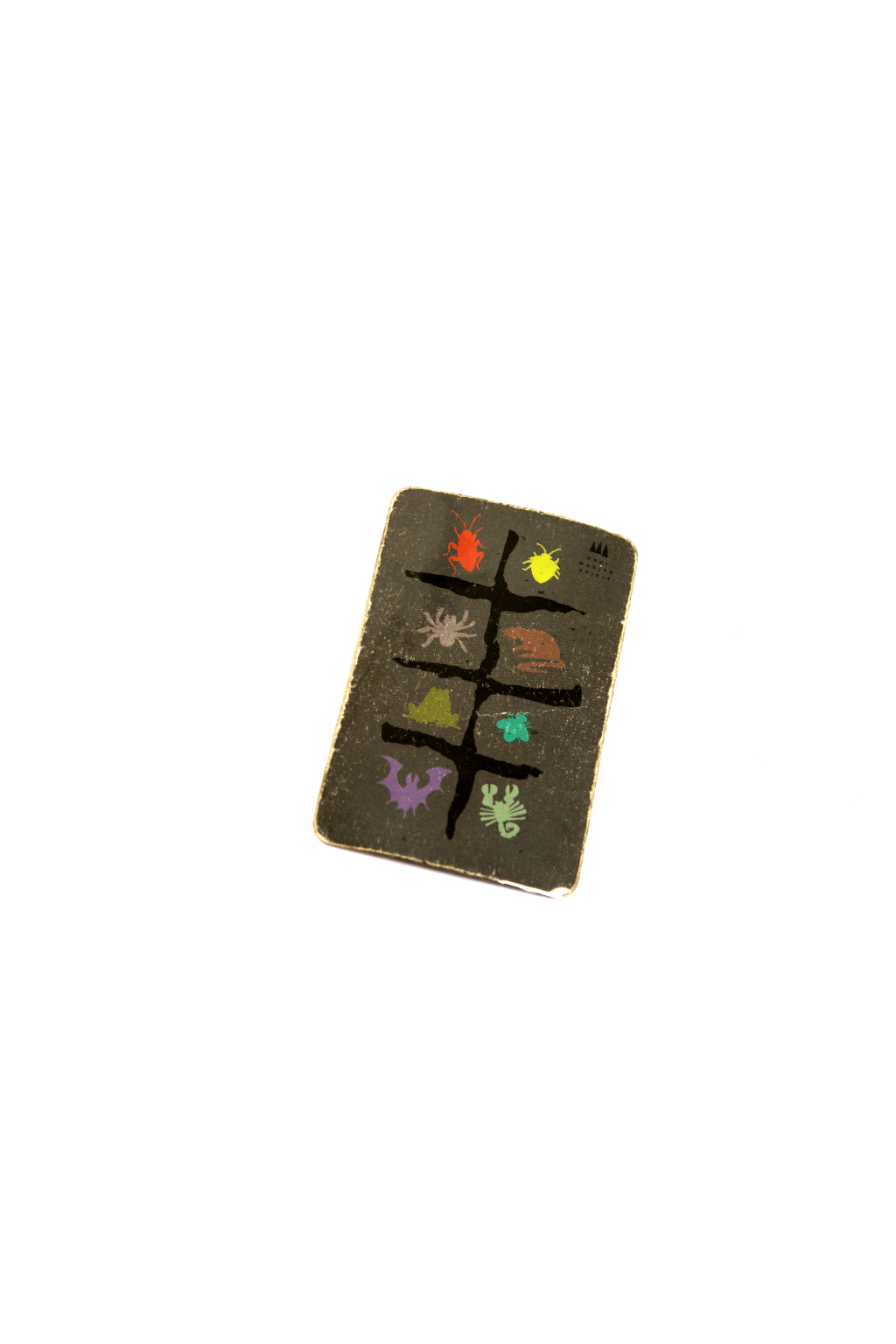
When you play, it's easier to identify cards by background color or the icon at the top. Flip a card over and you'll see all the icons on the back — I usually use the card back to explain the types to guests.
From left to right in the photo: cockroach, stink bug (technically a stink bug, but "fart bug" is way funnier in this game), spider, rat, toad, fly, bat, scorpion. Eight creepy-crawly types. First, shuffle all the cards and deal them out evenly to each player. If cards remain, set them face-down to the side. Then the starting player picks one card from their hand and slides it face-down to anyone, declaring what creature it is. Here's the fun part: you can lie or tell the truth.
The receiving player can choose one of two actions:
-
Declare whether the giver is telling the truth or lying, then flip to check.
-
Peek at the card themselves, then pass it to another player with their own claim.
If they choose option 1, it's simple: declare truth or lie, then flip the card to verify. Four outcomes are possible, depending on who was wrong. For convenience, I'll call the giver the "attacker" and the receiver the "defender."
① Attacker: truth / Defender: truth
The attack failed, so the attacker takes the card.
② Attacker: truth / Defender: lie
The defender didn't trust the attacker, so the defender takes the card.
③ Attacker: lie / Defender: truth
The attack succeeded, so the defender takes the card.
④ Attacker: lie / Defender: lie
The attack failed, so the attacker takes the card.
Cards you take become penalty points — you must place them face-up in front of you. Don't pick them back into your hand or the game will loop infinitely!
If they choose option 2, they peek at the card, then become the new attacker and pass it to another player, declaring a critter type. Again, lie or truth — your call.
Of course, you wouldn't pass it back to the previous player, since they already know the answer, right? That's why option 2 doesn't let cards circulate endlessly. The receiving player makes the same choice, but the last person to receive the card can only use option 1, since everyone else has already seen it.
Eventually, someone collects four of the same critter type face-up in front of them. That player loses, and the game ends.
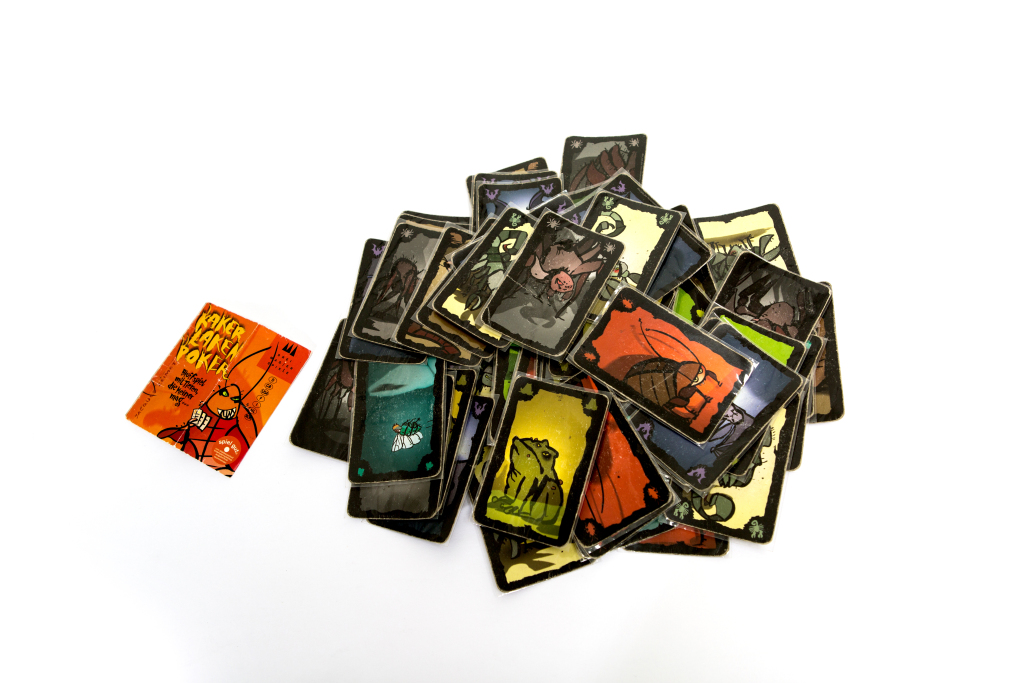
Light, fast icebreaker bluffing game: Cockroach Poker
03_Strategy
Pretty light, right? Cockroach Poker's biggest feature is that there are no turns. Multiplayer games suffer from downtime — waiting for your turn. But in Cockroach Poker, how long you wait varies, which keeps things tense. Plus, lies stack on a single card, so remembering what the previous player said doesn't matter much. That's why the game stays light.
When I first played, I tried tracking everyone's claims, but it was pointless. You never know where the lies are mixed in. Then once your brain starts to knot, you just keep losing.
Want to make Cockroach Poker even more fun? Tweak the end condition: lose if you collect either four of the same type or one of each of the eight types. Also, since you have multiple players, guests often want rankings. In that case, after the game ends, say the player with the fewest cards wins. That naturally encourages checking the leader and spreads the spotlight around the table.
04_Visuals
Some people aren't into the art, but I love the playful, whimsical style. Every critter looks like it's deliberately pulling a sour face, all lopsided like a kid drew it — isn't that charming? Most importantly, that mischievousness perfectly matches the game's vibe. Plus, the game is compact, so it's great to carry around or display in your space.
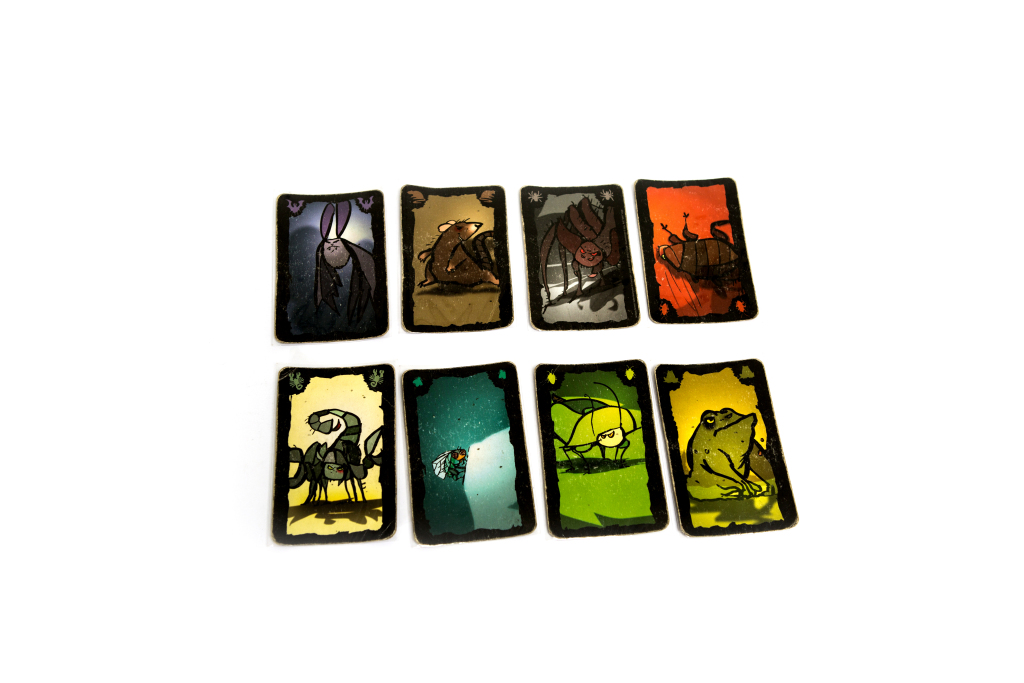
When playing, use the card's background color or top icon to identify critter types.
2. Bluff
01_Game Overview
Next up: Bluff. The name alone nails today's genre, right? More importantly, this game features dice and cups to shake them in, so the sound effects really amplify the atmosphere. At my space, when someone's playing Bluff, newcomers who've never tried it watch with intense curiosity. This is the game I played second-most in my youth, after Clue. Back then, we'd laugh ourselves silly. Even now, it gets huge laughs, but there's something about it — fierce bluffing in action.
02_Gameplay
To start, place the red dice on the betting board. Each player gets one cup and five yellow dice. Put the yellow dice in your cup, shake well, then slam the cup upside-down on the table.
Here's a tip: people familiar with sleight-of-hand cups often try to shuffle by sliding the cup around on the table without lifting it. Sure, Bluff has that street-hustle vibe, but unless you shake hard, the dice don't mix well and it's boring. Lift the cup, cover the opening with your hand, shake thoroughly, then slam it down.
Once play begins, cover the other side and peek under your cup to see your dice. You'll need to infer the total based on what you see and what happens in the game. The starting player moves the red dice on the betting board to make a bet. The red dice's face indicates the die face being bet on; the board number indicates the total quantity of that face you're claiming across all players' dice. Confusing?
Example: if I bet by placing the red dice showing 6 on the board space marked "9," I'm saying, "Among all the dice we have right now, there are at least nine dice showing 6."
Here's a quirk: our dice only have faces 1 through 5. The sixth face shows a star. The star is a wild joker — it counts as any number. So on the betting board, you'll see orange spaces with stars — those are for betting only on stars. Even a single step up the board dramatically increases the dice count, which creates subtle tension — a core mechanic. Personally, I think the "star" and "star-only spaces" are the cleverest rules in Bluff.
Play proceeds clockwise from the starting player. The next player can either raise the bet (like poker's Raise) or challenge (like poker's Call). If they raise, they advance the red dice clockwise, making the bet riskier than the previous player's. Eventually, someone shouts "Bluff!" and issues a challenge.
When someone challenges, all players immediately reveal their dice for verification. Three outcomes are possible, each with harsh judgment. Again, I'll call the betting player the attacker and the challenger the defender.
1) Attacker's bet is lower than the actual count: The attacker bet safely, so the defender loses dice equal to the difference.
2) Attacker's bet exactly matches the actual count: The attacker nailed it, so the defender and all other players lose one die each.
3) Attacker's bet is higher than the actual count: The defender correctly stopped a risky bet, so the attacker loses dice equal to the difference.
After judgment, the challenge winner starts a new round. Re-roll the dice and repeat. Once someone runs out of dice, the game ends.
03_Strategy
As you play, you'll find the "star" either irresistible or infuriating. When bets get dangerous, betting on stars only lowers the count, and if you happen to have a few, it seems plausible. This delicate tightrope walk is amplified by the most fun part: because Bluff uses sequential betting, usually only the attacker and defender bleed. (The odds of the attacker nailing the exact count are low.) So if the bet just passes you safely, you can leak information freely — or weaponize fake leaks. It's total chaos.
Plus, your dice count is your life — and it's directly tied to your private information. Snowballing is severe. Since you lose dice equal to the difference between the bet and the actual count, one bad call can wipe you out. If you die early, you're stuck watching from the sidelines forever. If you can't stay engaged and hyped, don't make reckless bets or you'll end up scrolling on your phone. It really feels like poker-style bluffing. You can keep Raising — upping the number — or Call — stopping the flow and revealing the hand.
04_Visuals
Bluff has the biggest box and most components of today's lineup. It's not just holding cards — you're rolling dice, which adds physicality. In practice, the color scheme, components, and box art are unified and well-packaged. The black background with yellow accents is striking — it'd look great displayed in your space.
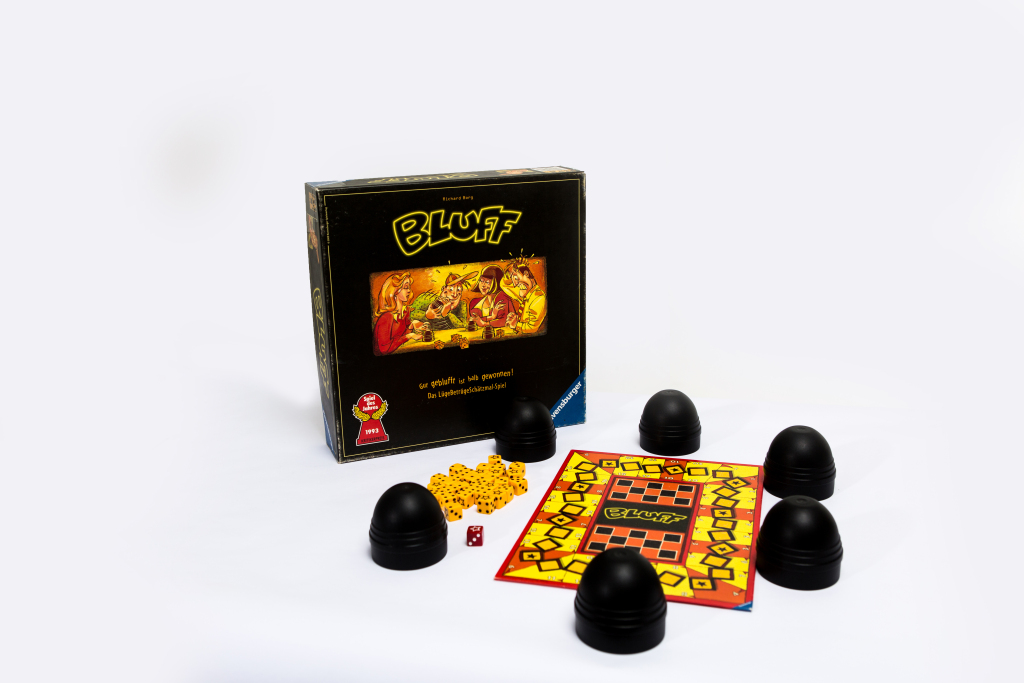

Bluff: big sound effects set the mood.
3. Resistance: Coup
01_Game Overview
The final game today is Resistance: Coup. I think it's the most psychologically demanding, but the components (base edition) are just 15 cards and 50 coins. Minimalism incarnate. In my opinion, this game extracts maximum depth from minimal components. The rules are concise but provoke deep thought — and they're captivating. Let's see what it's about.
02_Gameplay
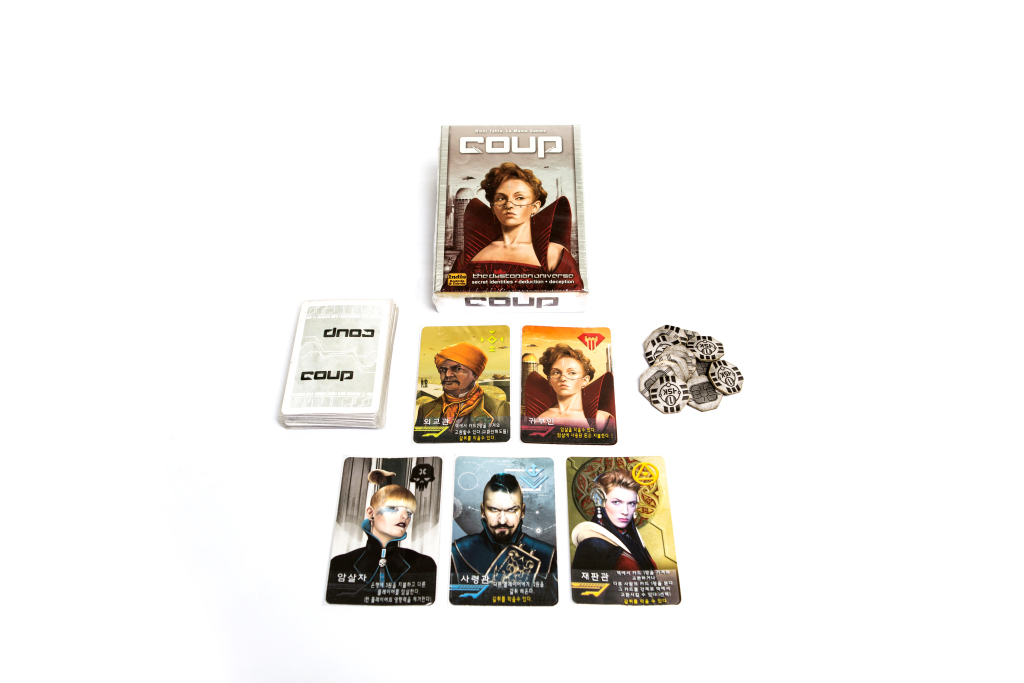
The 15 cards feature five characters, three of each: Duke, Assassin, Captain, Ambassador, Contessa. Shuffle all 15 cards and deal two to each player; set the rest in the center. Your hand is so critical it's practically everything in this game — check it carefully and don't let your neighbor peek. It's easier to keep them face-down on the table in front of you. Now take two coins and a reference card, and you're ready to play.
Starting with the first player, proceed clockwise. On your turn, you can perform one of three free actions or one character action. (The reference card makes this easy!)
[Free Actions]
- Take 1 coin: From the central bank. No one can stop this.
- Take 2 coins: From the central bank, but if someone has a Duke, they can block you from taking 2.
- Spend 7 coins to launch a "Coup": Spend 7 coins to attack a player. The target must choose one of their two character cards, reveal it, and discard it. If they only have one card left, they discard it and are immediately eliminated. No one can block this.
[Character Actions]
- Duke: Take 3 coins from the bank. Can block someone taking 2 coins (free action).
- Assassin: Spend 3 coins to attack a player. But if the target has the Contessa, the attack fails and you still lose the coins.
- Captain: Target a player and steal 2 of their coins. But if the target has the Captain or Ambassador, the theft fails and you still lose the attempt.
- Ambassador: Immediately draw 2 cards from the central deck. You can freely swap them with your current hand (your hand size doesn't increase). Can block someone using the Assassin on you.
- Contessa: No active ability. Can block someone using the Assassin on you.
Use these abilities to eliminate all other players and be the last one standing. So far, it's just another card game. But Resistance: Coup's devilish magic kicks in once you understand the actions. You can use character actions even if you don't have the character. Everything can be a lie. Naturally, you can issue a challenge at any point to verify the truth, just like in Bluff.
When someone uses a character ability and you suspect they don't have that character, shout "Wait!" and issue a challenge. Two outcomes are possible:
1) Card user is telling the truth: The challenger failed, so they lose one of their character cards and reveal it publicly.
2) Card user is lying: The challenger succeeded, so the card user loses one of their character cards and reveals it publicly.
Simple, right? But outcome 1 causes a small problem. The card user was truthful, but to prove it, they had to reveal their card. That card loses its bluffing potential.
To offset this disadvantage, in Coup, cards revealed to prove truth return to the central deck and are shuffled; the card user draws a new card. Of course, you might draw the same card back. Because of this — separate from the Ambassador's ability — cards constantly cycle, and even a strong hand can fall apart quickly. The game stays endlessly dynamic and tense.
03_Strategy
Simple rules, lots to think about, right? Despite this depth, you need to lie well to win. Poker-faced acting is crucial. Challenging is intuitive and fast, so any opening gets exploited instantly. Once a challenge is issued, either you or your opponent loses a card. Like Bluff, cards are life and information in this game, so you must be careful.
Some players exploit this caution by freely mixing abilities to gain advantage. Truth is only useful at the right moment. As this frantic round ends quickly and you'll play multiple rounds for fun, developing an overall playstyle and then twisting it at key moments is rewarding. It's like building up your persona over time.
This game especially rewards counting, since there are only three of each character and information constantly gets revealed as players are eliminated. (Cockroach Poker also has a fixed deck for counting, but it's more of an appetizer game where you don't need to go that deep.) Every card revealed shifts the landscape dramatically, amplifying the buildup. As a survivor, you're grateful for the crucial intel dying players leave behind. Of course, if my lies get exposed, I feel betrayed.
04_Visuals
Resistance: Coup's artwork is, needless to say, detailed and gorgeous. The small, portable package is unusual — it's embossed with foil and glitters. The unique touch here is the theme: look closely at the game's setting and clothing. The world is clearly cutting-edge sci-fi, but the costumes are classical. This incongruous, distinctive sci-fi fusion is signature. Resistance: Coup is a game with lots of visual appeal.
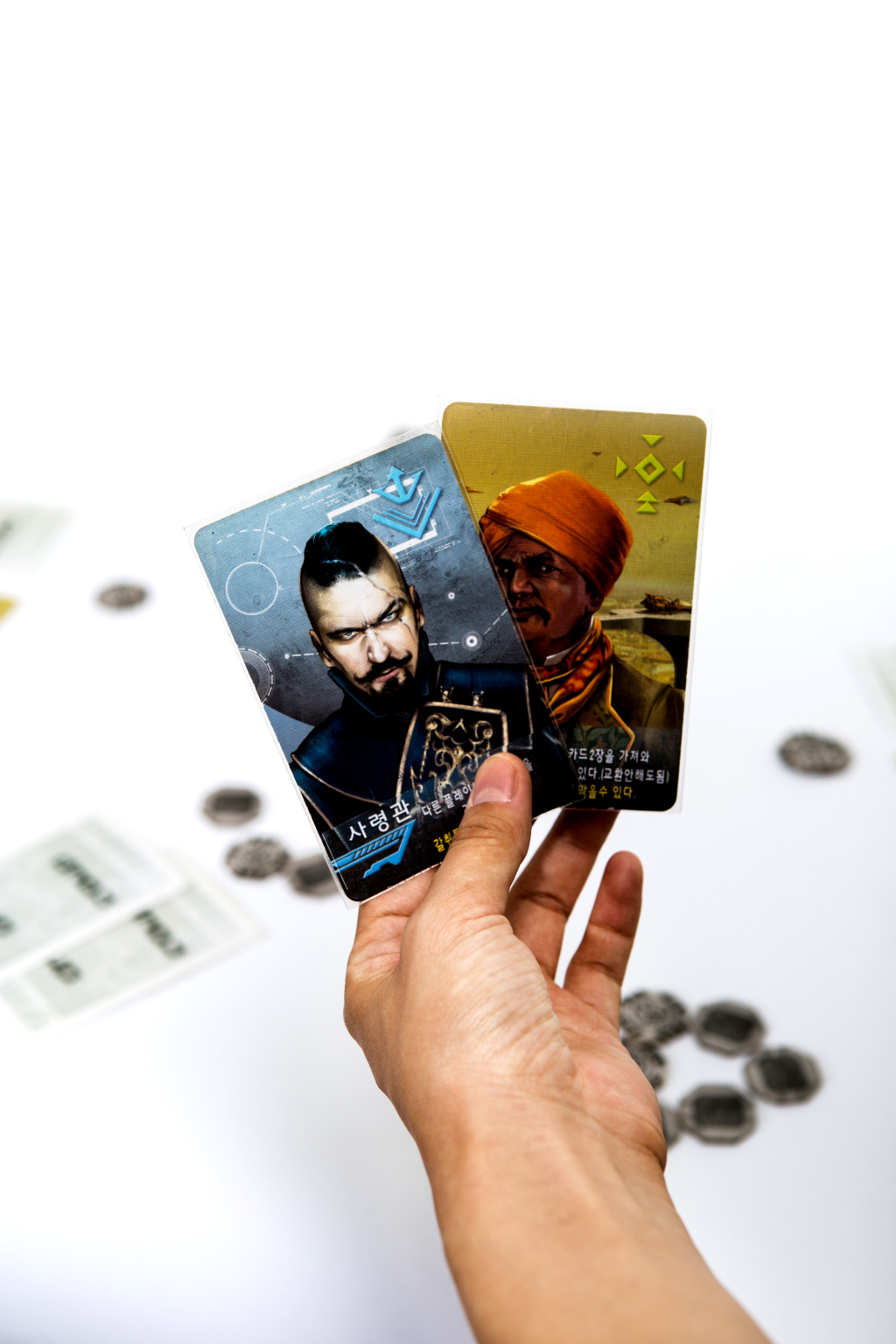
Resistance: Coup: maximum depth from minimal components.
Fine.
From Cockroach Poker to Bluff to Resistance: Coup — that's my curriculum of the best-received multiplayer bluffing games from five years of hosting thousands of guests. Over the next two installments, I'll introduce big-group games that really bring the laughs. Stay tuned. For detailed rules, I recommend checking each publisher's official rulebook on their website or communities like Boardlife or BoardGameGeek. Next time, I'll return with 5–6 player "cutthroat" games. See you then.
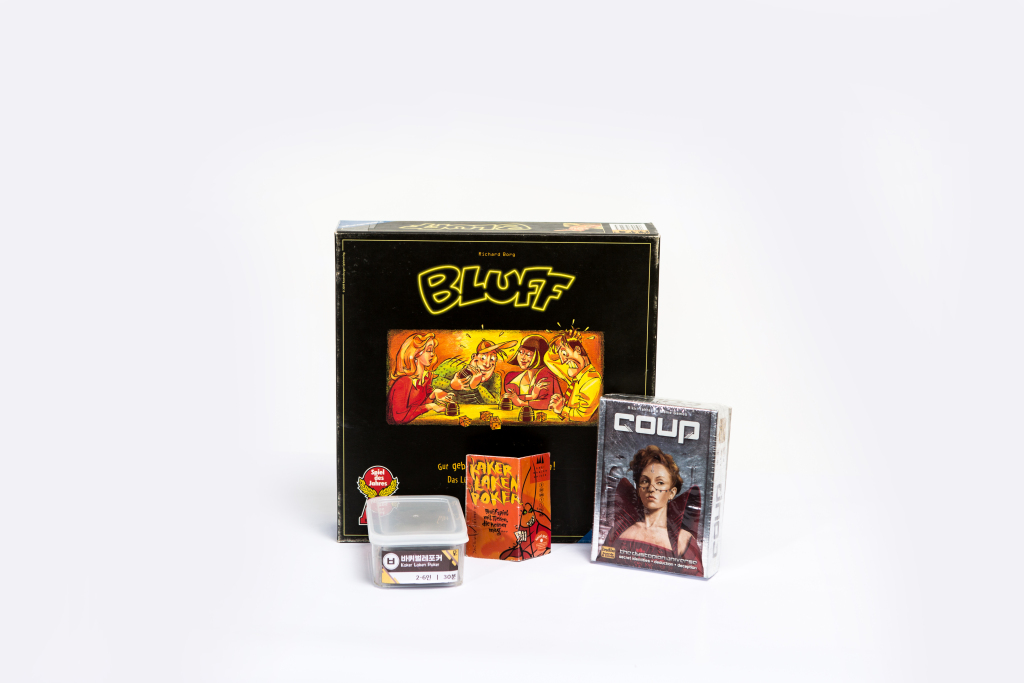
Huge thanks to the talented photographer who captured these shots
@siostudio http://studiosio.co.kr/
[Series Index]
2019.01 Introduction 2019.02 Two Players: Abstract Strategy 2019.03 Two Players: Psychological Warfare 2019.04 Two Players: Cards 2019.05 Special Edition: Big Games 2019.06 Three-Four Players: Placement 2019.07 Three-Four Players: Deduction 2019.08 Three-Four Players: Cards 2019.09 Multiplayer: Bluffing 2019.10 Multiplayer: Negotiation 2019.11 Multiplayer: Mafia 2019.12 Reflections