Mafia games evolved from school trip finger-pointing into sophisticated social deduction experiences. This final essay explores how modern designs handle team dynamics, role complexity, and the fine balance between chaos and strategic depth.
11. For Many: Mafia
Writer Ahn Min-woo, CEO, Agger Games
Editor Somora, Manager, ONDA
Photo Yuhwagaran & Studio Sio


Hello, I'm Ahn Min-woo, CEO of Agger Games. It feels surreal that we're already at the final game. It's November already. Feels like yesterday I was brimming with excitement deciding which games to introduce. As I sketched out this month's piece, I quietly pulled out my electric heating pad. Now that it's gotten properly cold, I'll introduce games that reach maximum output the moment people gather — games that run hot and get everyone fired up.
Feature: Mafia
Here comes the final boss genre. The genre where everyone's neck gets sore from all the backstabbing: 'Mafia.' Originally, "mafia" refers to Italian crime syndicates, but to us, it's simply synonymous with games where a malicious minority deceives an innocent majority. Created in Russia in the 1980s, this genre took off in the late '90s as The Werewolves of Miller's Hollow, converted to a werewolf theme. In Korea, though, it spread under the name "Mafia Game" instead of werewolf.
Everyone's played this on school trips or MT getaways — pointing fingers to assign mafia roles and shouting accusations. This game became synonymous with the genre itself because of its addictive immersion, the betrayal, the satisfaction, the thrill of deceiving others. Sure, broadly speaking, it belongs to the bluffing genre I covered in October, but mafia's unique flavor is distinct enough to deserve its own subcategory.
Case in point: the mafia games we all know feel quite different from Bohnanza, I'm the Boss!, or Chinatown, right? In bluffing games, you engage in long-term bluffing for personal gain — but mafia divides everyone into teams and shifts the goal from profit to survival. Mafia games that once needed only hands and voices have become even more special with board game components. You can shuffle cards or tiles to assign roles, eliminating the need for a moderator. Some games even start with the minority team unaware of each other's identities to heighten drama. Job compositions and rule variations drastically alter gameplay.
Max 10 simultaneous players, tension that never drops — dive into the mafia genre! Oh, and bluffing–negotiation–mafia: the more players, the lighter it should be, not heavier, got it?
1. Bang!
01_Game Overview
This is the most recognizable mafia game I'm covering today. Surprisingly, many men played this during military service. Playing a mafia game… between seniors and juniors… hard to believe, but okay. I even met with dV giochi, the Italian publisher, at Essen. Fascinating experience. Their catalog was all Bang! — two-player Bang, Bang expansions… they spun one game into countless product lines. I believe they also published The Werewolves of Miller's Hollow under the Da Vinci Games label, but Bang!'s lineup was overwhelming. The fact you can repackage it this many times and still sell proves how famous and well-designed Bang! is. Rare to see Italian publishers in the board game scene, but this company is legendary for birthing Bang!. Funny that Italy — home of the real mafia — spawned a mafia-genre giant.
02_Rules Explanation
My usual order is easiest to hardest. Today's mafia games reverse that. Why? More rules mean lower player freedom, which guarantees a baseline of fun and fewer derailed sessions. Even if there's a lot to explain, once you're done, even beginners pick it up quickly.
Mafia thrives on constant interaction, so from a facilitator's standpoint, high freedom equals steep difficulty. Hard to run. So the first game, Bang!, has the most rules but the lowest difficulty. Let's dive in.
First, understand a few core systems. Most important: 'good team, bad team, weird team' role composition and each team's win condition.
▪ Good Team (Sheriff, Deputy): Win by eliminating all bad and weird team members
▪ Bad Team (Outlaws): Win by killing the Sheriff
▪ Weird Team (Renegade): Kill everyone, but must kill the Sheriff last
Pretty unique, right? Let me break it down. The good team consists of the Sheriff and Deputies. The Sheriff is the outlaws' sole target, so at game start, they must flip their role card face-up and reveal their identity. Deputies protect the Sheriff and hunt down the other teams. The bad team — all Outlaw roles — must attack and drain the Sheriff's health to zero to win instantly.
The weird team is the Renegade, alone but most unique. I believe the Renegade makes Bang! what it is today. The Renegade must survive to the very end and kill the Sheriff. By playing the perfect Deputy, eliminating all Outlaws, earning the Sheriff's trust, and then taking out the real Deputies, the Renegade faces the Sheriff 1-on-1 — only then can they kill the Sheriff and win. If they kill the Sheriff while others are alive, the Outlaw team wins instantly. Seems hardest to win, but if you nail the Deputy act, not so much. More importantly, the Renegade completes Bang!'s design.
The funniest part? After roles are dealt, only the Sheriff is revealed. No one knows anyone else's identity or team, and no info is shared. In a 7-player game: 1 Sheriff, 1 Renegade, 2 Deputies, 3 Outlaws — all strangers to each other. That's where the fun is.
After roles are set as described, each player receives 2 character cards with unique abilities and picks one. The chosen card faces up, the other card's back overlaps it — the bullet count on that back represents health. Like Bohnanza, using card backs! Of course, you can use bullet tokens on player mats instead.
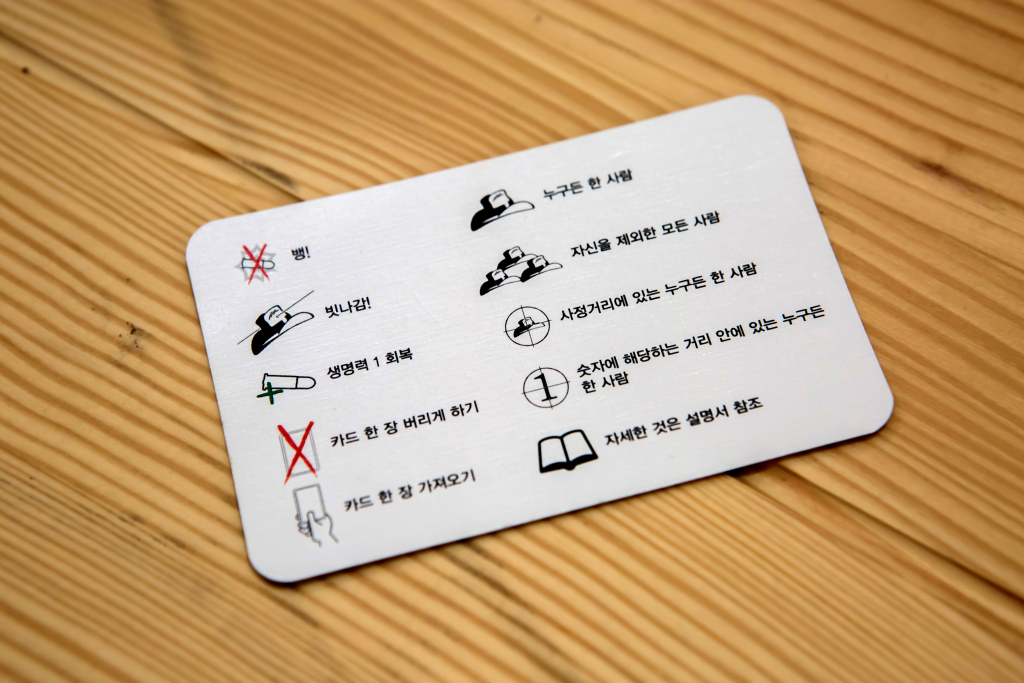
Naturally, if you take enough hits to drain your health, you die. Character abilities are balanced by health — stronger ability = fewer lives, weaker ability = more health. The Sheriff gets +1 health because they're at risk! Then shuffle and deal ~80 action cards equal to each player's health, and start the game. Bang!'s biggest entry barrier? The sheer number of card types. Use a reference card like this to make sense of it:
In this piece, I'll skip exhaustive card/character lists and focus on core cards and Bang!'s unique systems. First, the most important card that shares the game's name: the Bang card. A Bang card lets you shoot someone to deal 1 damage. But no matter how many Bang cards you hold, you can only play 1 per turn.
This ties into an important system: 'range.' In Bang!, you start at 0, neighbors are at 1, players beyond them are at 2… this sequential distance is range. At game start, you equip a range-1 gun on your player mat, so you can only Bang neighbors. If hit, players can play a Missed! card (even on others' turns) to dodge damage. Literal miss. Intuitive, right? There's an even more intuitive card: Beer heals 1 health. The reason is… obvious, I think.
Blue-bordered cards are equipment cards that remain in play after use unless discarded by you or forced effects. You can equip longer-range guns, guns that let you Bang multiple times, or Barrels that give you a chance to dodge — gear up your character. Barrel introduces another system: like Russian roulette, Bang! has card flipping for luck checks. Before triggering certain card/character effects, flip the top deck card — the suit/number determines if the ability triggers. With Barrel, when shot, flip a card: if it's hearts, you dodge. Pretty annoying when opponents turtle up with Barrels.
Now that you get the systems, gameplay is simple. Sheriff goes first. On your turn, draw 2 cards, then play as many as you want (Bang: only 1!) and end your turn. If you hold more cards than your health, discard the excess — so use them. If anyone's health hits zero, they're eliminated and reveal their role. Game accelerates. When any team meets their win condition, that team wins.
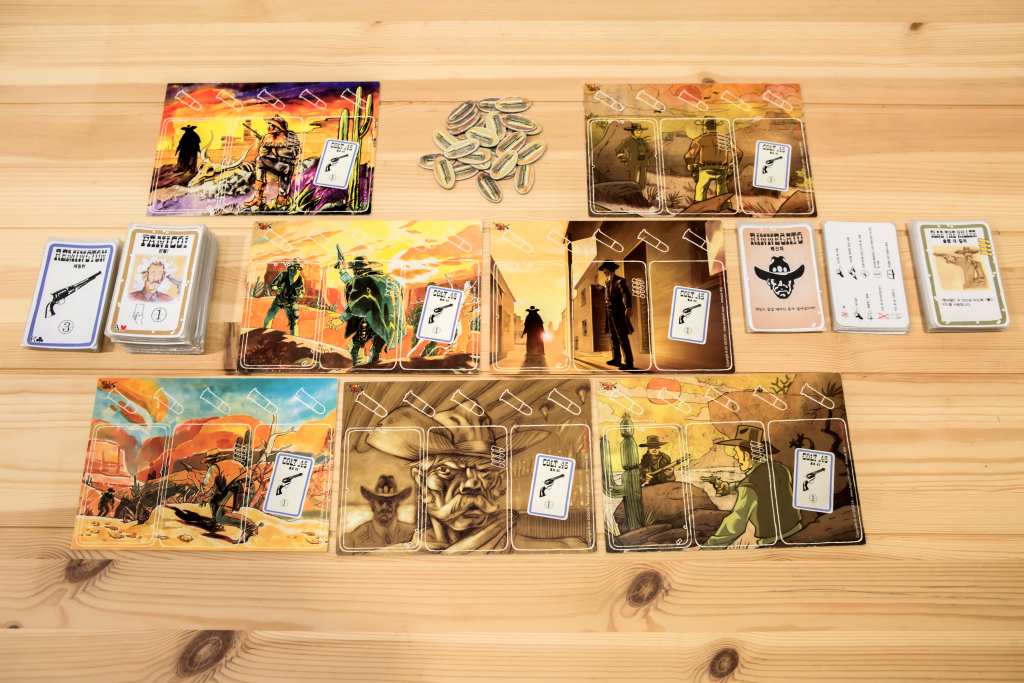
A Wild West mafia game with barren landscapes, guns, and rugged art: Bang!
03_Strategy Tips
Health equals hand size equals power, so manage health well. Even if you stand out and get focused, you draw cards first each turn, so you won't fall too far behind. Don't become a scapegoat. If you die too early, like most mafia games, you have nothing to do. Outlaws should read the room — once someone reveals themselves as Outlaw and attacks the Sheriff, focus fire and finish it. An ambiguous Outlaw might attack another Outlaw to avoid becoming a target.
If you're the Renegade, don't panic. Fully commit to being a Deputy. That's how you protect the Sheriff all the way, send off the real Deputies, then betray the Sheriff and aim your gun. That killing moment — the Sheriff's face when their trusted Deputy turns on them — is priceless. Because Bang! inevitably gives the Sheriff early-game power and some authority. So you must deliver that shock to nail the Renegade's satisfying twist.
This dynamic makes 5+ players the sweet spot for Bang!, when the Renegade enters play. Most say 7-player — with all roles — is best. However, these roles, teams, and card variety raise the entry barrier. So at our space, we favor Bang! The Dice Game — uses dice instead of cards, adds an extra Renegade for up to 8 players. Teach the lighter dice version first; if it clicks and they love it, guide them to the original card-based Bang!.
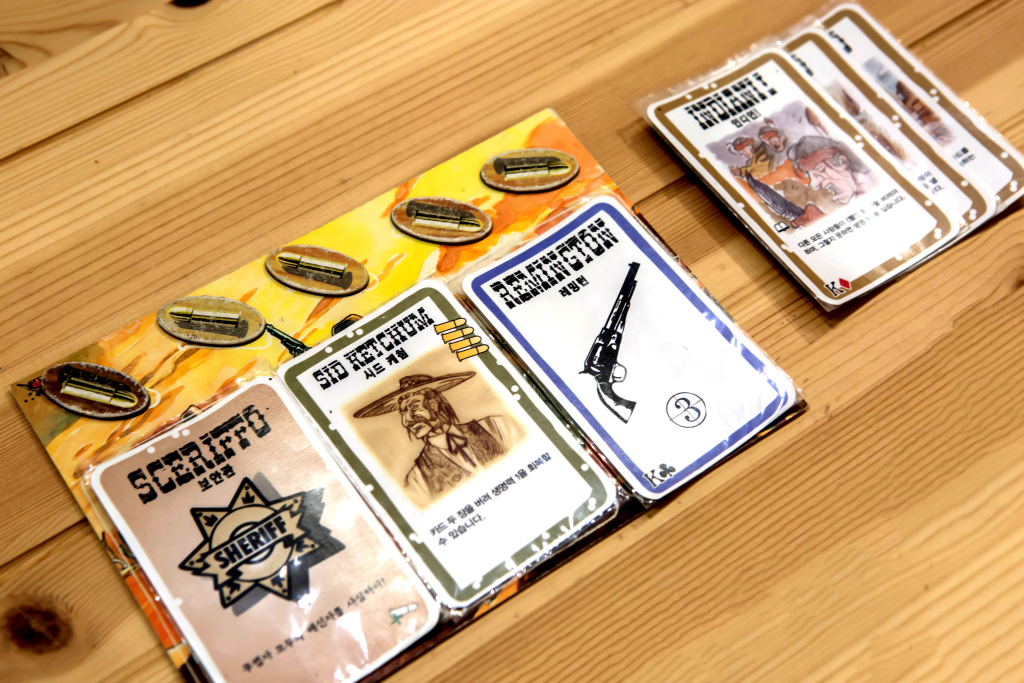
So many versions and expansions — exploring them is half the fun.
04_Visuals
Wild. West. Vibes. Everything starts with barren land, guns, rugged art, and ends with cutthroat schemes. After one round, the sheer number of cards becomes intuitive thanks to strong thematic design. Exploring the many versions and expansions is fun too. Above all, you can equip various gear cards, and each character has traits — adding depth to a potentially shallow mafia genre. Each card might feel dated compared to modern releases, but together they exude Wild West atmosphere. At our space, guests sometimes compete to grab their favorite player mat art! (Mafia starts before the game…)
2. The Resistance: Avalon
01_Game Overview
Personally, The Resistance: Avalon is the ultimate mafia game. It has everything. In 2009, the original version, The Resistance, debuted. I first played it at a regular board game meetup — loved it. Then in 2012, special roles were added and the theme shifted to medieval fantasy, rebranded as The Resistance: Avalon (hereafter "Avalon"). The core system was already great, so when I heard about added roles, I played with high expectations. Result: shock and awe. It was too good.
02_Rules Explanation
Avalon follows classic mafia structure. Evil forces (Mafia team) vs. Arthur's noble servants (Civilian team). But the roles interlock uniquely — let's understand them first, then move into gameplay. After receiving role cards, blue background with Arthur's seal = Human team, red background with Mordred's (demon king) seal = Evil team. You might just get a team with no special role, but if there's a name at the bottom, you've got a special ability.
I'll cover base game roles (excluding expansions).
<Human Team>
▪ Merlin: Knows all Evil identities except Mordred at game start.
▪ Percival: Knows who the wizards are at game start.
<Evil Team>
▪ Mordred: Evil king. Undetectable by Merlin.
▪ Morgana: Evil wizard. No special ability, but must pretend to be Merlin to confuse Percival.
▪ Assassin: If the Human team wins, all Evil players reveal and discuss who Merlin was. The Assassin makes the final call. If correct, victory instantly reverses to Evil. If wrong, nothing happens.
▪ Oberon: Evil's wildcard. The only Evil player hidden even from other Evil members. Revealed to Merlin.
These role interactions are key but hard to grasp at first. Because like mafia, these abilities trigger in sequence before game start. Let me walk you through it, mafia-style.
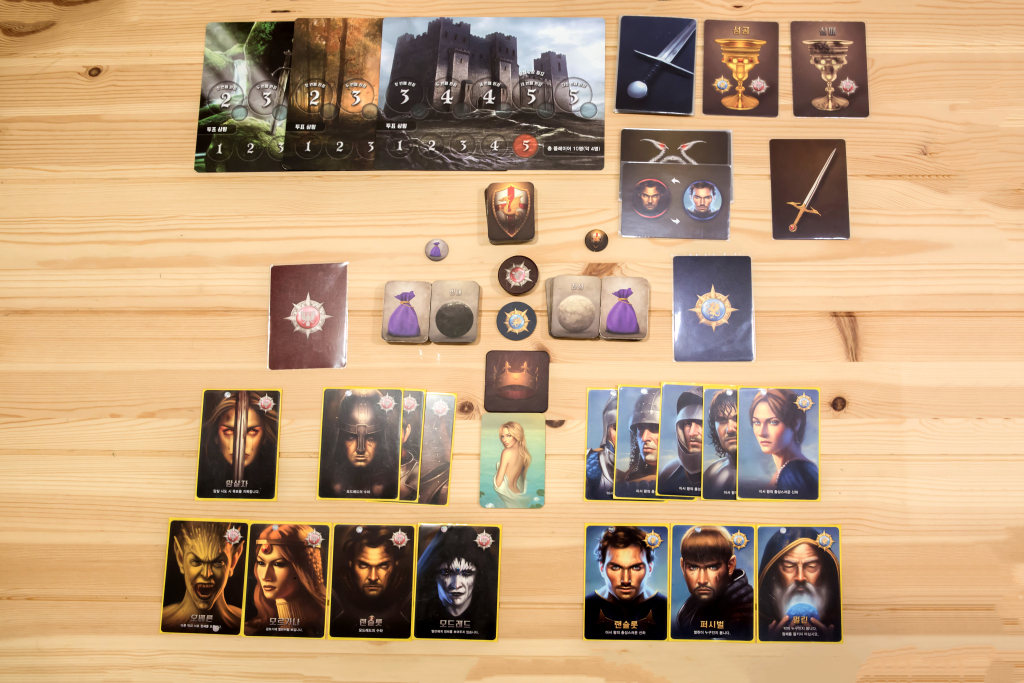
Assume a full 10-player game with all roles. Everyone receives their role card and closes their eyes. Evil players confirm each other. But Oberon keeps eyes closed. Other Evil don't know Oberon's identity, and Oberon doesn't know the others. Unlike Bang!, like traditional mafia. Once everyone opens their eyes after the sequence, eyes dart around — the calm before the storm. Stretch properly before starting!
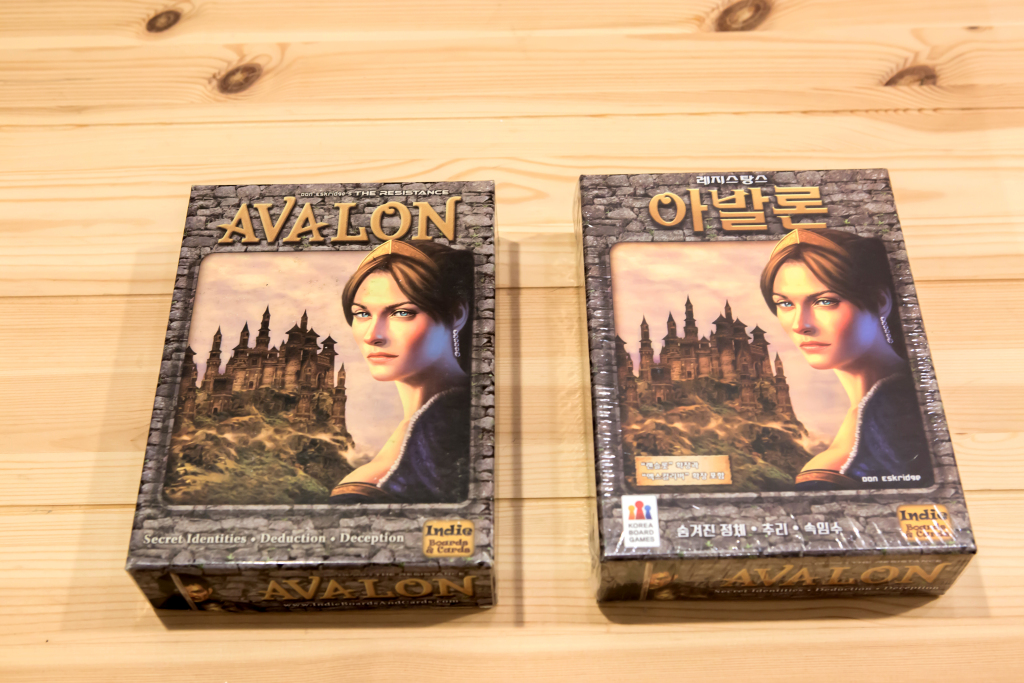
From the original The Resistance, special roles added and medieval fantasy theme adopted: The Resistance: Avalon
Once Evil closes eyes, all Evil except Mordred carefully raise thumbs to signal Merlin they're Evil. Oberon included! Merlin opens eyes and sees the raised thumbs. Doesn't know which Evil role each is, but knows all Evil except Mordred. Then Merlin closes eyes but raises thumb; Evil (except Morgana) lower thumbs. Percival opens eyes to identify Merlin. But Morgana (Evil wizard) keeps thumb up, so Percival sees two wizards. One is Merlin to protect, one is Evil Morgana. After this, everyone lowers thumbs and opens eyes to begin!
The game consists of five rounds, each with 2 phases: 'Quest Team Selection' and 'Quest.' Starting with the eldest, the Leader picks people for the quest. Number of quest members varies by round and player count, so check the chart!
Quest Team Selection is choosing who goes on the quest. Players vote to approve or reject the Leader's proposed team using tokens hidden in hand, then reveal simultaneously. Majority approval forms the quest team. If tied or majority rejects, the plan fails and Leadership passes clockwise to form a new team. But beware: if team selection fails five times in one round, Evil wins immediately!
Once a team is approved, only quest members receive 'Quest Success' and 'Quest Fail' cards. Members secretly choose one and pass it face-down to the Leader. The Leader shuffles received cards (so no one knows who played what) and also shuffles the unchosen cards. Then reveals the received cards.
Key point: even one Fail card means the quest fails. All members must play Success for the quest to succeed. Results are marked on the game board, and the next round begins. Crucial rule: during team approval, everyone can freely vote yes/no, but quest members on the Human team MUST play 'Success.' You absolutely cannot play 'Fail' to test the waters. Evil, however, can strategically play either.
So across five rounds, first team to win three rounds wins. Don't forget! If Humans win, all Evil reveal and the Assassin hunts Merlin, so Merlin must stay hidden!
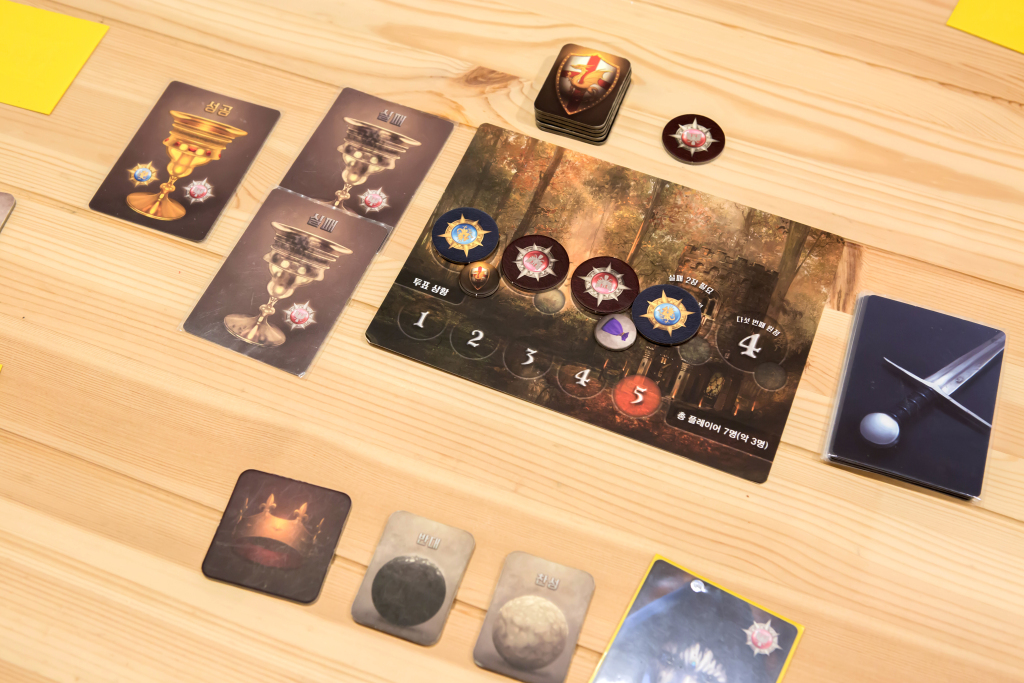
The game's Arthurian legend theme might not immediately resonate with our culture, but once you play, you'll be hooked.
03_Strategy Tips
How's that? Shorter explanation than Bang!, only 2 teams instead of 3, but role interactions are far more layered. If you don't fully grasp roles and the quest system, it's hard to lie boldly or defend against probing. So when teaching beginners at our space, I first run one round without special roles — just pure Resistance — then explain roles. Sure, it splits explanation time in two, but this minimizes failure and maximizes positive reactions. Everyone properly understands the game, and that's when they truly experience it. As a dedicated board game space, spending time on thorough explanation is worth it. For accommodations, keeping this game and occasionally teaching it to group guests could be a great selling point. Oh, and be careful — you might want to join the guests because it looks so fun!
Fundamentally, watch team approval voting results closely. Who approved/rejected which team composition. Based on context, you can sometimes predict quest outcomes from words exchanged or rejection counts. Because if all members are Human, most Evil will reject. Also, in Round 4, two Fail cards are needed to fail the quest, so Evil has a hard time winning. Use this strategically. Unless Evil swept Rounds 1–3, Round 4 resets to 2-2 and Round 5 is the real showdown. Brilliantly tight design, right?
Ultimately, the 'Quest' system is Avalon's heart. Normal mafia games kill people to learn identities, but Avalon's quests solve that necessity through game logic — a beautiful example. Even if you suspect someone early, you can't fully abandon them. They might not be Evil. To weed out Evil, you must find many good people, always leaving possibilities open. This, combined with unique roles, makes the game lean and tense.
Unlike Bang!, roles trigger pre-game like true mafia, adding setup time, so eliminate rustling clothes or other giveaways by lightly tapping the table to mask sound. Evil must stay hidden, but Merlin must also hide — because if the Assassin kills Merlin post-game, Evil wins via the lore that losing the great wizard dooms the world. Merlin must coordinate with Percival (whose identity is unknown) and read the battlefield well. That's why even no-ability teammates must support Merlin well for info to flow. Once players adapt, Percival-like players get baited by Morgana, and the Assassin hunts Merlin like a bloodhound. Intense, right? Just be careful with Percival — most commonly mispronounced name, and fits the suffering role perfectly.
Role composition and team distribution vary by player count, so check the official rulebook. Once comfortable, customize combos. Oberon is a true wildcard — adding him actually handicaps Evil. Mordred dodges Merlin, so adding him strengthens Evil. There are basic Evil with no abilities, so balance this way.
The game's charm is Evil-on-Evil trolling — happens often if you include Oberon. When two+ Evil are on the same quest (except Round 4), both don't need to play Fail. If signals cross and both play Fail, too much info leaks in one quest, so they second-guess each other.
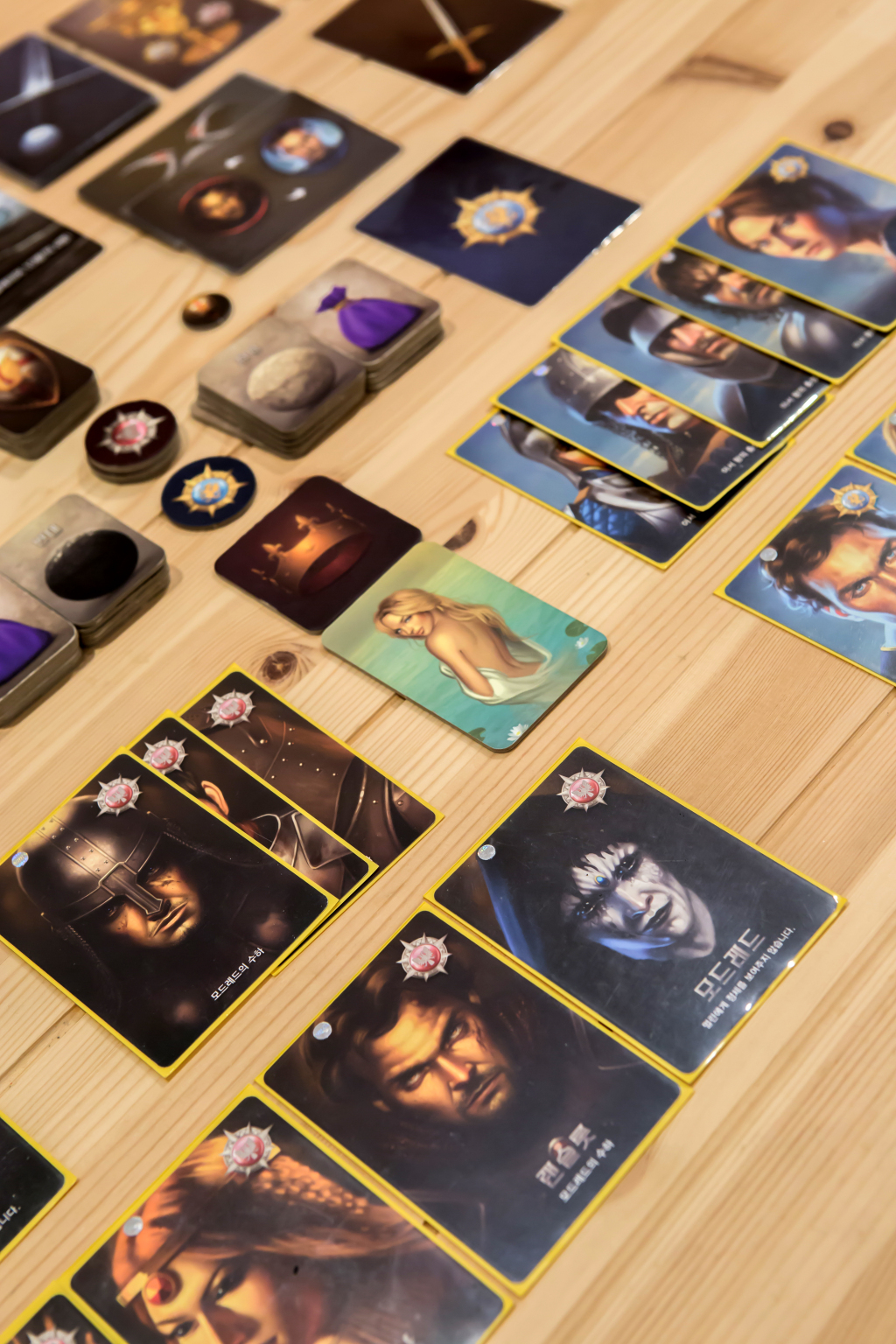
04_Visuals
More elegant than Bang!. Medieval fantasy done well. Best part: cards have no borders, filled entirely with art. This makes art bigger, prettier, and more immersive. But borderless cards fray easily at edges — noticeable wear. In mafia games, card tells are bad, so use sleeves. At first, the Arthurian legend theme might feel distant from our culture, but once you play intensely, you'll be hooked.
3. Deception: Murder in Hong Kong
01_Game Overview
I bought Deception immediately after playing. Above all, no other game makes guests talk this much while staying immersed in theme. Rules explanation is easiest. But play difficulty is high. As I said with Bang!, high freedom means it's easy to lose the fun thread or drift off-course. If all players are beginners, it's hard to play 'enjoyably.' At least one player must have experience — that player leads the first game, solves issues, and engages everyone. So at our space, we assign experienced facilitators who read player dialogue flow well to lead.
02_Rules Explanation
Deception's subtitle is "Murder in Hong Kong." Players become investigators on this murder case. Fits a mystery theme, but a killer hides among them — turning it into a mafia game. Reminds me of Dexter. So like Avalon, teams are Mafia vs. Civilians, Evil vs. Good.
Assume 6+ players, using all five roles: Forensic Scientist, Murderer, regular Investigators, Accomplice, Witness. Following this article's flow, if you understood Avalon, Deception's role structure is intuitive. It also triggers abilities pre-game in sequence.
First, shuffle role cards by player count and deal. Whoever draws Forensic Scientist reveals their role publicly (like Sheriff in Bang!) and becomes official moderator for this round. Then all players except Forensic Scientist receive four blue 'Means of Murder' (hereafter 'Means') cards and four red 'Key Evidence' (hereafter 'Evidence') cards, arranged face-up in front of them for everyone to see. Everyone reviews others' cards. Then all players except Forensic Scientist close eyes.
Forensic Scientist has Murderer and Accomplice open eyes. These two are allies and must hide the Murderer's Means and Evidence combo from Investigators until game end. Murderer points to 1 Means and 1 Evidence card in front of them, revealing the game's answer to Forensic Scientist and Accomplice. Once shared, Murderer and Accomplice close eyes. Thus Forensic Scientist knows the answer and must lead the game, so be careful not to speak or show it on your face. Don't forget!
Now Forensic Scientist has the Witness open eyes. Forensic Scientist directly points to reveal who the Murderer and Accomplice are. But Witness cannot distinguish which is which, and doesn't learn which Means and Evidence were chosen. Just identifies two bad guys. Once Witness understands, close eyes and wake all players to start.
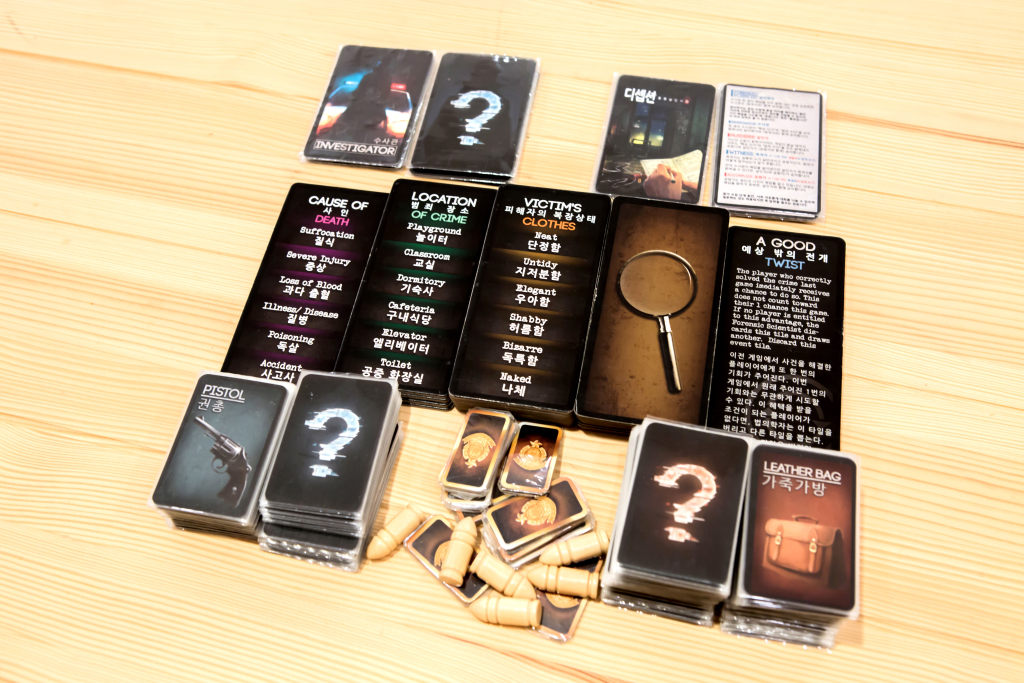
A mafia game where players investigate a murder case: Deception: Murder in Hong Kong
The game is three rounds. Before Round 1, place tiles: 1 Cause of Death tile, 1 chosen Location tile, 4 random Scene tiles — total 6 tiles. Each tile lists 6 items. Forensic Scientist uses only these to guide Investigators toward the Murderer's Means and Evidence combo. Can't speak, act, or show facial tells — but like a word association quiz, guide players to infer the answer through chosen items. Place 6 bullet markers on desired items. Truly a secret they cannot speak.
After placement, all players discuss equally and voice opinions. Rulebook says ~30 seconds per person, but listen flexibly and narrow the investigation. Important: minimize interrupting while someone speaks. After hearing everyone, move to Round 2. In Round 2, draw another Scene tile, swap one existing Scene tile, set the new tile's item, and give another clue. Listen to opinions again.
Round 3 is the same as Round 2. Throughout play, players can freely theorize or discuss. But all players except Forensic Scientist hold an investigator badge token. Using it lets you 'Solve the Case' — guess the answer to end the game. Each player gets one chance. Declare solving the case, then name a specific player's Means and Evidence combo. Forensic Scientist can only answer "yes" or "no." Even if one is correct and one is wrong, must answer "no."
If all players spend badge tokens without guessing correctly, Murderer and Accomplice win. If anyone guesses exactly right, Forensic Scientist, Investigators, and Witness win. But even then, like Merlin and Assassin, Murderer and Accomplice get a comeback chance — reveal identities, discuss, and identify someone suspicious as Witness. If correct, they reverse and win. If wrong, they lose.
03_Strategy Tips
High freedom, right? Round transitions and in-round progress all depend on Forensic Scientist and group atmosphere. You see why this game is harder than the explanation. If players don't understand and drag out play, interest drops fast. For beginners, I recommend a tutorial: start with 3 Means and 3 Evidence cards each for a quick practice round. Then immediately jump into the full 5-card hardcore Deception — you'll warp several hours. More cards = more possibilities = deeper immersion = longer playtime.
Like Avalon, you're not eliminated mid-game and can keep engaging in back-and-forth, so Forensic Scientist's clues must help filter out trustworthy Investigators. Use process of elimination to tighten the net. Like that blindfolded zombie game at MT! Murderer must slip out of that net in one move. Hesitate and you'll get caught, so redirecting suspicion is crucial. To keep this mind game fun, Forensic Scientist must maintain player energy — but when giving clues, avoid overly unique thinking. That causes confusion and derails the whole game's fun. In many ways, the Forensic Scientist's skill and overall group vibe heavily affect this game.
The game has many charms. First, even though it's mafia, by late-game, you roughly know who the Murderer is. So Murderer must choose a Means/Evidence combo hard for Forensic Scientist to tie together, forcing Investigators to waste badge tokens. But two factors elegantly balance this: (1) Murderer chooses combo before tile items are revealed, (2) Investigators don't know if Forensic Scientist's clues point to Means or Evidence. These two quirks create exquisite balance.
So when Forensic Scientist hesitates or swaps out Scene tiles, everything becomes a clue. And Forensic Scientist is human — unavoidable frustration and sighs leak out, adding another fun layer. The more public opinion drifts off-course, the more they suffer. Plus, Murderer and Accomplice also hold badge tokens. They can genuinely point to someone else and attempt to 'solve the case,' creating serious confusion.
In other words, Deception hinges not just on card-tile connections, but on atmosphere driven by luck and people — leading to fun. To amplify immersive game fun, I ask Forensic Scientist to debrief the case after each round. Depending on their style and how the game unfolded, a fun drama emerges — another fun element. I highly recommend you try the debrief too.
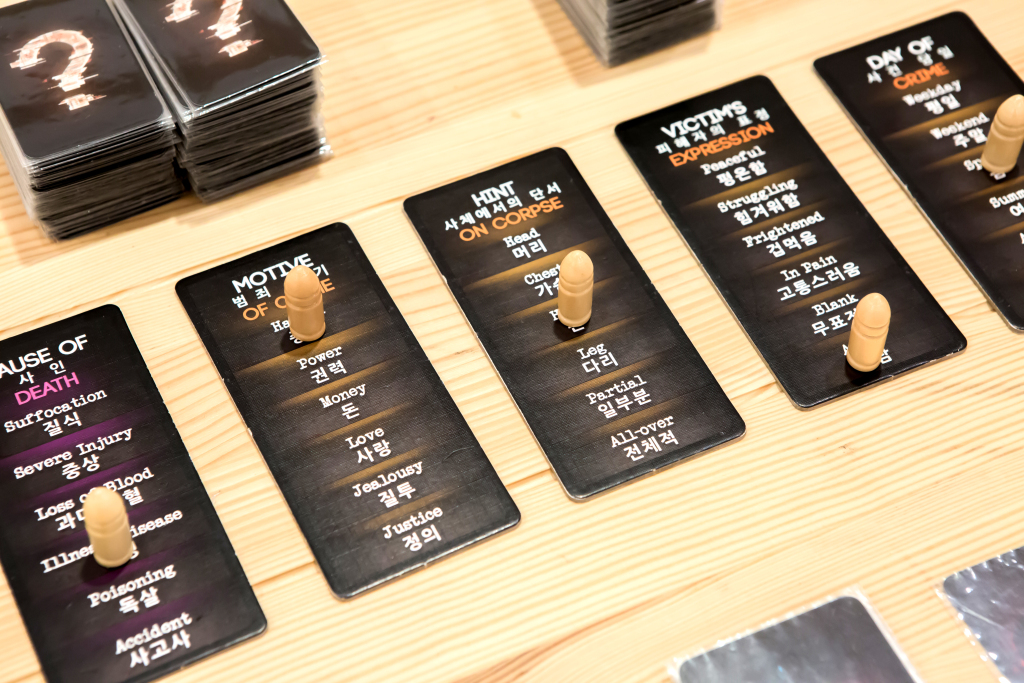
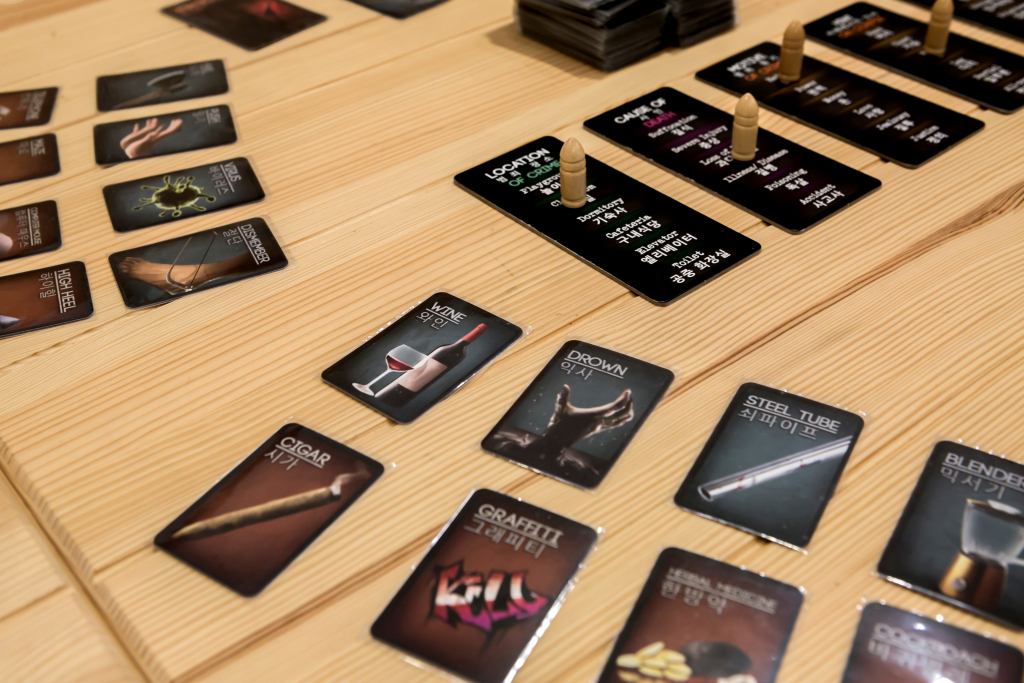
Atmosphere itself is driven by luck and people, leading to fun.
04_Visuals
Each card depicts objects in realistic art style. No game board, but lots of cards — so when many players spread them out, quite imposing. Beyond cards, diverse objects and 6 bullet markers are striking.
From the game box to play style, everything unfolds on a large scale, making great play photos. I recommend playing with 8+ people. Cards have good detail on each object, so when others talk too long, you can admire the art.
Fine.
From Bang! to The Resistance: Avalon to Deception: Murder in Hong Kong — I've laid out the multiplayer mafia game curriculum that got the best reactions from thousands of guests over five years. No board game genre for many players is as explosive and immersive as mafia. People say this genre is hit-or-miss, but mafia games aren't meant for people who don't mesh. (You'll just fight.) But if you mesh well, take this chance to fully reveal each other's true colors.
For detailed rules, check official rulebooks on publisher websites or communities (BoardLife, BoardGameGeek). We've reached the final installment of game introductions. Next time, I'll wrap up by reflecting on a year spent with board games.

Big thanks to the awesome photographer who took these shots
@siostudio
http://studiosio.co.kr/
[Series Index]
2019.01 Introduction 紹介
2019.02 Two Players: Abstract Strategy
2019.03 Two Players: Psychological Warfare
2019.04 Two Players: Card Games
2019.05 Special: Big Games
2019.06 Three to Four: Placement
2019.07 Three to Four: Deduction
2019.08 Three to Four: Card Games
2019.09 Many Players: Bluffing
2019.10 Many Players: Negotiation
2019.11 Many Players: Mafia
2019.12 Reflections 所懷