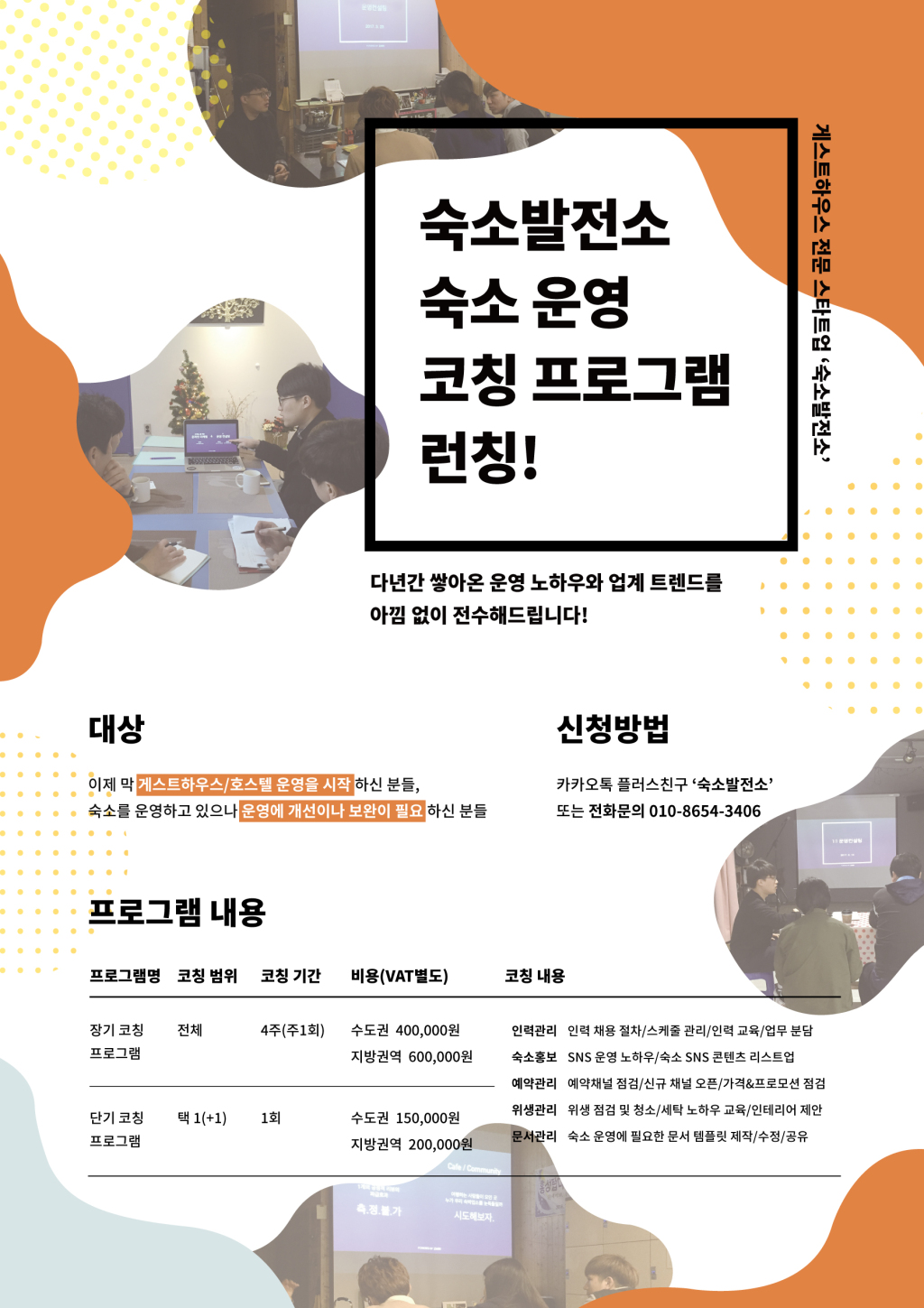
Guesthouses coined 'guestaff' to describe workers paid in room and board instead of wages. The term stuck because compensation, not just job function, became the defining difference from normal hospitality staff.
03. Why did guesthouses create 'guestaff'?
Writer: CHLOE, Operations Lead at Lodging Power Plant (https://brunch.co.kr/@merrychloemas)
Editor: ONDA Manager Somora
CHLOE, Operations Lead at Lodging Power Plant
Hi, I'm CHLOE, co-founder and operations lead at Lodging Power Plant — we specialize in guesthouse operations consulting and training.
I started in hospitality as guesthouse staff, widened my perspective as general manager at a franchise guesthouse and through sales and partner support at ONDA (an integrated booking management service), and now I'm back focusing on guesthouse operations — working hard inside this world again. I want to share what I've learned from playing different roles at different properties — operational know-how earned the hard way — with as many people as possible.
The third essay in "From Guesthouse Staff to Owner" is about 'guestaff'. Anyone interested in guesthouses has heard the term at least once.
Better known as 'guestep' (게스텝), it usually refers to people who work at guesthouses — especially in Jeju — in exchange for room and board. Of course, 'guestaff' exist all over Korea, not just Jeju.
So where did the term 'guestaff' come from, and what does it actually mean?
Etymology and definition of 'guestaff'
Before we start, let's trace the origins. 'Guestaff' is a portmanteau of 'guesthouse' and 'staff' — it means employees working at a guesthouse. The word 'staff' is industry-agnostic; we use it everywhere. So why did guesthouse workers get their own special term?
The reason is compensation. The key difference between someone called 'guestaff' and regular staff is 'payment for labor'. 'Guestaff' receive room and board — not wages — in exchange for their work. Of course, every property is different: not every guesthouse pays only in accommodation, and some staff do get fair treatment. But unfortunately, the term 'guestaff' has become associated in the public mind with substandard working conditions.
How 'guestaff' started
The origin of 'guestaff' can be traced to Jeju. As an island, Jeju faces unique hiring challenges. (Granted, most regions outside Seoul struggle similarly.)
Most guesthouses are small-to-medium-sized establishments — hiring regular employees is practically impossible. Jeju guesthouses typically accommodate 10–20 guests max, with low-priced dormitory beds. Revenue is inherently limited. At that scale, the financially sensible approach is for the owner to run everything solo, rather than hire staff.
But doing everything yourself — cleaning, laundry, guest service, reservation management — burns anyone out fast. So guesthouse owners face an endless dilemma: "If I hire someone, bookings will grow, right? No, wait — I'll do it alone until business picks up, then I'll hire." Chicken or egg?
The 'month-long stay' trend fuels the rise of 'guestaff'
But travelers don't know any of this. To them, guesthouses are beautiful, fun playgrounds. They stay, make great memories, then think: "I want to run a guesthouse too!" As travel boomed, a trend emerged that fit this dream perfectly: "living somewhere for a month."
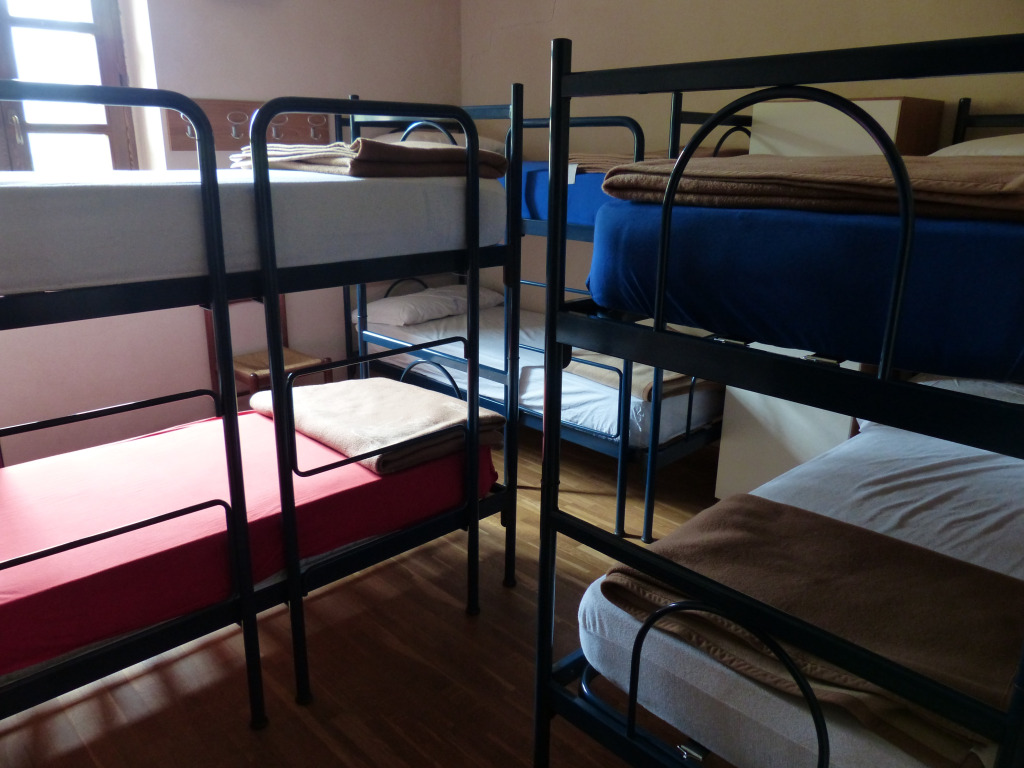
Accommodation is usually the biggest travel expense. Many guesthouses offered free lodging for a month-long stay — and young travelers flocked. Most were excited about living in a dream destination, with accommodation secured — never mind the actual sleeping conditions. Reality was different. In normal travel, lodging means rest. In a "month-long stay," lodging was payment for labor. Guesthouses gave up one bed in a 6- or 8-bed dorm and got free labor in return — no payroll costs.
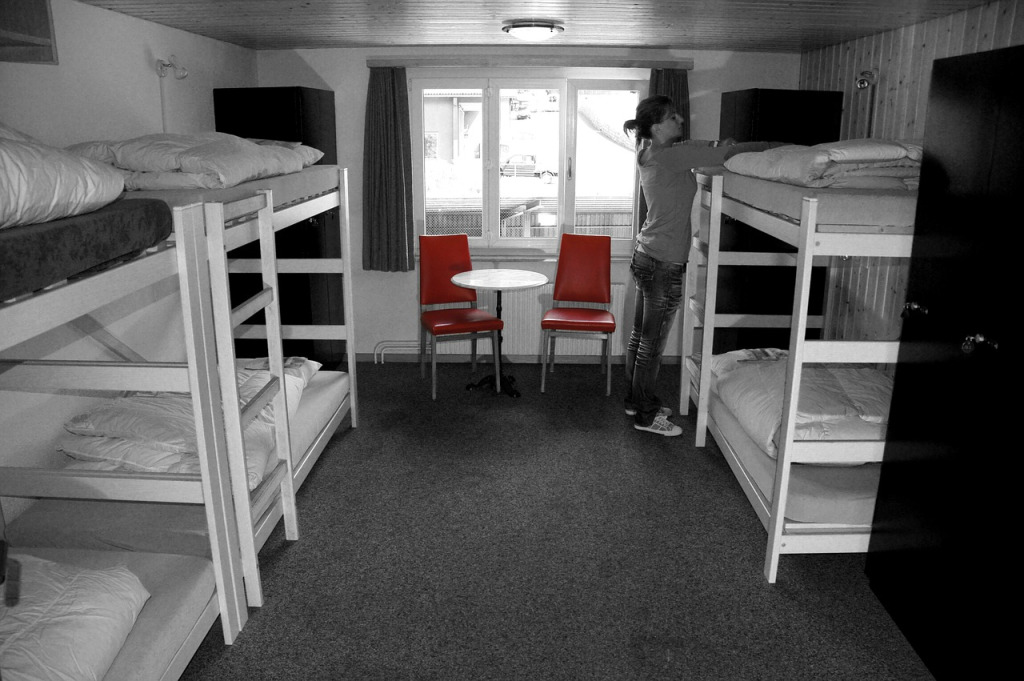
Many guesthouses secured labor simply by offering one dorm bed.
Is the compensation fair?
Over time, guesthouse staff started questioning whether the exchange was fair. They'd been told: "Just help out a few hours a day in exchange for a place to sleep." But work hours and rest hours blurred. Employment contracts weren't even mentioned. They'd jumped into the job with zero legal protection.
Let's be clear: paying workers in accommodation is illegal. But young travelers — drawn by the promise of free lodging — gave away their labor too easily. That made it hard to push back against unfair conditions. They came with dreams and left disappointed. Turns out there's no such thing as a free lunch.
Yet 'guestaff' perfectly reflects the reality of the guesthouse business. Guesthouses are the smallest players in hospitality. Revenue is capped. Hiring proper staff is a huge burden unless you have scale. In other words, guestaff is a workaround guesthouses came up with to fill staffing needs they couldn't afford to pay for. Both owners and staff knew it wasn't legal employment. But both parties had needs, so an unspoken arrangement persisted. I was 'guestaff' myself for a while — I know exactly how these relationships form. So the 'guestaff' phenomenon isn't one person's fault. It's not one side's doing.

Is a dorm bed fair compensation for your labor?
Who's responsible for the 'guestaff' dream?
I'd be lying if I said I had zero romantic notions about guesthouses myself. But I also had serious interest in the guesthouse industry as a business — so for a few months I was happy working for what you'd call 'passion pay.' Still, eventually I thought: I want to change these unfair working conditions. I wanted people getting into guesthouse work to think, "This is something I could pursue. This is a decent career." I felt that no matter how much someone loves guesthouses, they can't sustain the work without fair treatment.
That someone was me. I majored in hospitality management. I had grand dreams of making a positive impact on the tourism industry. Even I almost gave up on a career in tourism when I hit a reality totally different from my expectations. There's a huge gap between dabbling out of curiosity and making something your livelihood.
For the first few months, I rationalized low pay as the cost of training. But as I learned the ropes and could do more independently, my expectations for fair compensation naturally grew. Still, I came back to tourism. And if I was coming back, I was determined to do it right. Guesthouses were my starting point for that commitment.
Guesthouse staff deserve fair wages
So when I finally had authority over staffing, I spent most of my time and effort improving how guesthouse staff were treated. When I first took on contract operations for a guesthouse, the owner and I spent the most time thinking through hiring. Before I took over, turnover was constant and most staff just clocked in and out.
Yet these staff weren't even the 'passion pay' guestaff we've been talking about. In fact, they were treated relatively well for guesthouse workers. But tenure and attitude didn't improve — so I concluded wages alone weren't the issue. And having been 'guestaff' myself, I knew better than to think raising pay was the silver bullet.
What does 'guestaff' actually want from an employer?
I revisited the question: what does fair treatment mean to 'guestaff'? First, I worked with a labor attorney to draft proper employment contracts. Four major insurances, weekly holiday pay — basic protections that should be standard but haven't been. Wage improvement wasn't optional. Beyond that, everyone on staff needed to feel responsibility, belonging, and affection for their work. We needed a work environment people wanted to be part of. And building that environment required structure — the most important ingredient. Even office workers in typical companies aren't 100% satisfied with their jobs, but they stick around because there's a minimum safety net and a system to protect workers.
'Guestaff' pay and responsibilities should always match
But why should these protections only apply to 'regular employees'? It's not some massive expense. Let's not hide behind excuses. So I built a fair wage structure — but also clearly defined guesthouse staff duties and responsibilities. After thinking through why guesthouse staff treatment became controversial, I realized: owners and staff have different expectations of each other. What an owner expects in exchange for a dorm bed differs from what staff think they're signing up for. So I worked to close that gap by clearly communicating and training staff on their responsibilities upfront.
Unlike salaried employees with clearly defined hours, 'guestaff' duties could stretch or shrink like elastic. So I outlined specific roles in advance, provided thorough training, and narrowed the perception gap between owner and staff through hands-on practice.
One of the biggest headaches for property owners is people management. They don't know what to have staff do, where to draw boundaries, or how to train them. So they hire people and then waste that labor. Owners pay wages and naturally expect maximum output. But without clear standards, you can't make good use of paid labor. On the flip side, staff are getting paid but have no baseline — so if they're asked to do more than they think is reasonable, they get resentful fast. The solution: set clear wage and duty standards before hiring.

The standard a property needs is a manual.
Why you need an operations manual
That standard is your operations manual. Given high staff turnover in guesthouses, you need a systemized guide so anyone can learn and adapt quickly. But a manual isn't something someone else can make for you. Most guesthouses are solo operations chasing individual revenue — so it's better to find an approach that fits your property than copy someone else's. Of course, people with experience can share what worked better, recommend methods, make suggestions. But final decisions and responsibility rest with you, the owner. And no single method guarantees success for every property.
If the owner doesn't know, neither will the staff
In other words: if you want your business to succeed, you must know every process inside and out — better than anyone. And you must be able to train others on it. That's the owner's responsibility, full stop. A guesthouse staffer's responsibility is to faithfully follow the manual and deliver the best results in their role. If their job is cleaning, keep the property spotless. If it's guest service, earn satisfied reviews. Guesthouse staff earn fair treatment only when they fulfill their responsibility. And the paycheck is there to hold them accountable for that responsibility.

Image source: JTBC (left), tvN (right)
Know the reality of 'guestaff' before you start
Many people have woken up from the month-long stay dream and returned to reality. But guestaff job postings are still everywhere online — the trend continues. Negative news stories pour out, but interest in the guestaff experience hasn't faded. Media influence plays a huge role here.
TV shows like Hyori's Bed & Breakfast, Welcome, First Time in Korea?, and Seoul Mate have kept the guesthouse dream alive. Stars like Lee Hyori, IU, Park Bo-gum, and Yoona appear as hosts and staff, fueling the fantasy. Watching familiar celebrities stumble through guesthouse tasks is entertaining. They're not hospitality pros. They're clumsy. But they're celebrities — so guests are forgiving, and everyone laughs it off.
Global home-sharing platforms haven't helped either, with campaigns like "Travel is about living there." Travel used to mean short trips to famous sights. Now the trend is living like a local — eating, sleeping, experiencing daily life. So plenty of people still jump at the chance to "live somewhere for a month."
But real guesthouse operations are real business. Someone's effort drives profit. Someone's mistake causes loss. It's a revenue-critical business — not a TV show.

'Respect part-timers, RESPECT staff'
Respect part-timers, RESPECT staff
The term 'guestaff' emerged partly because of the guesthouse industry's harsh realities — but mostly because of a lack of respect for guesthouse staff as a profession. Both employers needing guestaff and applicants wanting to be guestaff shared the belief that guesthouse work isn't a real job. But as the job site Albamon's TV ads say, it's time to "Respect part-timers, RESPECT staff." Part-time work — and guestaff work — requires skill.
Until the day 'guestaff' is defined as "capable, valued employees of guesthouses," I'll lead the charge in RESPECTING guesthouse staff.
[Series Index]
(Stories of guesthouse people) 01. Prologue + I am a guesthouse staffer. 02. A day in the life of guesthouse staff: 25-hour deep dive. 03. Why did guesthouses create 'guestaff'? 04. The one thing guesthouses need most: people.
(Stories of guesthouse operations) 05. What guesthouse owners worry about 06. There are good guesthouses and bad guesthouses in the world. 07. Well-run properties have 'that thing.' 08. Guesthouse standards
(Stories of guesthouse startups) 09. Is a guesthouse a lodging business, a service business, or a real estate business? 10. The DNA of a guesthouse operator 11. Those who will succeed, succeed? Properties that will thrive, thrive! 12. Still, I love guesthouses.