From hardware to operations, most hosts wing it. The real work starts after opening—defining standards, building manuals, and turning implicit rules into repeatable systems that actually scale.
07. What Every Well-Run Property Has
Writer CHLOE, Operations Director at Suksopowerplant (https://brunch.co.kr/@merrychloemas)
Editor ONDA Manager Somora
CHLOE, Operations Director at Suksopowerplant
Hi—I'm CHLOE, co-founder and operations director at Suksopowerplant, which specializes in guesthouse management and training.
I started in the hospitality world as a guesthouse staffer. From there I widened my view as general manager of a franchise guesthouse, then working in sales and partner support at ONDA, the property management system. Now I'm back in hands-on guesthouse operations—running properties day to day. I want to share what I've learned from wearing all these hats and managing properties with different concepts.
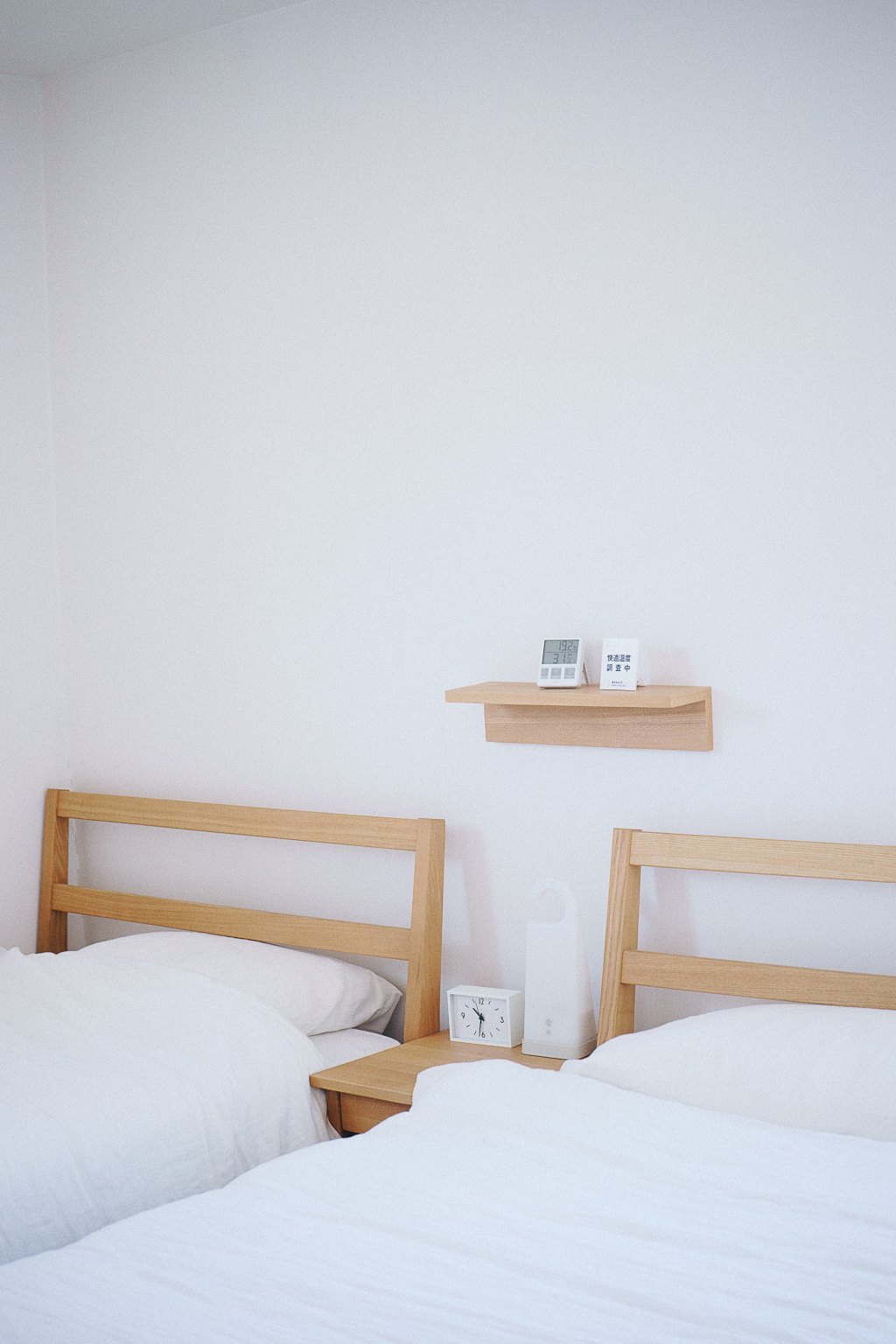
Photo by yi sk on Unsplash
The most overwhelming part of opening a property? Figuring out how to actually run it. Everything before launch is about hardware—construction, interiors, fixtures. Everything after is software—guest interactions, service delivery, day-to-day operations. You can outsource the hardware to experts. But how you use the space once it's built? That's on you.
You need to set standards, communicate them, and enforce them—all on your own. Some hosts rely on their own travel experience. Others learn by trial and error (read: lots of headaches). Either way, most properties develop an implicit set of rules. When those rules are documented clearly and comprehensively, you've got what we call a manual.
You've probably seen guest guides in guesthouses, B&Bs, hostels, hotels—sheets labeled "Information" or "House Rules" explaining how to use amenities, what's off-limits, checkout procedures. Most properties have a manual for guests. But hosts need one too—a manual for how to run the place. Hospitality throws curveballs constantly. You need a playbook to handle them quickly and consistently. Take luggage storage: Can guests leave bags before check-in or after checkout? What's the time limit? Is it free or paid? There's no universal right answer—but you need your answer, documented.

How you run your property is your choice. (Source: Pixabay)
A property is a business. You're selling a product (accommodation) and a service (the guest experience) for money. So you need to deliver a consistent level of satisfaction. What guests get depends on what they pay for—hardware (room size) and software (breakfast, amenities) scale with the room type. A dorm bed costs less than a family room, and the physical space reflects that.
In a guesthouse, services outside the room are mostly the same for everyone. In a hotel, everything—room size, amenities, access to facilities—varies wildly by rate tier. If you're running a multi-tier property, you need clear rules about who gets what. Yes, hardware differs by room type. But you also need standards for universal services—the baseline every guest receives, regardless of price.
Take breakfast pricing. Say you sell rooms with and without breakfast included. At check-in, your script changes depending on the booking. Guests who paid for breakfast? Tell them when and where it's served. Guests who didn't? Explain the add-on price and how to pay—or skip the topic entirely. Either approach works. Pick one. Write it down. Train everyone on it.
This is what a manual does: it ensures you deliver consistent service at a consistent standard, no matter who the guest is or what mood you're in. It's the difference between "some guests get this, some don't" and "everyone gets the same experience."

A manual is the scaffolding that keeps operations stable. (Source: Pixabay)
Hosts are human. You won't always be at 100%. On a bad day, the same problem can trigger different reactions—and that's when emotions creep into guest interactions. But guests paid to be here. They expect to be welcomed and taken care of, regardless of your mood. You have to keep your feelings out of it. A manual helps. It gives you a script to follow even when you're running on fumes.
The opposite can be a problem too. You're in a great mood and spontaneously offer a guest an unplanned perk—free late checkout, complimentary breakfast, whatever. Hospitality budgets are tight. If you blow past your cost structure on a whim, it hits the bottom line.
Bottom line: build your own manual before you open. Run a soft opening. Collect feedback. Revise the manual based on what actually happens. Some rules apply to every property. Others depend on location, size, concept. Don't copy another property's shuttle policy if your guests don't need one. Don't add amenities just because someone else offers them.
The most important thing is to build a manual around what your guests actually need. If 50%+ of your guests are women, stock twice as many hair dryers in the women's restroom. Give female guests two towels instead of one. Tailor your standards to your reality.
For first-time operators, writing a manual can feel overwhelming. You need a reference point. That's why manuals are the #1 request we get during consulting. Hosts need a blueprint.
If you want a solid baseline, check out the Korea Tourism Organization's Quality Certification program. Launched in 2017 to improve tourism quality, it includes guesthouses and other lodging types. Even if you don't pursue certification, the evaluation criteria are a great checklist for raising service standards and guest satisfaction.
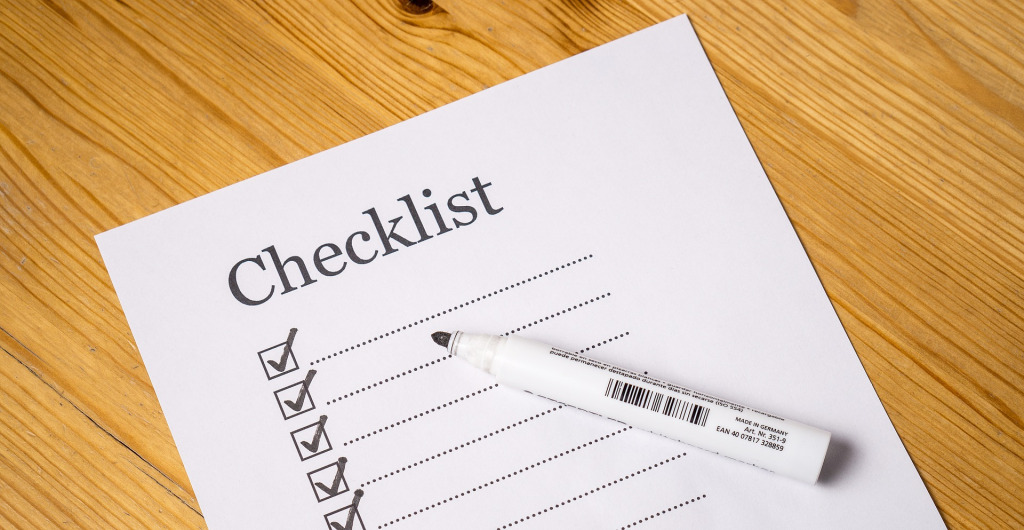
Still feel lost? Try this: put yourself in your guests' shoes. What questions would you have? Make a list. Then figure out how you'd answer each one. That's the foundation of a manual. Here are the 10 most common questions I've gotten over the years:
Q1. How do I get to your place? (from the subway / bus stop / airport / a specific landmark)
A. A must for guesthouses with lots of public-transit users. Include directions to the property and from the property (e.g., to the airport or bus terminal). If you get asked often, write it down.
Q2. Can I park?
A. Common with family or group bookings. If on-site parking isn't available, know where nearby parking is and how much it costs.
Q3. Do you have shampoo / a hair dryer / towels / toothpaste / a straightener / a phone charger / a fridge / a microwave?
A. First: list all your amenities accurately on every booking channel (Naver, Booking.com, Agoda, Yanolja, Yeogi Eottae, etc.). Second: every staff member should know the list by heart so they can answer on the spot—by phone or in person.
Q4. Check-in is until 10 p.m.—can I arrive later?
A. You set your own check-in window. Standard is 3–4 p.m. to 10–11 p.m. Some properties allow self-check-in after hours. Some don't allow late check-in at all. If you have a strict policy, notify guests in advance via text or email (always use a written channel).
Q5. Can we add a third person to a double room? (Can a 4-month-old baby sleep with us in a double?)
A. Define your base occupancy and max occupancy per room. Set your extra-person fee. Decide your policy on infants—free, or charged like an adult, or half-price after 48 months, etc. Your call.
Q6. Do you have availability? Any rooms?
A. Super vague question. Ask for specifics: dates, number of nights, number of guests. Then check availability and explain the booking process.
Q7. Can we cook? Can we eat in the room?
A. If you have a kitchen, clarify cooking rules and cleanup expectations—or take a deposit. Most properties use white or light-colored linens, so food in rooms is risky. If you allow it, warn guests about staining and potential charges.
Q8. What's the Wi-Fi password?
A. Essential if you host international guests—many don't have unlimited data or local SIM cards. Even for domestic guests, Wi-Fi is baseline. Post the SSID and password everywhere. Check the connection regularly.
Q9. We're checking out early—what should we do?
A. If you use key cards or physical keys, tell guests where to return them. If they'll miss breakfast, decide in advance whether you'll pack it to go or inform them it's unavailable outside set hours.
Q10. Do you offer discounts for long stays?
A. Anything beyond one night can be considered a long stay. If you offer discounts, set clear tiers (3+ nights, 1 week, 1 month, etc.) and make sure every staff member knows the policy. Long-stay inquiries are constant in Seoul and Busan. Decide upfront whether to accept long-stay bookings via OTAs or direct phone only.
Well-run properties have manuals. They don't panic. They have Plan A and Plan B ready. When a guest asks a curveball question, they respond professionally—no hesitation. The manual is invisible to guests, but they feel it. It shows up in the quality of the experience.
A good manual is built on one question: What do our guests need? If you're still figuring out your operating standards, don't wait for problems to blow up. Run mental simulations. Imagine scenarios. Prepare answers. Build your manual step by step—and watch your property's quality compound over time.
[Series Index]
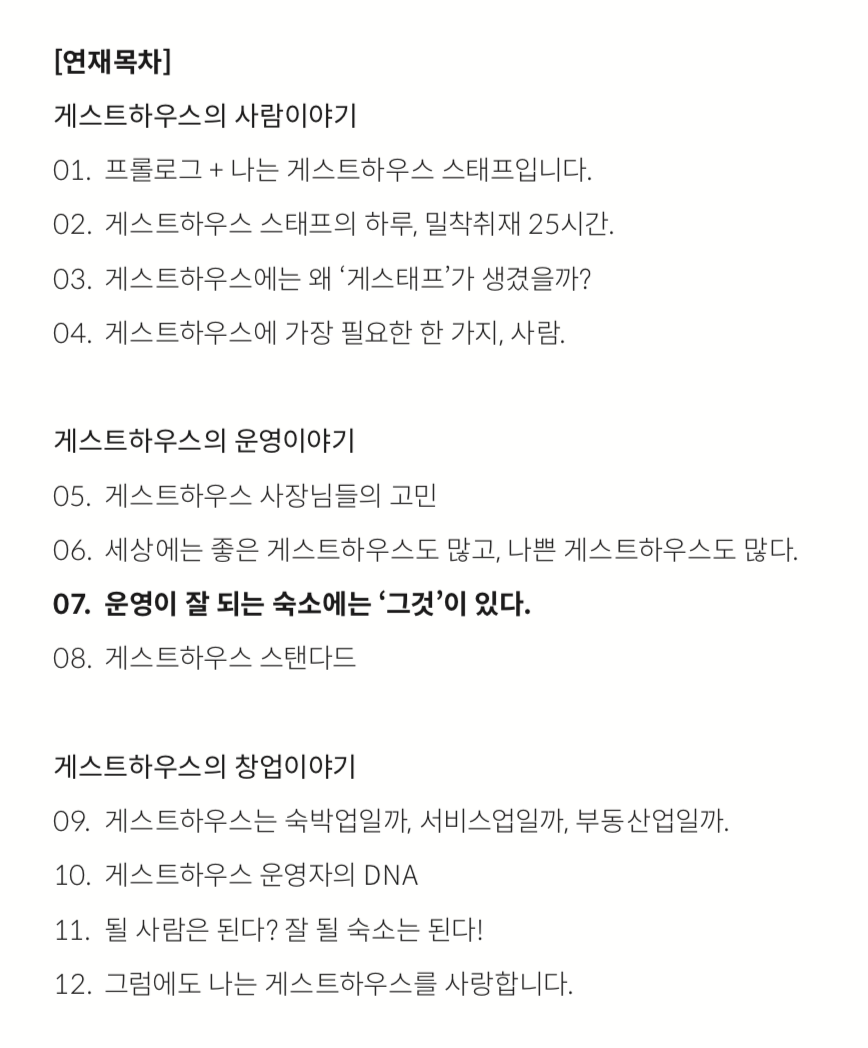
(The People Behind Guesthouses) 01. Prologue + I'm a Guesthouse Staffer 02. 25 Hours in the Life of a Guesthouse Staffer 03. Why Do Guesthouses Have "Guestaff"? 04. The One Thing Guesthouses Need Most: People
(Running a Guesthouse) 05. What Guesthouse Owners Worry About 06. Good Guesthouses and Bad Guesthouses Both Exist 07. What Every Well-Run Property Has 08. Guesthouse Standards
(Starting a Guesthouse) 09. Is a Guesthouse Hospitality, Service, or Real Estate? 10. The DNA of a Guesthouse Operator 11. Do Good Properties Just Happen? 12. Even So, I Love Guesthouses