Off-season vs. peak season pricing dynamics at Korea's top tourist destinations
Hi, this is ONDA.
Last week we covered pension and pool villa pricing across Korea's provinces (Gangwon-do, Jeju-do, etc.). Hope it gave operators wrestling with weekday vacancies some useful insights.
This time we're zooming in. We'll compare off-season and peak season pricing at five iconic Korean travel destinations: Gapyeong (Gyeonggi), Yangyang (Gangwon), Jeju City (Jeju), Gyeongju (North Gyeongsang), and Yeosu (South Jeolla).
For this analysis, "off-season" means Jan 1 – Mar 31, and "peak season" means Jun 15 – Jul 15.
Yangyang — Go After Gen Z and Millennials
Riding the surfing boom, Yangyang has become one of Korea's hottest travel spots. So what happened to pension and pool villa pricing in the off-season?
The standout trend: budget-friendly ₩50,000–₩100,000 pensions dropped from 44.3% of bookings in 2023 to 33.9% in 2024 — a 10+ percentage point decline.
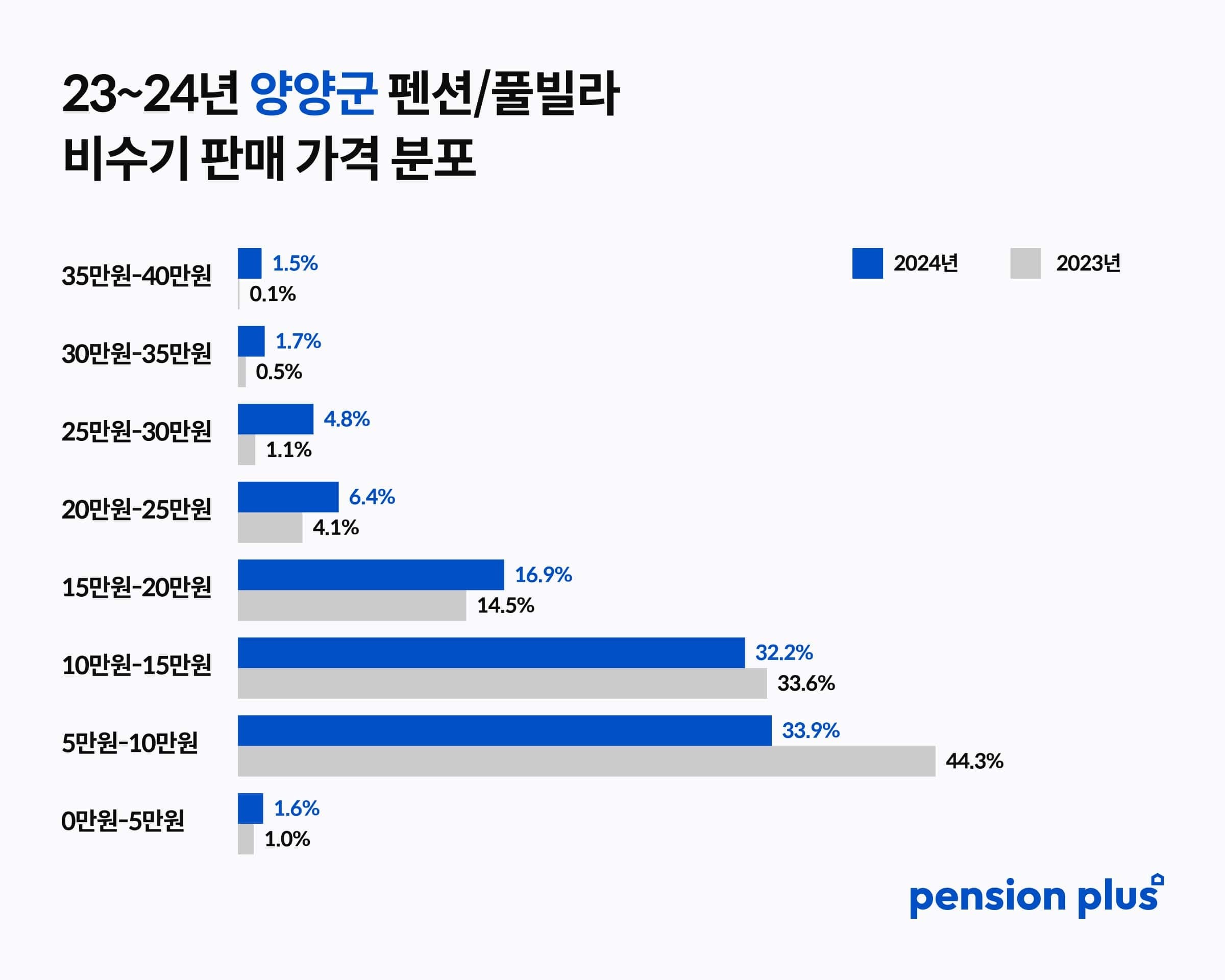
This signals just how hot Yangyang has gotten. In our last nationwide pricing piece, we saw budget pensions gaining share nationwide — but Yangyang bucked the trend, with demand spreading to higher price tiers even in the off-season.
Bookings for ₩200,000+ properties also grew. Yangyang's off-season pricing is diversifying — the budget concentration is easing, and demand is spreading across price bands.
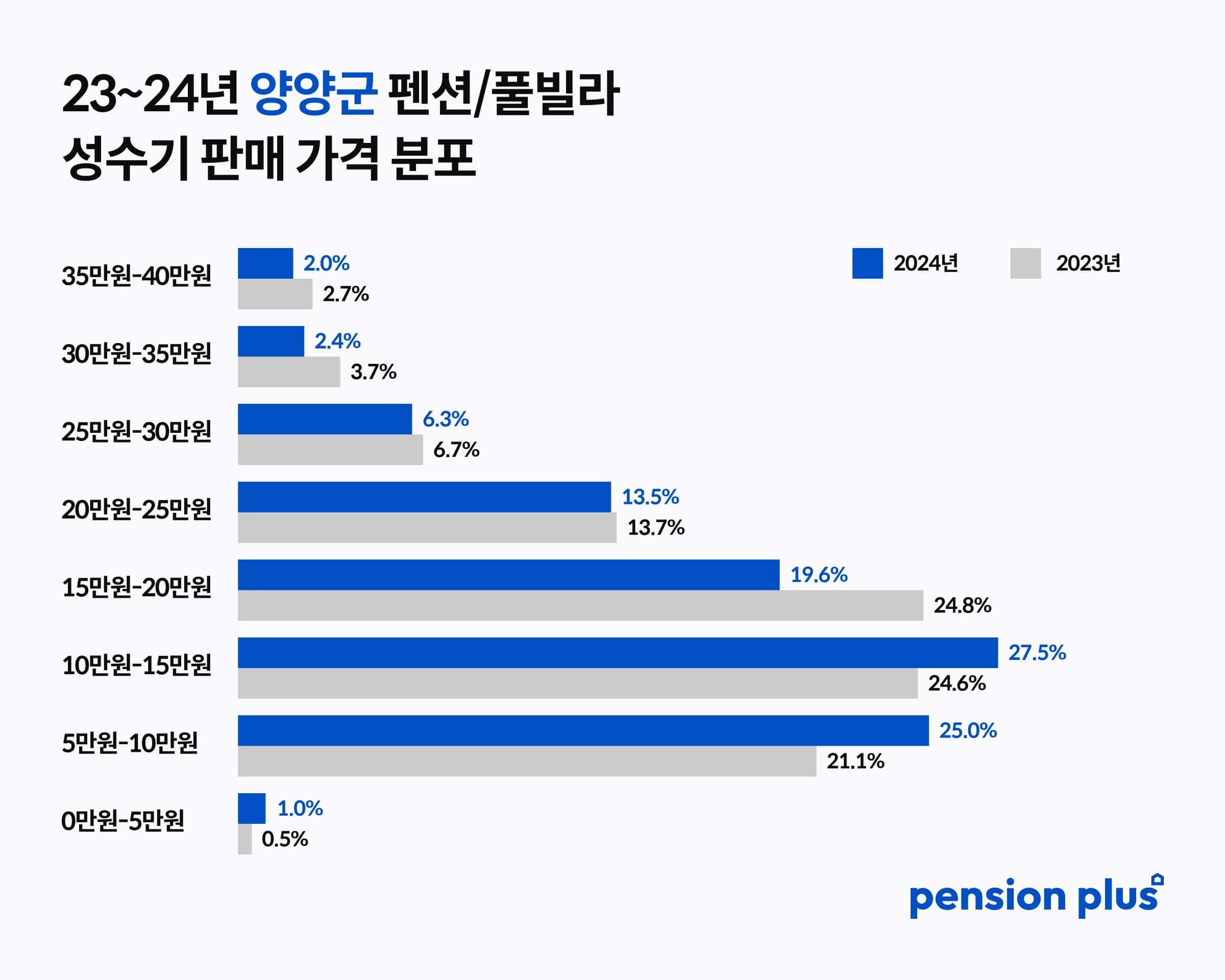
Peak season, though? Different story. In 2024, ₩50,000–₩150,000 properties gained 6.8pp share vs. last year.
Competition in the ₩100,000–₩150,000 band is especially fierce.
Yangyang also diverged from the national trend: demand for ₩250,000+ luxury properties actually fell in peak season compared to 2023.
Since Yangyang — like nearby Gangneung — draws mostly visitors in their 20s and 30s, demand for high-end family-oriented properties is weaker than in other regions.
Takeaway: Even in high season, jacking up prices doesn't guarantee bookings in Yangyang. Thoughtful pricing wins.
Gapyeong, the Pension Mecca — Average Rates Rising Across the Board
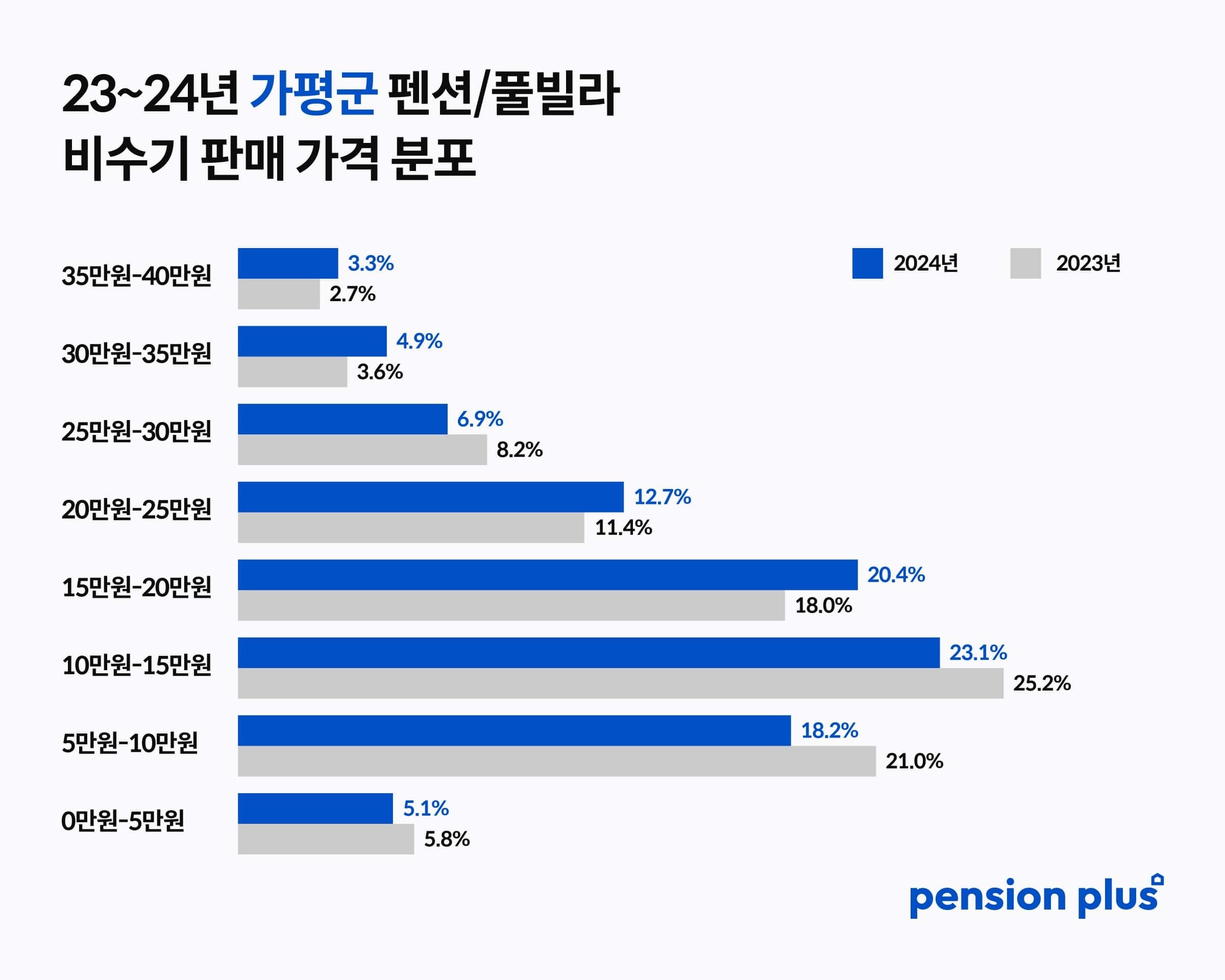
Seoul-adjacent areas are seeing fast-growing demand for higher-priced pool villas, kids' pensions, and pet-friendly pensions. If Yangyang is the surfing mecca, Gapyeong is the pension mecca — and its higher average rates reflect the value guests place on on-site amenities.
Properties priced ₩150,000+ grew from 48% of bookings last year to 54% this year. Meanwhile, ₩50,000–₩150,000 properties dropped 4.9pp. Gapyeong's family-traveler base (vs. Yangyang's younger solo/couple crowd) clearly drives this pricing power.
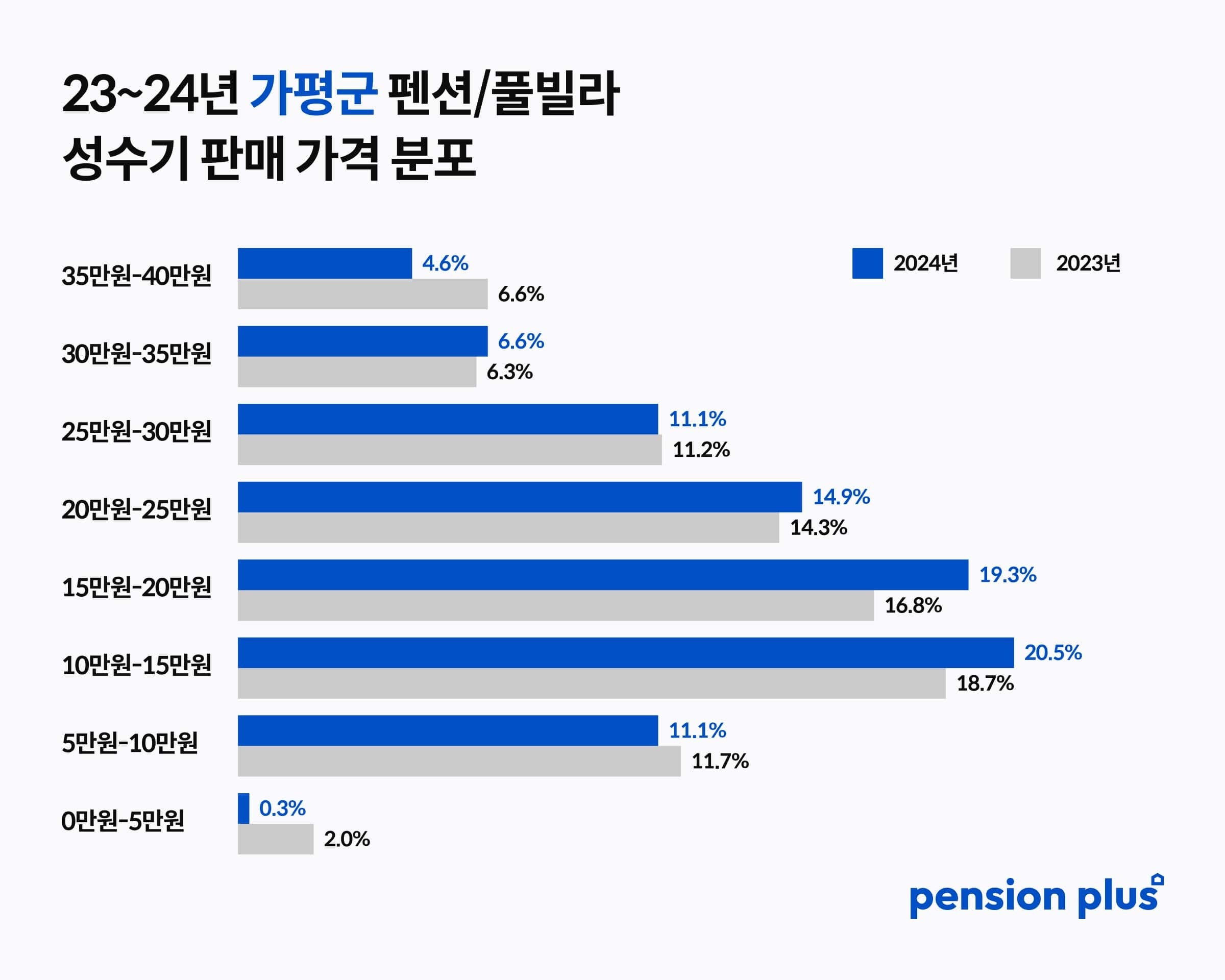
Peak season shows the same upward tilt. Properties in the ₩100,000–₩150,000 range command about 10pp more share than ₩50,000–₩100,000 properties.
I booked a kids' pool villa in Gapyeong for my own family recently. Even with an ONDA employee discount (yes, our company subsidizes our own vacations — perks!), 2 weekday nights cost well over ₩500,000.
Gapyeong has a massive pension supply, so competition is intense and operators are tuned into trends. But it also sustains higher rates than almost anywhere else in Korea.
Jeju City — Domestic Tourism Slump Pushes Prices Down
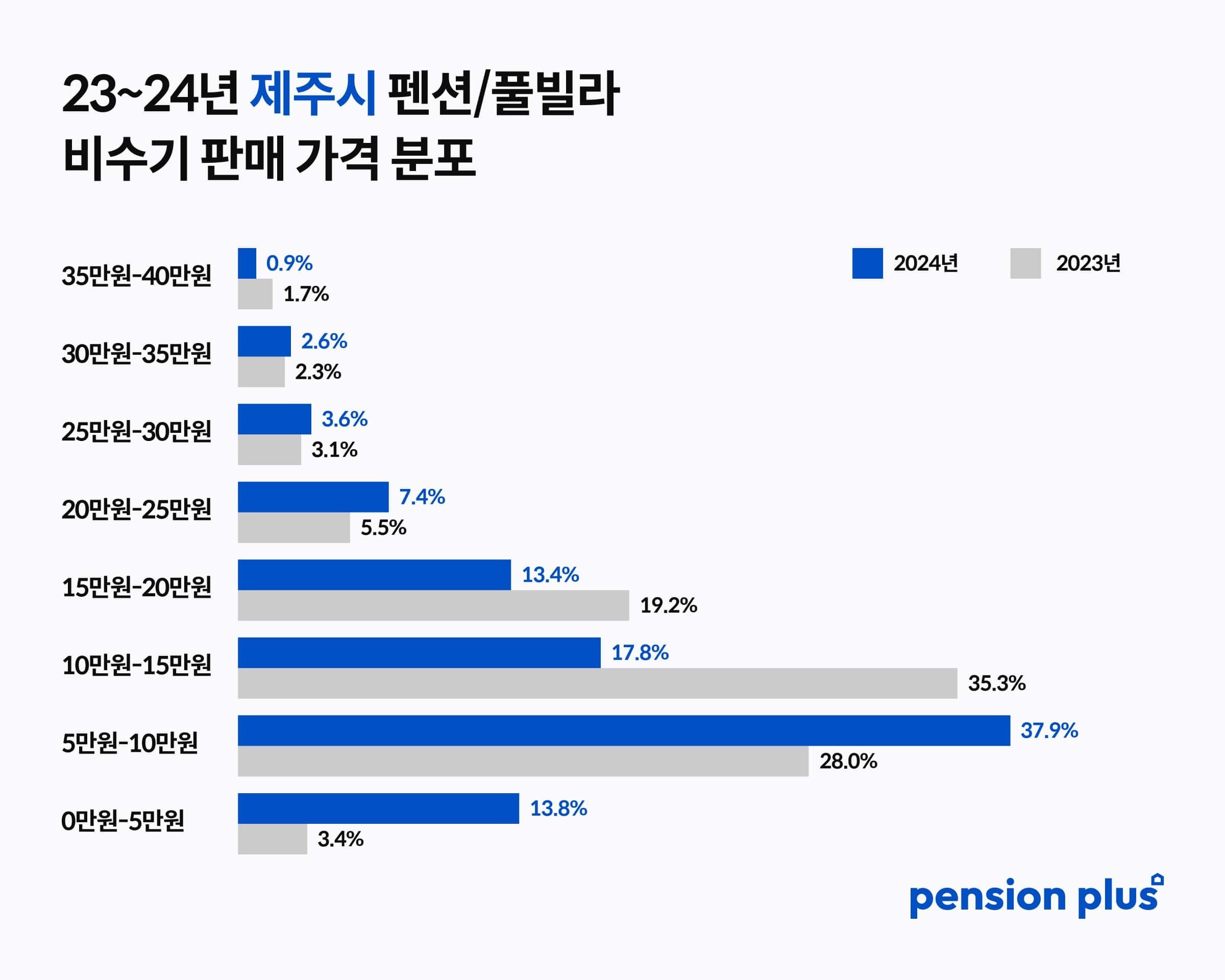
If there's one place where off-season rates fell hardest year-over-year, it's Jeju City.
Outbound travel surged, and Korean visitors to Jeju dropped significantly. As a result, ₩100,000–₩200,000 properties plunged from 54.5% of bookings last year to 31.2% this year — a 23.3pp collapse.
Meanwhile, budget ₩50,000–₩100,000 pensions surged to 37.9% — up nearly 40% vs. 2023.
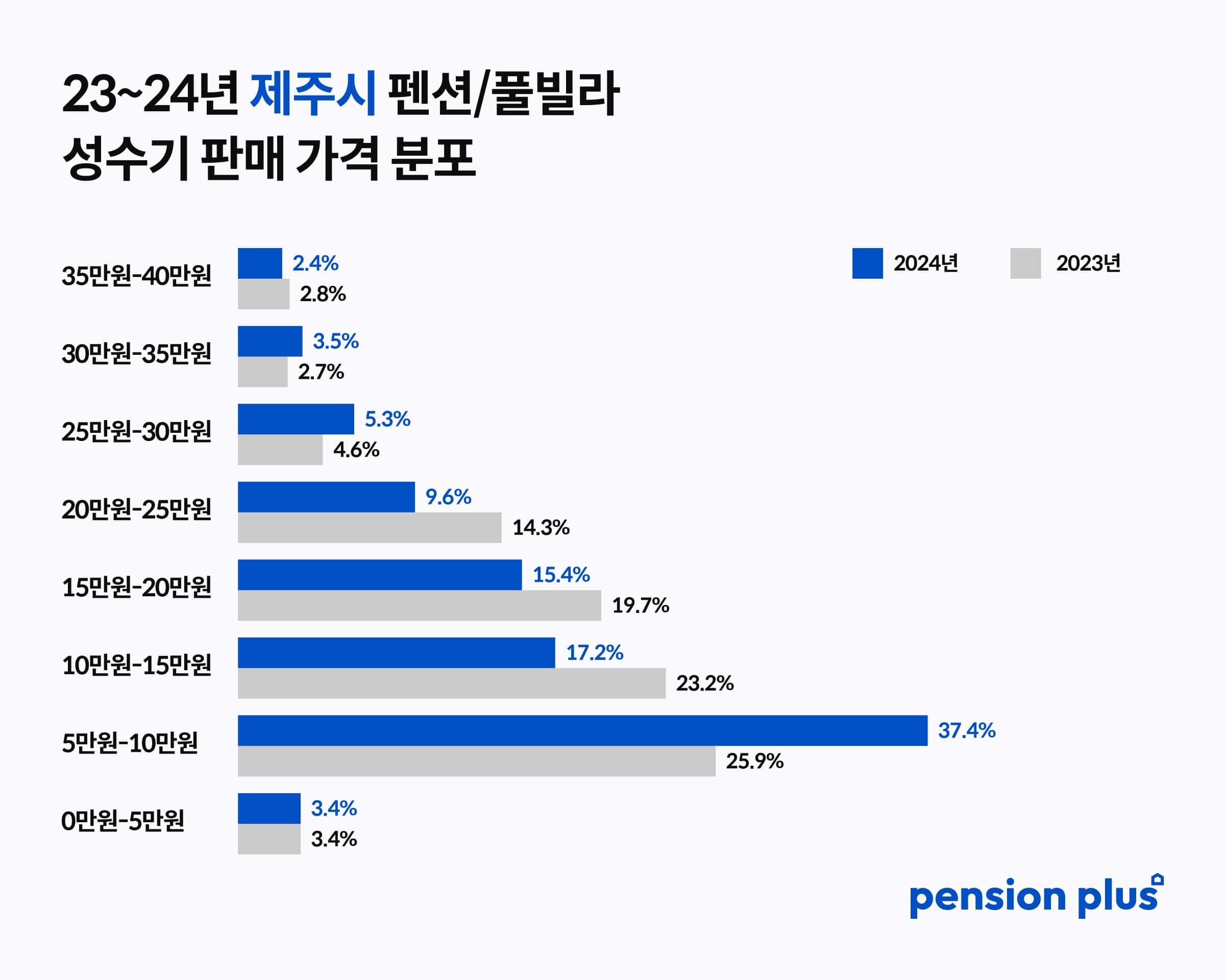
Peak season saw the same downward drift. Jeju requires higher upfront travel costs (flights, ferry) than other regions. And according to Korea Tourism Data Lab visitor demographics, Jeju skews young.
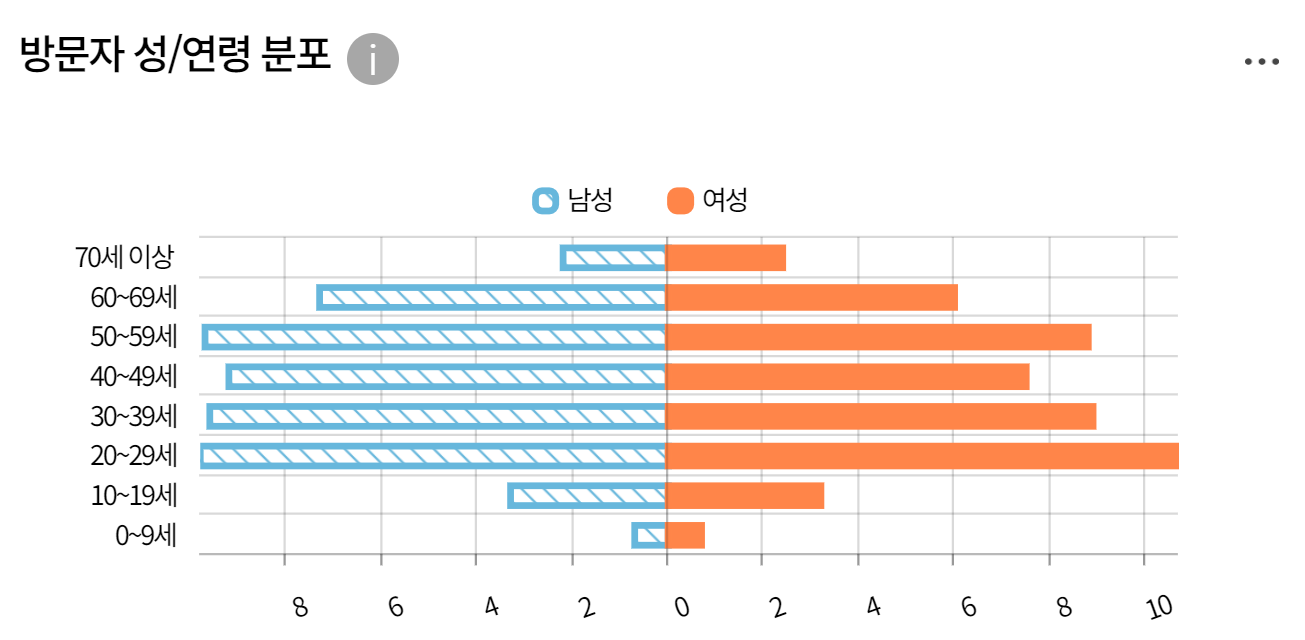
Jeju's 20–30s visitor share is even higher than Yangyang's. That means operators need to be even more disciplined about value pricing to stay competitive.
Gyeongju vs. Yeosu — Gyeongju Goes Upmarket, Yeosu Slides
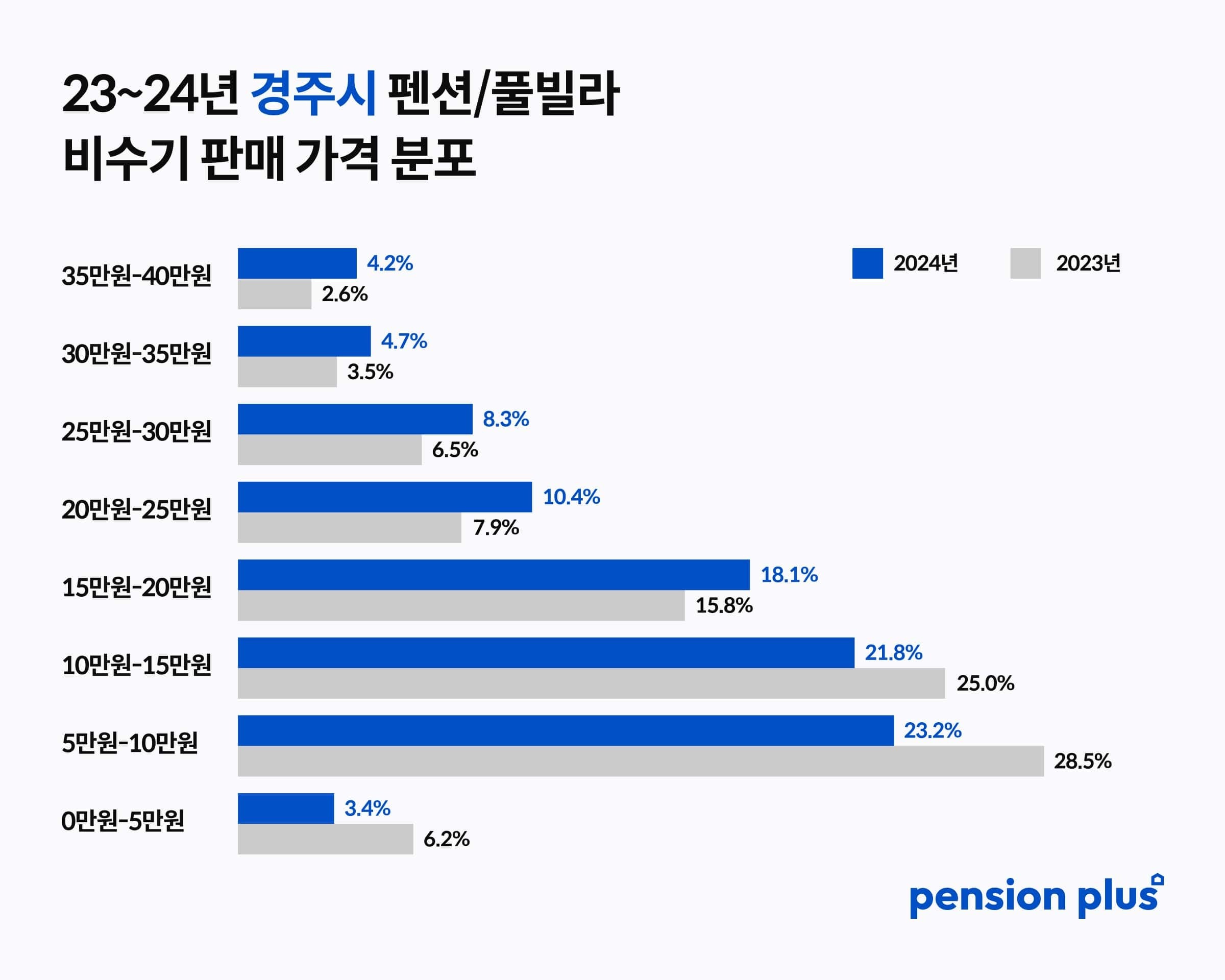
Gyeongju (North Gyeongsang) and Yeosu (South Jeolla) are moving in opposite directions. Gyeongju's "Hwangridan-gil" cultural district has sparked a wave of new demand — and dramatically higher rates. The area's hotel-style lodging and hanok pool villas command premium pricing.
Even in the off-season, bookings for ₩200,000+ properties grew year-over-year, driving clear upward momentum. That said, trendy travel consumption can be fickle — so operators should avoid overheating pricing if they want sustained growth.
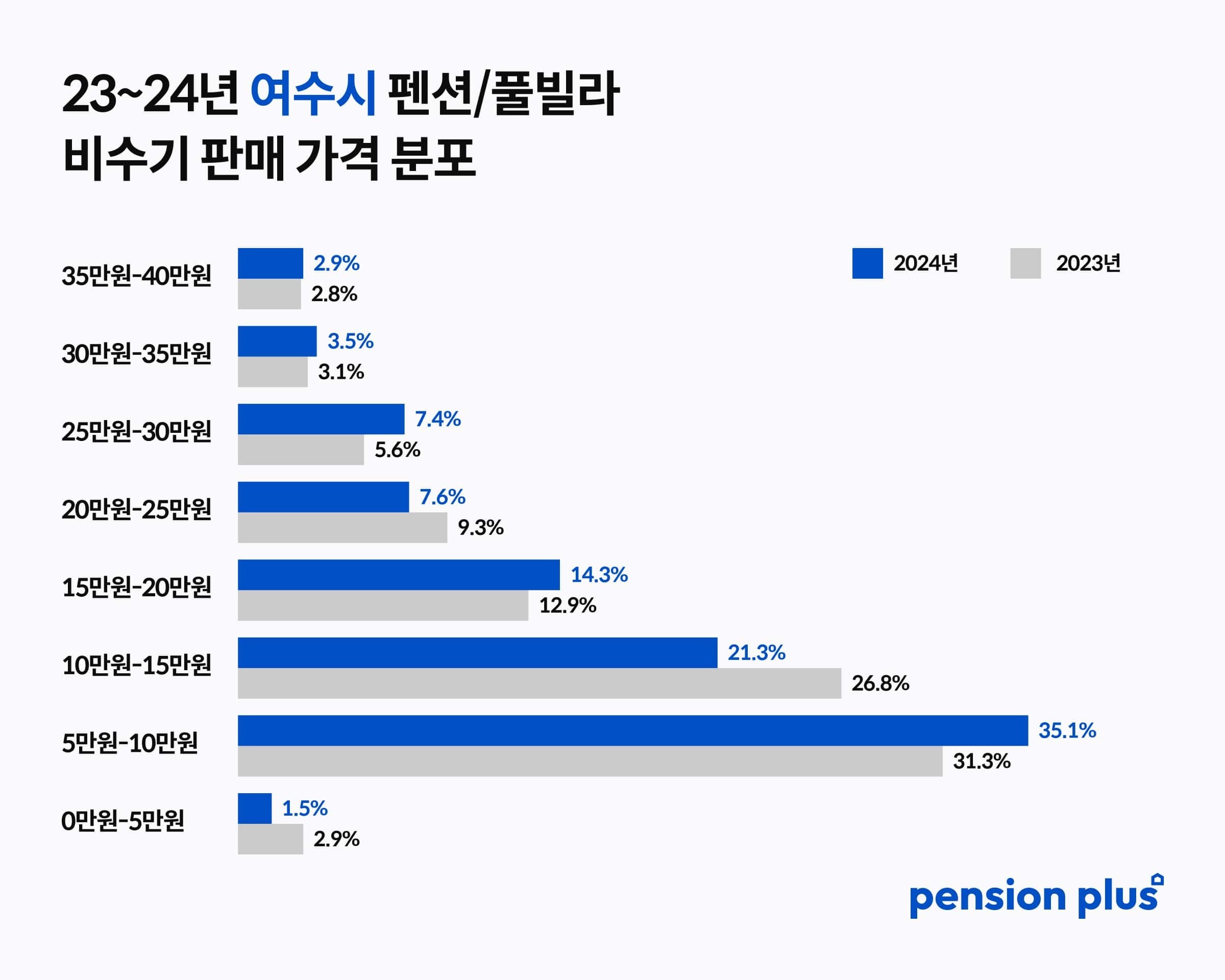
Meanwhile, local Yeosu press ran headlines like "Red Alert for Yeosu Tourism — Time to Find Solutions." Visitor numbers and tourist spending are both down. Accordingly, ₩50,000–₩100,000 pensions gained 3.8pp share, while ₩100,000–₩150,000 properties dropped 5.5pp.
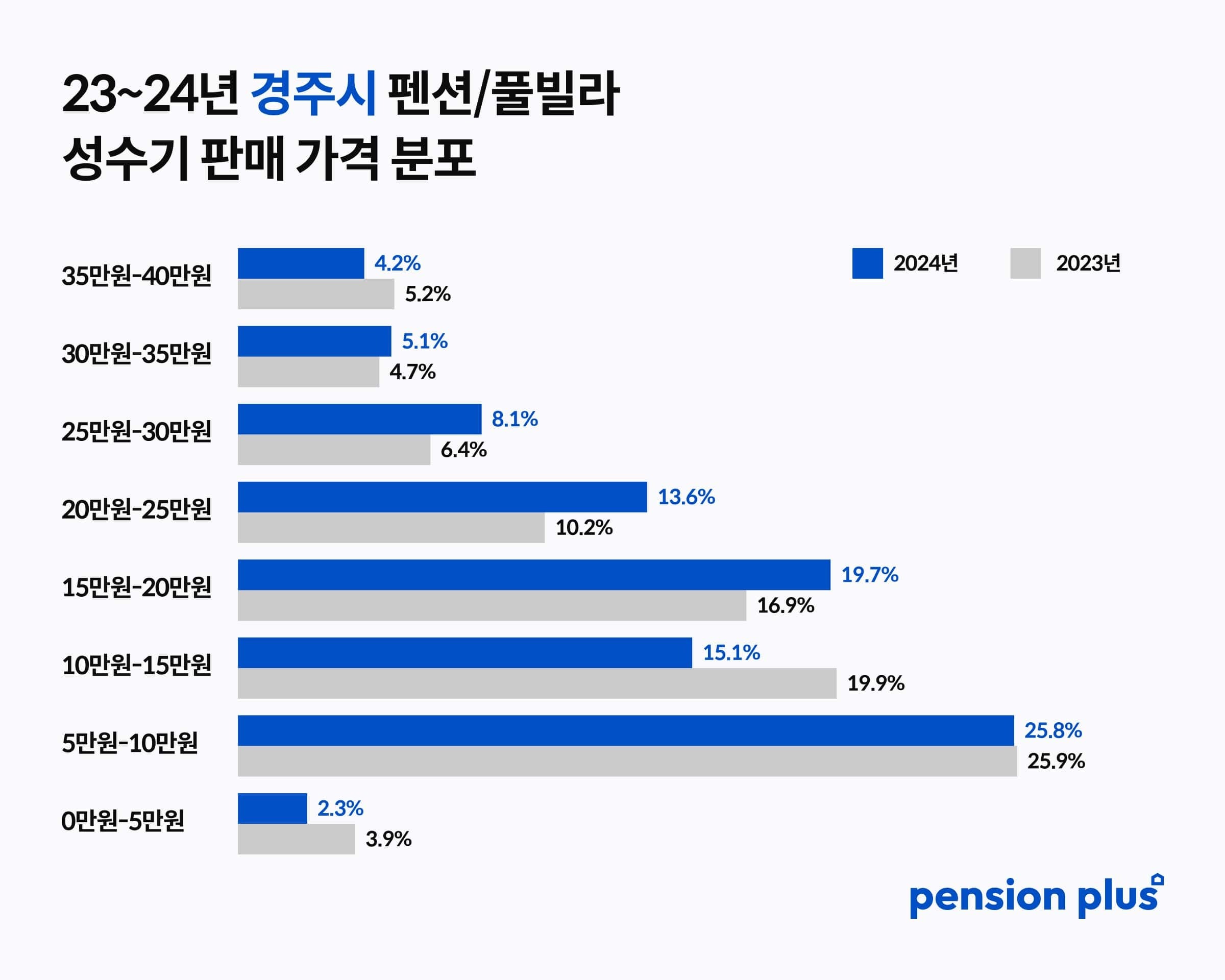
In peak season, Gyeongju's ₩100,000–₩150,000 tier shows a clear dividing line. Properties above ₩150,000 gained share vs. last year; those below stayed flat or declined.
Gyeongju's pricing is well-distributed across tiers, so operators need to benchmark carefully against similar properties in the area when setting peak rates.
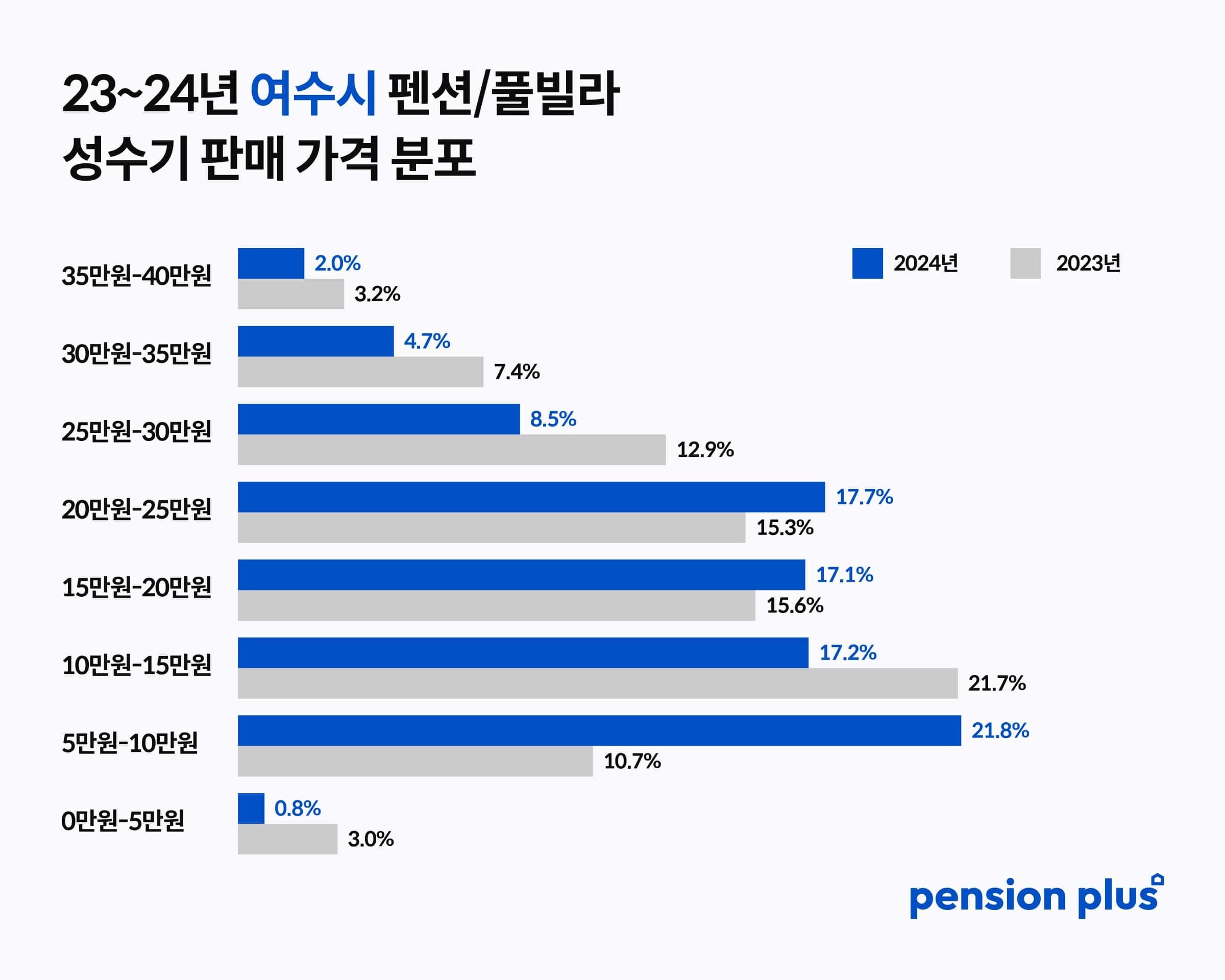
Yeosu's peak season still centers on ₩50,000–₩150,000 properties. But bookings for ₩250,000+ properties dropped sharply vs. last year, while demand for budget ₩50,000–₩100,000 pensions rose.
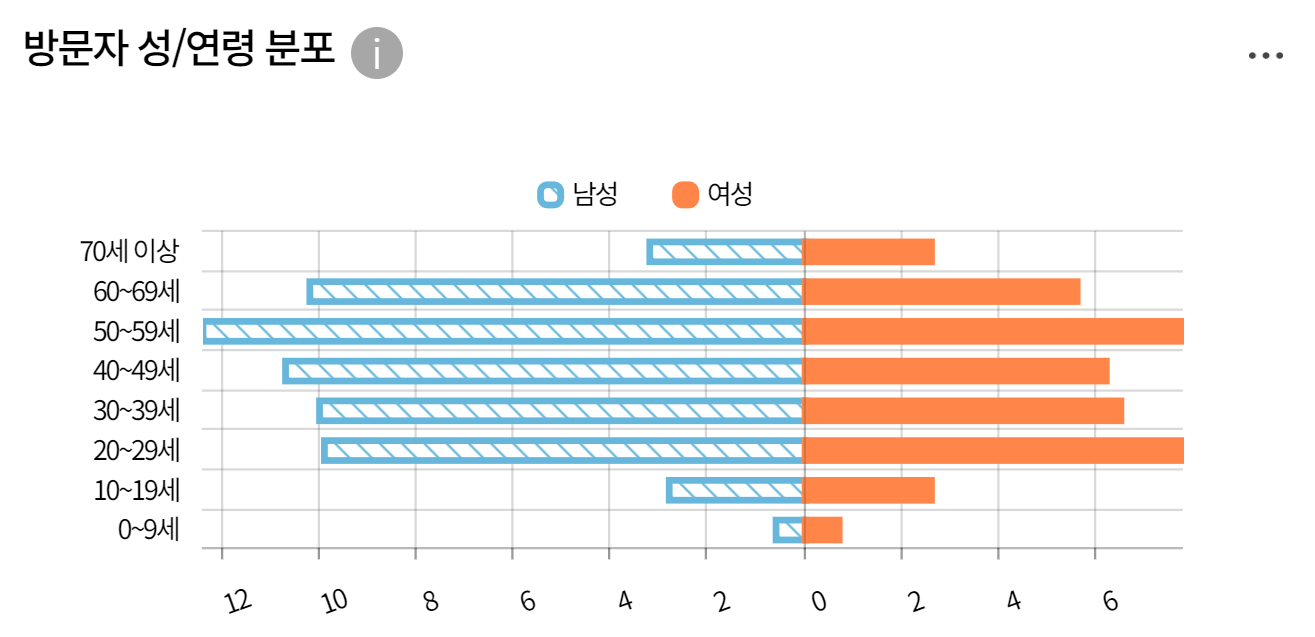
Korea Tourism Data Lab data offers clues: Yeosu's top visitor segment is men in their 50s, while women in their 20s visit at a notably high rate.
High-spending 50-somethings + trend-conscious 20-somethings = not a bad mix. But female visitors in their 20s dropped 6.5pp this year. With Gen Z interest waning, Yeosu needs coordinated efforts — policy and industry — to win back younger travelers.
Want deeper insights into your region? Reach out below.