How is ChatGPT and generative AI changing the way we work?
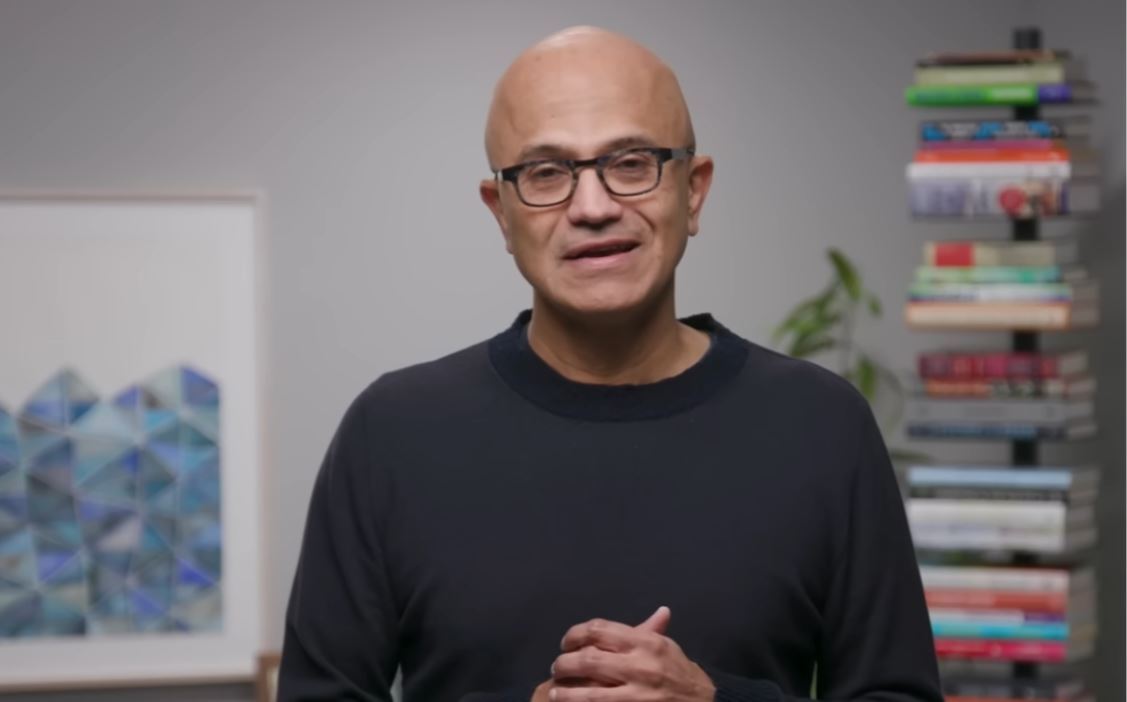
"Humans dream, create, and innovate. But today we spend too much of our time consumed by work that drains us — our time, creativity, and energy."
"To rediscover the soul of work, we don't just need a better way of doing the same things. We need an entirely new way of working." (Microsoft CEO Satya Nadella, image source: MS YouTube capture)
"If a tech historian writes the story of IT, how will they describe 2022? I think they'll call it 'The year of generative AI.' Not many people would stand up to dispute that. The output from generative AI in 2022 was astounding." (Byline Network, Reporter Shim Jae-seok)
Last April, OpenAI's DALL·E 2 — an image-generation model that turns text descriptions into pictures — made its debut. By year's end, ChatGPT arrived and shocked everyone by chatting like an actual human.
A wave of third-party ChatGPT apps is now exploding at breakneck speed. It's reminiscent of the homepage-building frenzy when the internet went mainstream, or the app gold rush after Apple launched the App Store.
What separates generative AI from old-school AI assistants?
ChatGPT runs on a hyperscale AI foundation using a language model approach. It predicts the next word based on all the preceding words — calculating probabilities to generate natural-sounding sentences. This type of AI is called generative AI.
What makes ChatGPT and other generative AI different from Apple's Siri or Google Assistant — different enough to cause this frenzy?
I asked ChatGPT 4.0. Here's what it said:
ChatGPT: "The key difference lies in the depth and complexity of tasks each can handle. Siri and Google Assistant are designed to execute simple commands and answer straightforward questions, while generative AI can generate human-like text, engage in nuanced conversation, and even offer creative ideas. ChatGPT's advanced language capabilities make it an ideal tool for a wide range of professional tasks."
We used to believe creativity was uniquely human. But now AI mimics it convincingly — and even draws pictures on demand. That's what stunned people.
Because it generates responses probabilistically, there are issues. Traditional AI assistants admit when they don't know. ChatGPT 3.0, on the other hand, confidently lied.
When I asked it about ONDA, it once told me we're a Korean biotech startup that makes menstrual pads. We're actually a hospitality tech startup. :)
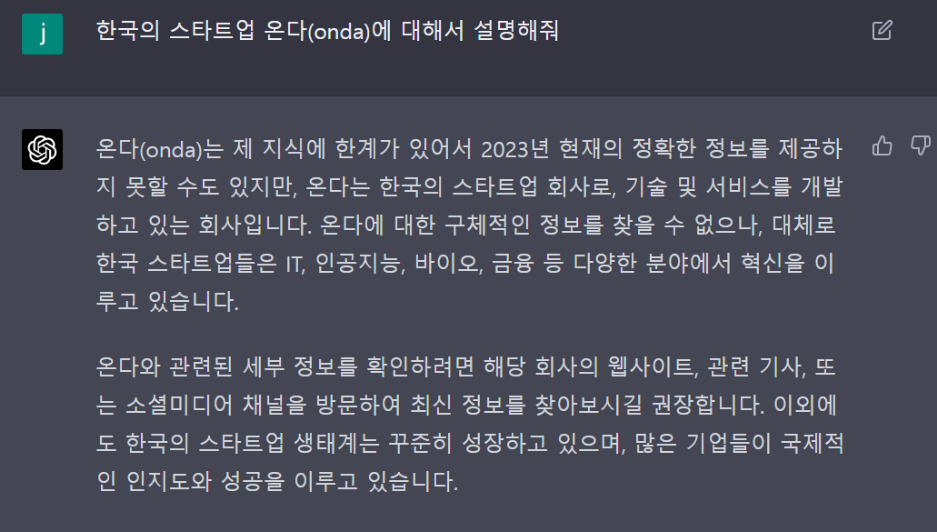
In the recently updated ChatGPT 4.0, there's a noticeable shift — it now hedges, noting that the information might not be accurate.
How will ChatGPT and generative AI reshape our work?
Most experts don't predict generative AI like ChatGPT will replace humans outright — the way kiosks replaced hotel front desks. Instead, it's poised to become a powerful tool that augments and amplifies human creativity and innovation.
It handles repetitive, time-consuming tasks. Think drafting emails, writing blog content, preparing press releases. By automating these routine jobs, employees can focus on more strategic and creative work.
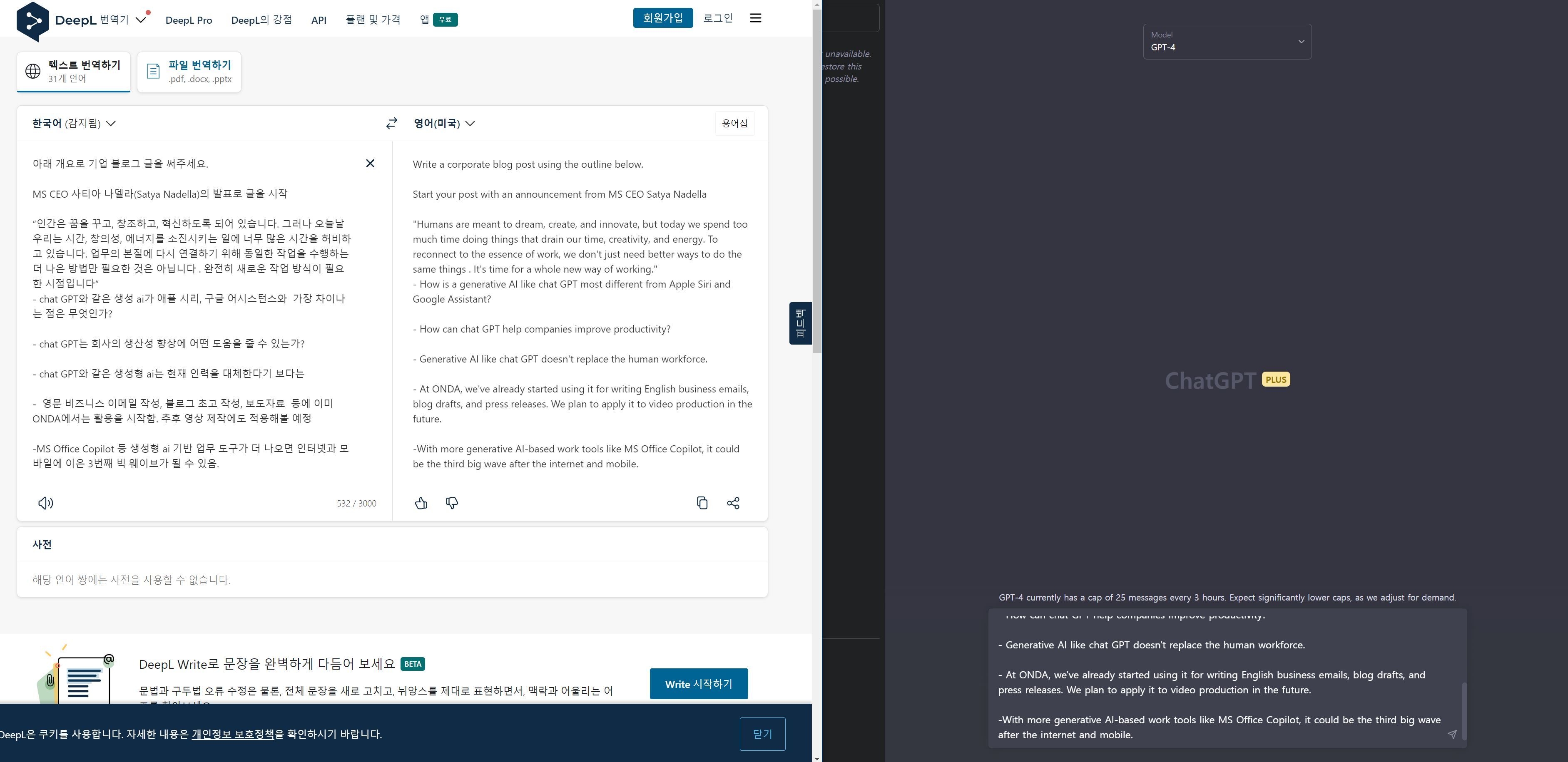
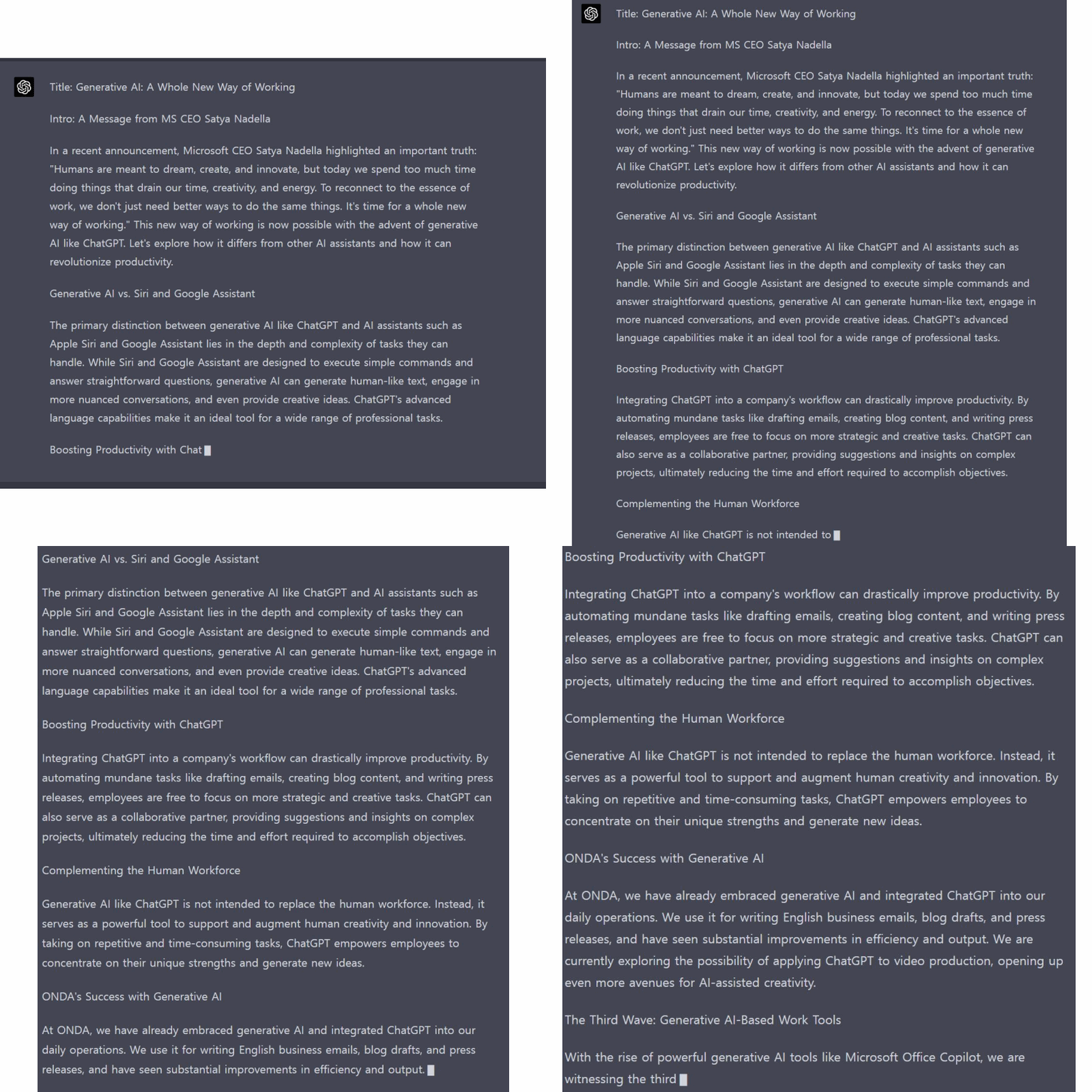
In fact, I drafted this very post using ChatGPT. I translated a Korean outline with DeepL, had ChatGPT expand it, then translated it back into Korean — like this:
Microsoft — which invested in OpenAI — named its suite "COPILOT" for a reason.
Generative AI sits in the co-pilot's seat. It might take the wheel from time to time, but it's there to assist the pilot — the human. That naming choice says everything.
The third wave: Generative AI-native work tools
At the The Future of Work with AI event, Microsoft CEO Satya Nadella said: "Today, we've taken a major step in the evolution of how we interact with computing — one that will fundamentally change the way we work and unlock a new wave of productivity growth."
He continued: "Copilot for Work, which we're announcing today, gives people greater agency and makes technology more accessible through the most universal interface: natural language."
We may be witnessing the third great wave of technological transformation — after the internet and mobile. For me personally, writing this post took half the time it used to when I wrote everything from scratch. The wild part? We're just getting started.
It's been less than a year since major generative AI services launched, and we're already experiencing massive productivity gains. What's more, we already carry the perfect input/output device: smartphones with cameras, mics, and speakers.
Today we chat with ChatGPT using text. But soon — talking to an AI assistant like Jarvis from Iron Man won't feel far-fetched. The future I never thought I'd live to see has suddenly arrived.