Hotels that weave local character into every corner, deliver comfort without the fuss, and charge a fair price
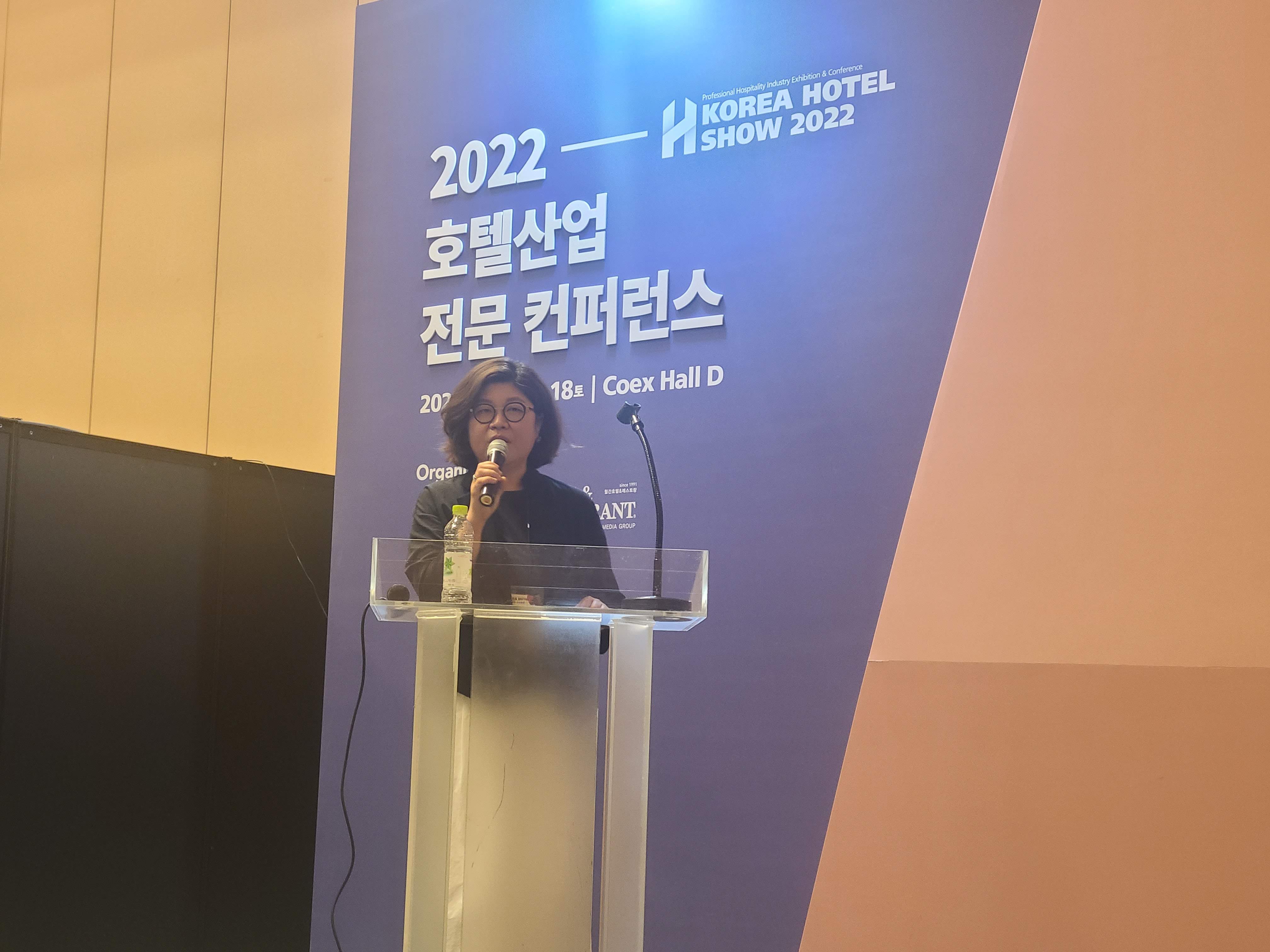
"What Korea needs is hotels that capture local character from the lobby onward — comfortable, straightforward, and priced to match. No unnecessary luxury. No overcomplication." — Lee Han-gyeong, CEO, Polaris Advisor
This past June 19, the Korea Hotel Show opened at COEX. ONDA was there with a booth, alongside sessions from industry leaders. One talk stood out: a keynote by Lee Han-gyeong — author of Almost Everything About Hotels and now the Korea opening PM for Marriott International at Polaris Advisor.
We were curious to hear her take. Not from a tech angle, but through the lens of someone who's opened hotels around the world. Her perspective? Sharp. Unflinching. Worth every minute.
Korea Has No True Luxury Hotels — And No Real Resorts Either
Lee didn't start with the familiar Korean 1-to-6-star system. Instead, she laid out four tiers: Luxury, Premium, Selective, and Longer Stay.
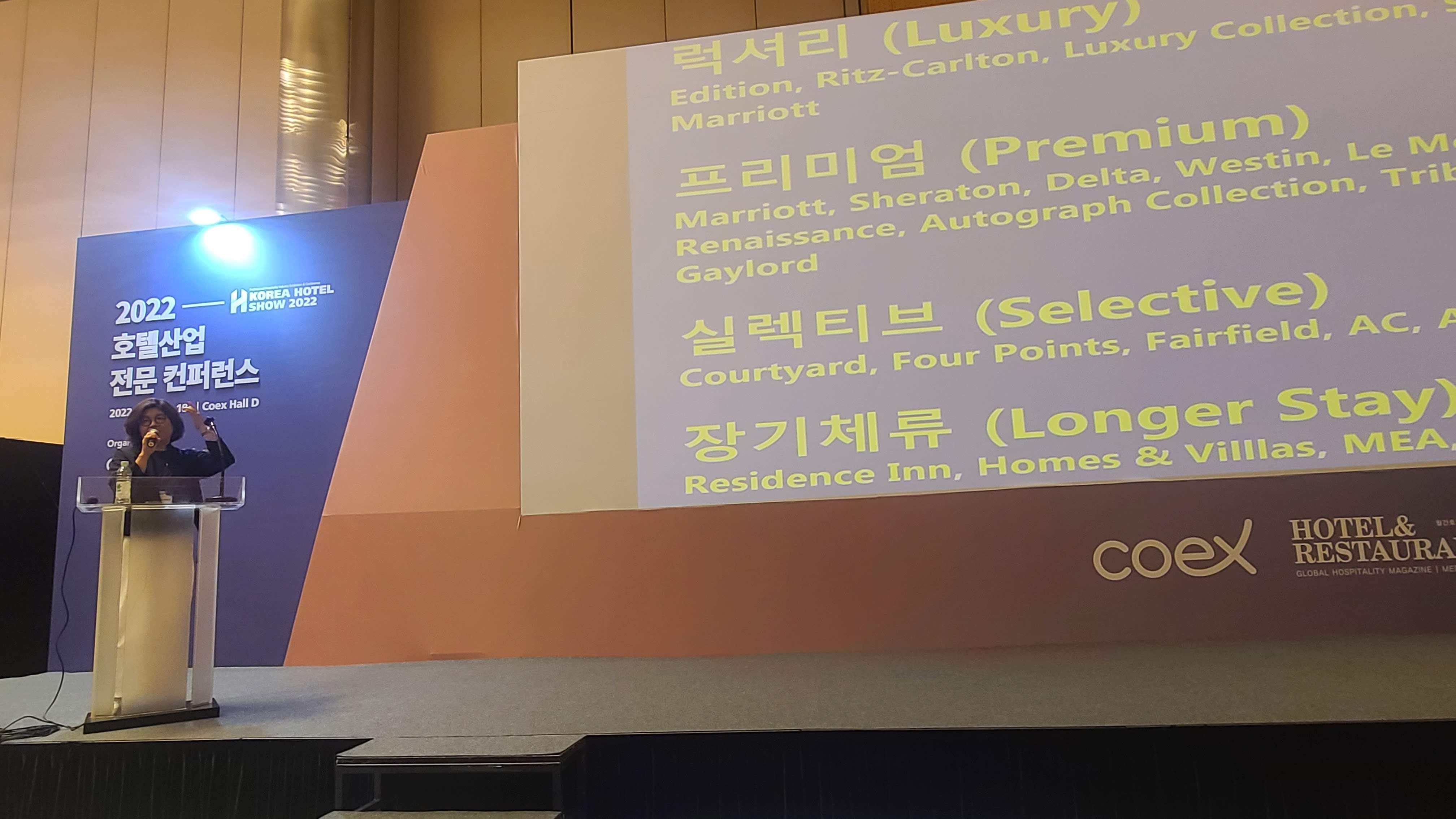
Then she dropped this: Korea doesn't really have luxury or premium hotels by global standards. Wait — so the five-star, six-star brands we know aren't actually premium?
"This is just my opinion, but I'll say it bluntly: Korea's hotel industry is significantly behind. We don't have true luxury hotels. We don't have real resorts."
According to Lee, achieving luxury or premium status globally requires things like room size, bathroom layout, ballroom dimensions, ceiling height, and F&B quality. Even Korea's top-tier hotels fall short when held to international benchmarks.
But that's partly a market reality.
"Building a true luxury hotel or resort demands massive capital — and room rates of ₩500,000, ₩700,000, even over ₩1 million per night. Korea just doesn't have a deep enough consumer base willing to pay that consistently."
She also pointed out that large-scale resorts require expansive low-rise structures and outdoor spaces — something that works in tropical climates like Thailand, but struggles in Korea's four-season weather.
So What's Really Holding Korean Hotels Back?
"Seoul, Busan, and Jeju have decent hotel supply. But go to smaller cities? The options dry up. In regional areas, you'll find Instagram-famous stays charging ₩500,000 a night — or traditional pensions that, frankly, left me with some uncomfortable memories."
"One highly rated rural stay had sleeping mats so thin I thought my back would break. Another had great views but combined the shower and toilet in one space — so after a shower, the entire bathroom floor was underwater."
Lee emphasized the basics: wet/dry separation, quality mattresses, thoughtful amenities. These aren't luxuries — they're fundamentals of guest comfort.
And she was blunt about "Instagrammable" properties that sacrifice comfort for aesthetics.
"Ask people if they'd return to a photogenic but uncomfortable place. The answer is usually no. One of hospitality's key success metrics is repeat bookings."
"If guests enjoy their stay, recommend it to friends, and choose it again the next time they visit — that's when a hotel is truly profitable."
Repeat guests mean lower marketing spend and fewer OTA commissions. This isn't novel — high repeat rates are survival basics across every industry. But in hospitality, they're everything.
A ₩150,000 Hotel That Embraces Local Character
"Korea doesn't have tropical rainforests, but we have stunning natural assets. (She showed photos of Tongyeong, Chungju, Maisan.) The boat ride from Tongyeong to Hansando Island is breathtaking — but most Koreans don't even know it exists."
"I climbed the Chungju observatory and saw these incredible island formations. But all three places? Nowhere decent to stay."
"There are so many locations in Korea where unique, reasonably priced hotels could thrive — yet they're left undeveloped. Domestic travel is booming post-COVID. This is the moment."
"This should be the starting point: building affordable, well-designed hotels in underserved regions."
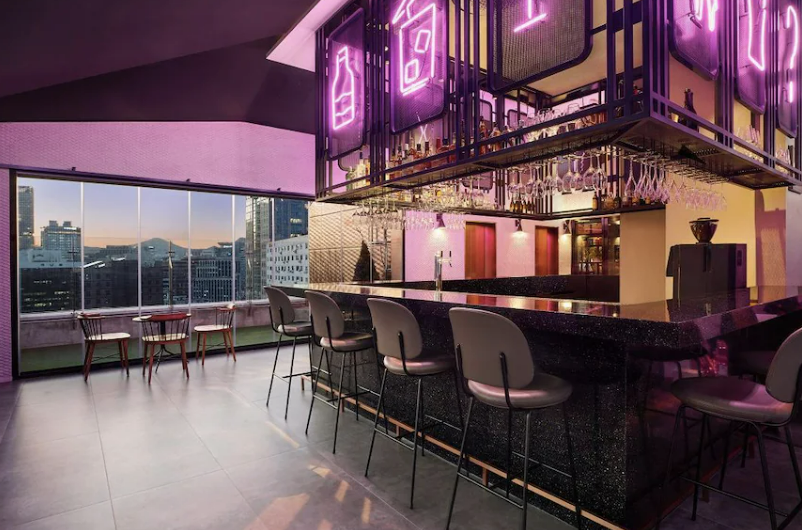
Lee cited Marriott's Moxy brand — a ₩150,000/night "Selective" tier hotel in Insadong, Seoul. No traditional front desk. Check-in happens at the bar. Welcome drinks. Upbeat music. Compact rooms designed efficiently with fold-out furniture. Built for Gen Z and Millennials.
She also shared an example from Japan.
"A major Japanese company operates highway rest stops — and at each one, they sell regional specialties you can't find elsewhere. Now they're planning to build around 150 hotels using the same local-first philosophy."
"The hotels are simple: breakfast service, two comfortable beds, and essentials done right — two power outlets and two USB ports per room. You've probably traveled in Korea and ended up with one outlet for two people in a twin room."
"These small details matter. Guests need comfort. The room may be compact, but the price is fair."
"Korea doesn't need complexity or luxury for luxury's sake. We need hotels that reflect their location — from the lobby design to the guest experience — at a price that makes sense."
※ This piece is adapted with permission from CEO Lee Han-gyeong's talk at Korea Hotel Show. Some details and sequencing have been edited for clarity. We're grateful to CEO Lee for allowing us to share her insights.
🗞 Subscribe to our newsletter for more hospitality insights