Digital transformation isn't a problem for one department or one manager. The entire hotel needs to change at once.

Q) IT companies develop new technologies and integrate them into traditional hotel operations. This brings benefits, but also many challenges.
How should we address this? And how are these technologies impacting staffing and profitability? (Lee Hee-ra, Country Manager, OTA Insight Korea)
A) "From a staffing and cost perspective, doing this half-heartedly actually costs you more."
I think 'seamless' is the word hotels need most right now.
If data flows seamlessly — from room operations to sales across multiple online channels — you gain insights that transform decision-making. (Oh Hyun-seok, CEO, ONDA)
Following up on our previous post, we're sharing more insights from the '2023 Tourism Business Connection Week' hosted by the Ministry of Culture, Sports and Tourism and the Korea Tourism Organization on September 20.
Hotel digital transformation, in plain terms, means changing the tools you work with and how you work. Like banks switching from abacuses to computers — this shift is reshaping hotel operations dramatically. And it's not optional. It's survival.
Also, digital transformation isn't a problem for one department or one manager. The entire hotel needs to change at once. That was the consensus among speakers and panelists that day.
In today's hotel environment where staffing keeps shrinking, digital transformation becomes more critical by the day.
Kim Ju-young, CEO of Duwat (a smart hotel platform), shared: "When we first met with hotels as IT developers, they looked at us like we were aliens. (laughs)"
"But look at the numbers. Between 2019 and 2023, hospitality workers dropped from 70,000 to 50,000. Meanwhile, hotels and resorts keep getting built."
"In a way, COVID forced hoteliers to adopt this faster. Both sides — us and the hotels — have improved significantly. That's a silver lining."
In other words, the COVID crisis accelerated workforce decline and operational shifts. Hotels on the ground are now solving these 'given problems' through digital transformation. CEO Kim walked through several case studies.
A 900+ room hotel in Sokcho used to see lobby chaos from 3 PM to 6 PM every day — three hours of check-in mayhem. After implementing smart systems, check-ins wrapped up in about 15 minutes. Another hotel cut internal phone calls by 60-80%.
All that saved time can now go toward better service. It lets shrinking hotel teams deliver experiences that exceed what they offered before.
It's a cliché, but crisis becoming opportunity — this is what it looks like.
This transformation can't happen in just reservations, the lobby, or sales. The entire hotel has to move together.
Jung Bo-young, Director, speaking on 'The Relationship Between Revenue Management and Digital Marketing' that same day, emphasized: "I gave multiple examples of collaboration, but ultimately it's all about maximizing hotel revenue. You need to share data, share strategy, share insights."
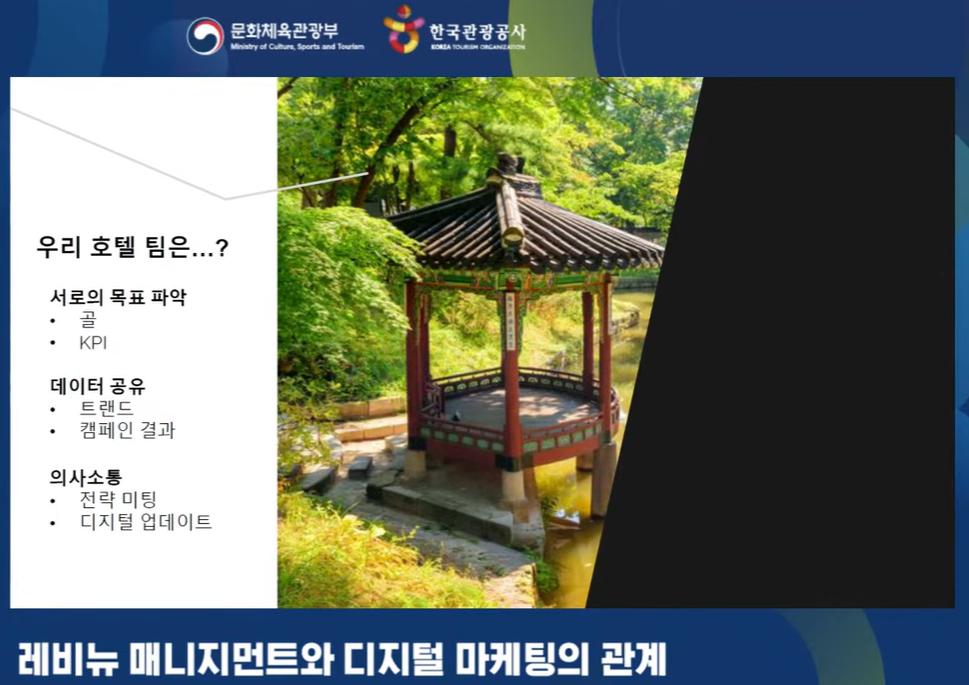
She also asked: "Does the digital marketing team understand lobby management KPIs? Vice versa? Does digital marketing join sales strategy meetings? You need to know what goal each team is chasing."
If you gather all this data through online marketing but don't share it with sales and operations teams to generate insights, all that data rapidly loses value.
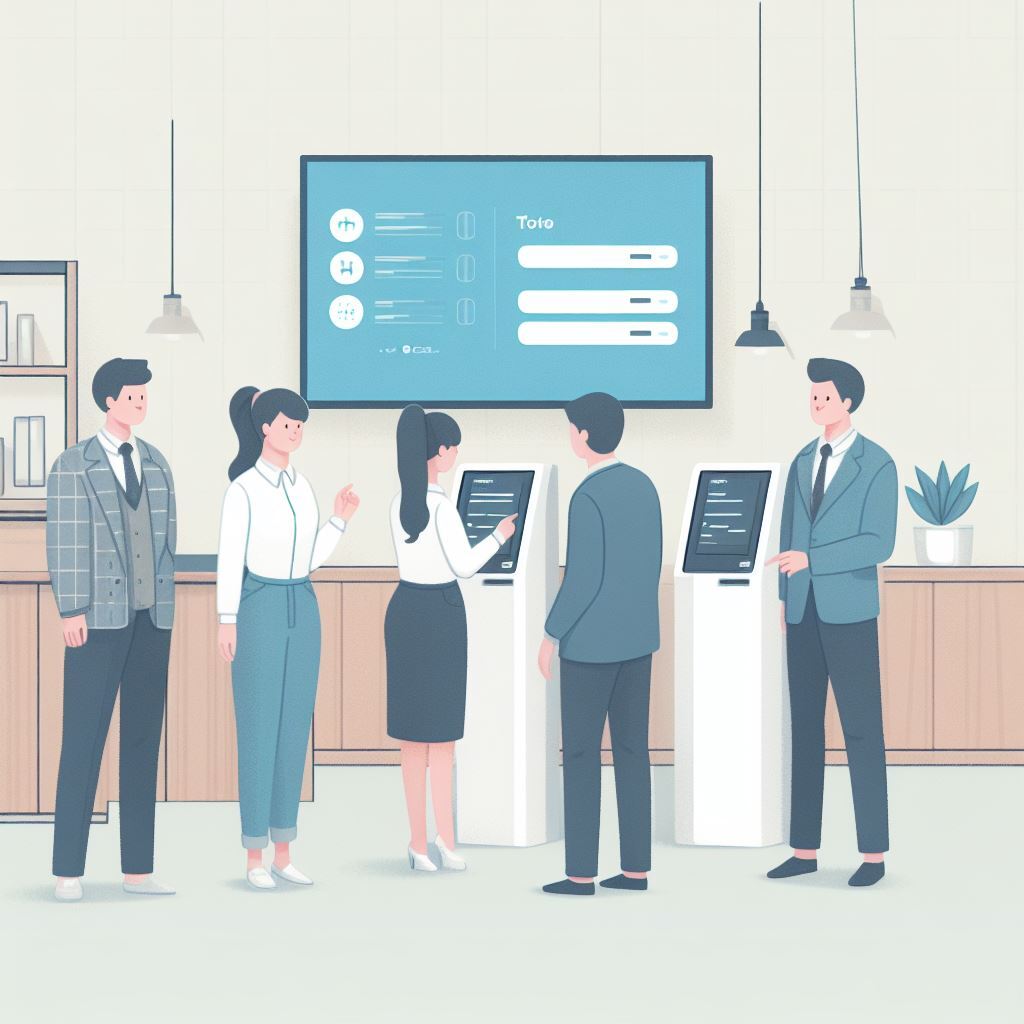
In other words, installing technology isn't the finish line. You need people who know how to use that technology and collaborate around it. Similarly, if you install kiosks in the lobby but staff still work the same way with the same headcount, you've created peak inefficiency.
Let's recap. Digital transformation — changing how hotels work — is accelerating across operations. Hotels are no longer field-staff-centric businesses. They've become knowledge-based businesses powered by data and technology.
As we said, hotel digital transformation isn't a problem for one department or one manager. The entire hotel needs to change at once. And this trend will only accelerate as generative AI and contactless services expand.
Especially since the staffing crisis — which we hoped or expected would end with COVID — is now dragging on due to inflation.
Morgan Stanley, in a report titled 'How Technology Can Guard Against the Impacts of Inflation,' analyzed: "As labor and capital costs rise, corporate investment will likely shift toward technologies that improve productivity and reduce business costs."
The report emphasized "software that optimizes business processes" and "IT hardware like self-checkout technology" as critical.
This aligns perfectly with where hotels need to go.
※ This content is excerpted and edited by ONDA from the 2023 Tourism Business Connection Week Tourism Insight Conference. Some expressions, order, and phrasing have been modified for reader clarity. We thank the Korea Tourism Organization, panelists, and moderators for allowing us to create this content. Full video available on the EO channel.