\"Rooms are the heart of a hotel. The RM manager decides how much revenue those rooms generate.\"
Everything You Need to Know About Revenue Management (Part 1)
Why Revenue Management Is the Crown Jewel of Hotel Operations
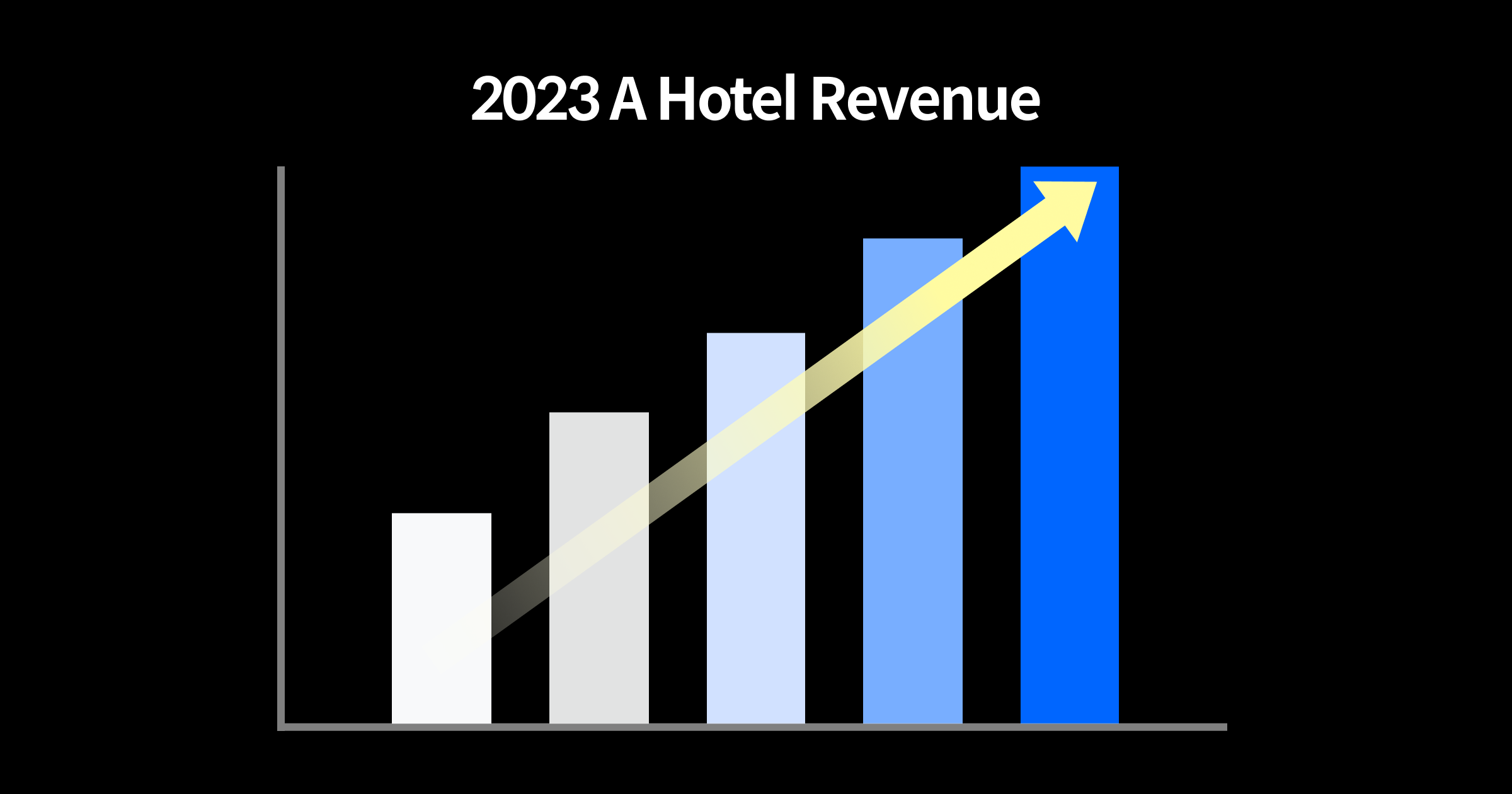
"Rooms are the heart of a hotel. The RM manager decides how much revenue those rooms generate." — Myrrine, ONDA Global Team
Revenue Management (RM) is the practice of maximizing revenue through demand-based pricing strategies.
Many hotels have dedicated RM departments or revenue managers focused on this mission. The concept isn't unique to hospitality — it's widely used in airlines, restaurants, and other industries.
So why are hotels so obsessed with revenue management?
What Does Revenue Management Actually Mean?
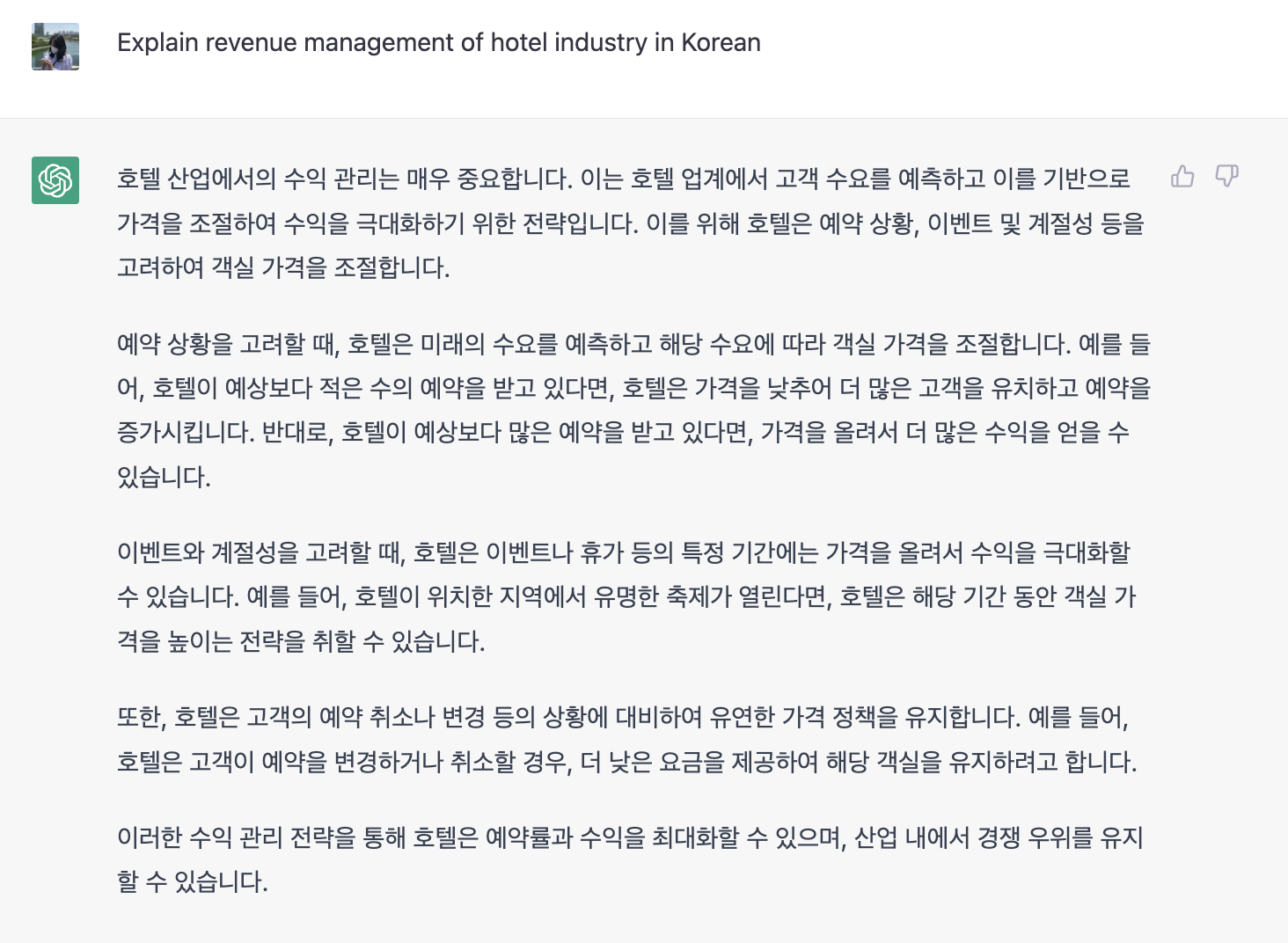
We asked ChatGPT what RM means in the hotel industry. Its answer: a strategy that 'forecasts demand,' 'optimizes pricing,' and 'maximizes revenue.'
"Selling the right inventory unit to the right customer for the right price, at the right time and in the right place"
Dr. Sheryl Kimes of Cornell's School of Hotel Administration defines it as: selling the right unit of inventory (e.g., a room) to the right customer at the right price, in the right place, and at the right time. In short, the more dynamically you optimize pricing across time, channel, and customer segment, the more revenue you unlock.
Six Core Principles of Revenue Management
HotelTechReport breaks down RM into six core principles that make the concept crystal clear:
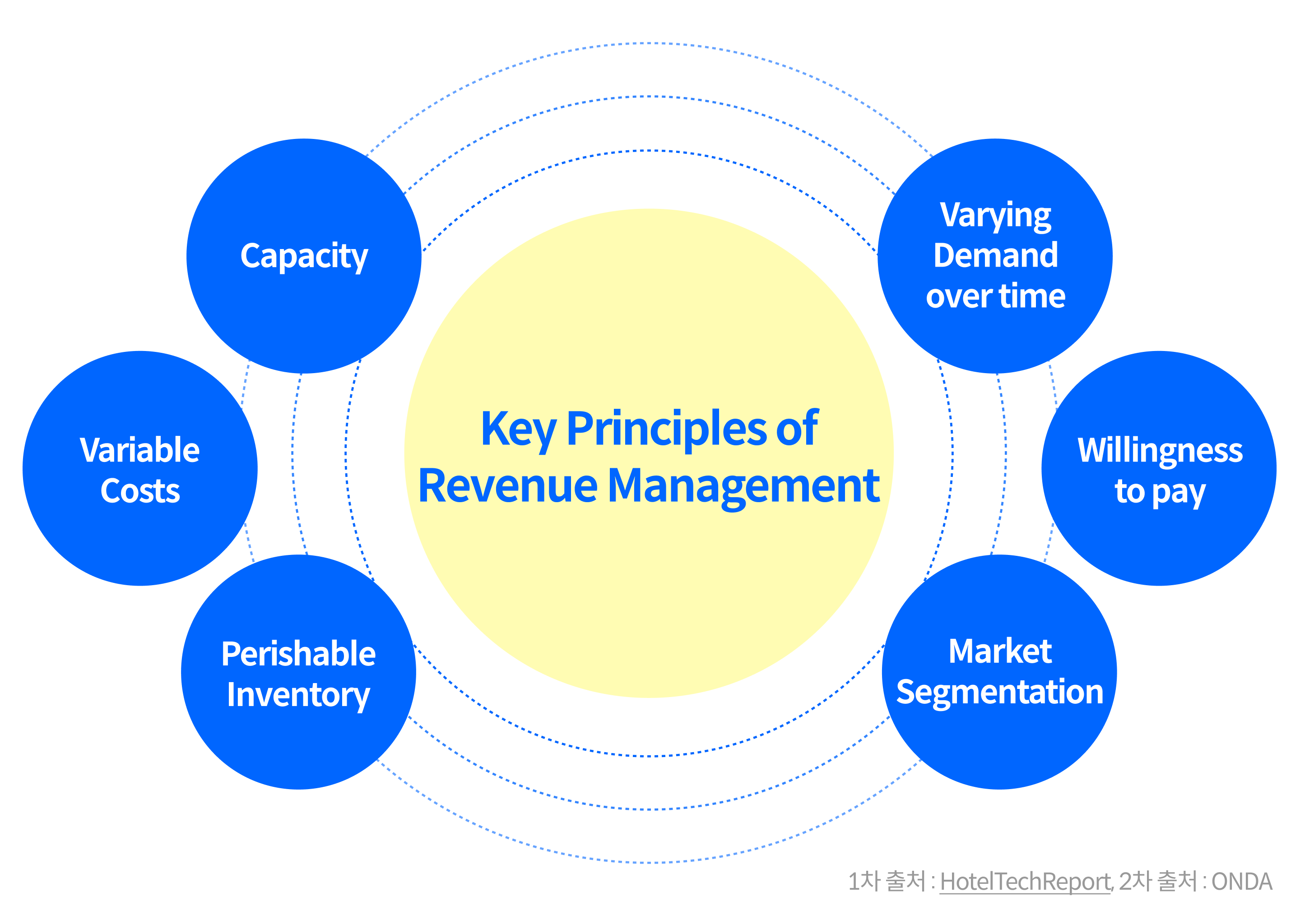
1. Capacity
The units available to sell in a given period — for hotels, that's rooms, ballrooms, meeting spaces. Some inventory is flexible (you can split or combine event spaces), but rooms are fixed.
2. Variable costs
Operating costs split into fixed (salaries, rent) and variable. Variable costs — like amenities, housekeeping supplies — change with occupancy. RM managers need to know cost-per-room to set profitable floor prices.
3. Perishable inventory
Hotel rooms expire. A March 31 room can't be sold on April 1 — its value vanishes. But slashing prices to fill every room isn't the answer. The goal is balance: optimizing both occupancy and rate.
4. Market Segmentation
Leisure travelers behave differently than corporate clients. Each segment gets a tailored pricing strategy. But it's tricky — guest needs overlap, segments blur, and behavior shifts constantly.
5. Willingness to pay
A good RM manager gauges what customers will pay for a room. This depends on supply and demand, but also perceived value. What does the guest expect? That value changes with context — a tropical beach is worth more in winter than summer.
6. Varying demand over time
Last October, when BTS announced a Busan concert, hotel rates hit ₩2 million per night. Hospitality demand swings between peak and off-peak seasons, holidays, and events. It fluctuates week to week, even day to day.
Demand also shifts by segment. During COVID, wedding bookings collapsed. The solution? Pivot to other segments.
Why Is RM So Critical for Hotels?
Revenue Management took root in hospitality when Marriott adapted Yield Management from airlines and saw immediate results. Yield Management — often used interchangeably with RM — focuses on maximizing revenue from a specific source (like rooms) by adjusting pricing based on booking timing.
Revenue Management is broader: it optimizes total hotel revenue, not just room sales.
It's also different from Sales, where teams (corporate, MICE, etc.) drive revenue from their own verticals. RM managers see the forest, not just the trees.
That's why Revenue Management directly impacts overall hotel performance. If pricing isn't "right" given all the variables, rooms won't sell — and revenue suffers.
"Hotel room inventory expires daily. If it doesn't sell, revenue is lost immediately. You need to set the right price per room, analyze every booking channel, and decide how to price each one.
The goal is maximizing occupancy, average daily rate, and total revenue. Finding the optimal mix is the heart of RM." — Myrrine, ONDA Global Team
Real-World Success Stories Prove the Point
Global chains like Accor and IHG have long used RM to maximize revenue. IHG built its own RMS (Revenue Management System) to optimize resource allocation and pricing. Accor uses its RMS to calculate optimal rates per property — and when one hotel sells out, the system redirects demand to nearby Accor brands, preventing revenue leakage.
By managing operations efficiently through technology, they cut costs and boost revenue.
So what strategies make Revenue Management successful?
👉 Find out in Part 2
Myrrine Kim
Spent six years at a five-star Seoul hotel working in reservations, sales, and RM. Now at ONDA's Global Team, she uses that experience to drive online sales and revenue for international properties.
References
- HotelTechReport, "Revenue Management", https://hoteltechreport.com/news/revenue-management, accessed March 27, 2023
- HotelMinder, "Revenue Management", https://www.hotelminder.com/revenue-management-versus-yield-management-8-tactics-for-success, accessed March 27, 2023