Metasearch platforms aggregate booking channels in one place, letting hotels compete on price and drive traffic to their own sites—without the steep OTA commissions.
Hello from ONDA, the B2B hospitality platform digitizing Korea's accommodation industry. If you run a hotel, you've probably thought long and hard about reducing OTA dependence. Ideally, you'd drive more direct bookings through your hotel's official website. But the reality is that OTAs — with their massive user base — still capture the lion's share of reservations. That's why most hotels pay steep commissions and remain heavily reliant on them.
So is there a way to dial down OTA dependence and push more bookings to your own site? Yes. The answer is metasearch. Use this channel strategically, and you can unlock more visibility, more direct bookings, and lower marketing costs. Curious what metasearch is and how to leverage it? Keep reading — we'll walk you through everything.
What is metasearch?
Metasearch aggregates results from multiple search engines. In other words, it shows you search results from various sites all in one place. And it's not just for hotels — metasearch is used across industries. Take Skyscanner, the flight metasearch engine everyone knows.
When a user enters dates and a destination, Skyscanner displays flights from different airlines and times. Select a flight, and you'll see booking options from various channels — including travel agencies and the airline's official website. The user picks a channel and books there. That's metasearch: a service that aggregates multiple sales channels in one spot.
OTA vs. metasearch
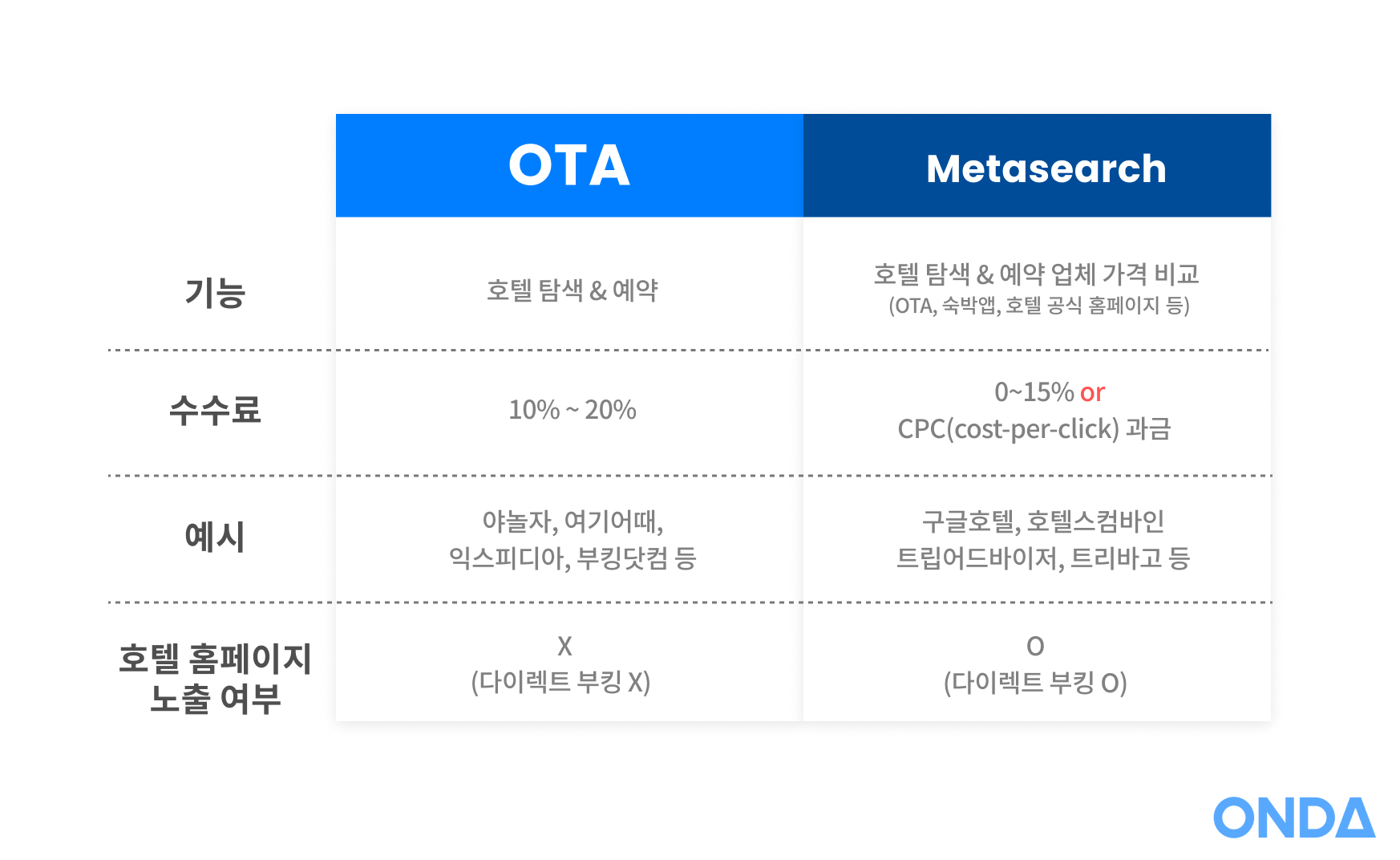
What's the difference between an OTA and metasearch? Let's focus on hotels. OTAs sell rooms directly from partner properties. Search for a hotel on Yanolja, for instance, and you'll see a list of hotels where you can book immediately. With metasearch (like Google Hotel Search), you search for a hotel, pick one, and then see multiple booking platforms — Yanolja, Yeogi Eottae, and (if integrated) the hotel's official website. You compare prices, click through to an OTA or the hotel site, and complete your booking there.
Why does metasearch matter for hotels?
Metasearch lets you reach guests you couldn't otherwise access. Users who aren't loyal to a specific OTA brand — or who prioritize price — will use metasearch to find the best deal. These travelers typically have no allegiance to a particular booking site. That gives you a chance to convert them into loyal customers of your hotel. Of course, you'll need to sweeten the deal: offer perks exclusive to guests who book direct. We'll dive deeper into that strategy in a future post.
Metasearch is also cost-efficient. Even factoring in ad spend or commissions to metasearch platforms, the fees are far more reasonable than OTA commissions. Google Hotel Search, for example, currently charges no platform commission. Even after paying for a booking engine and payment gateway, you can save 70–80% compared to typical OTA fees.
How do you use metasearch?
Step one: connect your hotel's booking engine to metasearch via a PMS (Property Management System) or CRS (Central Reservation System). Metasearch platforms integrate with hotel software providers so potential guests always see accurate rates and availability.
It's not required, but you can maximize visibility by running metasearch ads. Google, for example, offers Google Hotel Ads. With the right bidding strategy, you can secure top placement. Combine that with competitive pricing, and you'll pull guests to your official website — even in a crowded OTA landscape.
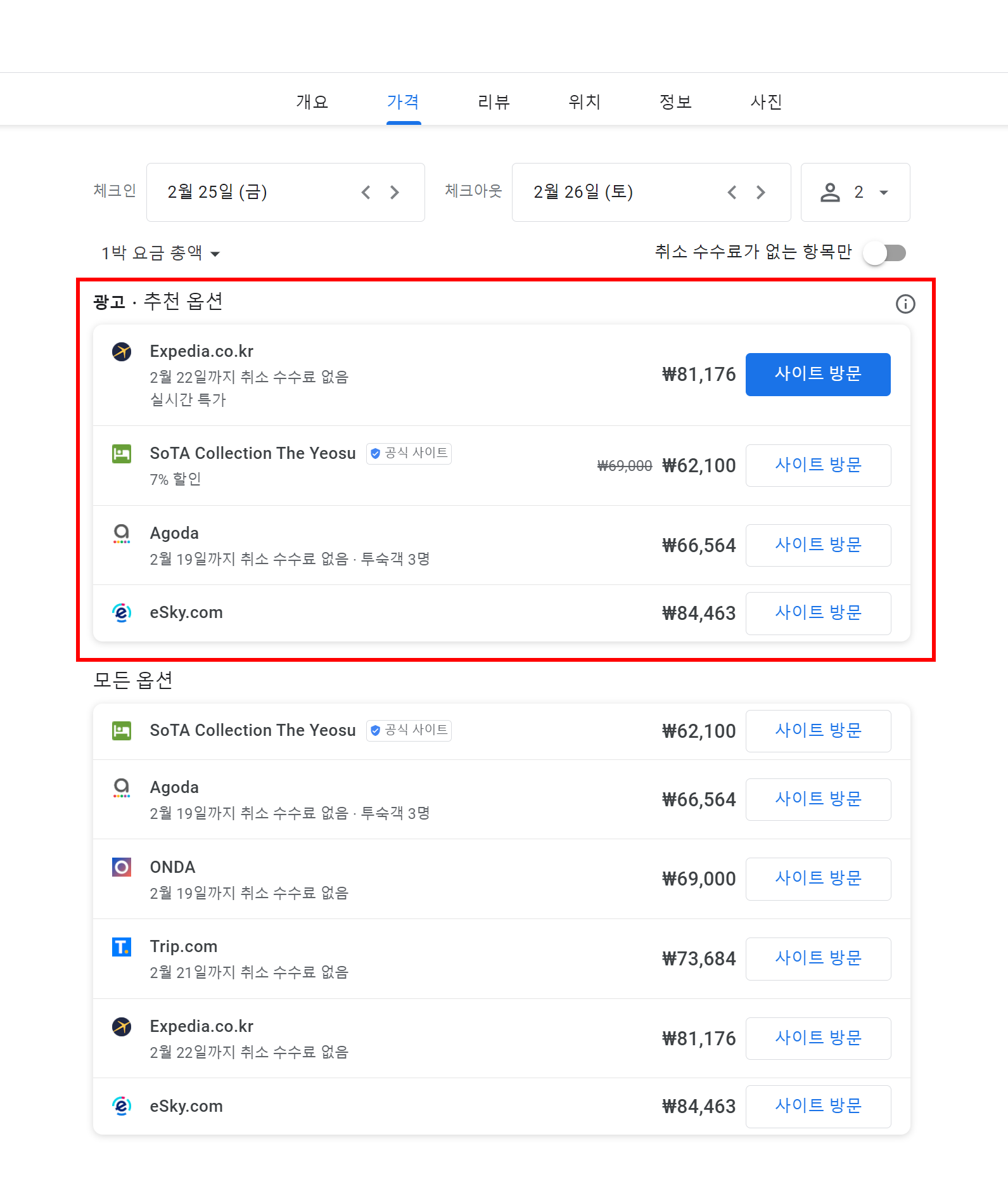
If you've never run these campaigns before, though, budget can get wasted fast. We recommend partnering with a hotel tech specialist who can handle everything — from metasearch integration to ad management. ONDA has deep experience in hotel metasearch, and our team includes experts in this space. We recently became the first company in Korea to form an official partnership with Google Hotel Search. Curious what ONDA can do for you? Get in touch. (>Click)
What makes each metasearch platform different?
- Google Hotel Ads – Market leader (67% share in 2019) and growing fast. In 2019, average ROAS (Return On Ad Spend) hit 10.5x
- Trivago – If you offer the lowest rate, you rank high regardless of your bid. Lowest risk among metasearch platforms
- Tripadvisor – Reaches the most engaged travelers. Best for quality targeting
- Hotelscombined – Strong in Asia. CPC tends to be higher (typical when targeting niche markets)
Which metasearch platform delivers the best ROI?
According to data from one industry provider, Google Hotel Ads commanded 67% of the hotel metasearch market in 2019. It's the fastest-growing platform, and that trajectory shows no signs of slowing. Unlike other metasearch engines, Google Hotel Ads is integrated into Google Search results — which means exposure to billions of Google users.
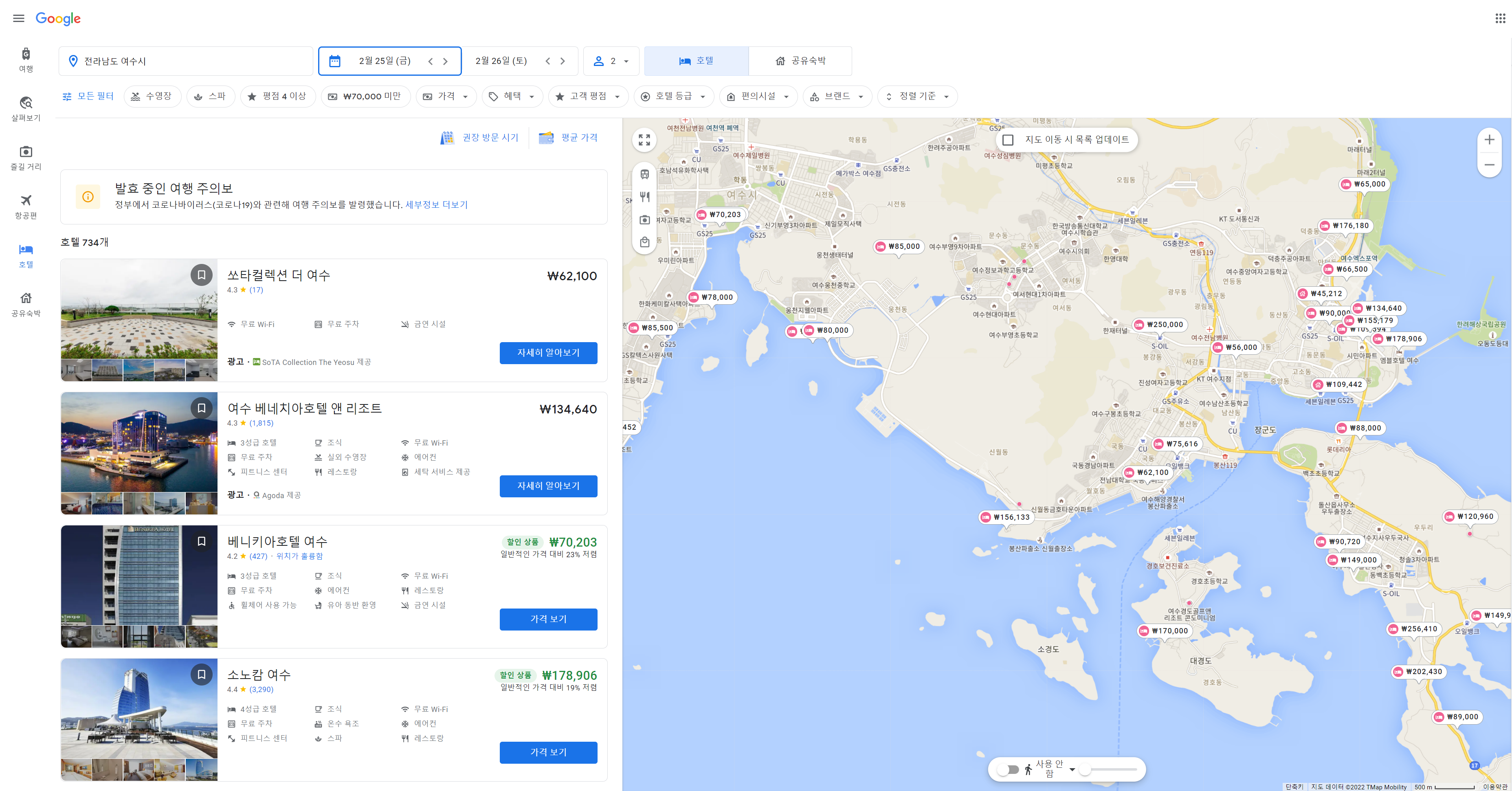
Google Hotel Search may still be new in Korea. Last July, Google officially partnered with ONDA to enter the Korean market. Given how quickly it scaled globally, we expect its influence here to grow just as fast. In fact, major hotel chains in Korea are already onboarding Google Hotel Search through ONDA.
Want to get ahead of the curve? Reach out to ONDA, Google Hotel Search's official partner in Korea.