Essential checklist before the grace period for living accommodation regulations ends
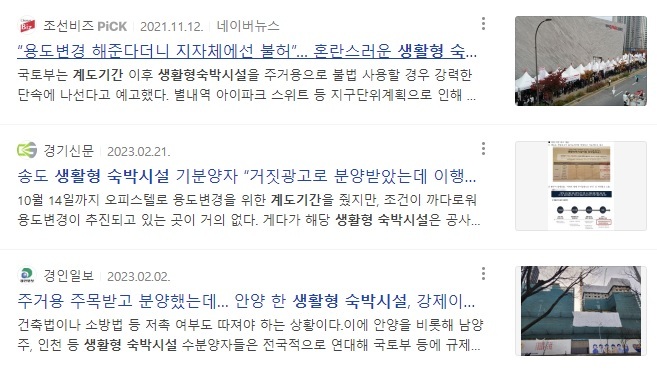
Living accommodation facilities are back in the spotlight — and not in a good way. Search the term in Korean and you'll find a surge of negative press. The reason? Korea's Ministry of Land, Infrastructure and Transport (MOLIT) grace period for living accommodation regulations ends October 14.
'Living accommodation' (saenghwalhyeong sukbaksisel) is classified under Article 3-5 of the Building Act Enforcement Decree. These properties look like regular officetels or urban hotels, but they're zoned strictly for lodging — not long-term residence.
We won't rehash the full regulatory backstory here. For details, see ONDA's earlier deep dive:
What living accommodation facilities mean — and why the regulations matter
The core issue: these properties were often marketed as 'suitable for residence,' which led buyers to use them as homes rather than lodging businesses. Using a non-residential building as a residence creates obvious problems.
In January 2021, MOLIT drew up enforcement rules. The grace period expires this October. After that, anyone still using living accommodation as a residence faces annual fines of 10–15% of the property's sale value.
(Update Sept 25) MOLIT has extended the enforcement grace period until end of 2024. But after that, residential use will trigger annual fines equal to 10% of the building's standard taxable value under the Local Tax Act.
ONDA has been flooded with inquiries. But here's the reality: we can only help after owners have done significant groundwork. Specifically, if you don't have a consortium representing at least 30% of units (or 30+ rooms), there's little we — or anyone — can do.
Start by understanding where you stand. Use the chart below to assess your situation and plan next steps.
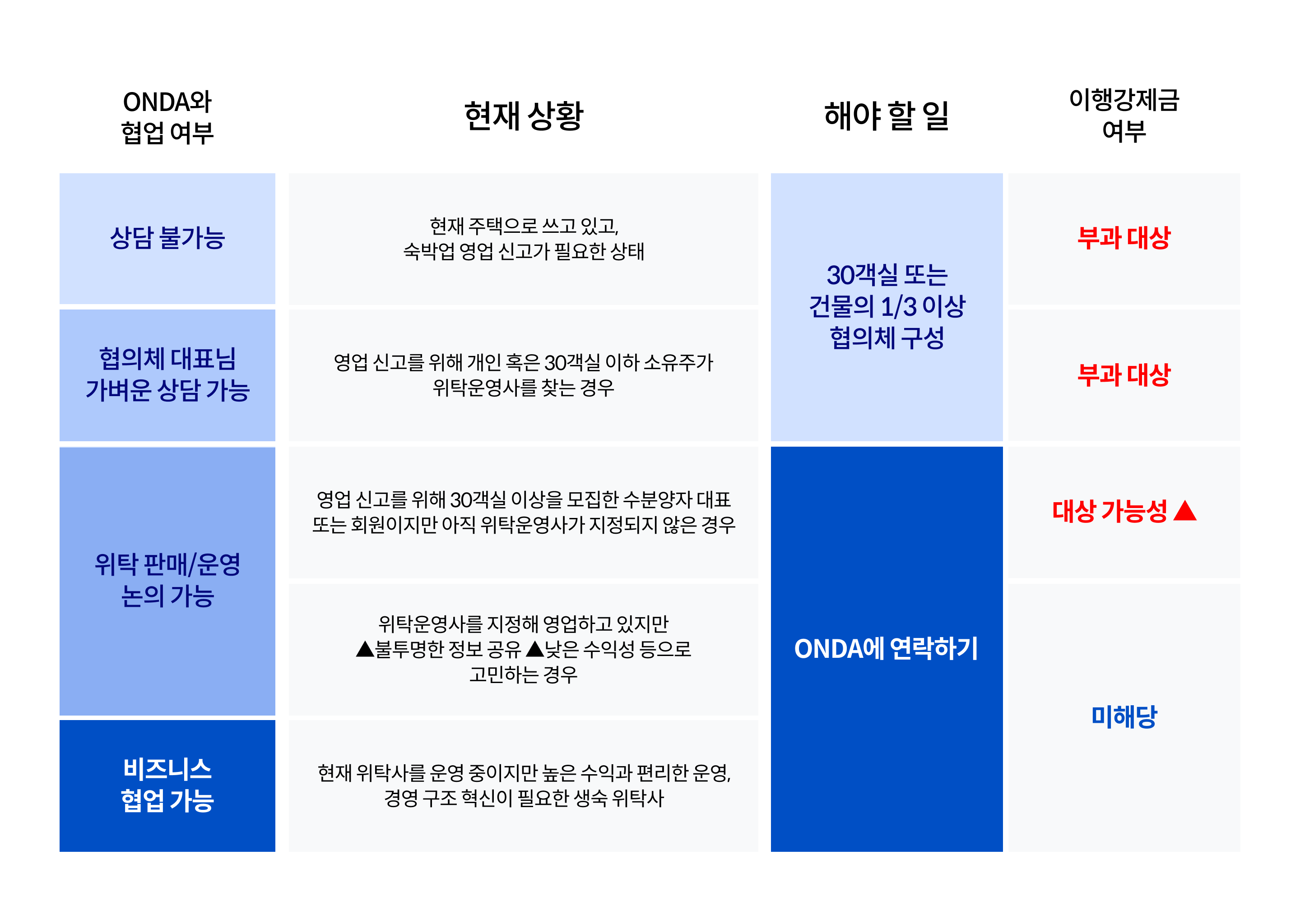
ONDA is already partnering with multiple living accommodation operators nationwide to navigate these challenges. If you're a contract operator wrestling with this new reality, let's talk.
**Do I really need 30 rooms to outsource sales?
Can't I just list on Airbnb or Naver myself?**
Short answer: almost certainly not. ONDA commissioned attorney Song Ji-eun to write on this exact topic. Her analysis identifies three major blockers:
- Local governments supervise lodging businesses. They don't want a proliferation of one-off operators — so individual living accommodation licenses are rarely approved.
- Lodging businesses operating in part of a building must have either 30+ rooms or occupy at least one-third of the building's gross floor area. (Public Health Control Act Enforcement Rule, Article 2)
- Individual owners struggle to meet the compliance and operational demands of a legal lodging business.
Between regulatory compliance and local government approvals, there's no easy path. You need a consortium of 30+ rooms just to qualify for a lodging business license. And even then, approval isn't guaranteed — it's just the starting line.
One facility ONDA knows managed to assemble 80+ rooms. It still took over two years to launch operations. Living accommodation is one of the hardest lodging categories to run. Anyone who sold these properties with promises of easy money or implied residential use should be deeply ashamed.
In practice, individual operation is nearly impossible. ONDA's managed living accommodation facilities operate like mid-tier hotels. We pull customers from portals, domestic and international OTAs, direct bookings (D2C), and messaging channels. Guests check in at a front desk.
Guests don't think they're staying at a 'pension' (Korean term for small guesthouse). They think they're staying at a decent hotel for the price. And they expect hotel-level service. Delivering that as an individual owner? Not realistic.

Think of it this way: running a neighborhood snack bar with your family is doable (though exhausting). Running a full-service restaurant with high foot traffic? Different ballgame.
Guest expectations, regulatory compliance, and operational complexity in living accommodation are orders of magnitude higher than a small lodging business. That's why the government effectively requires facilities to pool at least 30 rooms or one-third of the building and hire a professional management company.
**Getting a lodging license is just the start.
Find an operator that can run a digital business.**
Once you've got approval and a sign on the door, the real work begins. The timeless formula for lodging success is still location and pricing. Add spotless rooms and friendly service, and you've got a winner.
Location is fixed — it was locked in when the building was built. If your location isn't ideal, you'll need to compete on price. And delivering 'clean rooms' and 'friendly service' costs money. If your costs exceed revenue, you lose money. Simple as that.
This is where choosing the right contract operator becomes critical.
You need an operator who can:
- Price rooms intelligently based on real-time market conditions to minimize vacancies
- Source amenities at reasonable prices
- Minimize labor costs — by far the biggest operational expense
Post-COVID, the labor picture has gotten brutal. Many hospitality workers left the industry, viewing it as unstable and poorly compensated. Fewer workers means higher wages. You need an operator who can run efficiently with minimal headcount.
> 5 recruitment strategies to solve hotel staffing shortages
So how do you solve this? Many lodging businesses are taking the direct approach: cut non-essential costs and staff, and maximize online sales revenue.
Historically, large lodging businesses were labor-intensive by design. Bellhops at the entrance. Friendly front desk staff. 24/7 room service lines. For upscale properties, these were non-negotiable. 'Hotelier' carried a certain prestige.
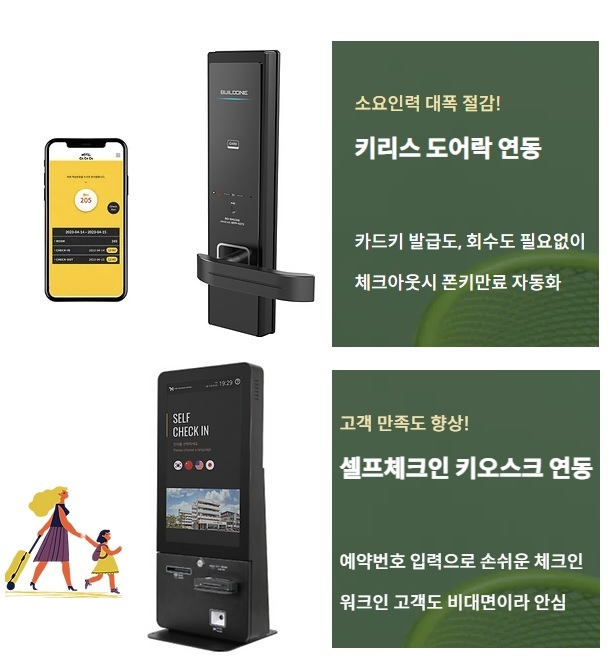
Problem is, all of this costs money. ONDA solves it with technology. Where a 200-room property used to need 30 staff, ONDA runs it with 5 to 10.
We do this through:
- Easy-to-use property management systems (PMS)
- Self-check-in kiosks and keyless door locks
- Operational know-how built over years in the market
Online sales performance determines profitability
The lodging industry changed more in the three years after COVID than in the previous decade. Pre-pandemic, most hotel rooms were sold through offline travel agencies or a handful of OTAs. Post-pandemic, distribution exploded.
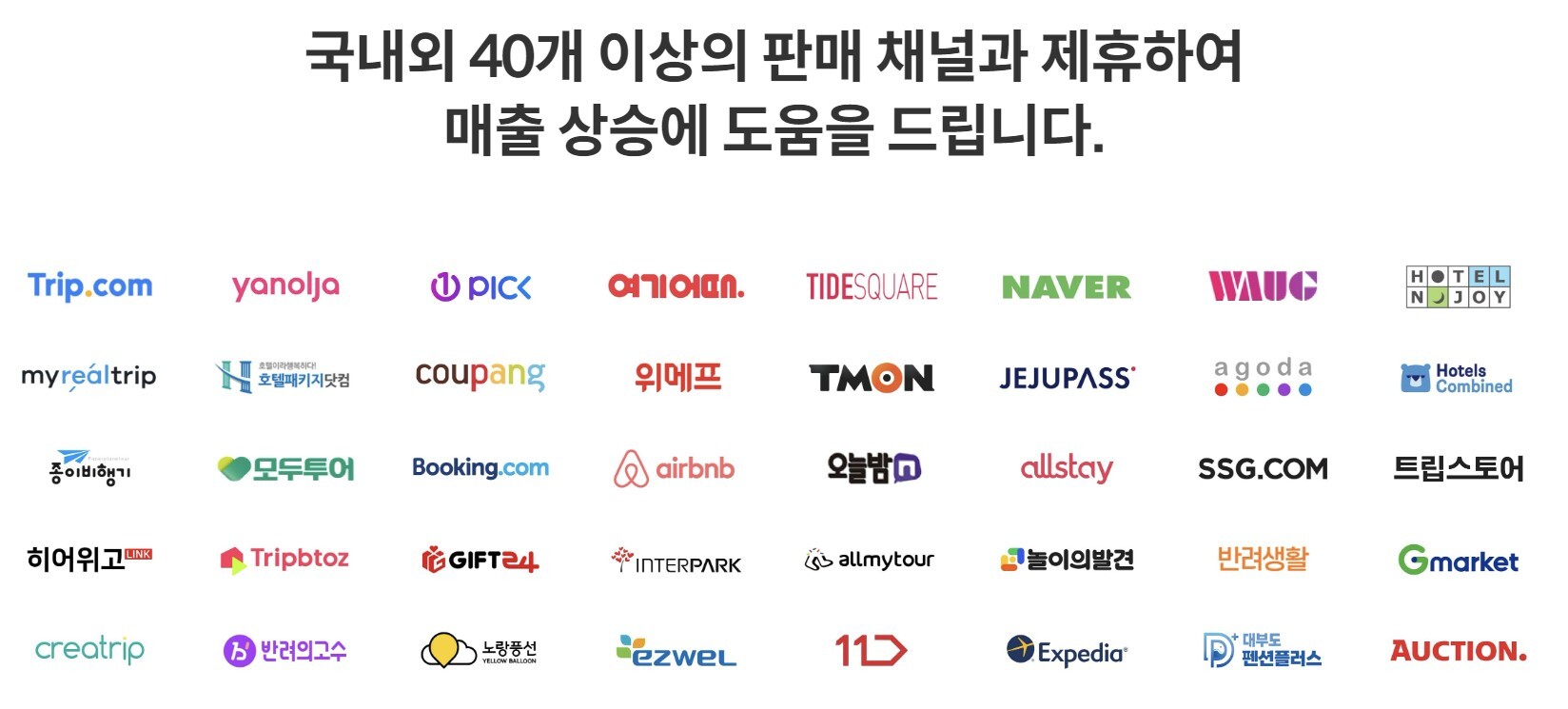
The biggest shift? Channel diversification. It's not just offline-to-online. Even within online, the number of channels has multiplied.
In Korea, you've got Yanolja, Yeogi Eottae, MyRealTrip. Internationally: Airbnb, Agoda, Expedia.
But now? You can also book through Naver and Kakao maps, car-sharing app Socar, daycare app Kidsnote, Google Hotel Search, and corporate benefit platforms. And unlike the old days — when you had to call the property after buying a voucher online — today the entire booking flow happens digitally.
ONDA is widely recognized as Korea's leader in multichannel distribution and online booking UX. Major hotel chains and resorts sell rooms through ONDA across dozens of online channels.
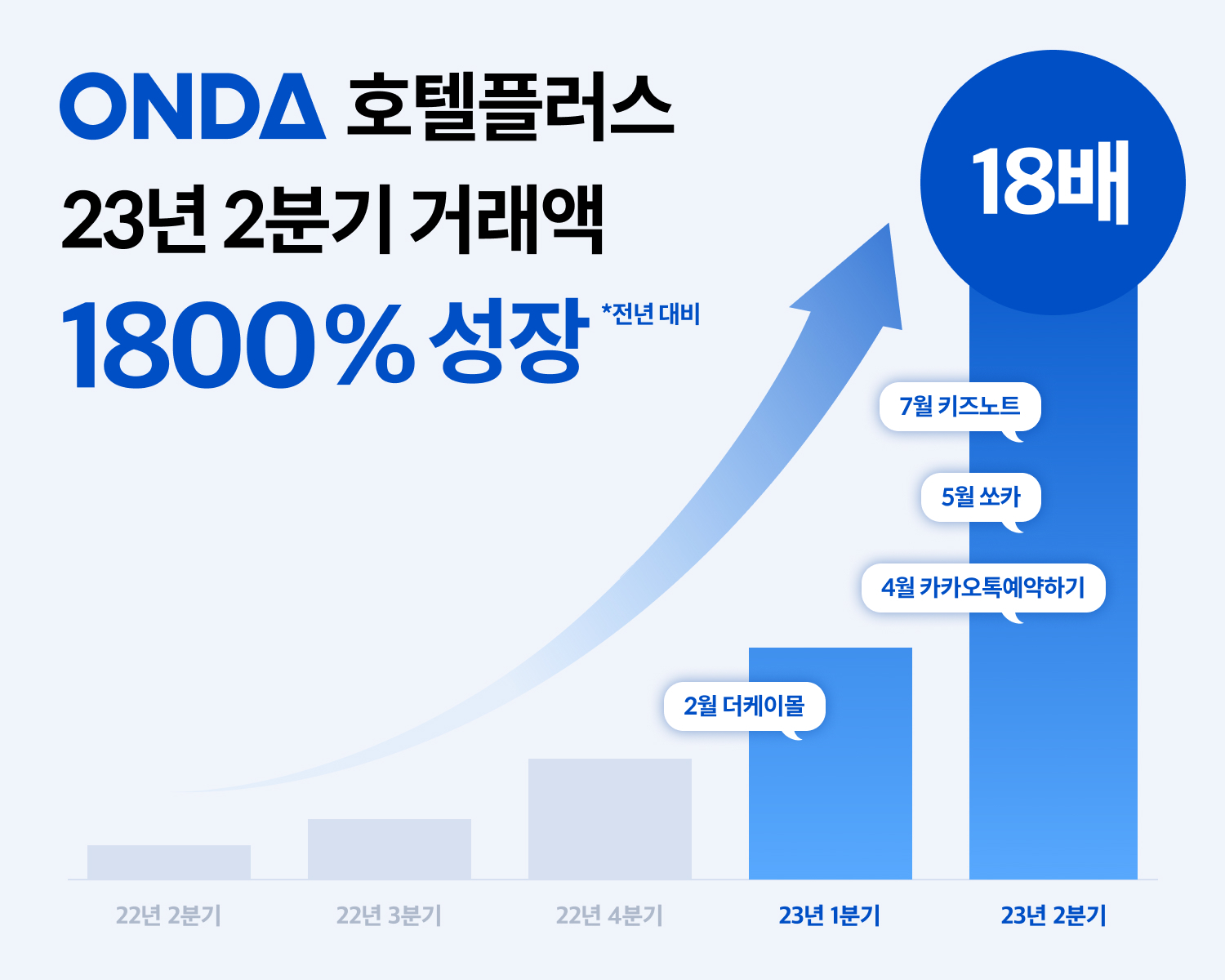
Living accommodation facilities compete with nearby mid-tier hotels and other living accommodation properties. Over the past two years, ONDA has focused company-wide resources on hotel room sales performance — and our quarterly sales numbers keep climbing. Living accommodation facilities partnering with ONDA can expect the same strong results.
⚠️ All rights reserved. Cite this piece as 'ONDA (온다)' when quoting.