What do travelers really think about sustainability and eco-friendly practices?
Travelers worldwide are paying more attention to sustainability — eco-friendly practices, carbon neutrality, responsible tourism. And the industry's responding. More hotels and travel brands are launching green initiatives than ever before.
Korea's hotel sector is feeling the shift too. In late March, the government amended its resource recycling law to ban free single-use amenities in properties with 50+ rooms. Since then, hotels have rolled out a range of eco-friendly services — and some are turning compliance into a marketing edge.
As environmental stewardship becomes a defining issue of our time, hotels are adapting.
Sustainable travel? Hotels hold the keys
So what do travelers actually think about sustainability?
Booking.com surveys travelers from 34 countries — including Korea — every year on sustainable travel. This year's Sustainable Travel Report shows consistent, strong interest in greener travel worldwide.
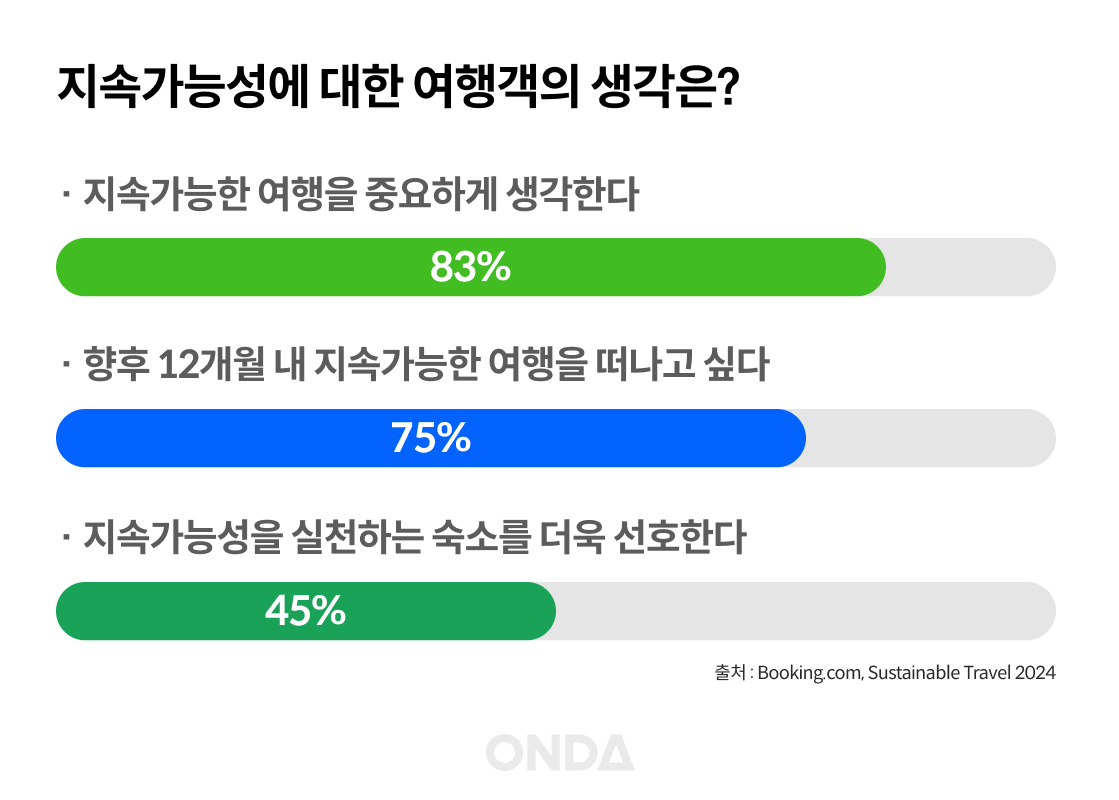
Korean travelers are no exception. 78% of Korean respondents said environmental factors matter to them when traveling.
But here's the catch: travelers also feel powerless when the infrastructure isn't there to support them.
42% of Korean travelers said there's no point trying to be sustainable if the destination or accommodation doesn't have eco-friendly systems in place. In other words, sustainability starts with the properties and destinations — not just individual guests.
And 43% said the travel industry (suppliers) holds the key to making green travel possible. There's only so much a consumer can do on their own. Hotels, airlines, and other suppliers need to lead the charge.
Eco-friendly services: where do Korean hotels stand?
Travelers are clearly asking more from hotels when it comes to the environment. They want products and services that help them travel sustainably.
Korean hotels are already responding. Let's look at some of the green services hotels are offering — and how guests are reacting.
The most common move? Swapping out traditional amenities for eco-friendly alternatives.
Many hotels are replacing single-use toiletries with sustainable solid amenities. WE Hotel Jeju switched to eco-friendly solid soap and shampoo, for example. It's a small change that boosts the brand's long-term image.
Creating opportunities for guests to participate matters, too. The simplest version? Putting recycling bins in guest rooms.
Glad Hotels now provide both general waste and recycling bins in every room. They've also placed clothing donation bins in the lobby, encouraging guests to participate in sustainable travel firsthand.
Launching eco-friendly packages or running green events is another effective tactic. Some hotels offer programs where guests can join conservation activities or receive eco-friendly merchandise. It's about helping guests feel their stay contributes to something meaningful.
Cutting down on plastic and disposables is critical. Since the single-use ban took effect, Korean hotels have moved fast — introducing refillable dispensers, reusable containers, and more.
Some hotels now offer unlabeled bottled water or go further and install water purifiers in rooms. Le Méridien & Moxy Seoul Myeongdong recently installed purifiers in all 405 rooms.

Grand InterContinental Seoul Parnas replaced plastic keycards with eco-friendly bamboo ones. Or skip keycards altogether — keyless locks eliminate plastic waste entirely.
Reducing wasted energy is another win. Room power control systems can automatically shut off lights and HVAC when guests leave, cutting unnecessary consumption. Long-term, energy savings also improve profitability.
Eco-friendly hotels: no longer optional
According to Booking.com's survey, 1 in 2 travelers worldwide plan to prioritize sustainable accommodations on their next trip. Guests aren't just looking for comfort and convenience anymore. They want to stay somewhere that aligns with their values.
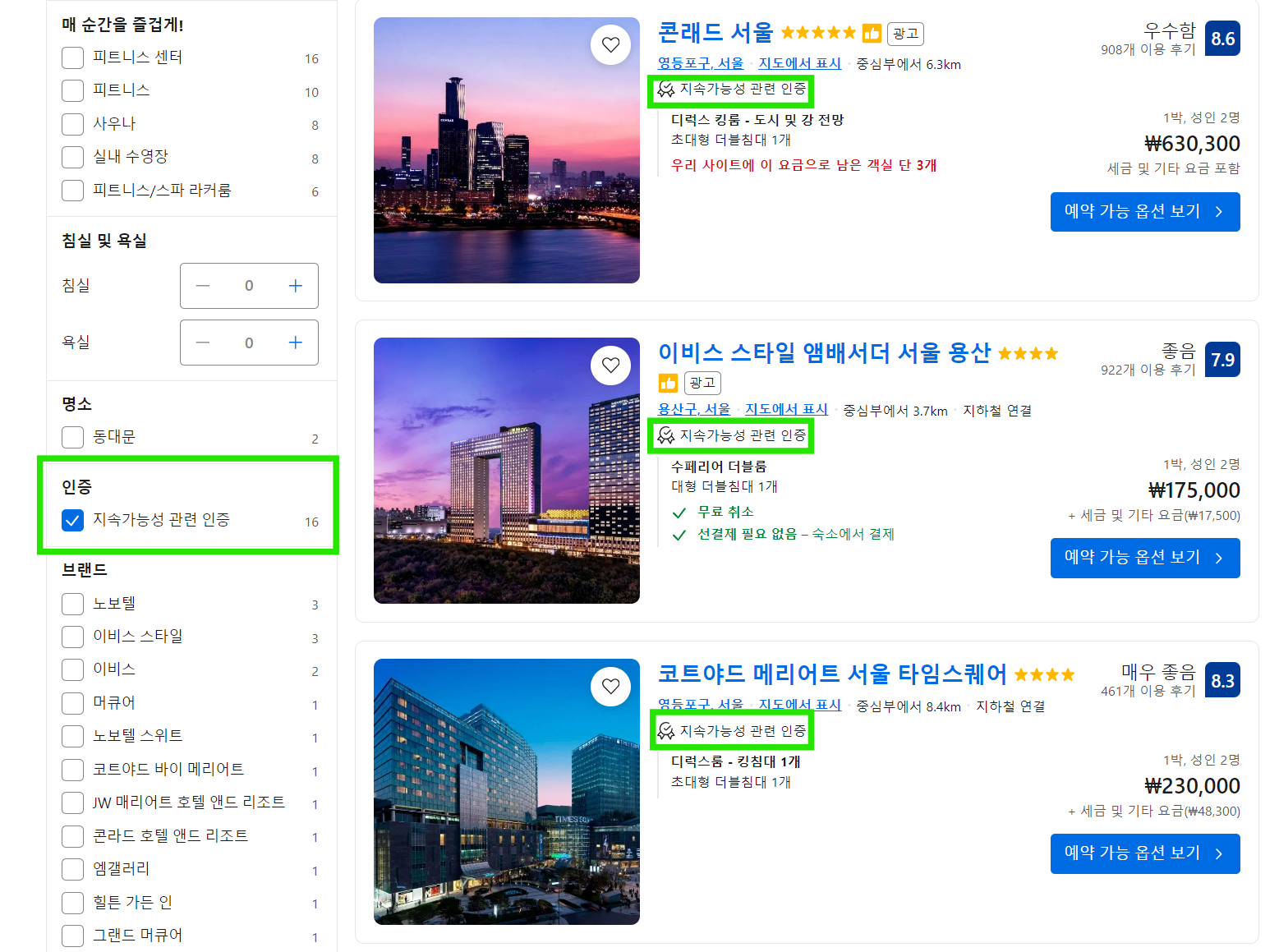
Younger travelers care even more. For Gen Z and Millennials, choosing an eco-friendly hotel is a way to practice sustainable travel and make their spending meaningful.
Sustainability is no longer a nice-to-have. It's a core strategy. Going green isn't just about protecting the environment — it shapes guest satisfaction and brand reputation.
What eco-friendly services could your property introduce?