As we enter the post-endemic era, is your tourism business evolving with technology?
From September 19–23, Korea's Ministry of Culture, Sports and Tourism and the Korea Tourism Organization held Tourism Connect Week 2022. Experts delivered presentations across three themes: regional collaboration, tourism reopening, and tourism service exports.
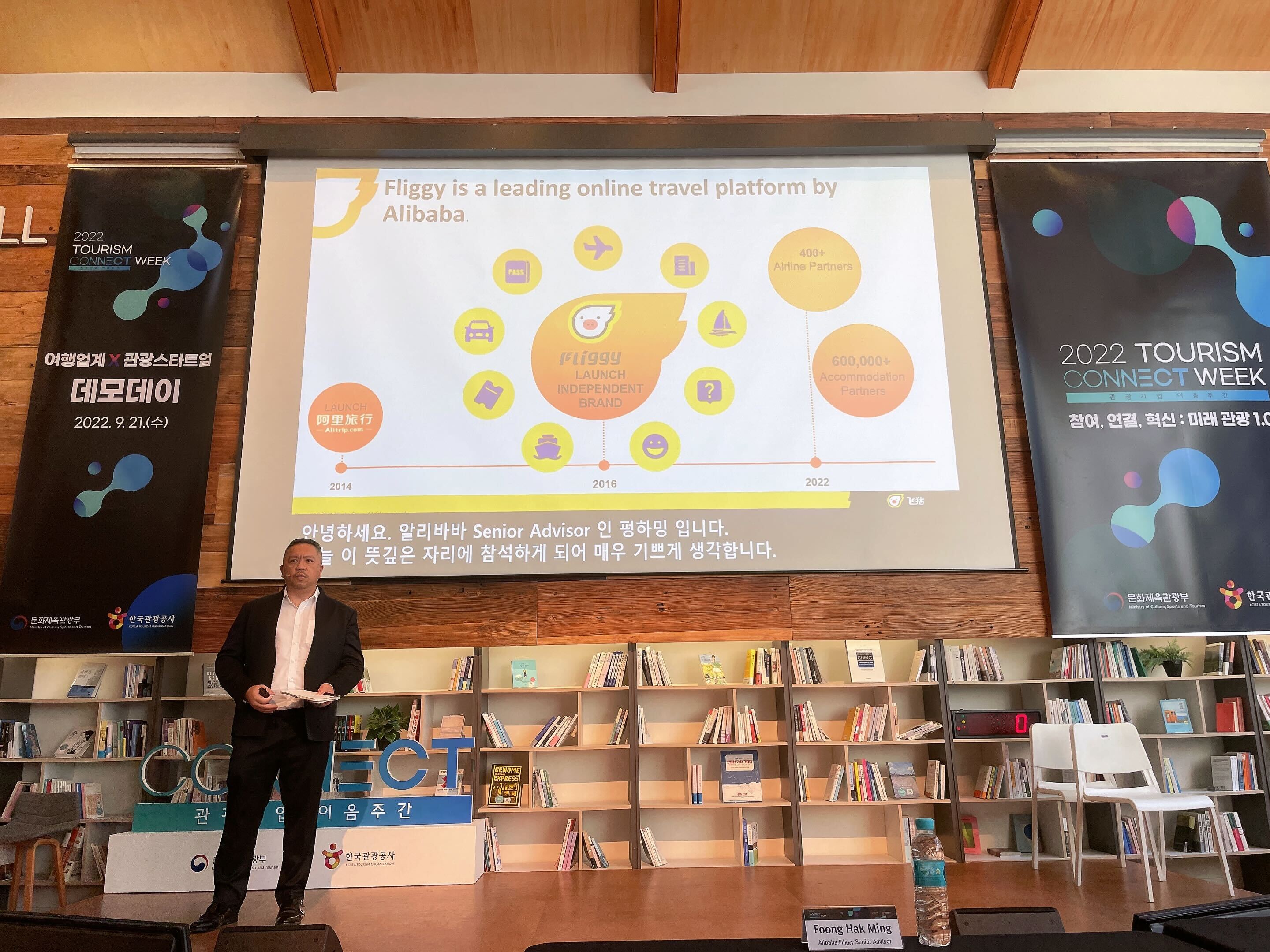
One stood out. Foong Hak Ming, Senior Advisor for International Strategy at Fliggy (Alibaba's travel platform), shared sharp insights on how tourism businesses need to evolve for the post-endemic world.
"Are you just going to wait around until tourism fully recovers, until travelers come back?"
As reopening looms, what does the world's largest e-commerce giant see in the global tourism market?
After Hardship Comes Happiness
Foong opened with a wink — delivering the Korean proverb "고생 끝에 낙이 온다" (after hardship comes happiness) in fluent Korean. It was the morale boost the COVID-battered tourism crowd needed.
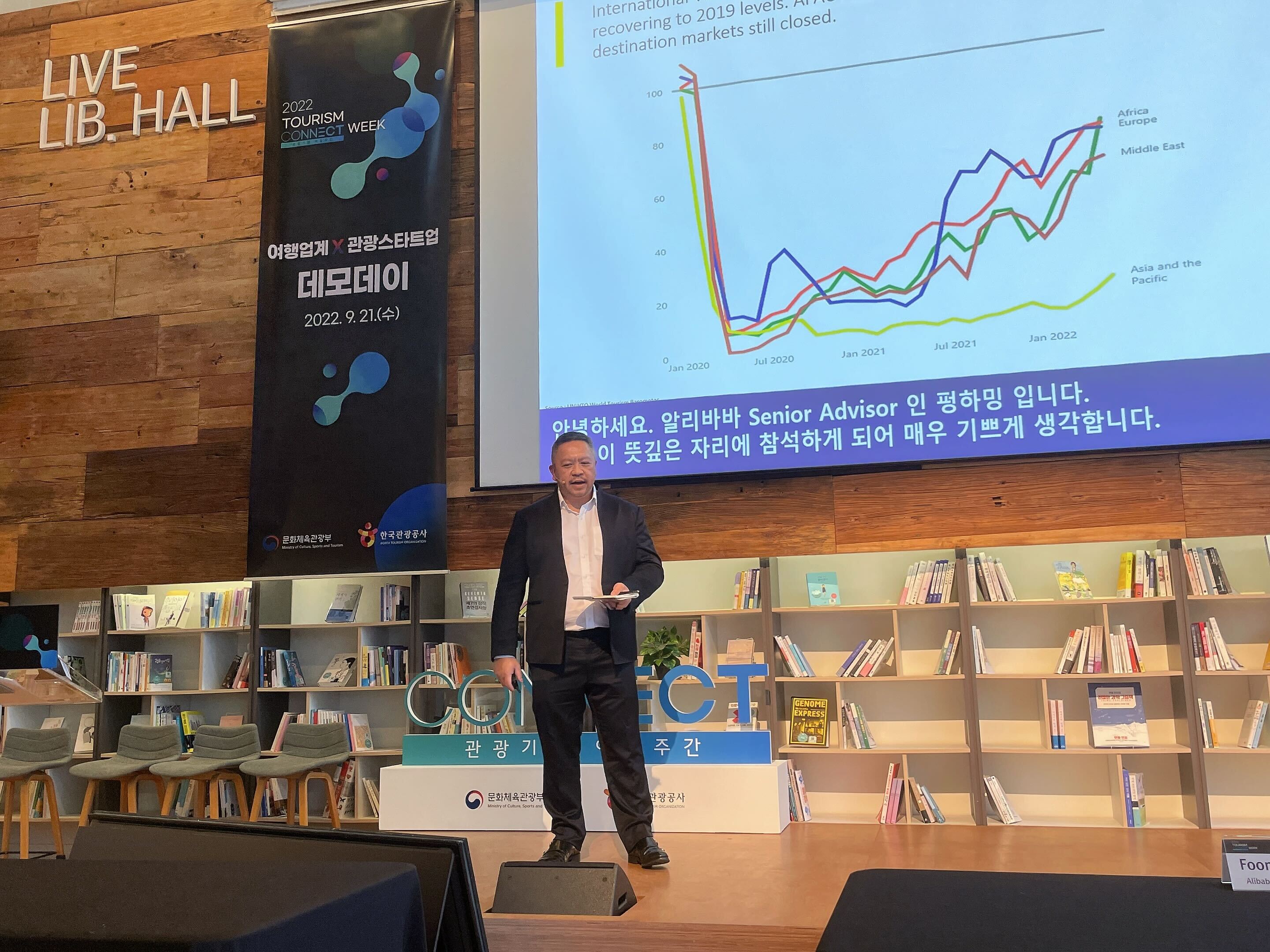
"UNWTO data shows the world — outside Asia-Pacific — has recovered to 60–80% of pre-pandemic tourism levels."
Foong explained that Asia-Pacific lags because key markets like China, Hong Kong, and Japan haven't reopened yet. But he predicts the region will see very rapid growth in the next 18 months.
In fact, Japan announced visa-free entry for tourists starting October 11, and Taiwan followed with similar reopening measures.
"Countries are opening up gradually, but it'll take at least two more years for Asia-Pacific tourism to return to pre-pandemic levels."
Online travel will keep growing post-pandemic. Offline tourism? It'll only survive if it delivers differentiated experiences — and that means tech evolution.
Don't Count Your Chickens Before They Hatch
Foong stayed bullish on the tourism rebound. But then he pivoted.
He quoted another Korean proverb: "김칫국 마시지 마라" — don't drink the kimchi broth before it's cooked (i.e., don't count your chickens before they hatch). Tourism must evolve technologically, he warned.

"Are you just going to wait around until tourism fully recovers, until travelers come back?"
Foong introduced three key trends shaping the new tourism landscape: Evolved Travel, Flexication, and Technology Usage.
1. Evolved Travel
The pandemic reshaped how people travel.
"Travelers avoided long-haul trips because of complicated border procedures. They started preferring domestic travel. Domestic demand spiked — and so did domestic travel costs."
"That looks good for domestic tourism. But it actually burdens travelers and makes them hesitant to book."
High prices pushed travelers away from package tours and group tours toward FIT Travel (Flexible Independent Travel).
"FIT travelers are young, affluent, and knowledgeable about travel. They compare and choose for themselves, which means they have high service expectations."
"You need to rethink everything: Which platforms to partner with. What marketing to use. How to simplify the booking process. Improving customer experience is the most important factor in building traveler loyalty."
Foong emphasized that all travelers now expect better service and unique experiences. Creating differentiated customer experiences is no longer optional.
2. Flexication
Remote work blurred the lines between business and leisure. In Korea, long stays and workations are taking off.
Flexication describes flexible, extended travel enabled by remote work and online schooling — longer trips than pre-COVID.
"Flexication is changing how travel gets planned. People have more time and flexibility, which could erase the concept of peak season."
"Hotels, accommodations, and the broader tourism industry need to think about how to adapt operationally."
Foong noted that more people will travel going forward. The question is how to allocate costs and resources effectively around Flexication behaviors.
3. Technology Usage
"Over the past 20 years, tourism has seen massive technological progress with the rise of OTAs."
"Post-pandemic, technology becomes even more critical: customer data tracking, AI integration, contactless processes and services."
Foong highlighted the importance of customer data tracking by pointing to travel companies entering fintech.
"In Southeast Asia, most people don't use banking services. No deposits, no credit loans. So travel companies entered fintech — offering 'buy now, pay later' services and installment payments like credit cards."
"Traditionally, OTAs focused on planning, booking, and payment. They didn't really serve travelers during the trip. But by entering fintech, they can now track spending during the trip — gaining incredibly powerful data across the entire travel lifecycle."
Foong also discussed price comparison and dynamic pricing technology.
"Price comparison via metasearch engines has existed for a long time. But today's travelers compare multiple channels to find differentiated value."
"They're not just comparing prices anymore. They demand much richer experiences. You need to think about what value and services you can deliver."
"Dynamic pricing based on demand forecasting has been particularly advanced in the airline industry."
"But now, many companies are developing pricing models based on competitor and market analysis. This technology needs to be adopted by accommodation and tourism businesses as well."
Foong closed with heartfelt advice for Korea's tourism industry.