Korean OTAs like Yanolja and Yeogi Eottae — riding high post-COVID — are losing market share
"Korean OTAs like Yanolja and Yeogi Eottae — riding high post-COVID — are losing market share."
"Meanwhile, global OTAs are on the rebound. Agoda reclaimed third place, overtaking Naver Travel. The market's shifting: domestic travel down, international travel recovering, and global players are striking back." (Consumer Insight 2024/11/18)
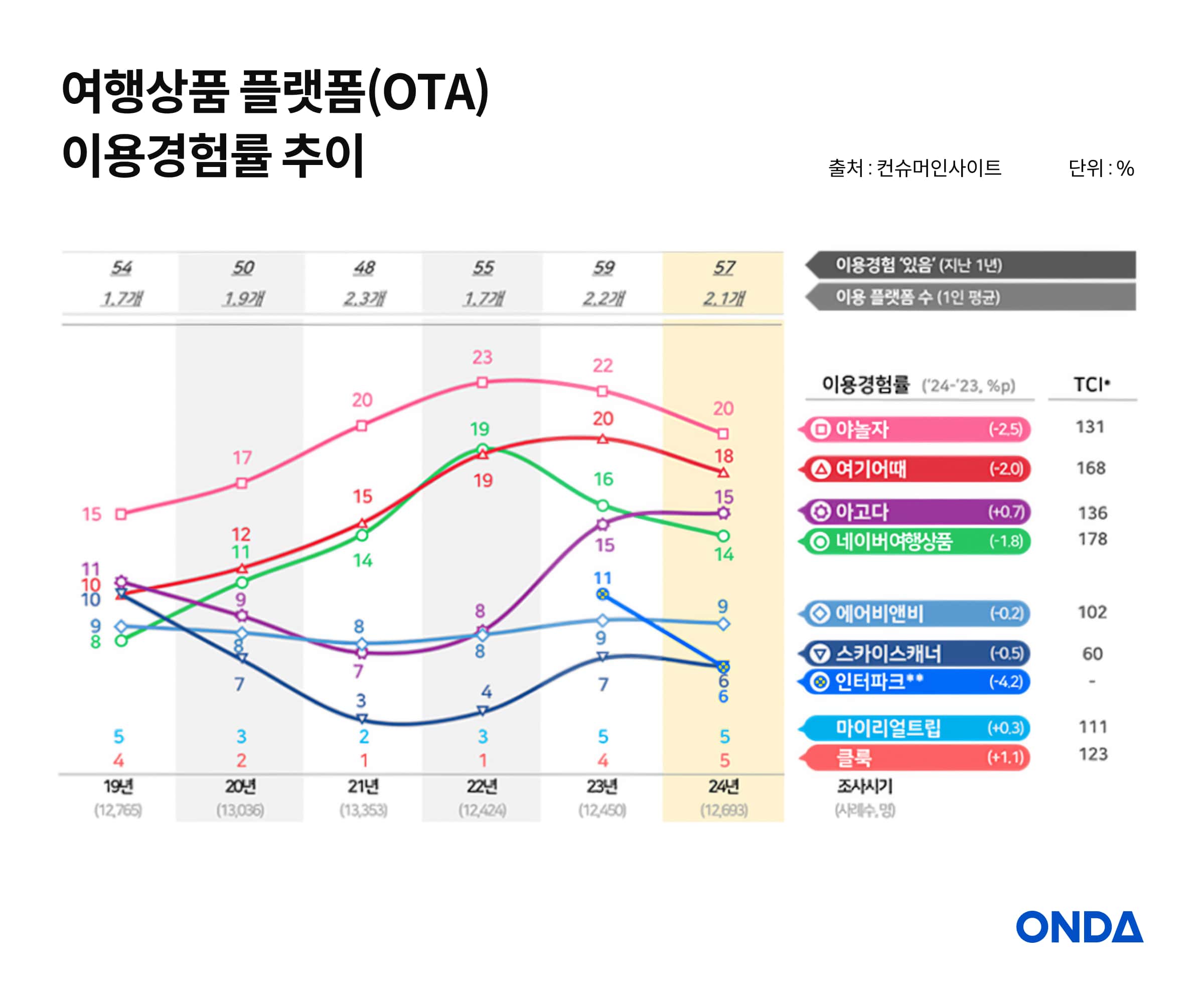
Consumer Insight — a data fusion and consumer research firm — runs an annual "Travel Product Satisfaction Survey" dating back to 2016. In the latest edition, 12,693 respondents who'd used an online travel platform in the past year (Sep '23 – Aug '24) were asked which platforms they'd tried. The six-year pre- and post-COVID trend is revealing.
Consumer Insight's take on the Korean OTA market:
- The big three — Yanolja, Yeogi Eottae, Naver Travel — all declining
- Heavy reliance on domestic travel is a structural weakness
- MyRealTrip is the only Korean OTA holding steady, thanks to local guides and diverse activity offerings abroad
Global OTAs, by contrast, are surging.
Agoda sat at 7% in '21. By '24 it hit 15% — trailing first-place Yanolja by just 5 points. Airbnb is at 9%, Skyscanner at 6%. The global players are on offense.
ONDA's internal data tells a similar story.
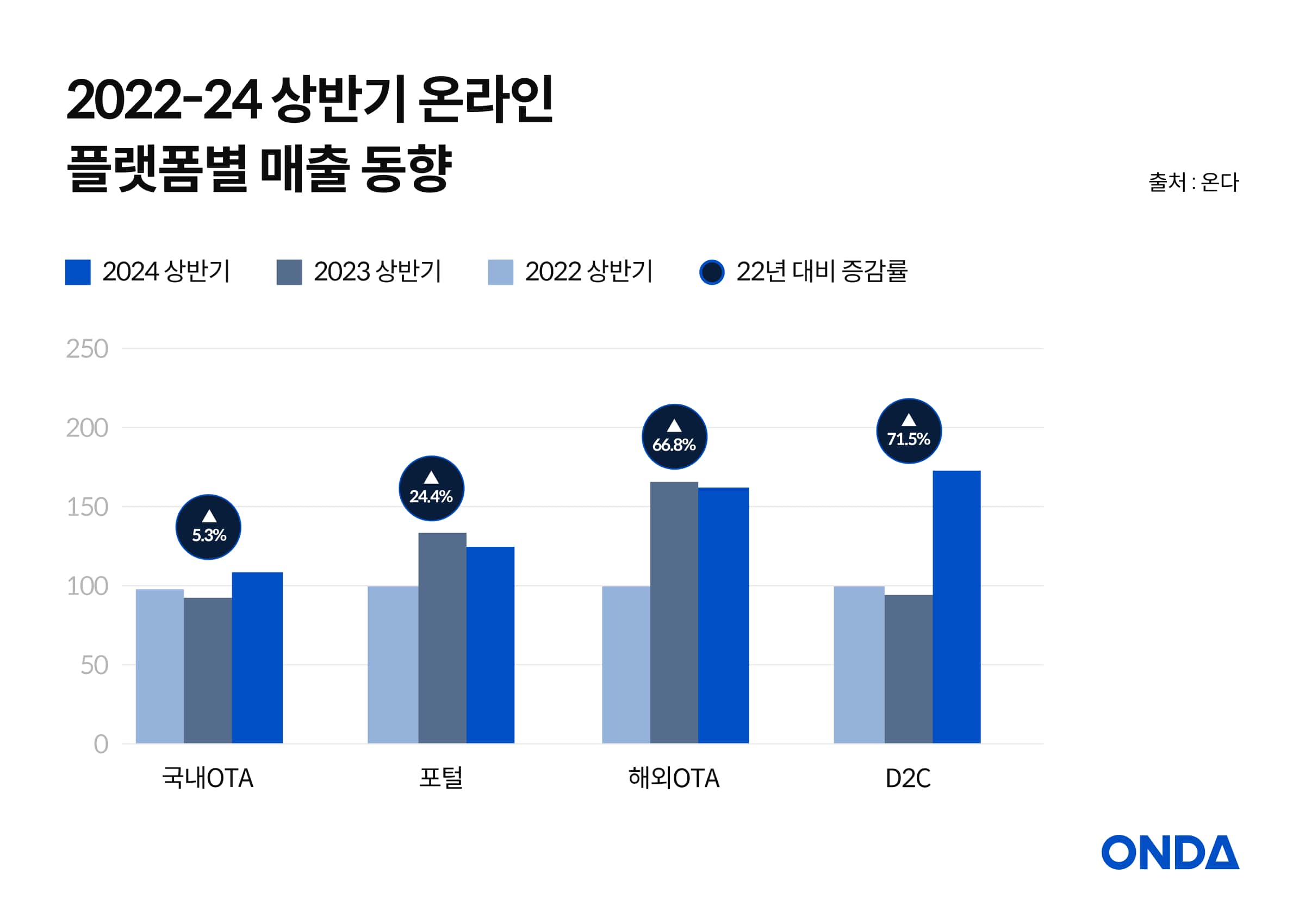
ONDA's 2024 H1 data shows a slight dip from 2023, but up 66.8% compared to H1 2022 — peak COVID recovery. That trend continued into H2. Internal ONDA data shows strong growth against 2023 baseline in the second half as well.
The consensus: this divergence between Korean and global OTAs comes down to outbound travel growth.
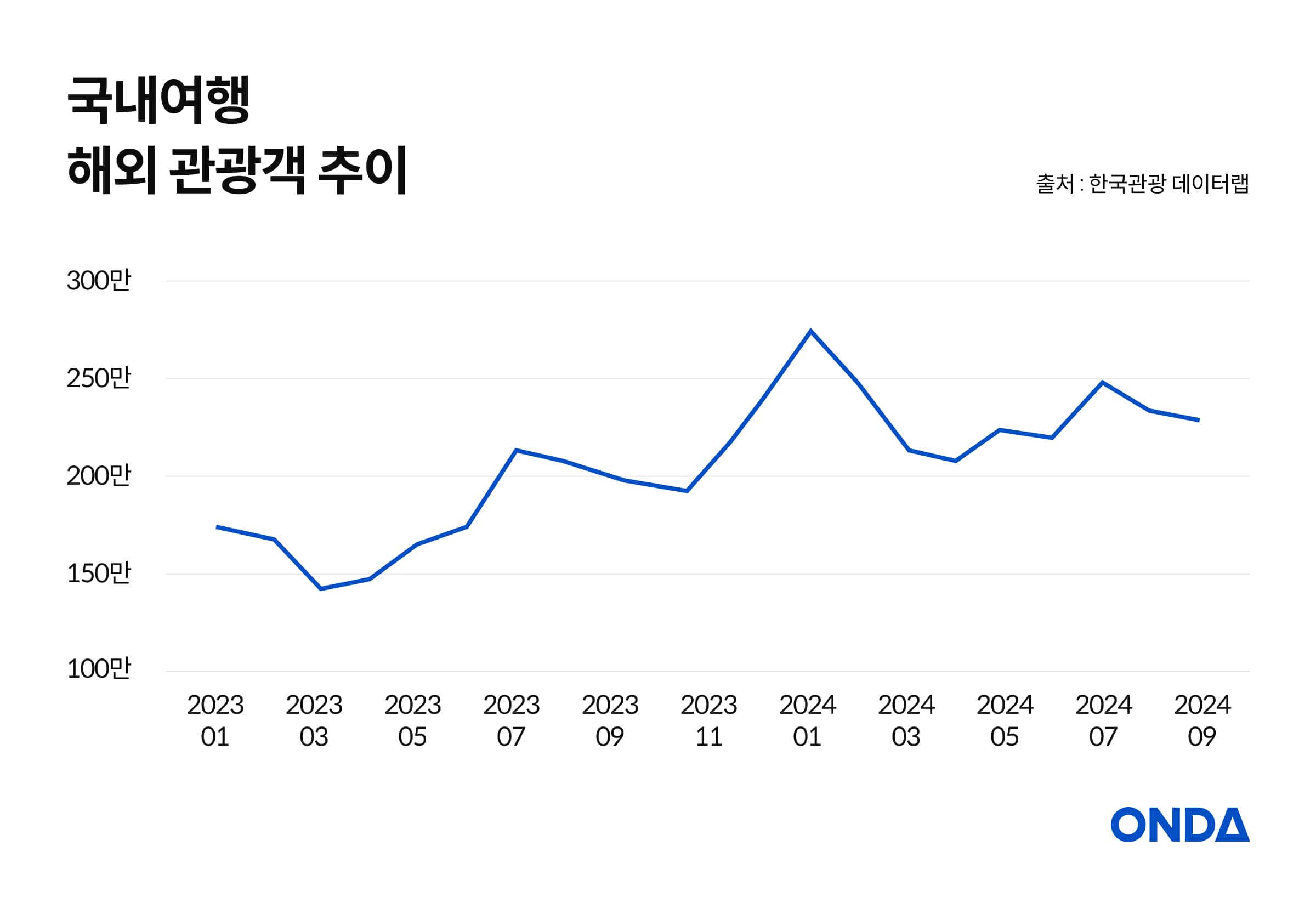
Consumer Insight's analysis: domestic travel peaked in 2022 and is falling. Outbound is only climbing. Many Koreans now believe that — flights aside — overseas trips cost the same or less than domestic getaways.
The data backs it up: Koreans pinch pennies on domestic trips but open their wallets abroad. This flows straight into accommodation — OTAs' core product. Expensive overseas hotels sell via global platforms. Domestic properties — outside a handful of luxury outliers — have seen prices fall post-COVID.
During 2024 peak season, bookings in the ₩50,000–100,000 range rose ~2% YoY. Every bracket above ₩150,000 shrank. (Not shown in the chart: demand for luxury properties over ₩600,000 soared.)
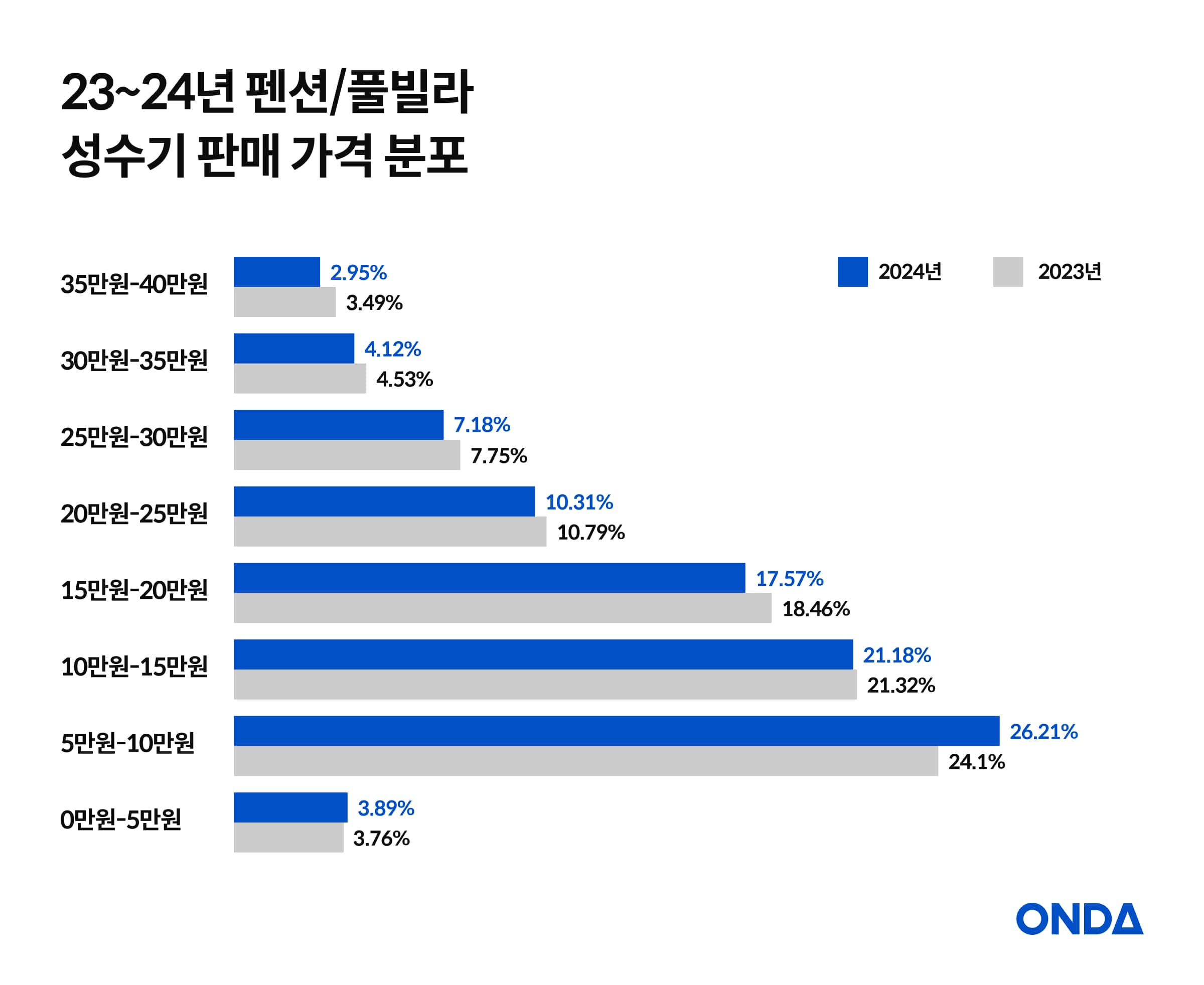
Industry chatter suggests habits formed on global OTAs abroad are bleeding into domestic hotel and pension bookings.
Korean OTAs aren't sitting still — they're pushing international flights, accommodations, and activities to capture outbound travelers. ONDA is doing the same, contracting directly with overseas hotels to bring better pricing to the Korean market.
Right now, the Korean players are underdogs in outbound. But next year? The year after? All bets are off. Online ecosystems move faster than brick-and-mortar ever could.