Channel mix strategies to boost hotel revenue
"There are so many OTAs out there. Which ones should I list my property on?"
It's a question every property owner grapples with. Korea alone has over 200 OTAs, according to industry reports. But you can't—and shouldn't—list everywhere. So how many OTAs do you actually need? And which ones?
Hospitality platform Cloudbeds published 'The Big Book of OTAs' with data-backed answers. Let's break it down.
What is channel mix?
Channel mix means selecting OTAs that align with your brand and attract your target guests—then distributing inventory accordingly.
A smart channel mix works like free marketing. You reach your ideal customers without extra ad spend, which translates to higher occupancy. Done right, it's one of the most effective levers for driving bookings and revenue.
Building a successful channel mix
How do you choose the right channels? Cloudbeds highlights three priorities:
✔️ List on global (tier-1) OTAs ✔️ List on regional OTAs popular with your target market ✔️ Don't overlook niche OTAs targeting specific traveler segments
Global OTAs like Booking.com, Agoda, and Airbnb drive hundreds of millions of monthly visits. They're table stakes—your baseline for online visibility.
Regional OTAs matter just as much. Domestically, platforms like Yanolja and Yeogi Eottae capture Korean leisure travelers. For inbound tourism, consider OTAs popular in your target countries. A property in Mexico might not see much local traffic from Agoda—but it's essential for reaching Asian and UK travelers.
Then there are niche OTAs: platforms targeting surfers, skiers, campers, or pet owners. If your property serves a specific need, these channels deliver high-intent, repeat-prone guests. Examples in Korea include Ban-Life (pet-friendly stays) and Nolbal (family and leisure properties).
You don't need all three categories. If you're not a niche property, global + regional is enough.
Understanding your positioning and target guest comes before choosing channels.
So how many channels should you list on?
Cloudbeds analyzed properties with 21–50 rooms. The data showed revenue growth with each additional channel. Properties listing on 6+ channels saw average revenue increases of 26.8% compared to single-channel listings.
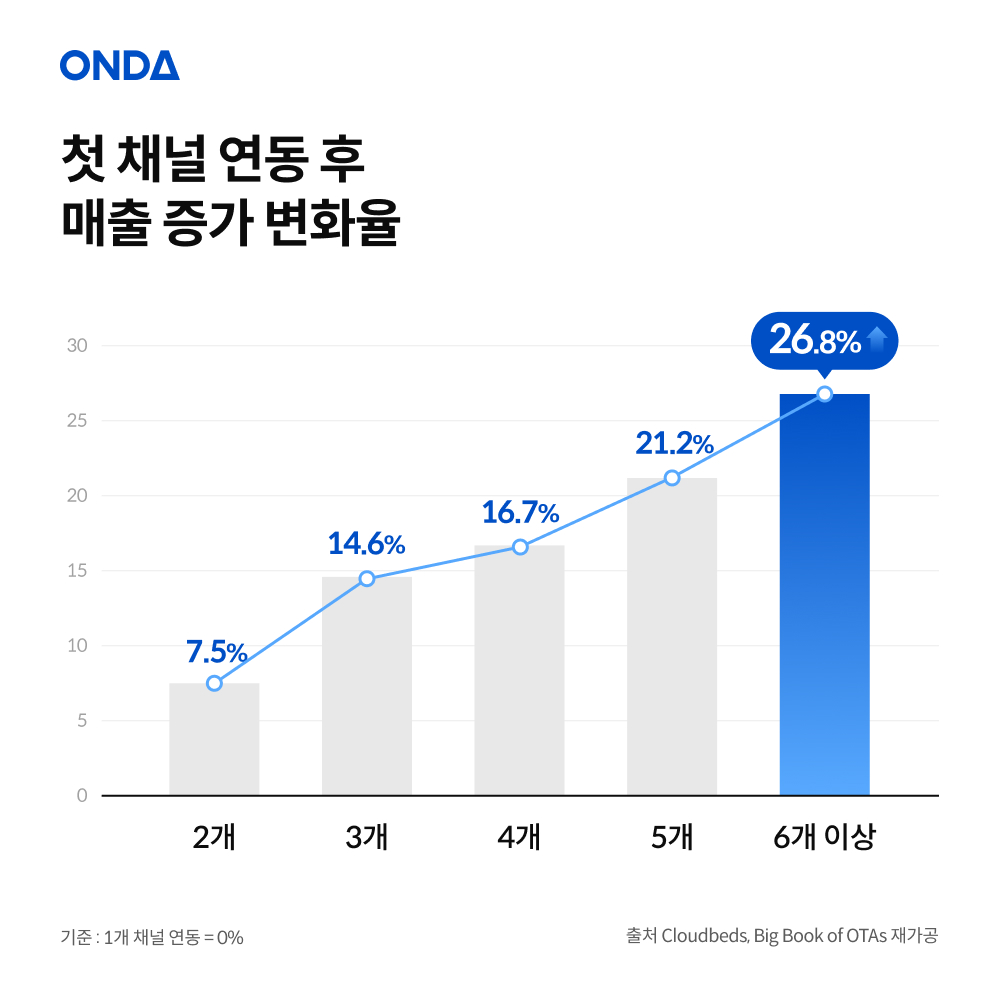
But does this hold in Korea? Unlike global markets—where four OTAs control 90%+ market share—Korea remains fragmented. No single platform dominates. So the impact of adding one or two channels is less dramatic.
ONDA's GDS data offers a local perspective. Here's what we found when analyzing properties with 50+ bookings over a three-month period (June–August). We used median values to minimize skew.
*ONDA GDS connects 50,000+ properties to 42+ channels, covering ~60–70% of Korea's online lodging market.
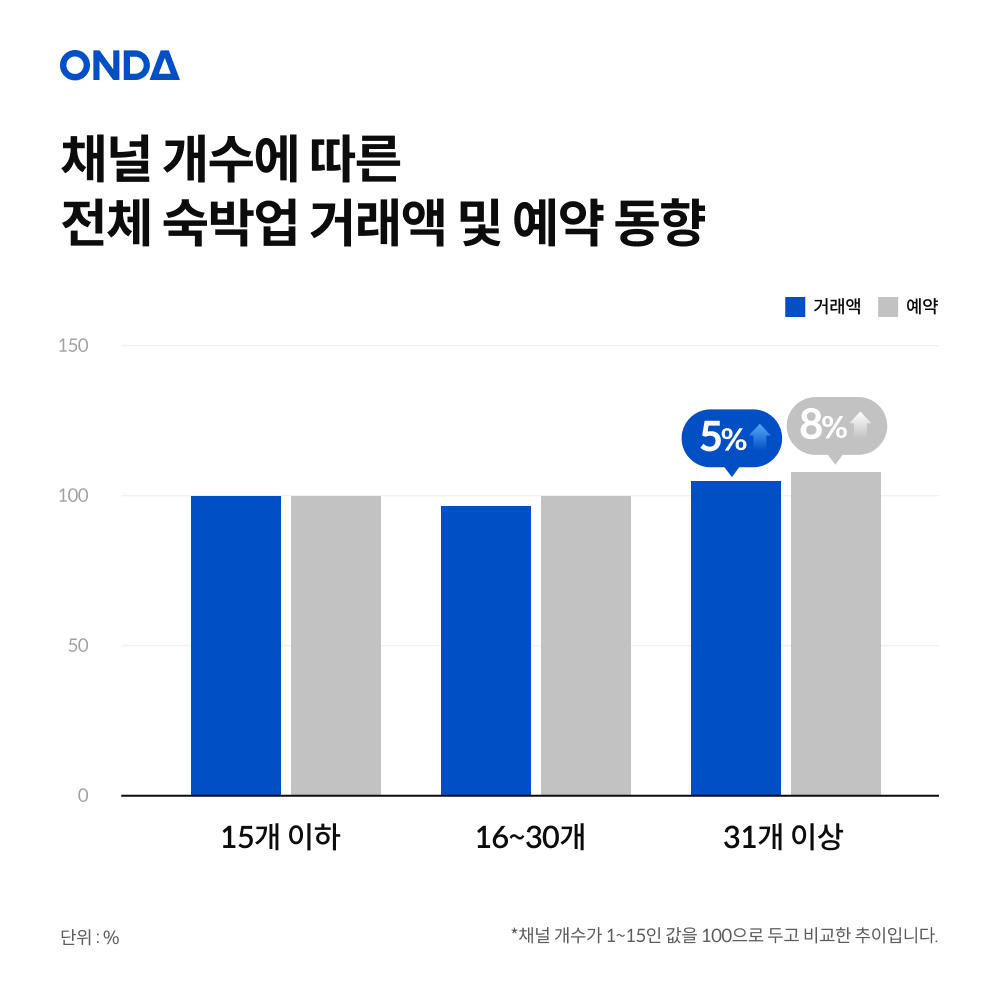
Across all property types, listing on 31+ channels increased GMV by 5% and bookings by 8% vs. properties on ≤15 channels.
The biggest winner? Hotels. Properties listing on 16–30 channels saw marginal or even negative growth. But hotels on 31+ channels saw GMV jump 127% and bookings rise 43%.
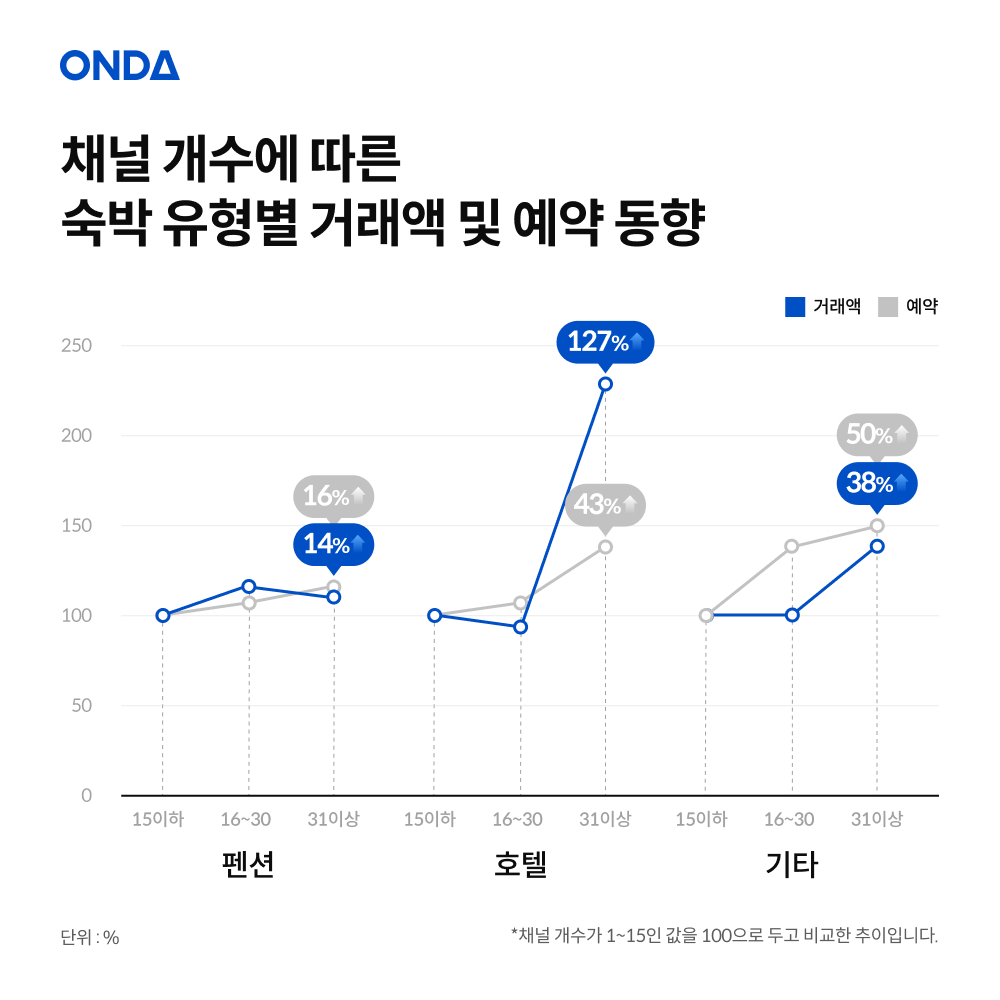
Pensions also benefited at 31+ channels: GMV +14%, bookings +16%. Other property types (excluding hotels and pensions) saw GMV +38%, bookings +50%.
Takeaway: More channels = more revenue—especially once you cross the 31-channel threshold.
Of course, the "right" number depends on your property type, size, and target market. But in Korea's fragmented OTA landscape, casting a wide net pays off.
Tips for building your channel mix
We've established that identifying your target guest and diversifying across OTA types matters. Cloudbeds adds a few more best practices:
Analyze fees and commissions
OTAs charge different commission rates (typically 15–25%) depending on their business model. If a high-commission channel isn't driving bookings, it's inefficient. Evaluate the value each channel delivers relative to its cost.
Check where competitors list
Listing where your competitors are ensures you compete for the same eyeballs—and capture your target audience. But also look for gaps: channels your competitors haven't tapped yet.
Measure and optimize performance
Review your channel mix regularly. Which channels drive the most bookings? Are commissions justified by revenue? Adjust inventory allocation or test new channels based on performance.
Manage reviews
More channels = more reviews. Positive reviews convert browsers into bookers. Negative ones hurt. Build a reputation management strategy early—guest satisfaction surveys, proactive review responses, etc.
💡 Managing multiple OTAs requires a channel manager that prevents overbookings and syncs inventory in real time. The best ones integrate with your PMS and booking engine to keep rates and availability aligned across every channel. (Like ONDA's CMS.)**
Beyond OTAs: The direct booking flywheel
A strong OTA strategy doesn't just boost OTA revenue. It can also drive direct bookings via the billboard effect.
Most travelers start their search on OTAs. If they see your property repeatedly across multiple platforms, brand recall builds. Eventually, they Google your property directly—and book on your website (if you make it easy).
To capitalize on the billboard effect, you need:
- Clear CTAs on your website
- A booking engine integrated with your PMS
- Better pricing or perks for direct bookers
Google Hotel Search amplifies this dynamic. Travelers filter by location and rating, then compare prices. If your direct rate undercuts OTAs—or includes exclusive perks—you'll win the booking.
For example, Shilla Hotels offers membership-only packages with room service and facility access. That's a compelling reason to book direct.
Driving more direct bookings
Even with great direct pricing, OTAs sometimes undercut you. Triptease's 'Guide to Hotel Metasearch' offers tactical solutions:
Reduce OTA allocation based on demand
Adjust how much inventory you allocate to OTAs depending on lead time and booking patterns.
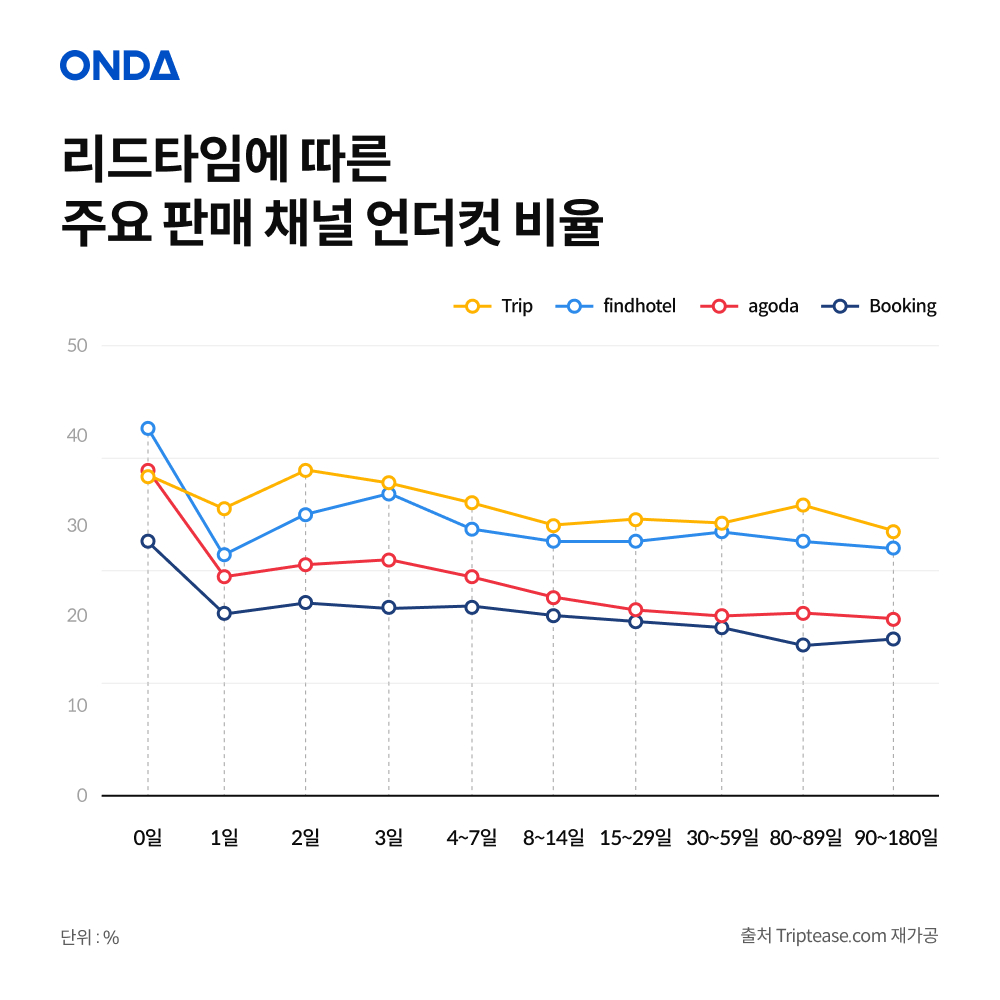
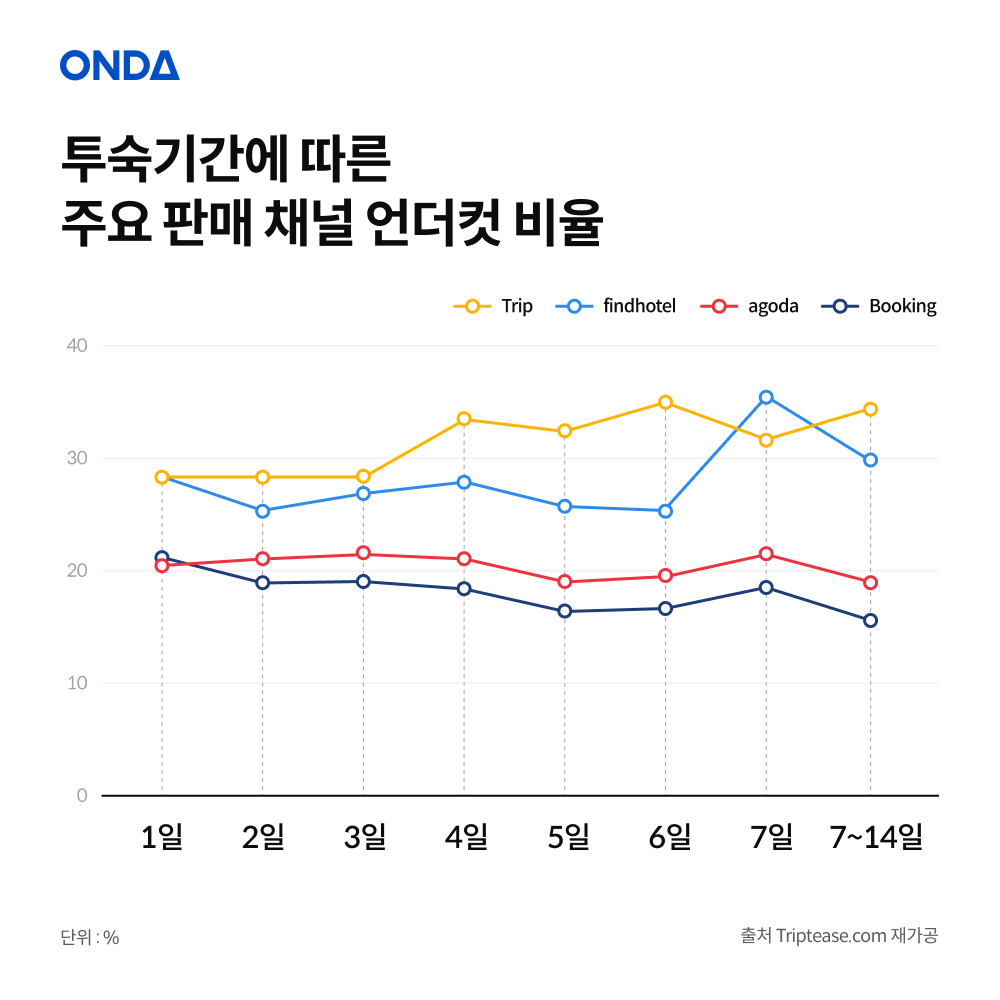
The charts above show how major OTAs (Agoda, Booking.com, Trip.com) adjust inventory ("undercut rates") based on lead time and length of stay.
Undercut = reducing available rooms on OTAs. Shorter lead times correlate with higher undercut rates. Length of stay shows mixed effects depending on the channel.
By dynamically adjusting OTA inventory, you reduce the likelihood that guests find cheaper OTA rates before checking your direct channel.
Strengthen direct booking incentives
Offer member rates. Show the discount clearly.
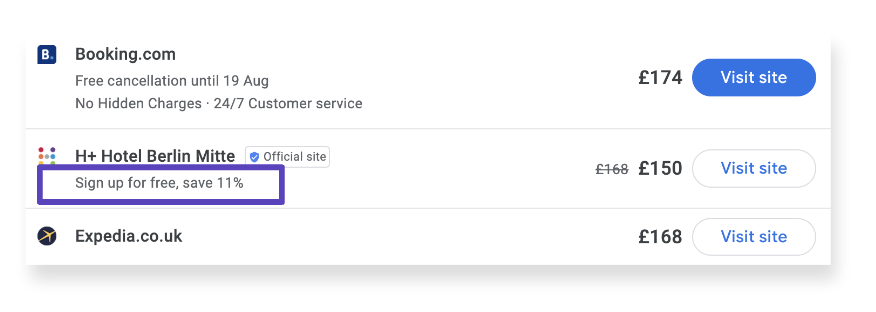
When you enable member pricing on Google Hotel Ads, it displays as a strikethrough rate above the discounted member rate. Guests see the savings instantly. Click through, and they're prompted to sign up for your loyalty program.
Another option: non-refundable rates. Lower cancellation risk for you. Lower price for the guest. Win-win.
_Sources:
- Cloudbeds, The Big Book of OTAs, 2022, pp. 14-22 - Triptease, The ultimate guide to hotel metasearch, 2022, pp. 24-33_
⚠️ All rights reserved. Cite this piece as 'ONDA (온다)' when quoting.