From booking to check-in to coming back
Global travel is roaring back. According to the UN World Tourism Organization (UNWTO), international tourism recovered to 87% of pre-pandemic levels through Q3. By year-end, that figure's expected to hit 90% — practically back to normal.
Inbound tourism to Korea is recovering fast too. Through October, foreign arrivals reached 61% of 2019 levels, with forecasts putting the annual total over 10 million visitors.
With international guests returning in force, Korean hotels are asking: how do we attract them — and give them an experience worth coming back for?
Global IT consultancy Planet surveyed 6,500 hotel guests worldwide to answer that question. We dug into the data to find out what today's travelers — especially those from Asia — actually want from their hotel stay.
What Do Asian Travelers Expect?
Post-pandemic travelers expect smoother, more seamless stays. But expectations vary by region.
Let's look at three critical touchpoints — booking, check-in/out, and loyalty — and see what global and Asian guests are asking for.
1. Booking and payment? Mobile.
No surprise: most consumers search for hotels online. Among global travelers, 59% use mobile and 37% use desktop to research hotels and trips.
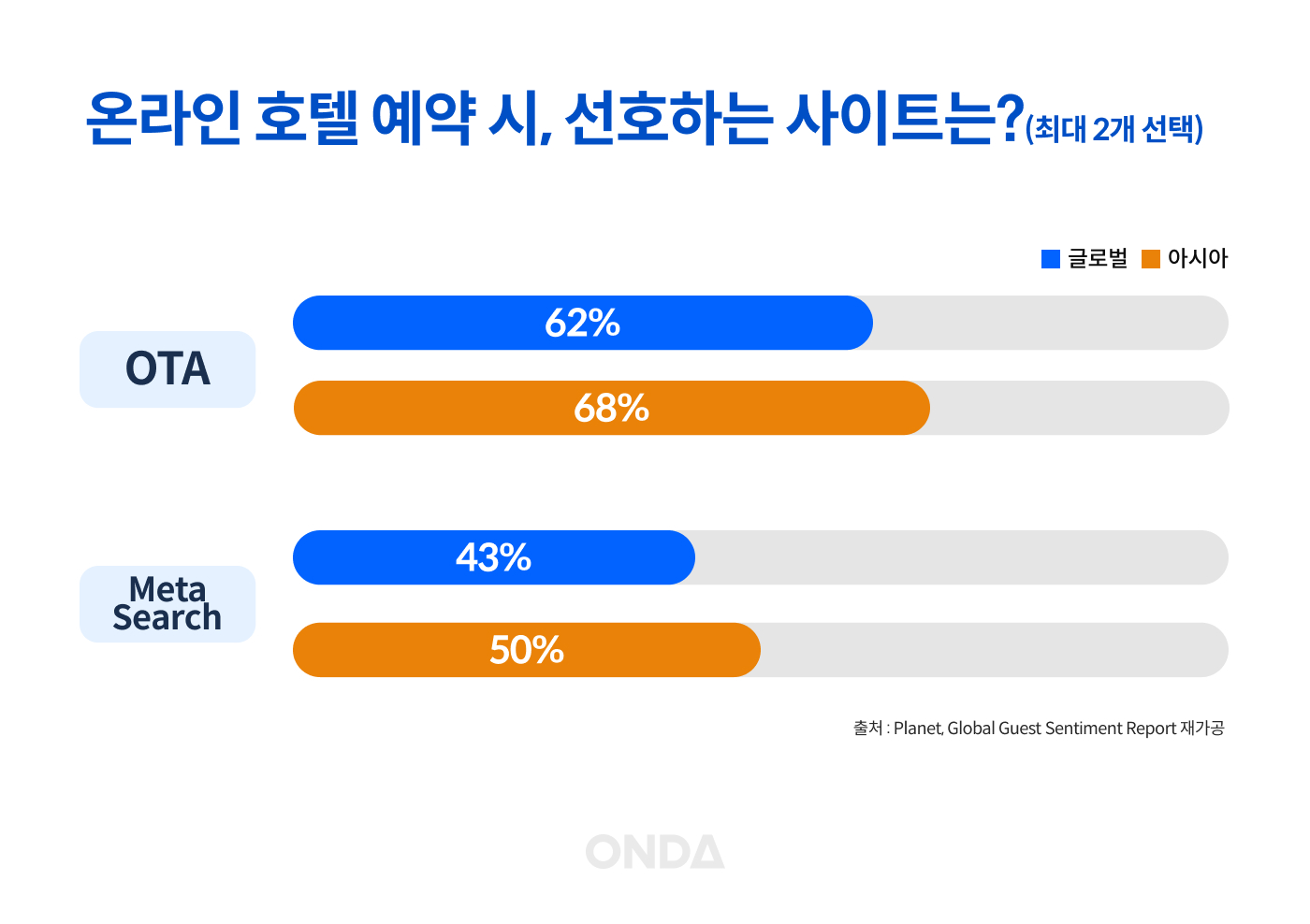
When booking, travelers prefer OTAs like Booking.com and Expedia, plus metasearch sites like TripAdvisor and Trivago. Globally, 62% book via OTAs and 43% via metasearch.
Asian travelers lean even harder on these platforms — 68% book through OTAs and 50% via metasearch, the highest rates of any region.
Interestingly, North American travelers prefer direct hotel website bookings almost as much as OTAs.
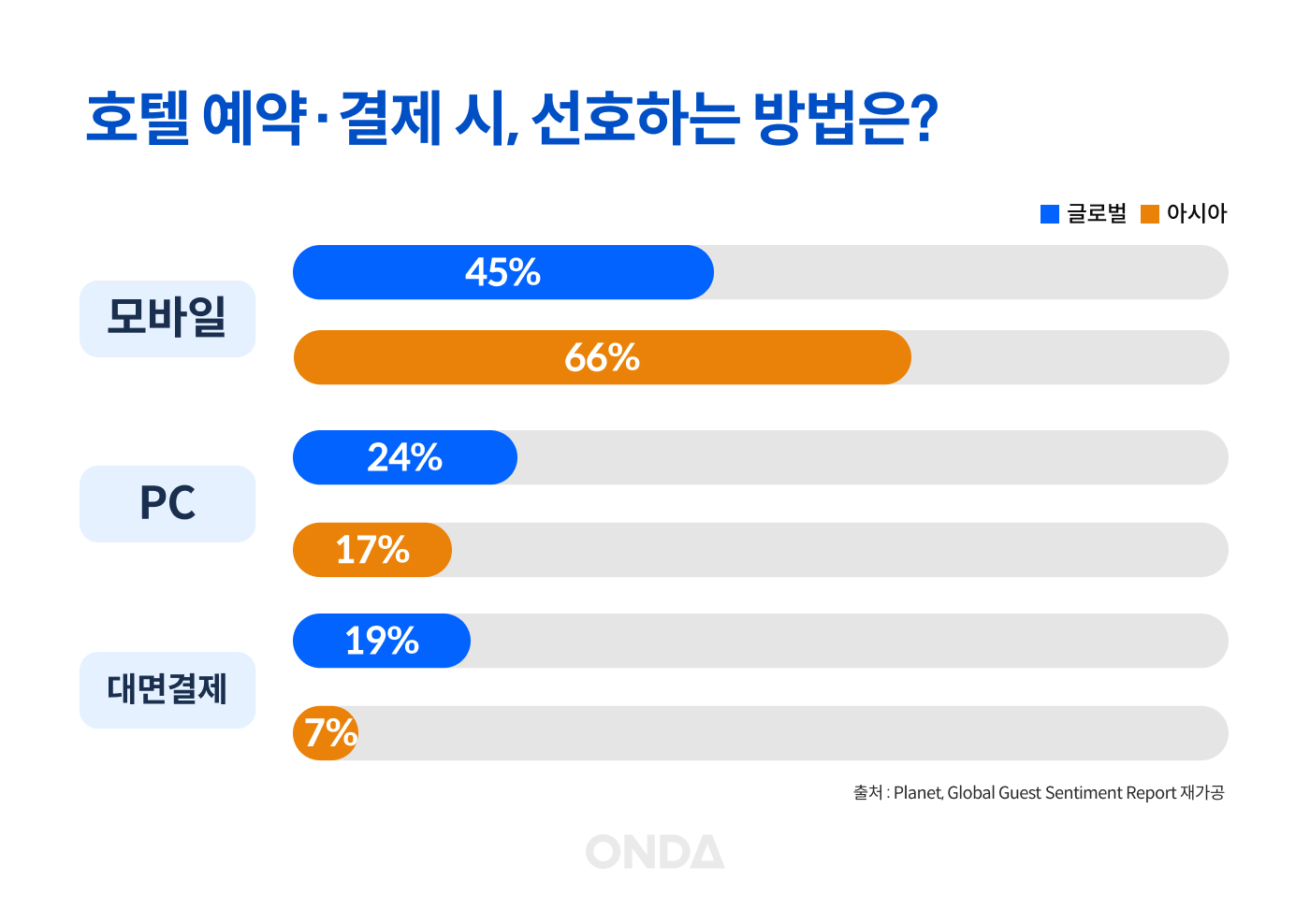
Payment preferences also differ. Globally, mobile booking and payment is on the rise — but Asian travelers (66%) favor mobile far more than the global average (45%).
Over 20% of travelers from the Americas and Europe still prefer paying at the hotel. Only 7% of Asian travelers want to pay on-site — significantly lower.
Preferred payment methods vary too. Credit cards dominate globally, but Asian travelers show a relatively lower preference (64%) and strongly favor mobile wallets like Alipay and WeChat Pay (59%).
For smooth bookings with Asian guests, offering local mobile payment options is essential.
2. Check-in and check-out? Digital.
COVID normalized contactless tech. Now, 59% of global travelers prefer self-check-in via mobile or kiosk to skip lines and get to their rooms faster. Another 13% simply don't want to interact with staff.
Regional preferences differ. North American and European travelers prefer face-to-face check-in more (57% and 56%, respectively) — above the global average. That means they're less interested in self-service options.
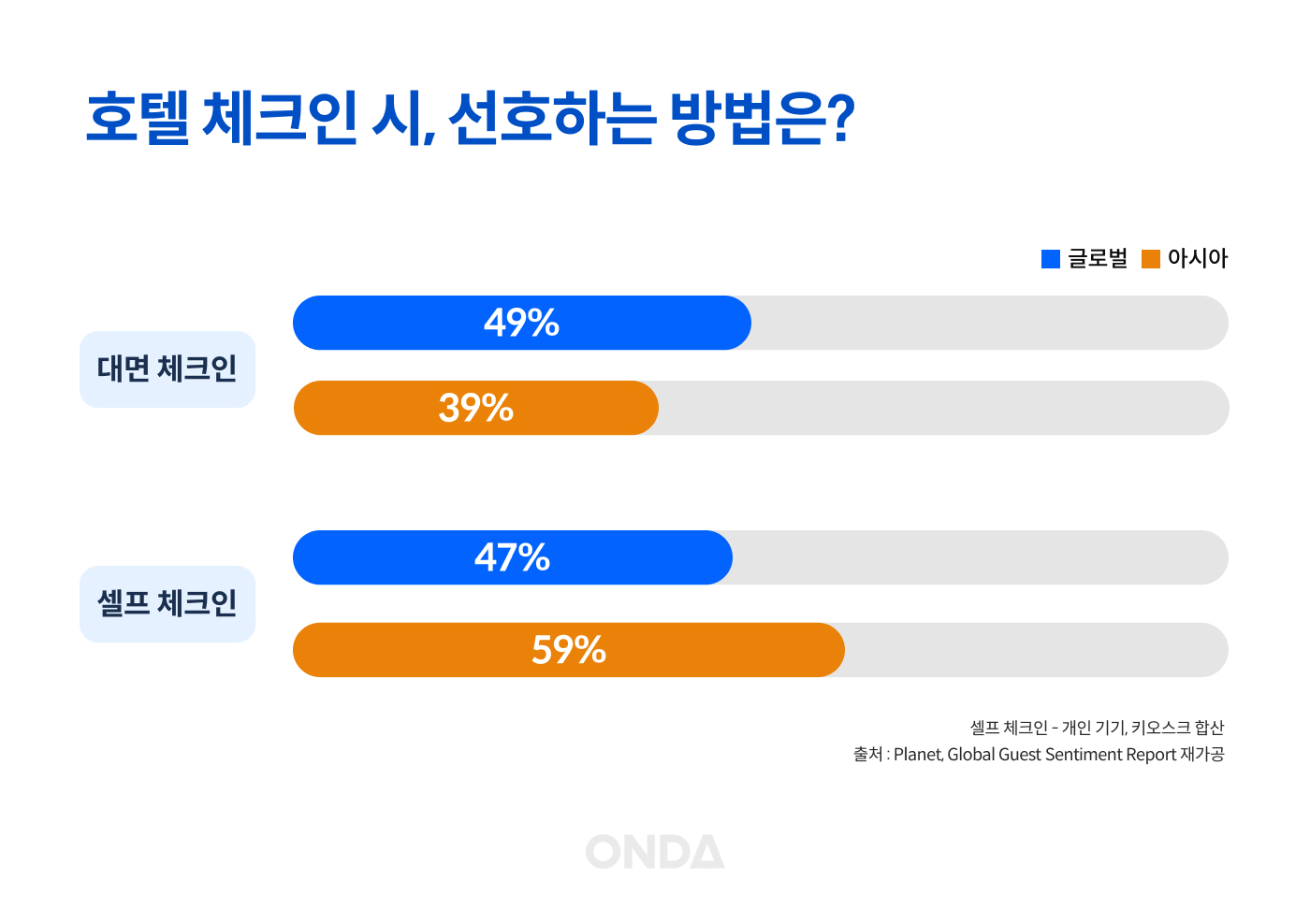
Asian travelers showed the opposite trend. Preference for in-person check-in was 10% lower than the global average, while demand for digital self-check-in was significantly higher.
For check-out, though, everyone agrees: speed matters. More than half (55%) of global travelers want a fast, no-wait check-out process. Chinese travelers (63%) prioritize quick check-out most.
3. Loyalty? Upgrades.
Once you've delivered a great booking and stay experience, how do you bring them back?
Globally, travelers value financial perks most: discounts (48%) and points (40%).
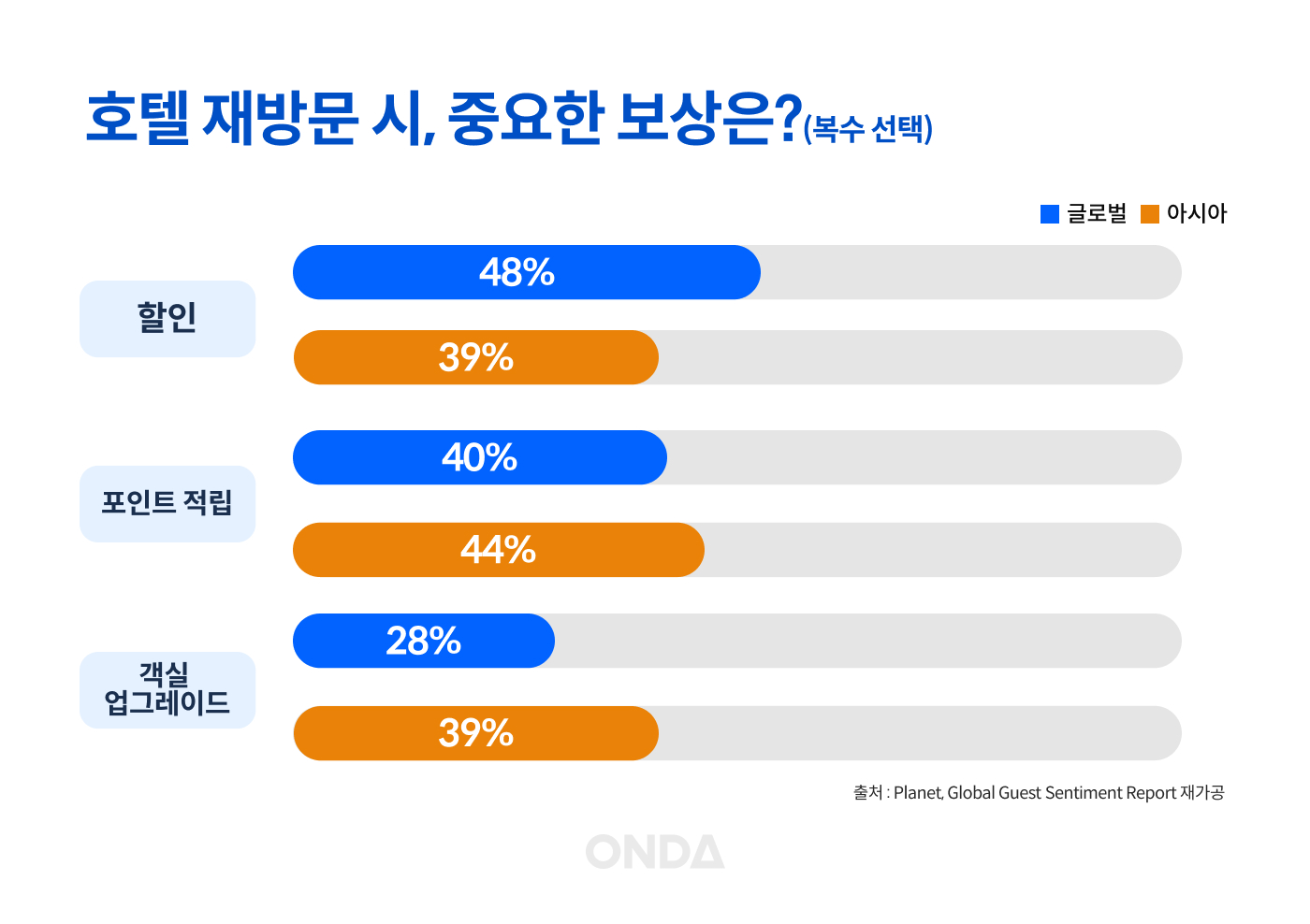
But here's the key insight: Asian travelers value room upgrades nearly as much as discounts — far more than travelers from other regions.
Guests also want hotels to remember them on return visits. If you collect contact info, stay history, and preferences, you can build a customer database that enables personalized service, targeted offers, and repeat bookings.
'Mobile, Digital, Upgrades'
We've looked at survey data from 6,500 guests worldwide to understand what international visitors want — and what services Korean hotels should prioritize.
The past three years changed hotels. They changed travelers too.
As inbound tourism nears full recovery, the hotels that win will be the ones that understand their guests' needs and keep pace with rapidly shifting expectations.