More municipalities are partnering with OTAs to attract visitors.
⚠️ All rights reserved. Cite this piece as 'ONDA (온다)' when quoting.
1️⃣ Busan Welcomes 2.93 Million Foreign Tourists in 2024 — Second-Highest in a Decade
2️⃣ Gangwon-do Sees 3.18 Million Foreign Visitors Last Year — Up 20% Year-on-Year
Reading recent tourism news in Korea, you can feel the desperation — local governments are pulling out all the stops to attract visitors. They're aggressively marketing regional destinations to foreign tourists concentrated in Seoul, and areas with reputational baggage (looking at you, Jeju) are announcing crisis-mode reforms.
Meanwhile, central and local governments are ramping up investments in regional tourism infrastructure. Here are some concrete examples:
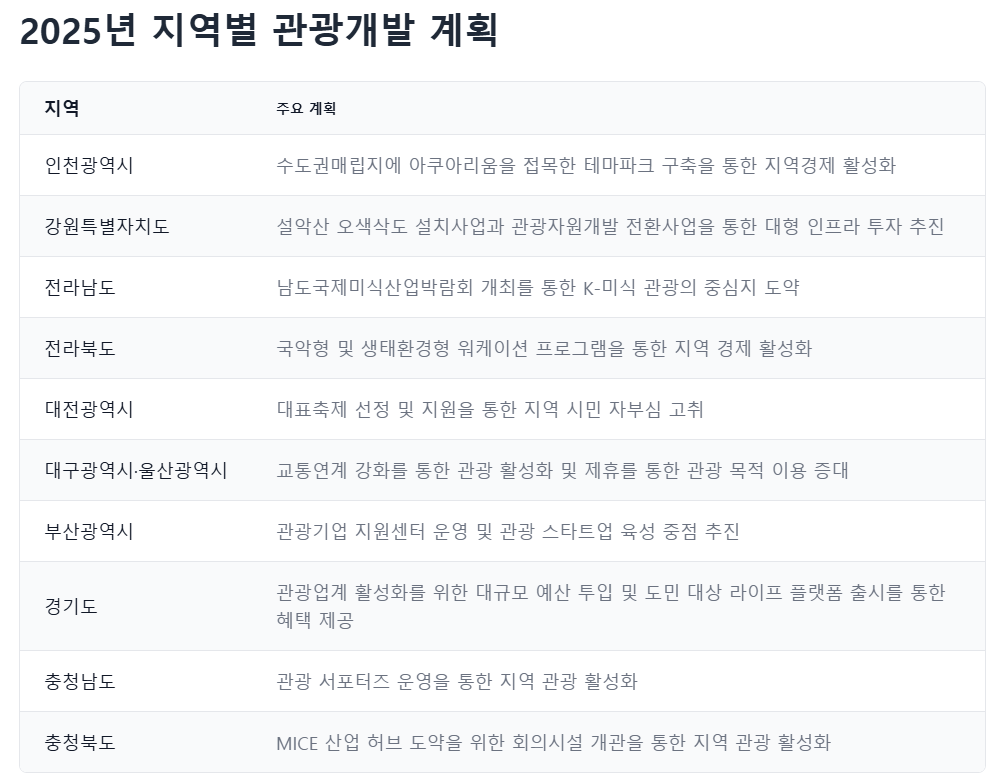
The Ministry of Culture, Sports and Tourism, for one, has designated 13 cities and districts — including Suseong-gu in Daegu and Suyeong-gu in Busan — as "Culture Cities." Each will receive ₩20 billion over three years, totaling ₩260 billion in infrastructure development nationwide.
If tourism infrastructure spreads beyond the current hotspots (Gyeonggi, Gangwon, Jeju), it could be a massive win for the travel industry — and a lifeline for regions facing demographic collapse. Regional tourism activation is arguably the best policy lever to combat local extinction.
Here's what municipalities are trying right now:
Partnering with OTAs: Most regions are now collaborating with global OTAs to offer local travel packages and accommodation discounts to international travelers.
Encouraging Longer Stays: Workation programs, night-tour experiences, and promotions for solo travelers are all aimed at keeping visitors in-region longer and boosting the local economy. Jeju ran a successful digital nomad workation from October to November last year — and is now considering visa reform for remote workers.
Repackaging Local Assets: Regions are building tourism content around their unique nature, history, and culture — elevating the quality of local experiences.
Tailoring Content to Travelers: Custom itineraries, digital tools, and experiential content are the new playbook for attracting independent travelers.
And finally, we're seeing a lot more OTA collaboration in the headlines.

Last year, Gangwon-do partnered with OTAs on workation campaigns, and Busan Tourism Organization collaborated with Yanolja to generate over ₩2.4 trillion in production-induced effects from 2020 to 2024. Those successes seem to be accelerating the trend.
This year, we're seeing more campaigns offering government-backed coupons or incentives when travelers book regional stays through specific OTAs. By tapping into platforms with massive active user bases, municipalities are driving immediate visitor growth — no brand-building lag required.