Korea Tourism Organization publishes comprehensive guide to attracting international tourists through OTA marketing
Where do lodging, activities, and travel experiences actually sell? If you're targeting international visitors, the question gets even trickier. The Korea Tourism Organization just released 'Marketing Analysis and OTA Expansion Strategy for Regional Tourism Activation with Foreign Tourists' — and it's comprehensive👍
The report covers ▲explanations of major OTAs ▲common myths and realities about OTAs ▲platform-by-platform data breakdowns ▲regional tourism consulting frameworks and success stories.
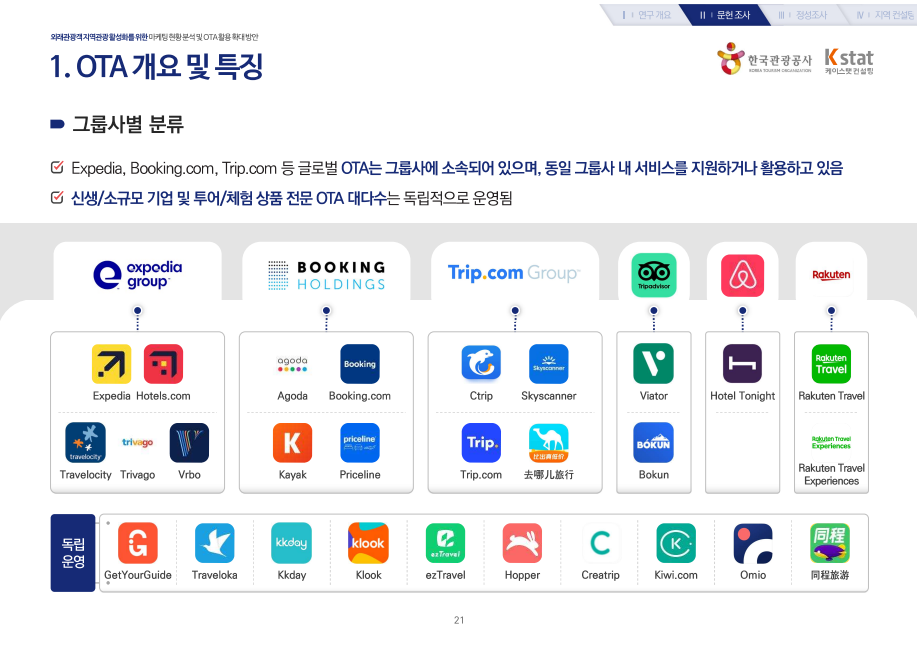
The OTA overview splits into two categories: platforms focused on accommodation and flights (Booking.com, Expedia) and those specializing in tours and experiences.
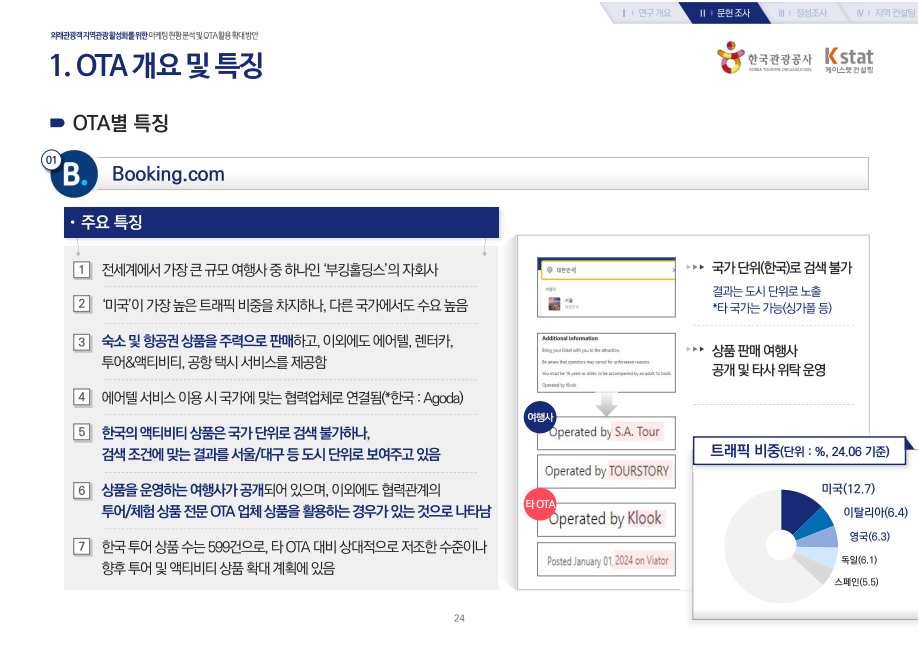
Take Booking.com. The US is its biggest traffic source, but European demand is massive. For Korean activity products, you can't search by country — results center on major cities like Seoul or Daegu.
Expedia is 89.5% US users and also searches by city. One quirk: listings on GetYourGuide and Viator automatically sync to Expedia — worth knowing if you're managing distribution.
For tours and activities, the report profiles Viator, KONEST, GetYourGuide, Kkday, Klook, Creatrip, and more.
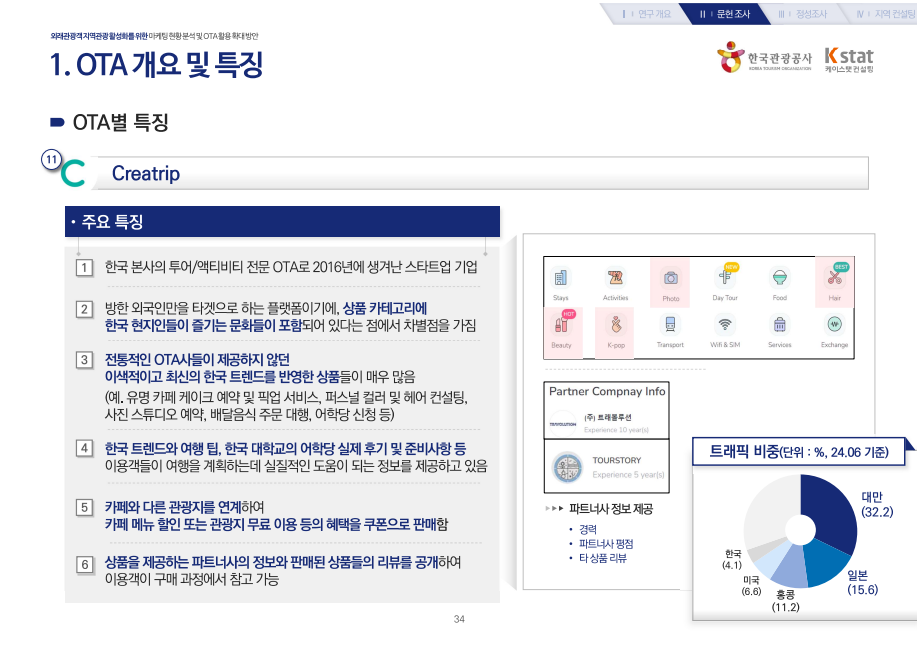
Creatrip is a Seoul-based startup with a twist: it includes local culture categories Koreans actually enjoy, not just tourist traps. Think popular café reservations, pickup services, even food delivery assistance — things global OTAs don't touch.
Kkday is over 50% Taiwanese users and specializes in tours and experiences. It runs its own Korea guide pages packed with travel intel.
Klook draws mostly from Hong Kong and Taiwan and has built trust by having HQ directly manage negative reviews on travel products.
The report also debunks common myths: ▲the same tour can sell at wildly different prices across OTAs ▲OTAs are growing in influence and can genuinely activate regional economies ▲OTAs are platforms — they don't run tours themselves — and more foundational explanations of how the online travel ecosystem works.
There's also regional case studies and OTA consulting frameworks worth digging into. If you're in hospitality, the full report is worth your time🙂