They say opportunity knocks three times in life. In your career, one of those knocks is the chance to level up — and sometimes it comes disguised as something you never thought you could do.
Hi there — December's here, and 2023 is sprinting toward the finish line. You've got about a month to map out your 2024 strategy. Let's use today's Weekly ON to reflect on this year and gear up for the next 🙇
⚠️ All rights reserved. Cite this piece as 'ONDA (온다)' when quoting.
In this issue
🏨 Growing with ONDA: An interview with Paraspara Seoul's Sales Director
💡 Why you need to adopt digital payments now
⌨️ #HospitalityLabor #OctoberArrivals #HotelInvestment #TravelAgencyLivestream #WorkationDemand
🏨 Industry stories
Growing with ONDA: An interview with
Paraspara Seoul's Sales Director
They say opportunity knocks three times in life. In your career, one of those knocks is the chance to level up — and sometimes it comes disguised as something you never thought you could do.
Work gets hard. You get burned by your boss. Projects feel impossible. Burnout creeps in. And then there's that crushing feeling when your career hits a wall.
That's when people take the leap — switch jobs, try something completely different, grab the chance that scares them. That's how careers break through.
Oh Eunji, Sales Director at Paraspara Seoul, did exactly that. Over the past two years, she dove into sales — "something I never thought I could do" — and it's transformed her career as a hotelier.
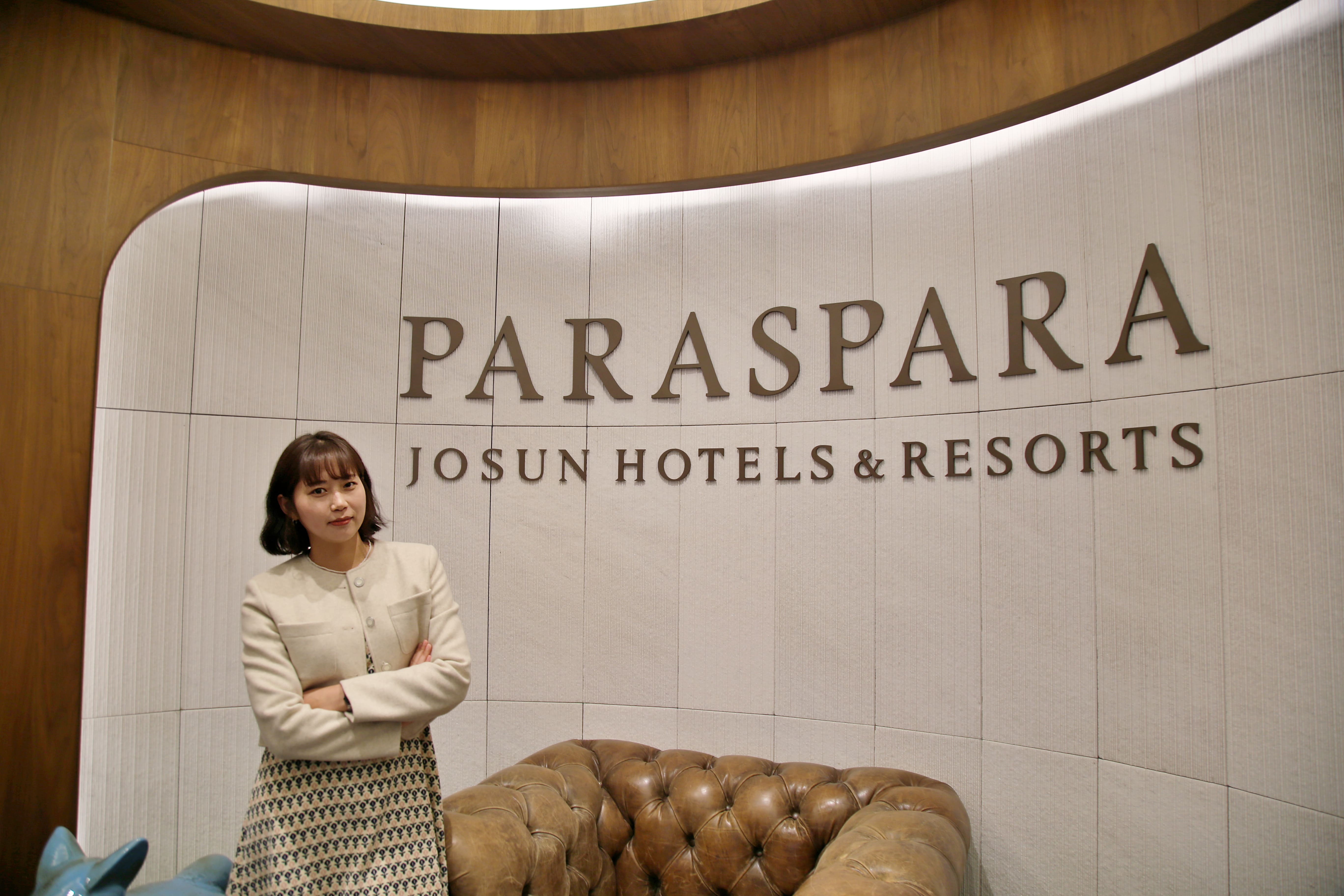
Oh's hospitality career didn't start in Korea. It started in Dublin, at The Central Hotel.
"I studied abroad in Dublin and that's where I got my first hotel job," she says. "I worked in this 200-year-old building right in the city center for two years. Those memories are still some of my best."
After returning to Korea, Oh continued working in hotels — mostly front desk roles. She didn't touch sales until August 2021, when she joined Paraspara Seoul.
"Salespeople were like magicians to me. I dealt with guests face-to-face, but sales teams? They brought guests to me. They ran ads, drove bookings, hit revenue targets — things I never thought I could touch."
"Honestly, sales wasn't my choice. Paraspara offered me the role when I joined. But I thought: challenging myself with something I didn't think I could do — that's meaningful."
That decision changed everything.
Wait — what is Paraspara Seoul? It's a luxury hotel and resort that opened in August 2021, nestled in Seoul's Bukhansan National Park across 76,000 square meters.
It's rare to find a large-scale hotel where you can escape into nature without leaving Seoul. Today, Paraspara is a go-to for couples and families looking for a retreat close to home.
"We're pretty well known now, but back when we opened, we were brainstorming every possible way to get our name out there. We were thinking hard about online marketing and advertising — and feeling like something was missing. That's when someone introduced us to ONDA," Oh recalls.
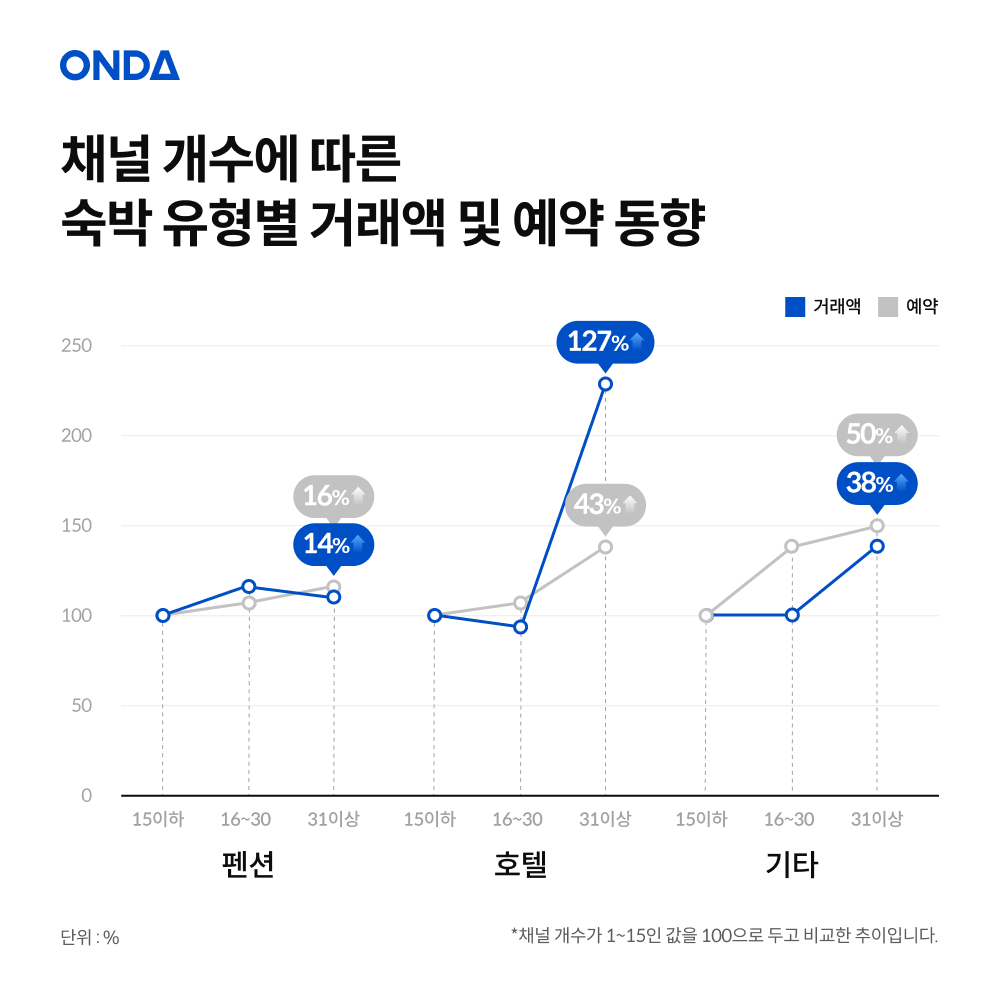
ONDA's biggest value proposition: one contract, instant access to 60+ booking channels covering over 90% of Korea's OTA market. ONDA's data shows the sweet spot is 31+ channels. Hotels using 31+ channels see 43% more bookings than those on 15 or fewer.
For a newly opened hotel, getting listed on dozens of platforms is free advertising. Especially for travelers who filter by "newly opened."
"Being able to sell rooms on channels we didn't sign direct deals with — that was incredibly appealing. It felt like one stone, three birds. You don't have to negotiate contract after contract, your rooms get distributed everywhere, and you get exposure automatically."
"Our hotel does a lot of business through metasearch. But after partnering with ONDA, we opened up closed-mall and B2B inventory."
"We participated in a Kakao Talk booking promotion right when it launched. That was huge for us."
Want to hear more from Sales Director Oh Eunji, who's growing alongside ONDA?
👉<Read the full interview with Paraspara Seoul's Sales Director>
💡 Hospitality trends
Why you need to adopt
digital payments now
"To satisfy Chinese tourists — whose expectations are higher than ever — hotels need to integrate digital payment methods like WeChat Pay and Alipay." (Kim Ji-woong, Director at Trip.com Group, on the 2024 Korea-China tourism outlook)
Every stage of travel — search, booking, check-in, reviews — is going digital. Payments are no exception. The need to adopt digital payments — credit cards, mobile pay, QR codes — is growing fast.
According to a Visa survey, only 3 in 10 travelers in the Asia-Pacific region carried cash this year, down sharply from 79% in 2020.
A U.S. survey found that about 45% of travelers still carry cash while traveling — and they reported hassles: safeguarding it, finding exchange bureaus, dealing with loss or theft. At the end of trips, they had an average of $40 in leftover local currency. Some made unnecessary purchases just to use it up.
COVID accelerated the shift to convenient digital payments, and that's reshaping the overall travel experience. Digital payments have become a must-have for a satisfying trip — and travelers' expectations will only grow.
Read the full story below!
👉<Read the full story>
⌨️ News roundup
1️⃣ Hospitality labor shortage 👉[full story]
TL;DR: Tourism industry still struggling with staffing post-pandemic
The story: Workers who left during COVID haven't returned, and new talent is avoiding the industry. The labor crunch is hitting the entire tourism sector. Even university enrollment in hospitality programs is declining.
Hotels? According to the Korea Hotel Association, domestic hotels are running 8.1% short on staff on average. The biggest gaps: housekeeping, F&B, and culinary roles.
2️⃣ October arrivals 👉[full story]
TL;DR: October international arrivals hit 61% of pre-COVID levels
The story: About 1.23 million foreign tourists visited Korea in October — the highest monthly figure this year — recovering to 61% of 2019 levels. Top source markets: Japan, China, the U.S., and Taiwan.
Outbound? Korean outbound departures have exceeded 2 million for four straight months since July. October saw around 2.04 million departures — 94.8% of 2019 levels.
3️⃣ Hotel investment market 👉[full story]
TL;DR: Post-pandemic profitability driving surge in hotel investment demand
The story: Korean hotels are drawing serious investor interest. Multiple properties are on the block: Shilla Stay Mapo, Conrad Seoul, Jeju Best Western, Haeundae L7, and more.
How big? Reopening lifted hotel performance in 2022, fueling a spike in investment. Seoul's hotel transaction volume hit an all-time high of ₩2.4 trillion last year.
4️⃣ Travel agency livestreams 👉[full story]
TL;DR: Korean travel agencies launching and expanding in-house live commerce channels
The story: Hana Tour, Modetour, Kyowon Tour, Yanolja, and others are opening their own live commerce channels and ramping up programming. Post-COVID, demand for travel livestreams keeps climbing, and agencies are fielding more requests to add shows.
Outlook? Kyobo Securities estimates Korea's live commerce market will grow from ₩2.8 trillion in 2021 to around ₩10 trillion by the end of this year.
5️⃣ Workation demand 👉[full story]
TL;DR: 9 in 10 Korean office workers want workations
The story: A Korea Chamber of Commerce and Industry survey found 90% of respondents want workation options. Preferred destinations: Jeju (31.8%), Gangwon-do (19.5%), Seoul (18.8%), Busan (14.2%), Gyeonggi-do (6.2%).
For lodging? Accommodation and workspace quality ranked as the top priority when choosing a workation. Hotels need to invest in facilities that cater to this growing segment.