Regulations around advertising messages have gotten a lot stricter — and the penalties are serious.
Most ONDA partners use text or messaging to stay in touch with guests — sending booking confirmations, check-in instructions, and so on. These messages are totally legal. They're transactional, not promotional. They help complete or confirm a transaction.
But when you send promotional messages to past guests, you need to be very, very careful.
Rules around commercial text messages have gotten much stricter, and the fines have gotten bigger. As Boannews reported on April 10, Korea's spam enforcement is ramping up hard. The headline says it all: "Harassing Users with Spam? Tougher Consent Rules and Penalties Are Coming."
To legally send a promotional text, you must comply with over a dozen rules — including ▲prior consent from the recipient ▲immediate opt-out upon request ▲no messages during nighttime hours, and more. Miss any of these, and you're likely breaking the law.
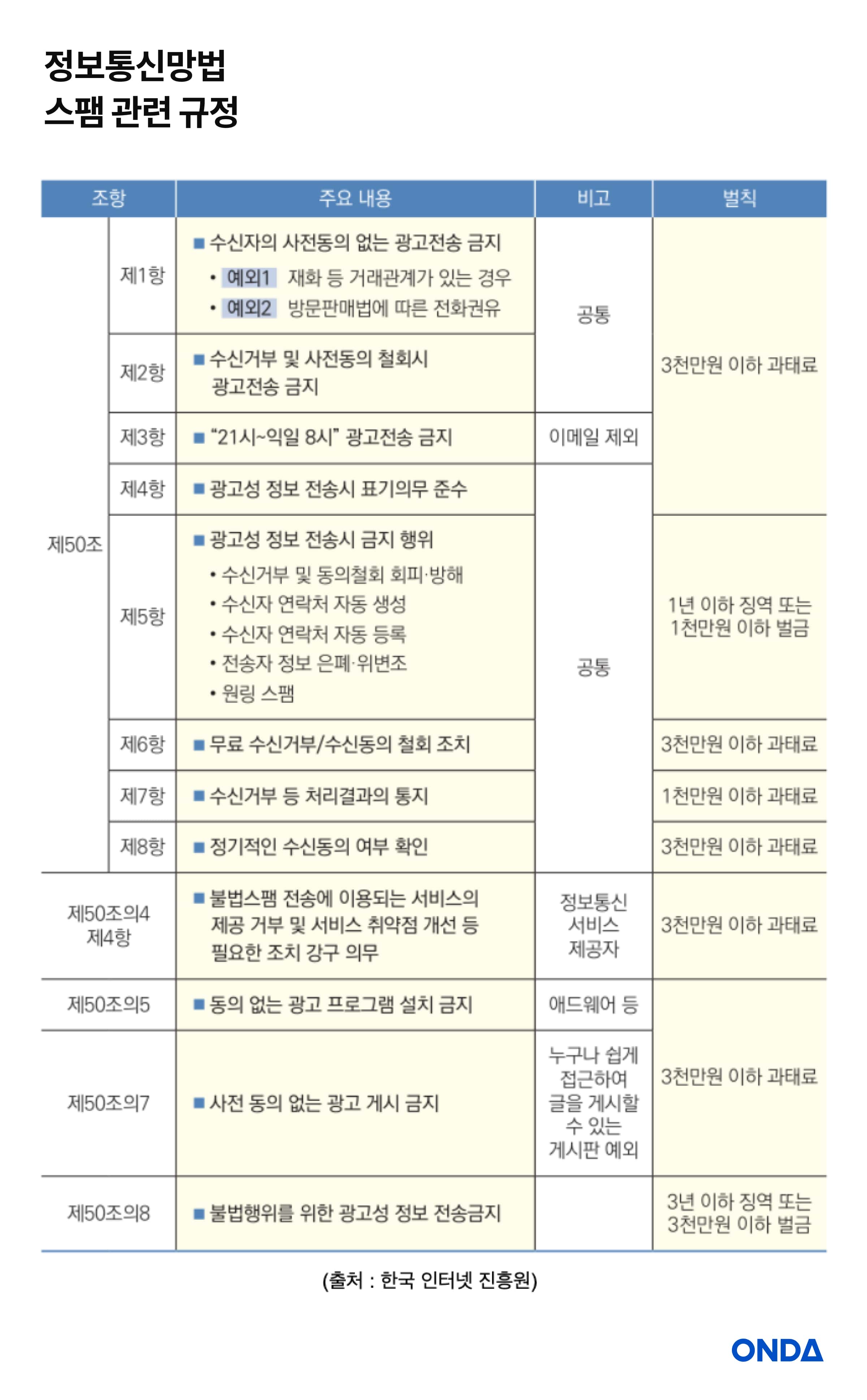
Realistically, it's extremely hard for small lodging businesses to comply with every single rule. That's why we strongly recommend ONDA partners do not send promotional texts on your own. The three rules below are especially easy to violate — and very difficult to follow.
1️⃣ You must obtain prior consent — and be able to prove it
Article 50(1) of the Act on Promotion of Information and Communications Network Utilization and Information Protection (the ICN Act) says: "No one may send commercial advertising information via electronic transmission without the recipient's express prior consent."
The Korea Internet & Security Agency's spam prevention guideline (6th edition) defines "express prior consent" as making it completely clear to the user that (a) they will receive ads in the future and (b) what those ads will be about — before asking for their consent.
There's no fixed format for how you get consent, but you — the sender — bear the burden of proof. You must be able to show that the recipient knowingly, explicitly agreed to receive marketing messages.
Even if you collect email addresses or phone numbers during the booking process, you must (1) clearly indicate that the info will be used for marketing and (2) separate service-related data collection from ad-consent checkboxes. Don't bundle them.
2️⃣ Messages must be clearly labeled "(Ad)" and offer an easy opt-out
Every promotional message must start with the label (Ad). If you've ever received a marketing text in Korea without that tag, it was probably illegal. You also can't use spaces, symbols, or formatting tricks to hide the (Ad) label or make it harder to opt out.
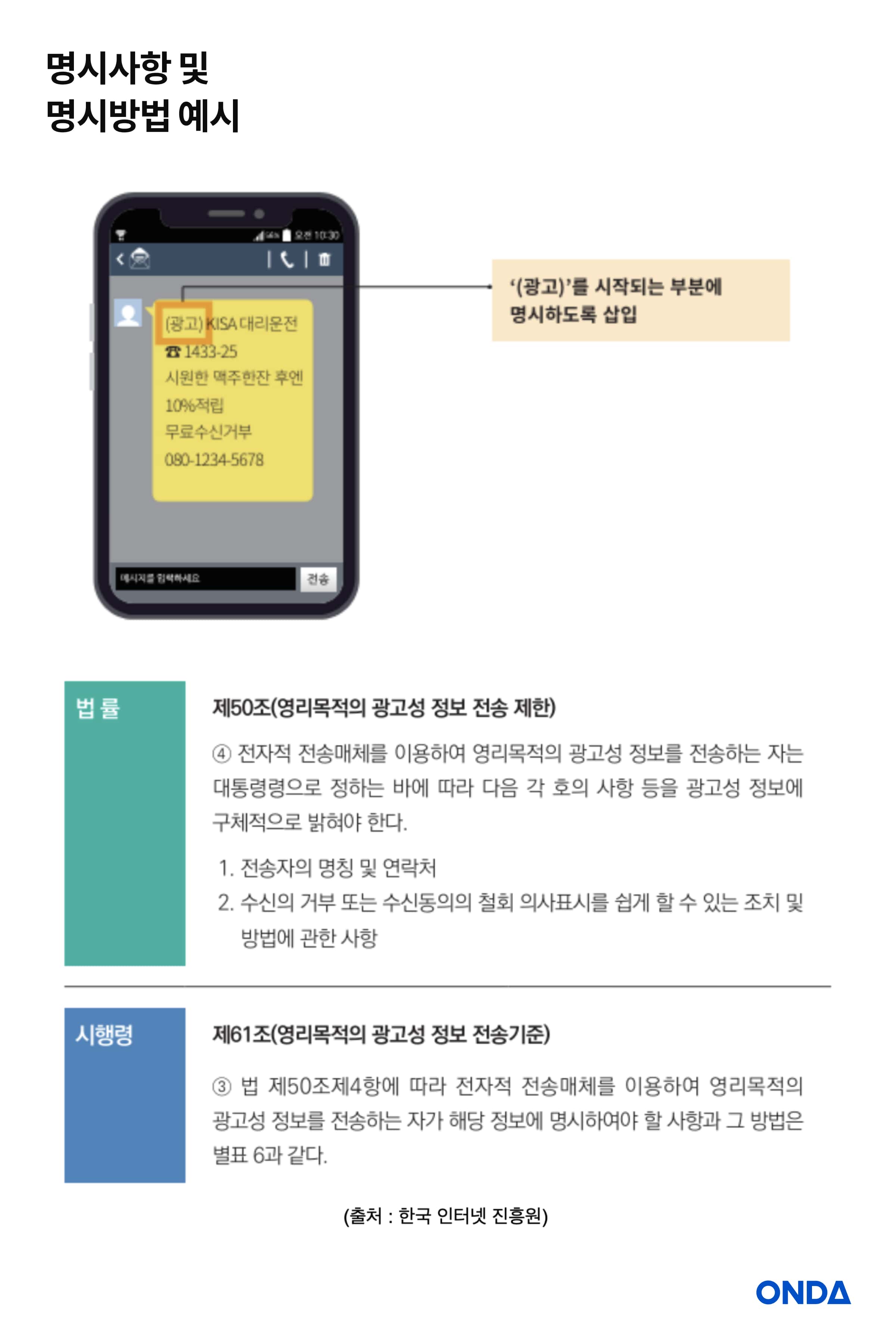
You must also display your business name, phone number or address, and a clear opt-out method at the end of every message. If the recipient opts out via phone, they must not incur any cost for doing so.
3️⃣ You must reconfirm consent every two years
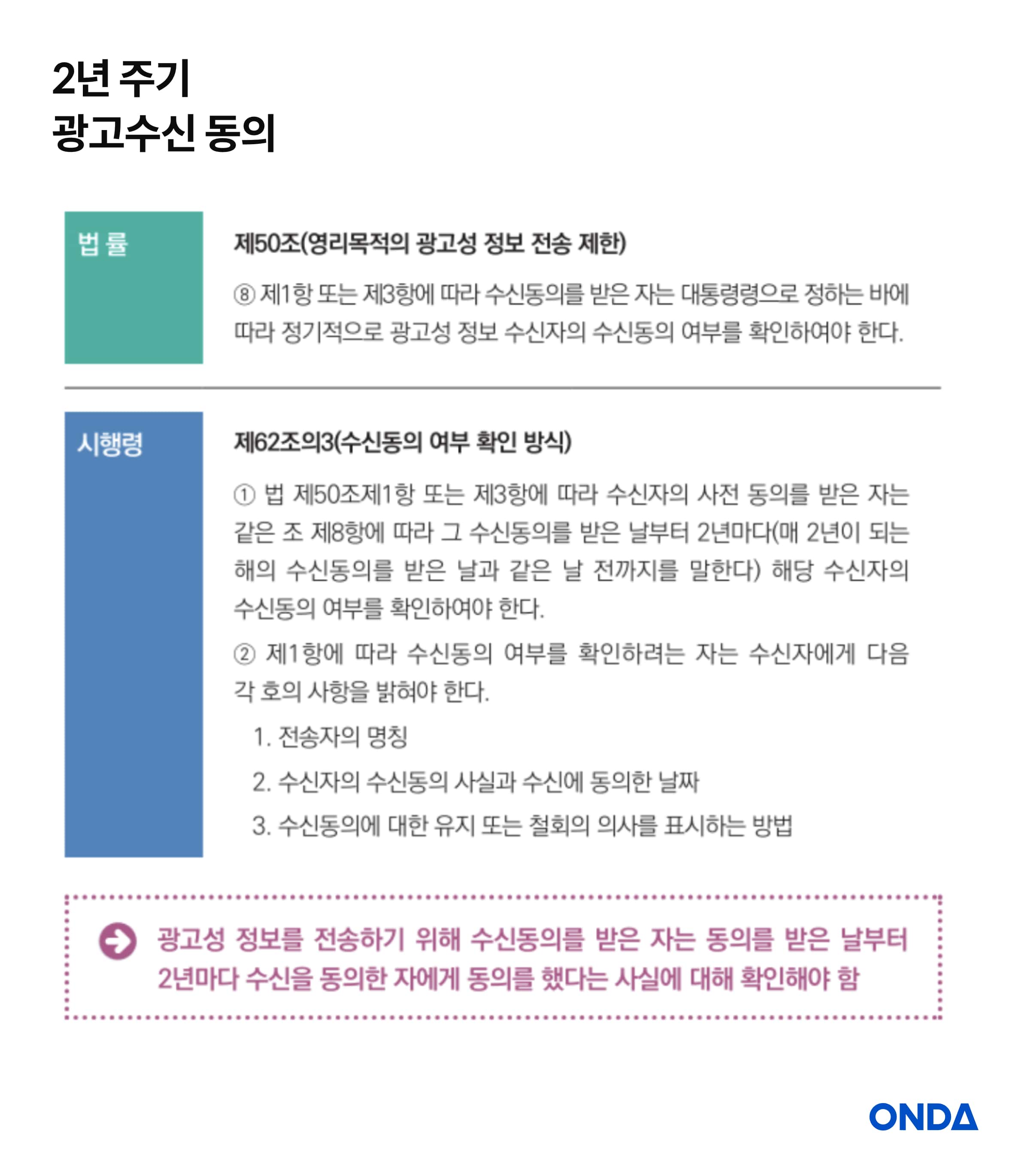
You've probably received periodic consent reconfirmation requests via KakaoTalk or email. Same rule applies to you. If you send promotional messages, you must ask recipients every two years whether they still want to receive them.
When you request reconfirmation, you must include: ①your business name, ②the original consent date and fact of consent, and ③instructions on how to maintain or withdraw consent.
Complicated, right?
There are many other rules you must follow. The full list is in KISA's Guide to Preventing Illegal Spam (6th Edition).
If you plan to send promotional texts, read that guide carefully — and only proceed if you can comply with every requirement.