Guillaume Kashima blurs borders—French-Japanese heritage, Berlin-Toulouse base, work that floats between illustration and animation. We visited his Kreuzberg studio to see where the smoke and characters come from.
09. Guillaume Kashima's Smoke-Filled Studio
Original Author: Jin Jun-hwa, CEO of Pinzle (www.pinzle.net)
Adapter & Editor: ONDA's Somora Manager
Monthly Artwork: Pinzle Website: www.pinzle.net
Pinzle is Korea's only art subscription service, introducing one artist and their work to the world each month. We created this series to inspire those who design spaces by exploring the lives and studios of the artists we love.
For inquiries about this series or the art subscription service, reach us on KakaoTalk Plus Friend 'Pinzle' for a quick response.
Some spaces evoke fantasy just by existing. They're where contemplation deepens and awe-inspiring work is born. Studios, ateliers, workshops — whatever we call them, artist spaces feel like time moves slower there, like every trivial moment could spark inspiration. What do the studios of today's most-watched global artists actually look like?
Guillaume Kashima is a French illustrator working in Berlin. With East Asian features, a name that defies geography, and playful character-driven work, he's irresistibly intriguing. A bold artist with a cheeky sensibility, he moves fluidly across illustration, graphic design, products, and animation. Based between Berlin and Toulouse, his personal studio — also known by his alter ego Funny Fun with Guillaume (FFwG) — embodies his lifestyle: emotionally honest, present-focused. Like his nomadic practice, his work explores diverse themes across diverse media.
Kreuzberg: Berlin's Berlin
We flew to Berlin in that cusp season between fall and winter. Flipping through a Berlin guidebook on the plane, I stumbled on Guillaume Kashima's name listed as an illustrator — it felt like an omen, adding weight to the trip. Arriving late in the evening, Berlin's temperature matched Seoul's, but the dark streets made it feel colder. The drizzle reminded me of Guillaume's brushwork.
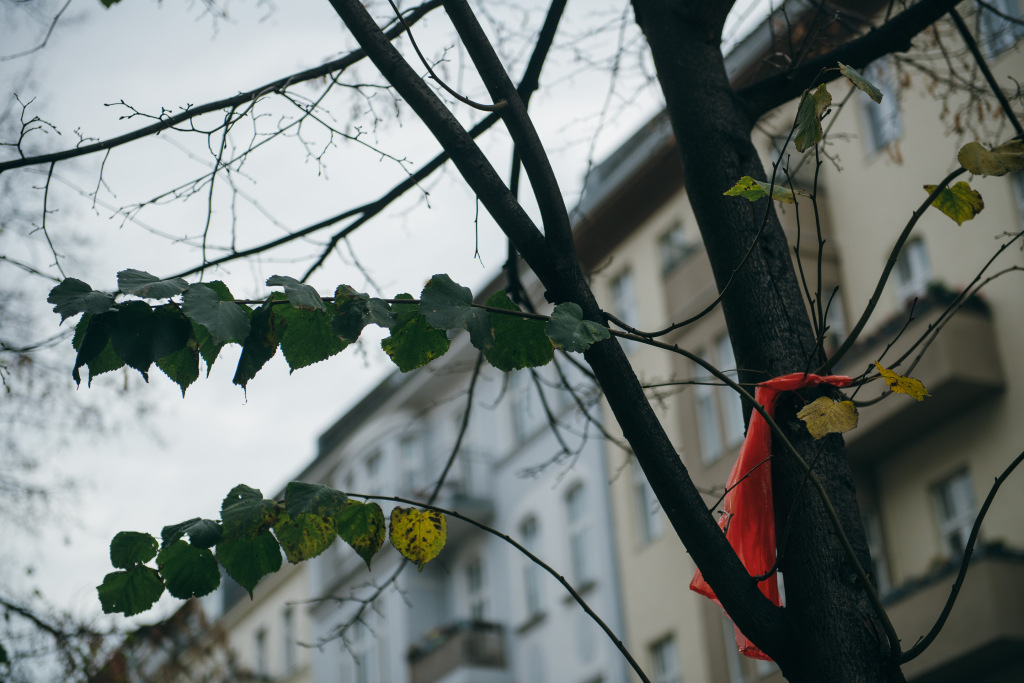
That day's weather — straight out of Guillaume's aesthetic
After our first Berlin night, we headed early to Kreuzberg to meet Guillaume. The neighborhood is a hub for Berlin's artist scene, and it's like Berlin in concentrate — though my first impression was more chaotic than charming.
Berlin — and Kreuzberg especially — resists simple definition. Everything's so diverse and free that it strikes some people as disordered, even unpleasant. It took time to realize this is the healthy rawness of a city capital hasn't gentrified yet: alive, uncensored, free.
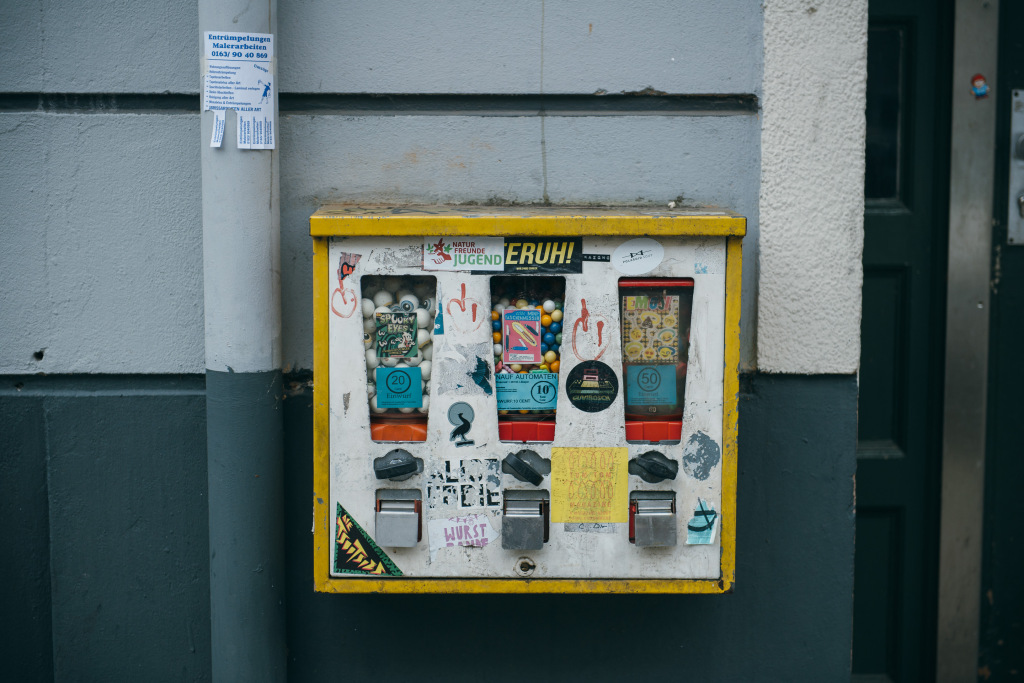
A gumball machine on Guillaume's building wall — no idea if it works
Guillaume's building wore its age plainly, scattered leaves and old flyers defining its identity. We arrived a bit early and wandered. Hip record shops, bookstores, and a gumball machine bolted to his building's wall caught my eye. Yellow box stuffed with kids' toys, stickers layered on stickers, scribbled-over and peeling — did it even work? I stared, distracted, until movement above drew my gaze. Guillaume Kashima, watching from his window.
Monochrome
Berlin's called "the sexiest city in the world," but ironically, the city's palette isn't particularly saturated. The sexiness comes less from high chroma and more from the collision of faded history and raw youth. In that sense, Guillaume Kashima's first impression was Berlin itself.
This artist in a black sweater and worn jeans greeted us with a sharp look and a mischievous grin. A man of East Asian appearance, French nationality, fluent in English and French — Guillaume embodied Berlin's hard-to-pin-down diversity. We'd heard he loves coffee, so we carefully presented the beans we'd brought. His quiet smile hinted at his gentle nature.
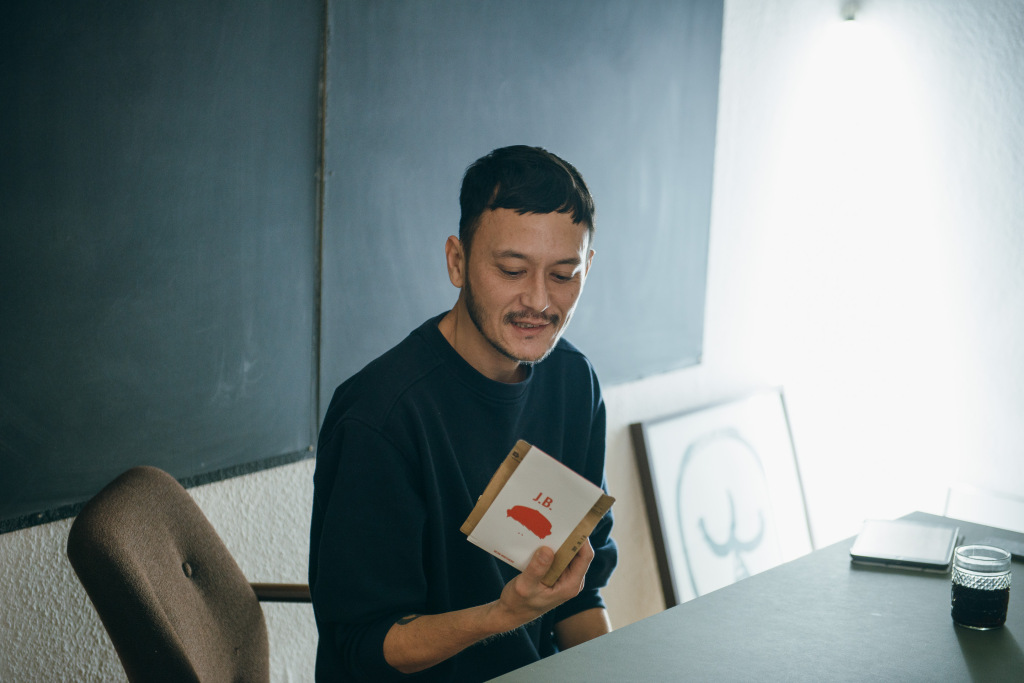
We brought beans from Beanbrothers for the coffee lover
His workspace matched our first impression. Despite the weathered exterior, the interior was tidy. Guillaume spends most of his time in this studio, which is almost entirely monochrome — finding a saturated object is nearly impossible. Even the strong black coffee he served, and the gray cigarette smoke he constantly exhaled, felt like part of the space.
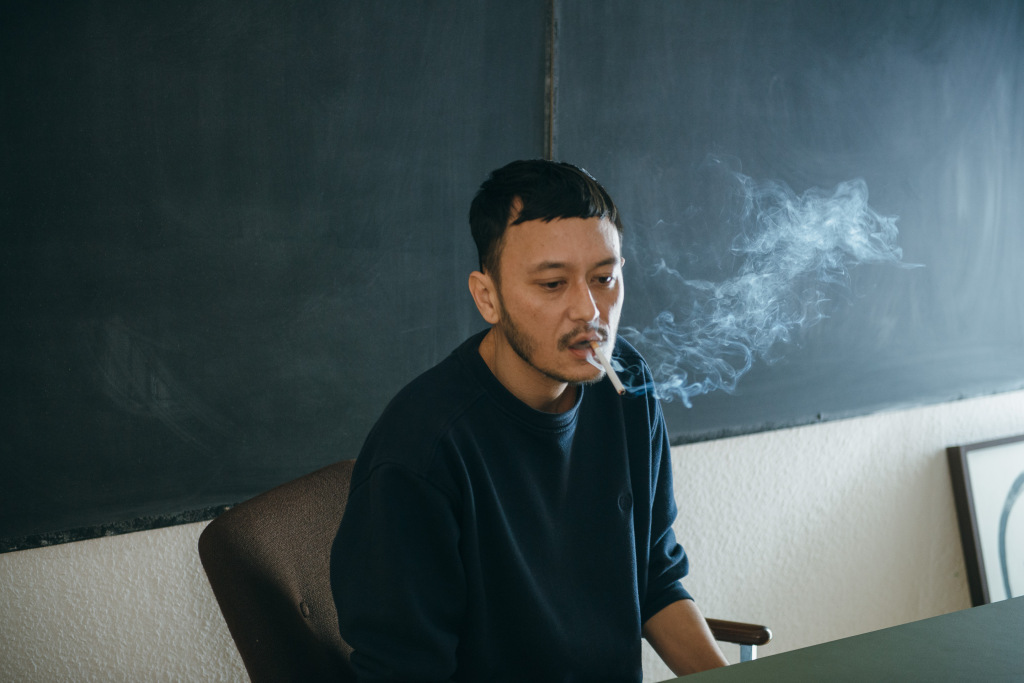
He enjoys his cigarettes
The only bright color in the room? Fluorescent tubes leaning against one wall, like his artwork. Exposed and glowing, they emitted a strange aura against the monochrome backdrop.
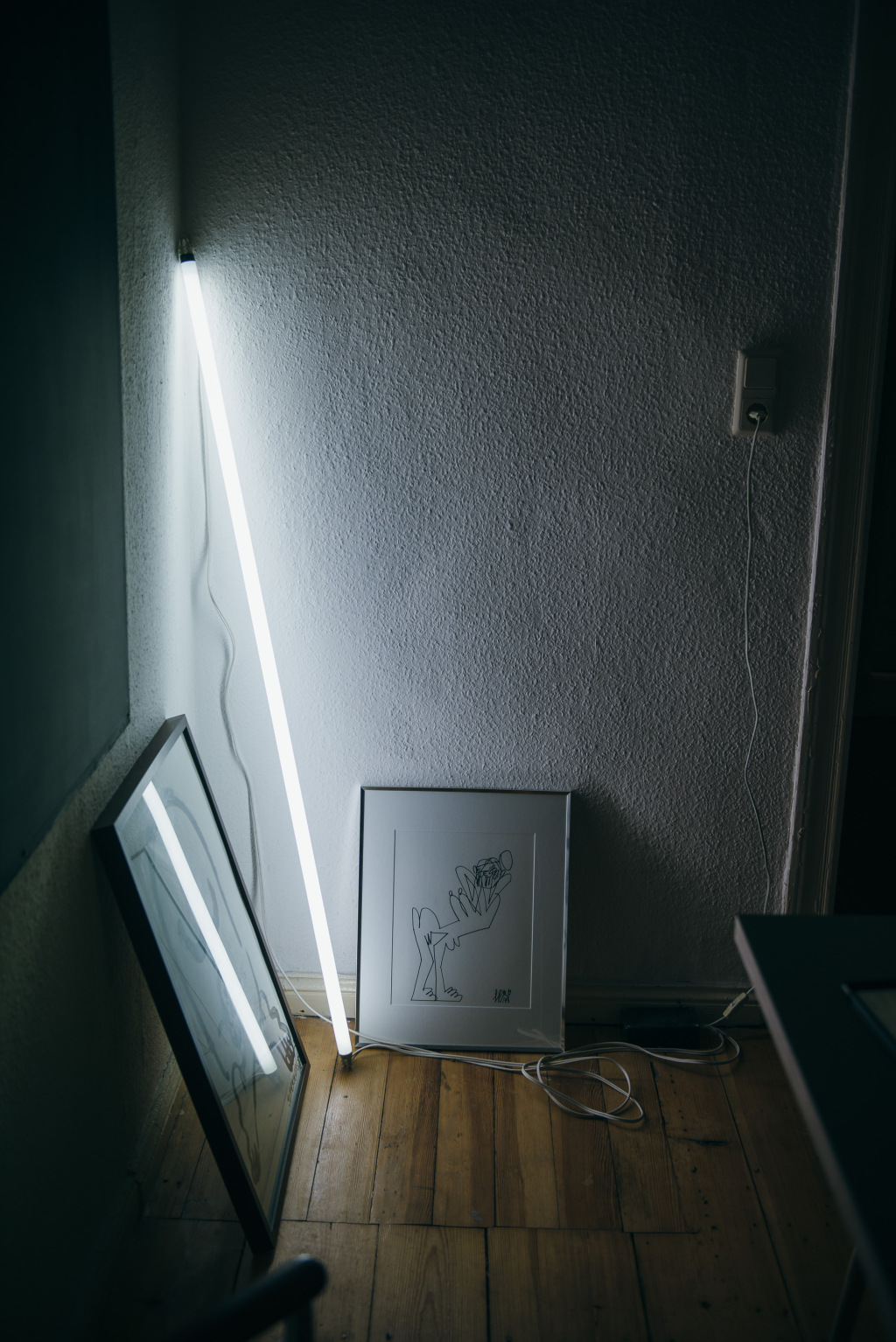
Exposed fluorescent lights create an odd atmosphere
As we exchanged introductions and curiosities, Guillaume's work — mostly black and white — reinforced the theme. When color appeared, it was single hues, never flashy but always striking. Many illustrators lean on color to avoid monotony, which made his restraint even more compelling. I assumed it was pure preference, so when I asked why he favored monochrome, his answer was unexpectedly earnest.
He sees himself as both an artist and an artisan who must deliver flawless results. He wants to transmit his intent intact. When printing multicolor work, the final colors sometimes drift from his vision. Guillaume hates losing control to variables that produce unsatisfying results. That's why he focuses on conveying intent through monochrome. But he didn't insist we understand — it felt less like indifference and more like respect. Guillaume answered even casual questions with clarity. As if to prove it, he leaned into spontaneous sketching because, he said, there's no time to overthink.
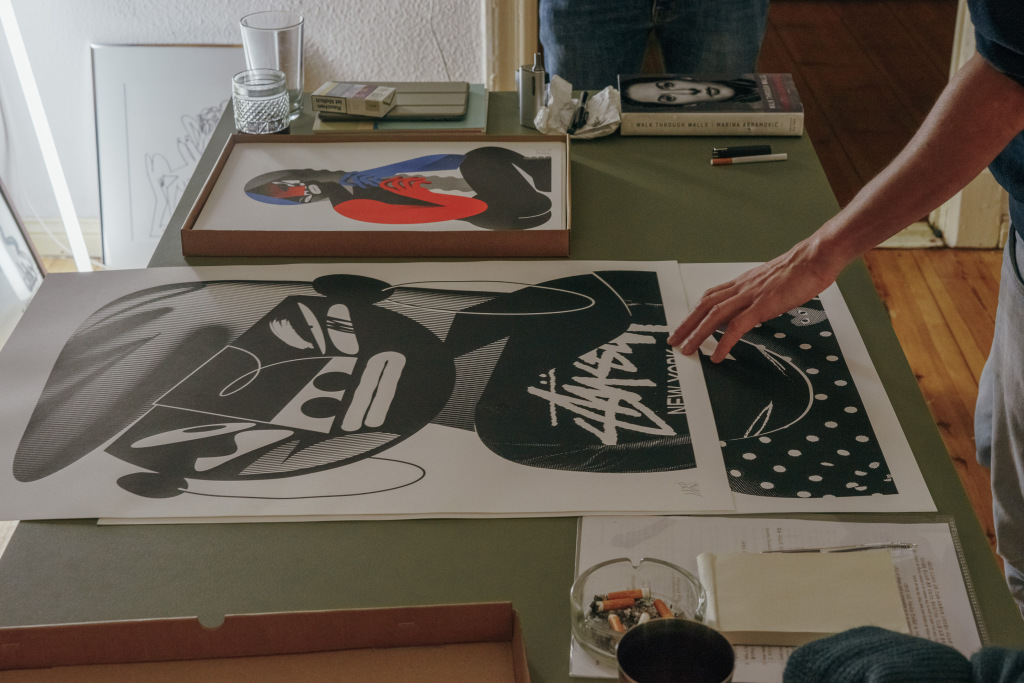
Guillaume introducing his work
Floating Life
A metal shelf on the opposite wall held books and stacks of his artwork. Not just framed illustrations but also figurines of his characters, postcards, paper, a laptop, a speaker — simple yet complex, the shelf radiated Berlin energy. Or maybe that's just me.
Berlin's a place where global cultures gather but don't fully blend. Each maintains its own beauty while contributing to the city's kaleidoscope. Present-day Berlin is in the process of scattering and re-gathering colors to create something new. That synergy is what draws hipsters from around the world. Guillaume — a French artist with Japanese roots, a hipster himself — insists long-term plans are meaningless. Today's great, tomorrow might suck. Or vice versa. His thinking and lifestyle felt as free and complex as Berlin itself.
Up close, I could see his artwork in detail. One piece evoked Picasso: chaotic yet dimensional, black-and-white lines, dots, shapes. Another featured a sky-blue background with scribbled lines and a central character fragmented yet unified.
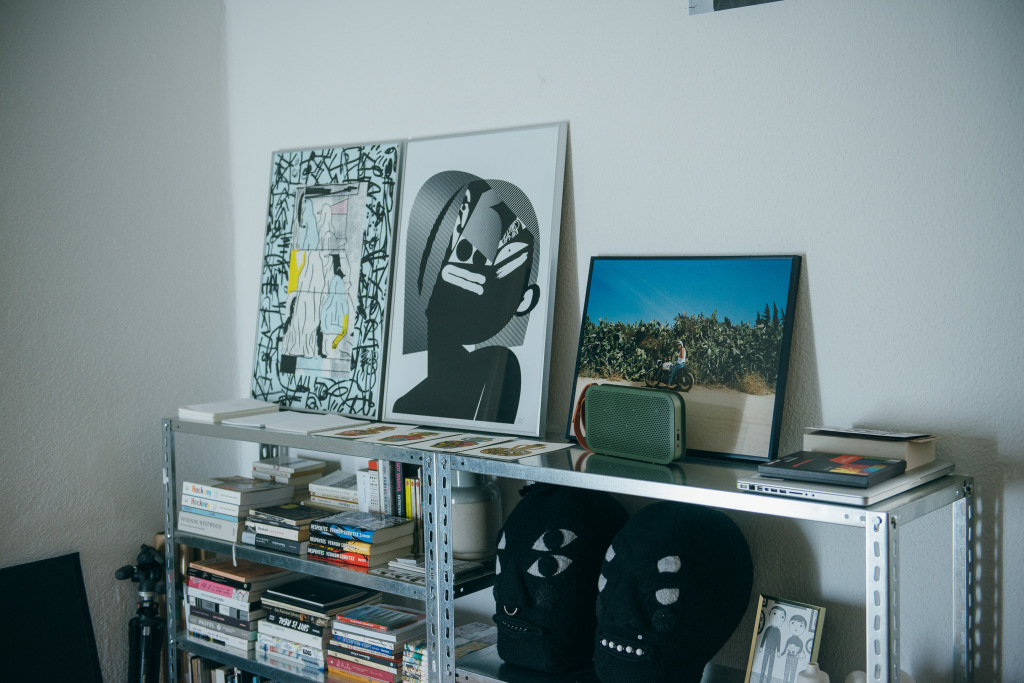
Shelf stacked with various artworks
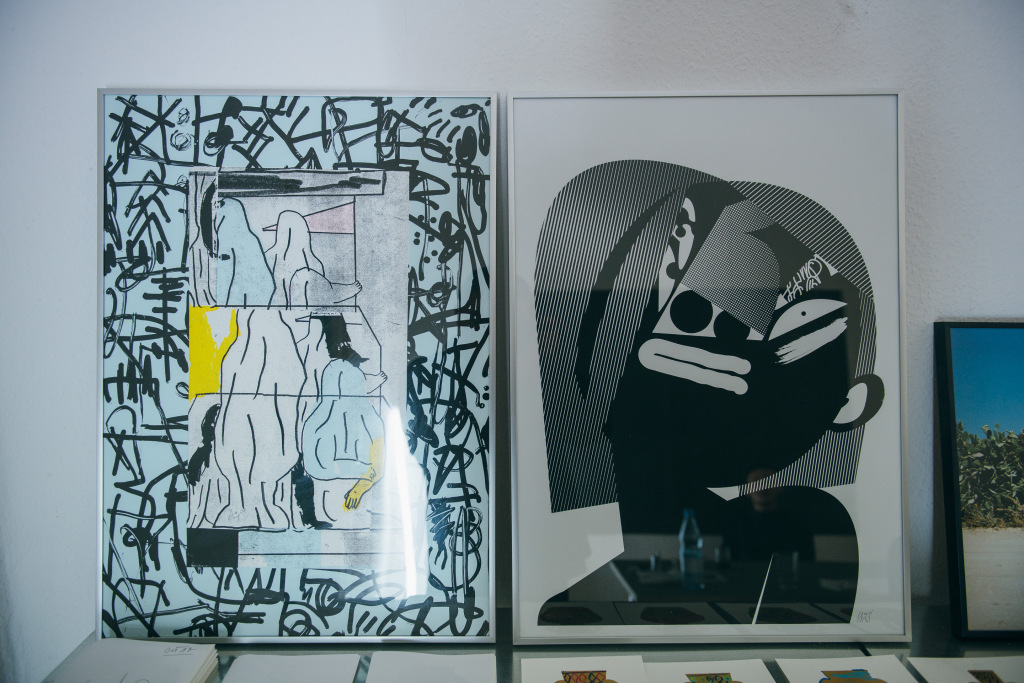
His artwork
Is it his focus on today? In his work and conversation, Guillaume seemed to crave freedom from all goals, standards, affiliations — anything that could bind him. For people conditioned to believe in goals, milestones, and success metrics, his lifestyle is more than refreshing. It's jarring.
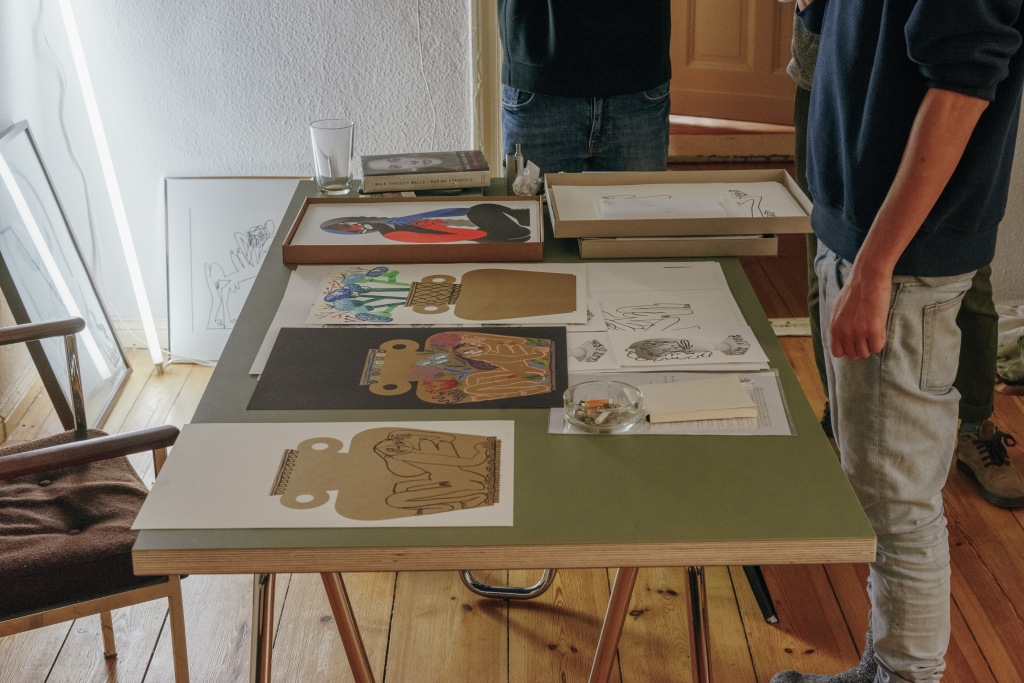
Guillaume's works
Looking up from the shelf, I noticed a photo of a Black woman on the wall. Guillaume turned his gaze there too, saying it brings him endless inspiration. I paused with him. Her expressionless face held ambiguous sorrow. Her eyes looked upward — at what? The gaze was powerful. Guillaume constantly looks at this photo for inspiration, carefully deliberating his work and expression. A classic creative under stress.
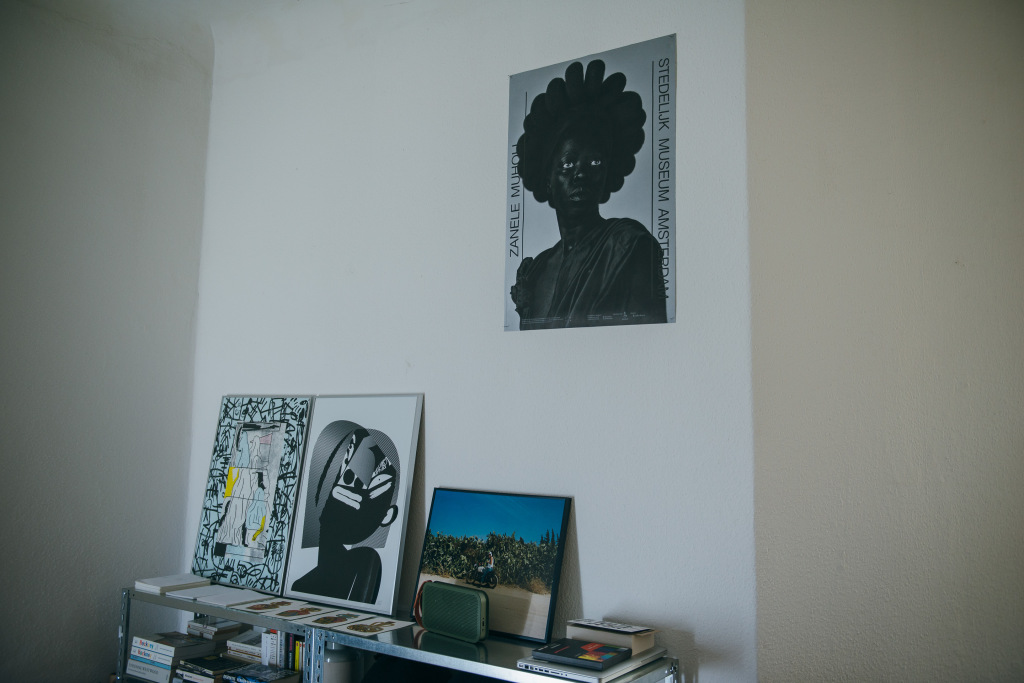
The photo of a Black woman that inspires him
After the studio interview, we moved to Tempelhof Park in the good weather. On the way, a sign caught my eye: "Korean BBQ" in red Korean characters. Berlin's multicultural, sure, but I'd only seen German pubs and Turkish kebab joints until now. The unexpectedly large Korean restaurant startled me — and delighted me. We kept chatting.
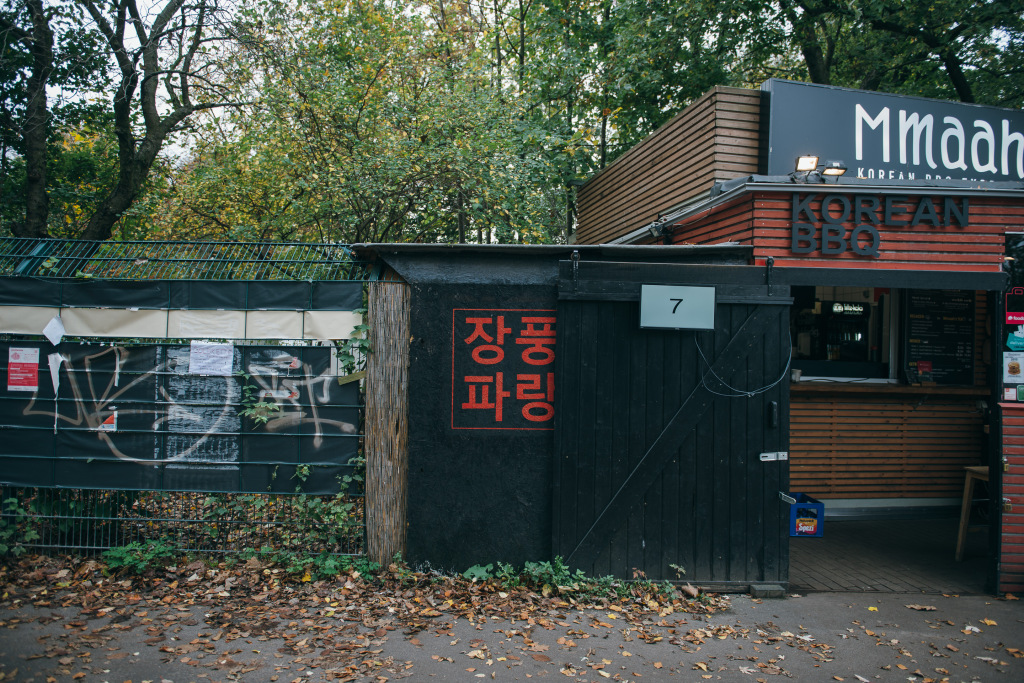
On the way to Tempelhof Park
The air lightened, and so did the conversation — less interview, more catching up with an old friend. Still hungry, we shared the small bag of mixed nuts Guillaume brought. We concluded that expensive rent is a universal tenant woe. The meeting was pleasant, so the goodbye felt light. In his favorite park, saying farewell, I realized: we seemed different at first, but Guillaume's wrestling with the same questions all young people are.
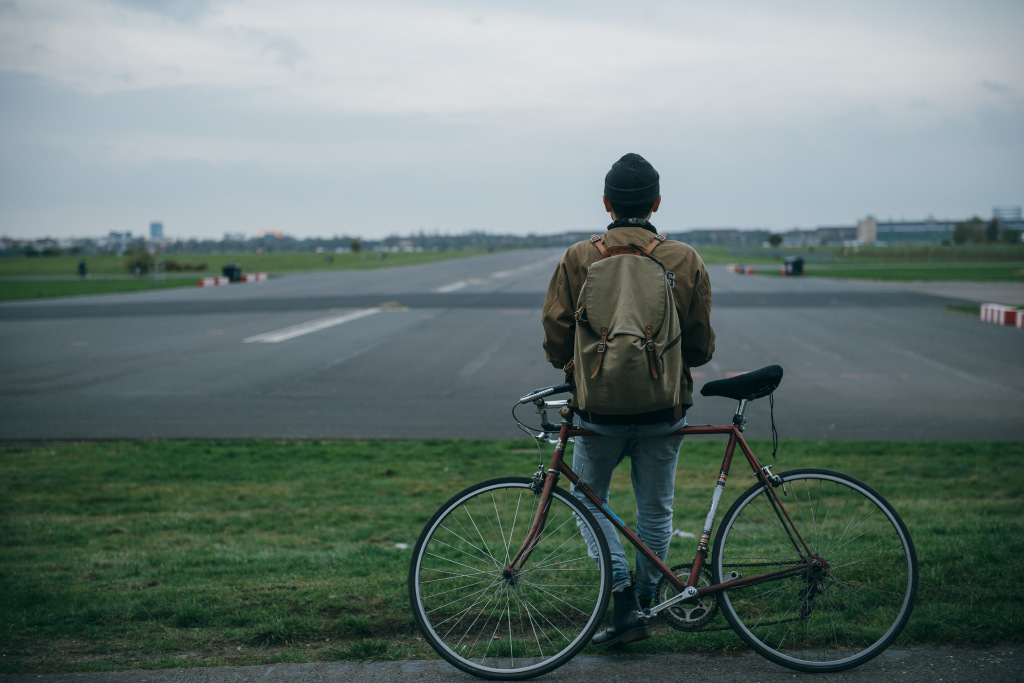
Goodbye in his favorite park
Everyone reads books and watches movies these days, but art still feels distant and difficult. Imagine if we knew how a creator sees the world before encountering their work — wouldn't it enrich the experience beyond just an image? That's why Pinzle, an art subscription service, introduces one artist every month. We visit globally-recognized artists, document their lifestyles in video and print, and produce large-format artworks of selected pieces. We want to bring art closer to those who've avoided it because it seemed irrelevant or expensive.
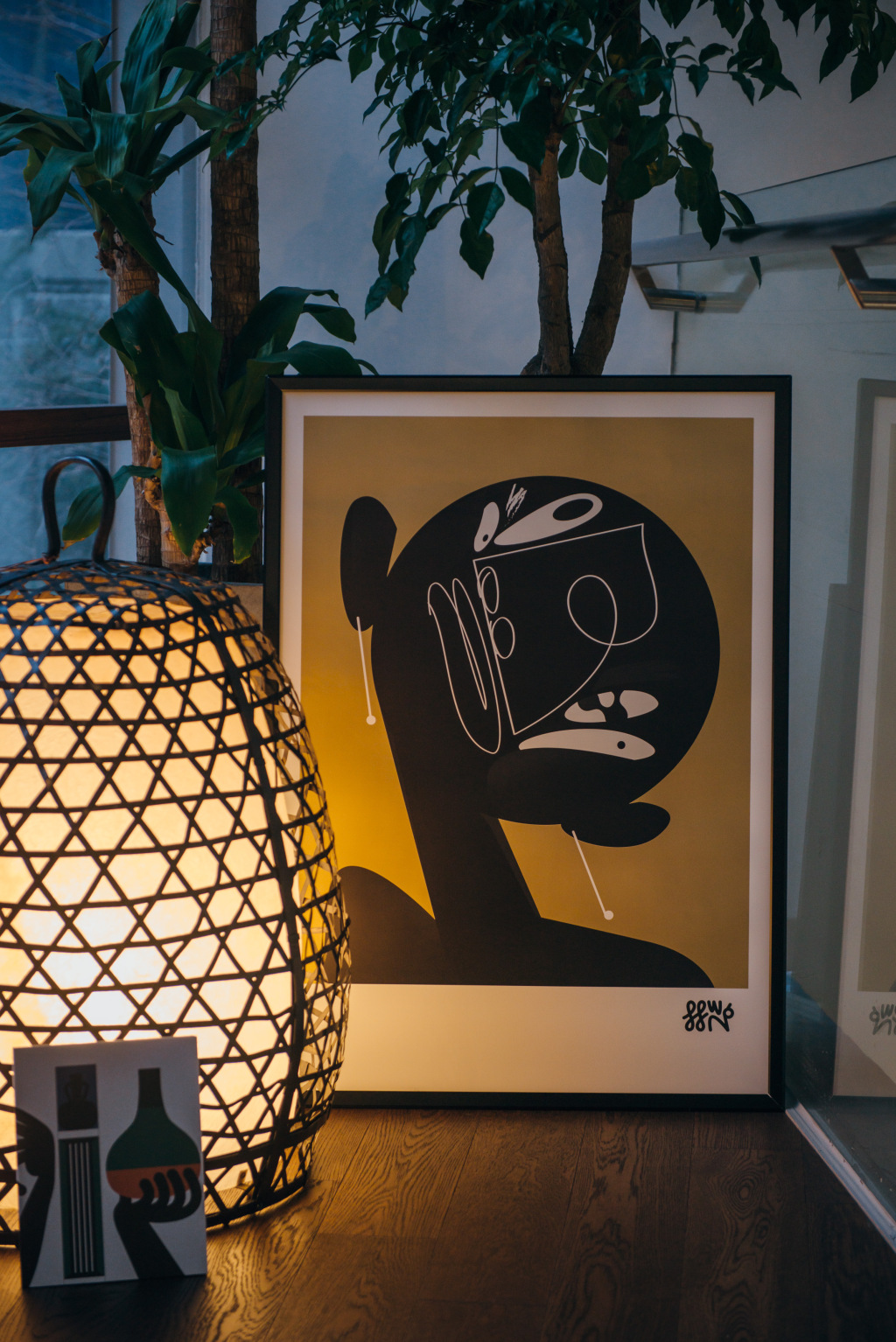
Guillaume Kashima's 'Don't Touch My Hair'
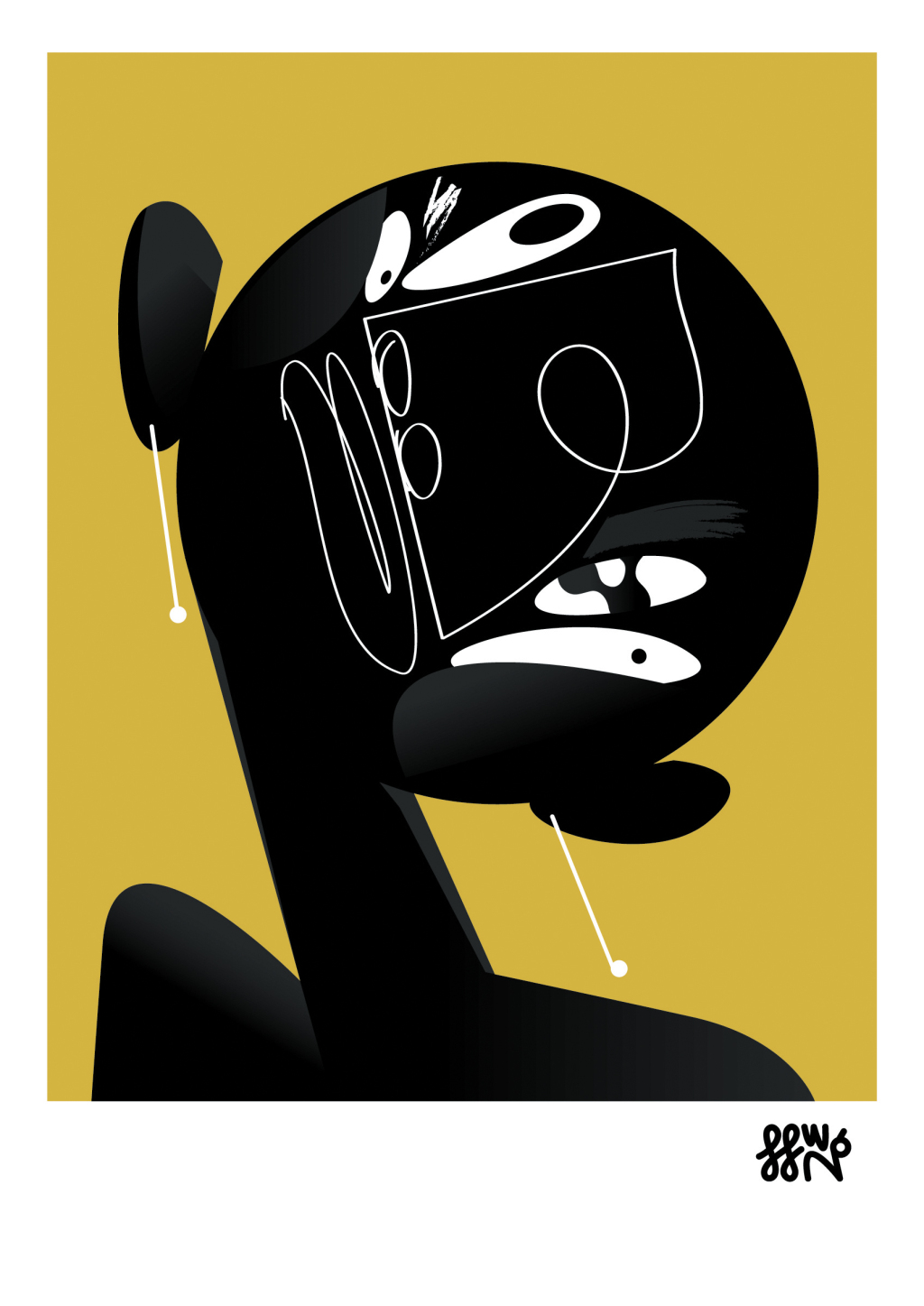
Guillaume Kashima's <Don't Touch My Hair> balances kitsch drawing with luxe color. On a yellow background, a white-and-black four-eyed character tilts its head as if to say, "Don't touch my hair." The mysterious four-eyed figure is Guillaume's signature, born from a self-portrait. Each eye represents joy, anger, sorrow, pleasure — the work's mood shifts with the viewer's state. Unique.
The work's vibe mirrors Guillaume's Berlin life. By conventional standards, his lifestyle looks unstable. No long-term plans, no steady affiliation — he floats day to day, like riding waves. That's not the "right answer" for most.
But 7.5 billion humans pursue different values and live different ways. Guillaume Kashima's focus on today isn't universally right — but it's not wrong either. How about you? I hope his work and life inspire you to be a little more honest with your own thoughts and feelings.
[Series Index]
(Tokyo) 2018. 08 Modest Family Home, Takumi Bannai 2018. 09 Quintessentially Japanese Tatami, Kotaro Machiyama 2018. 10 The Master's Studio, Tatsuro Kiuchi
(Paris) 2018. 11 Filled with Love, Séverine Assous 2018. 12 Cozy Nest, Vincent Mahé 2019. 01 Playground Built with His Daughter, Tom Haugomat 2019. 02 Hip & Trendy, Agathe Studio
(Berlin) 2019. 03 Bethanien, Source of Inspiration, Michela Picchi 2019. 04 Smoke-Filled Studio, Guillaume Kashima 2019. 05 Berlin University of the Arts, Carmen Reina 2019. 06 Form and Void, Clemens Behr