Carmen Reyna defies categories—graphic design, painting, dance, architecture. Still a student at Berlin University of the Arts, her restless creative hunger rivals any veteran. A rare look inside her workspace.
10. Berlin University of the Arts, Carmen Reyna
Original Author: Jinhwa Jin, CEO, Pinzle (www.pinzle.net)
Adapter & Editor: Somora, ONDA Manager
Monthly Artwork: Pinzle Website: www.pinzle.net
Pinzle is Korea's only art subscription service — each month we select an artist and their work to introduce to the world. We created this series to inspire all the people building spaces: what does the life and workspace of an artist we love actually look like?
For inquiries about this series or the art subscription service, reach out via KakaoTalk Plus Friend "Pinzle."
Certain spaces inspire a peculiar kind of fantasy. Places where works are born that make you pause in thought or gasp in admiration. Workshops, ateliers, studios — these artist spaces go by many names. Time seems to slow down there. Even trivial moments feel like they could spark inspiration. What do the studios of globally recognized international artists actually look like?
Some people resist simple categorization. One moment they seem white, the next blue; red gives way to green. Carmen Reyna is that kind of artist. She's still a student at Berlin University of the Arts, but her fierce commitment to figuring out what and how to capture in her work rivals any seasoned professional we've met.
Carmen moved to Berlin in 2011 to experience what she saw as this sleepless, astonishing city — and her work followed. Rather than settle in a comfortable niche, she throws herself into new territory: graphic design, architecture, painting, contemporary art, workshops and exhibitions, various dance forms. She believes Berlin attracts people with new energy, projects, and ideas. Following Carmen's lead, we headed to Berlin University of the Arts.
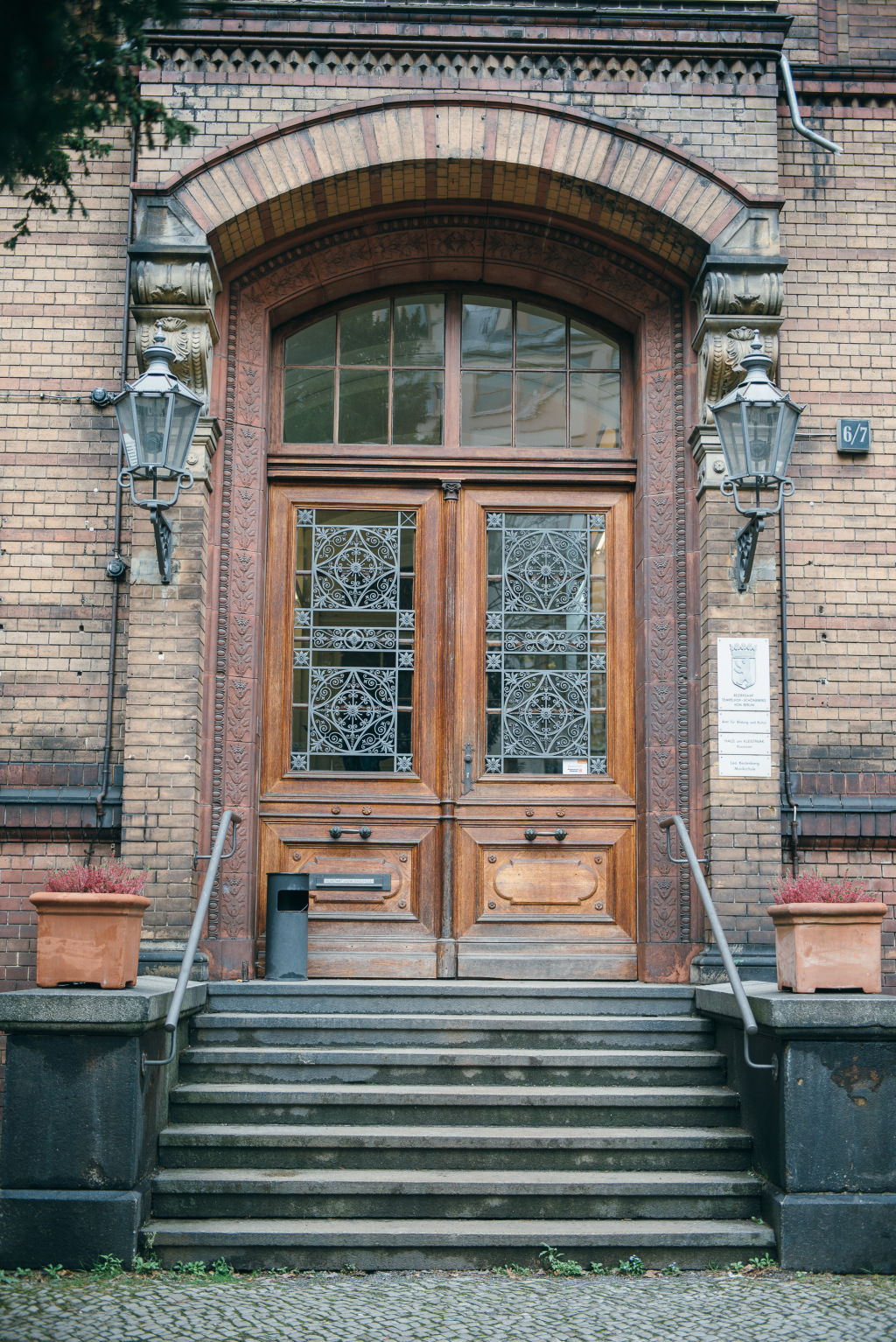
Berlin University of the Arts entrance
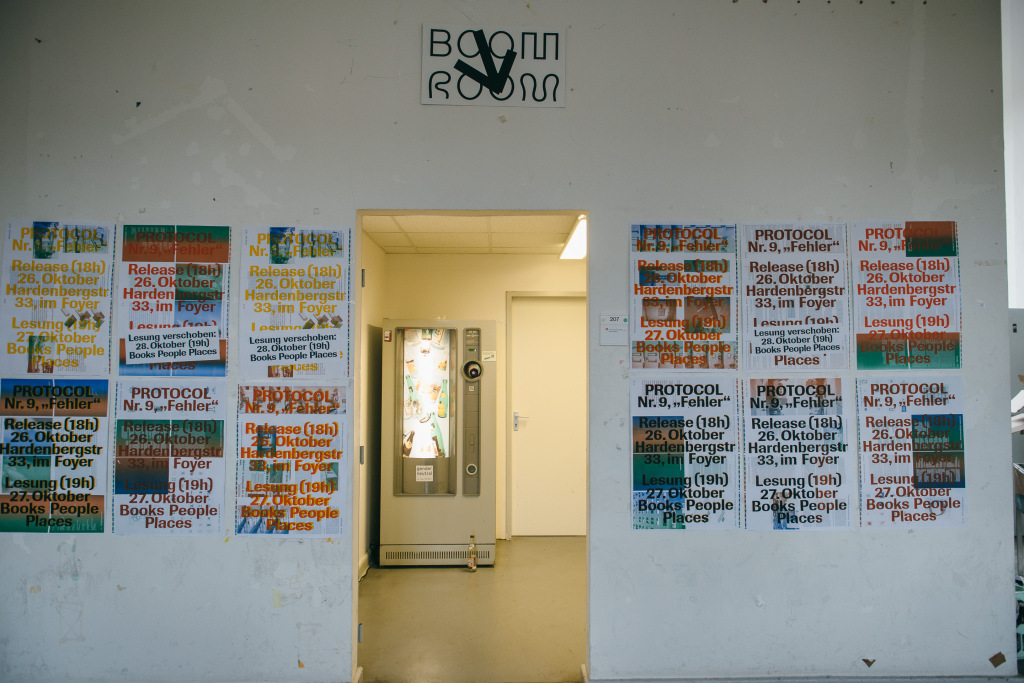
Campus walls plastered with hip posters
Berlin University of the Arts meets Carmen
The entrance to Berlin University of the Arts exudes grandeur. Low stone steps lead to an arched doorway, ornate glass and wood beneath. Weathered and worn — you expect the interior to be equally vintage.
But step inside and you're met with crisp white walls and ceilings blanketed in hip posters. A blank white canvas signals infinite possibility, though that infinity can be daunting. How does Carmen handle this sea of potential? We follow her confident stride to her studio to find out.
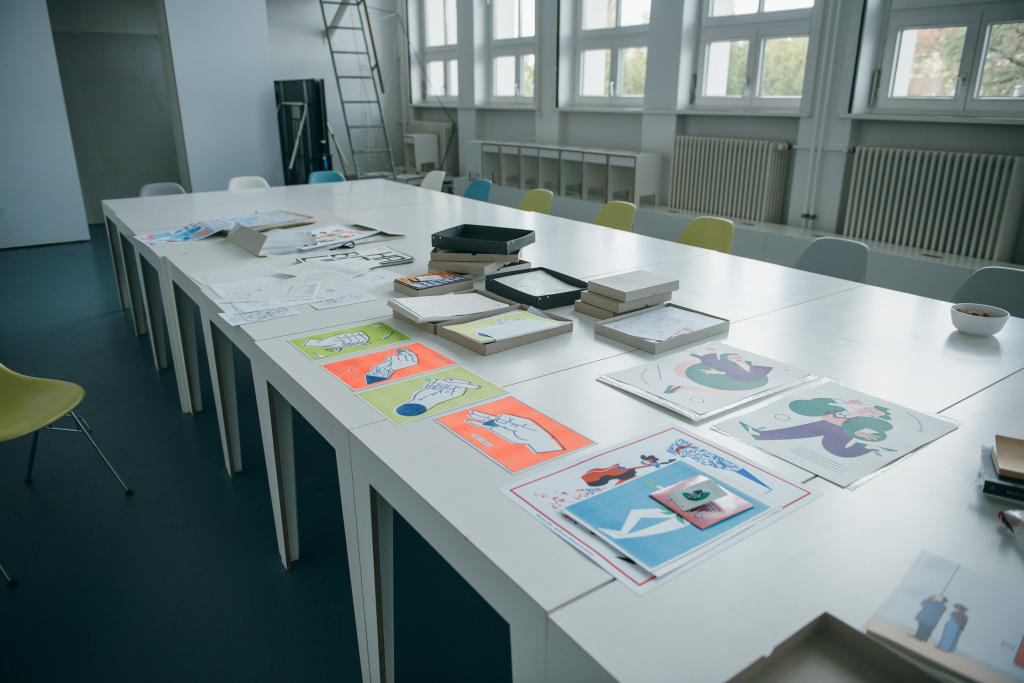
Reyna's prepared studio space
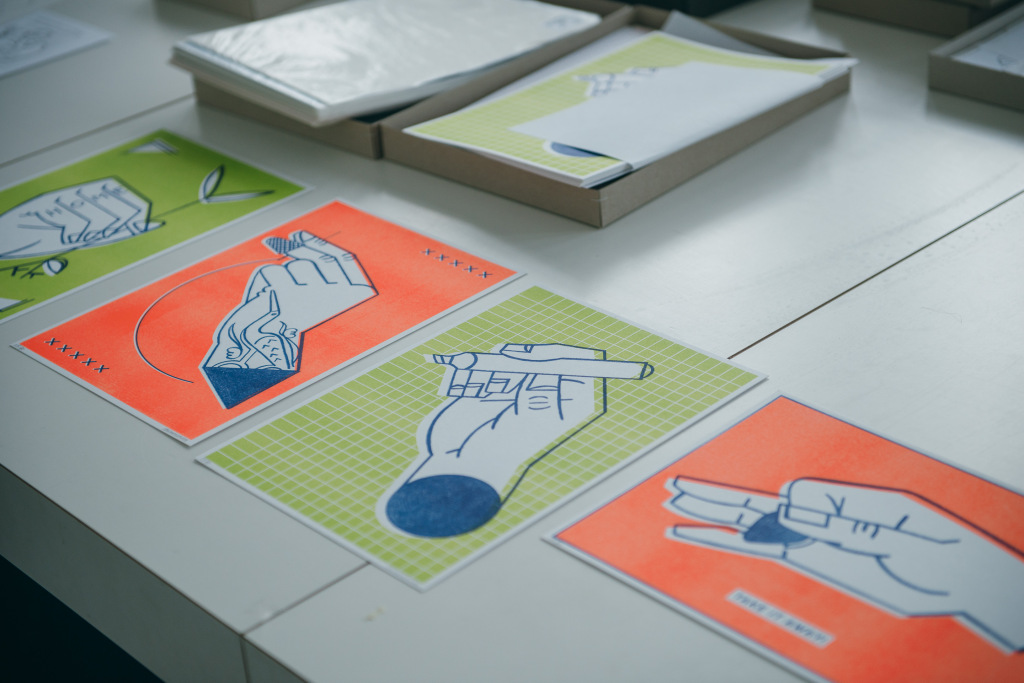
Her work on display
Her studio is flooded with white light. A tidy desk displays her work in neat rows — sketches and pieces in distinctive neon orange and green. The subject: hands in various poses. Hands, she says, have always fascinated artists. Through hands she can represent individual or collective labor and activity.
Carmen's training is in graphic design, but she's also an architect. She constantly approaches graphic design from entirely new angles. Her advisor, Fons Hickmann, notes that she draws ideas from what she already knows about space, cities, and materials — then deliberately leaves familiar territory in search of better graphic solutions.
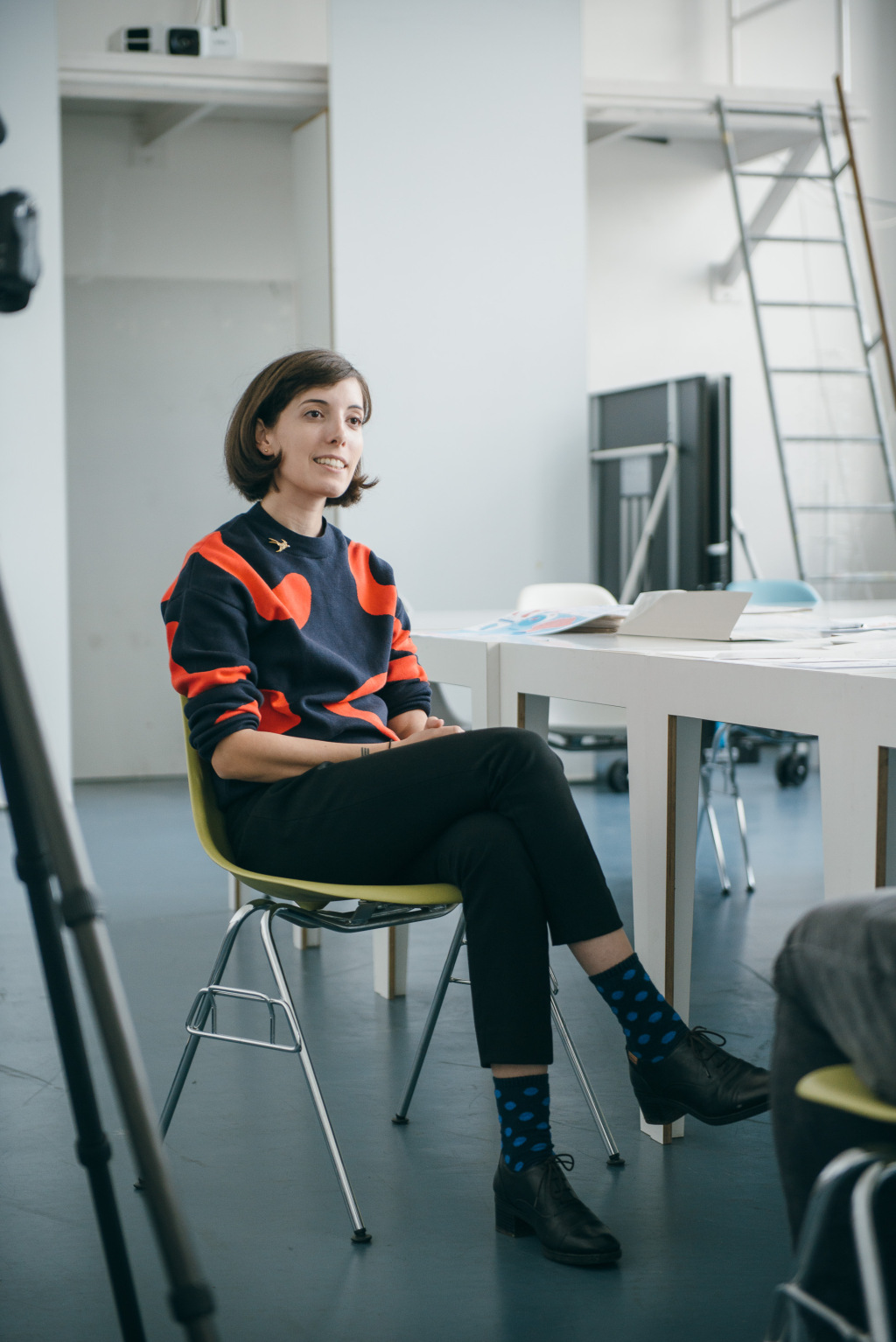
An artist radiating playful energy
Carmen lights up when talking about experimentation across media. Watching her move between architecture, graphic design, dance, painting — testing her own limits — it's easy to think of her beloved swing dance. It looks like casual swaying, but Carmen finds her own rhythm within it, growing all the while. Just as she fumbles through awkward moves and missteps learning to dance, she swings freely through new artistic ventures, never losing her rhythm.
swing, swing, swing
Carmen has this buoyant energy. When she talks about her work and art, her hands, feet, face never stop moving. The air around her fills with motion until empty space vanishes. She smiles at the scenes she conjures, sketches invisible drawings in the air. Maybe it's the music drifting in from somewhere on campus, but describing herself as an artist, Carmen seems to dance to her own rhythm.
After talking about her work for a while, my gaze lands on a corner of the studio. A simple sink sits beside a table neatly arranged with kitchen items — cups, a coffee pot. Before selecting Carmen for this series, her student status gave me pause. Setting aside reputation or achievements, was she mature enough to have a clear artistic voice? But there, in that tidy blue ivy plant nestled among the white masses, I glimpsed the other Carmen — serious, composed, always growing — beneath the passionate exterior.
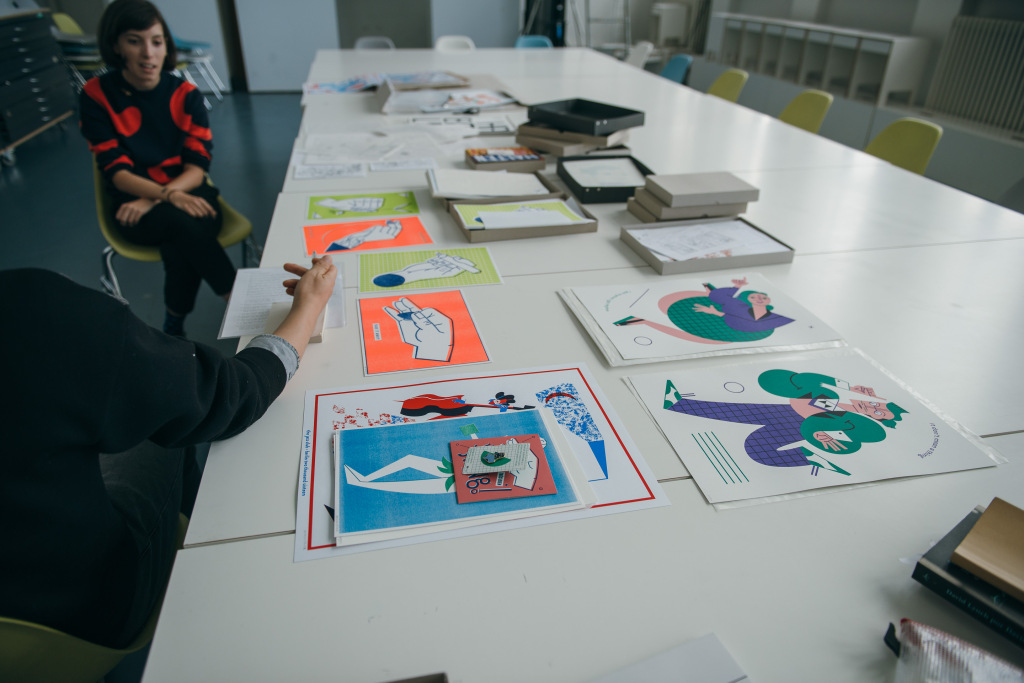
Her works
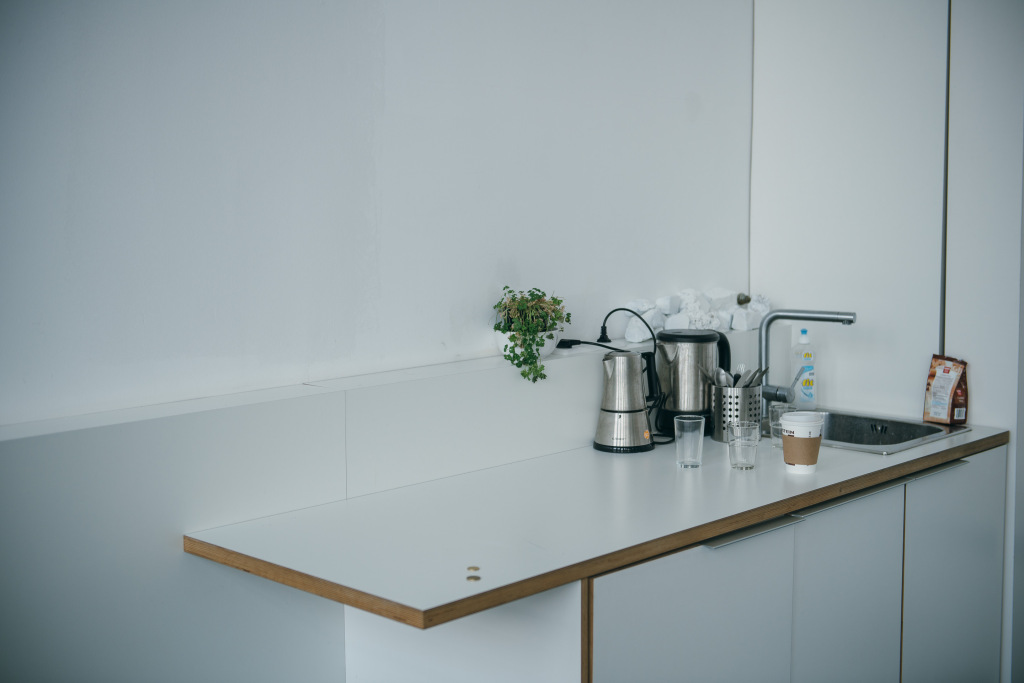
A corner of the tidy studio
Printmaking studio
Following Carmen to the printmaking studio, we pass finished prints leaning against the entrance, clothes crushed underneath, and work aprons hanging in a rainbow of stains. The scene hints at the passion these artists pour out. Maybe this is one of those spaces Berlin University of the Arts gave Carmen — space and time to experiment and find her voice.
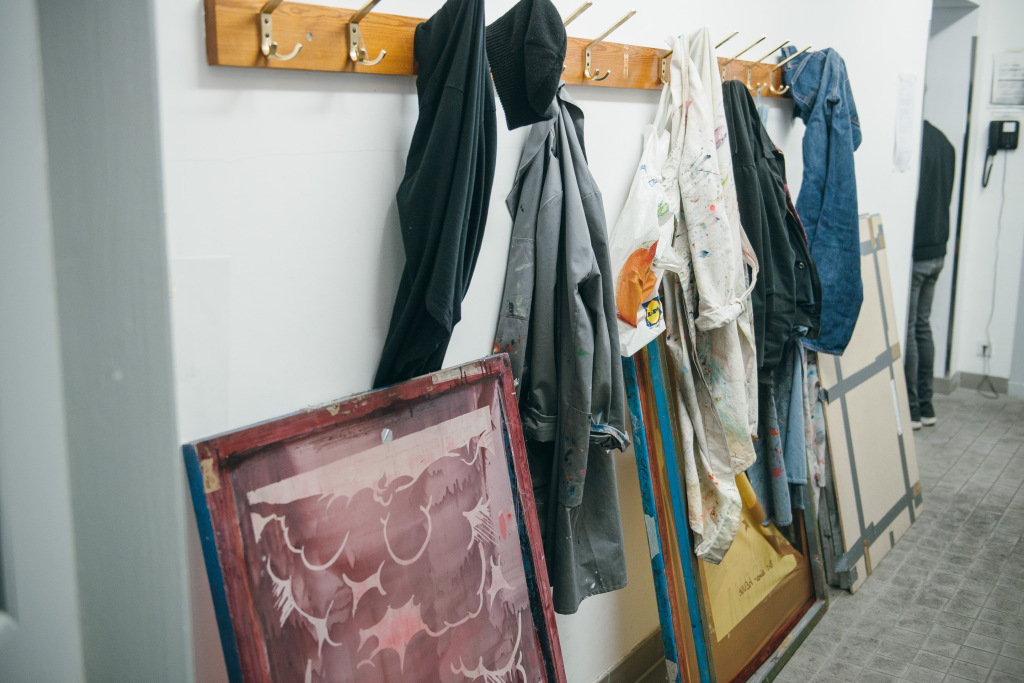
Printmaking studio entrance
She introduces us to the friend managing the print studio. They exchange warm greetings. When they mention that their advisor, Professor Fons Hickmann, gives students freedom to develop their own ideas, pride shines in their faces.
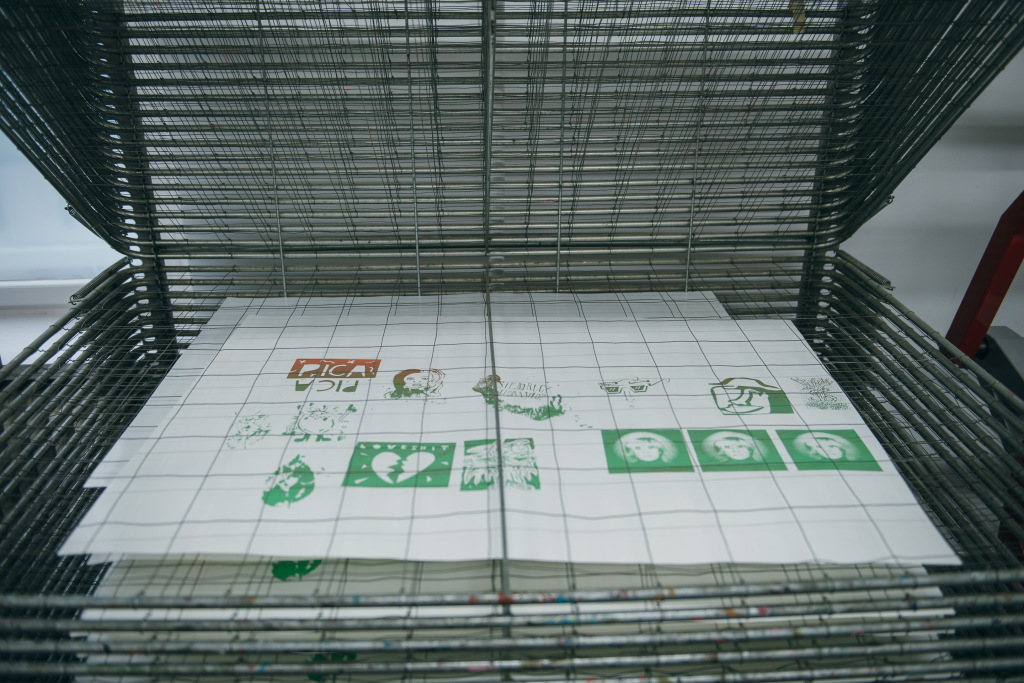
Prints drying
Unlike her studio, the print room feels a bit cluttered. Things scattered haphazardly — but look closer and each object has its place. Massive printmaking machines, trays of finished works drying, contribute to this intimate chaos. Even the prints on the wall reflect her pursuit of variety and novelty — each one entirely different.
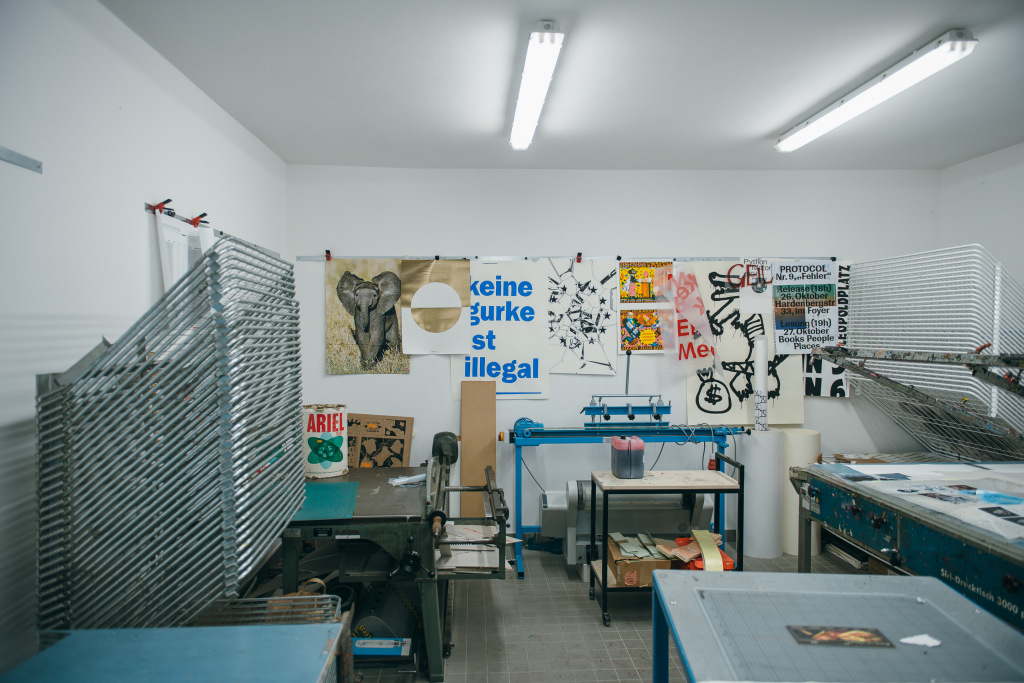
Various prints hanging
Mistakes
Leaving the studio, we tour the campus with Carmen and hear more of her thinking. She shares her take on mistakes. To Carmen, a mistake is a powerful tool. Success is hard to recognize in the moment, but mistakes always push you forward. They teach you something or lead you to create something new — they guide you toward better action. The confidence and fearlessness in her voice struck me. She's still a student, growing — free to voice her thoughts and doubts openly. Compared to my own habit of compromise and deference, I wondered: who's really more mature?
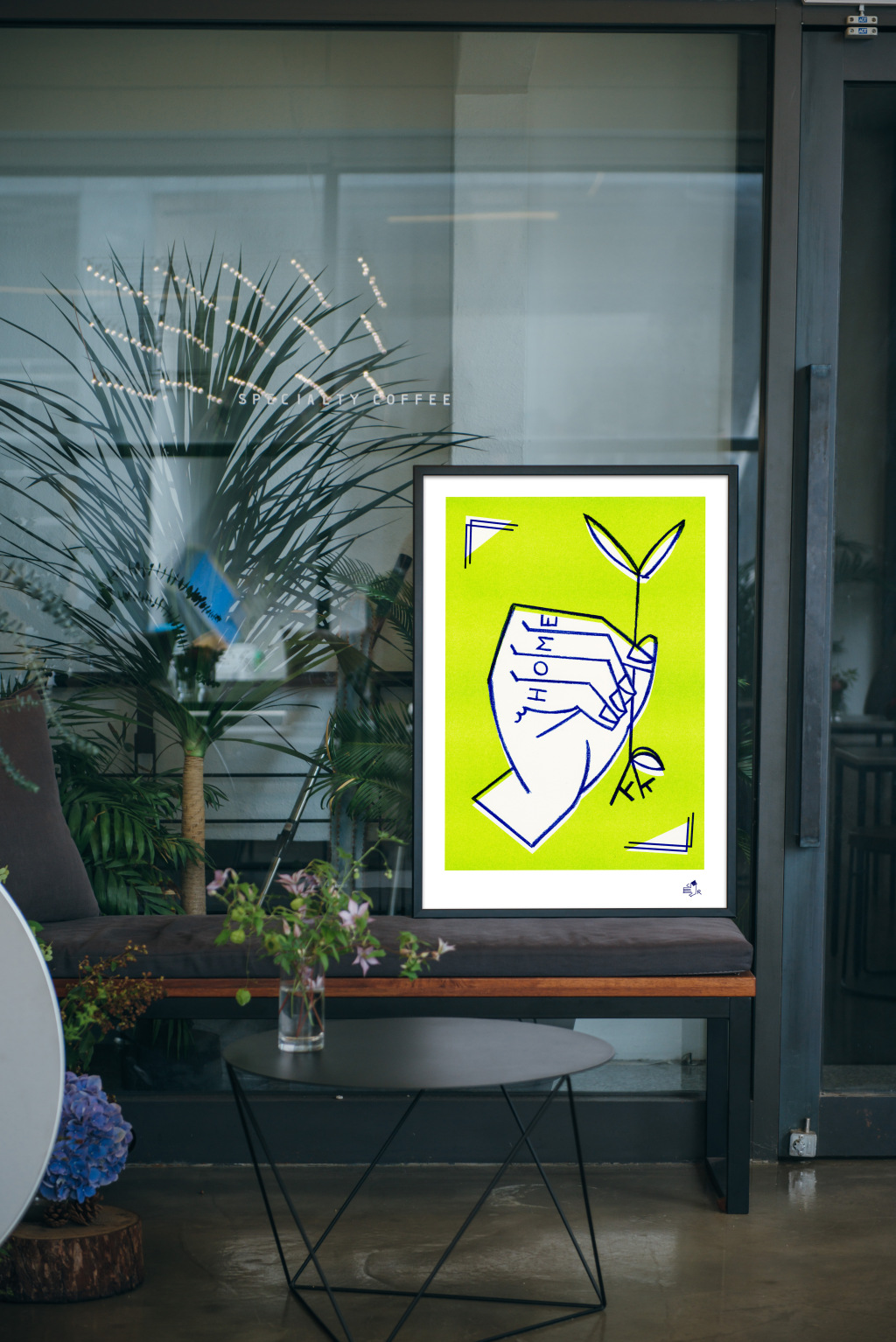
Carmen Reyna's 'Busy Hands'
Swing dance
As we were leaving Berlin University of the Arts, Carmen led us to another building — the room where she practices swing dance. She can't remember life before dancing; she loves dance and swing that much. Eyes full of affection and joy, she danced for us to the music. She explains that traditional jazz dance connects her to some point in the past that's not so different from now. For Carmen, swing dance is her greatest passion and a medium for conversation and connection. Watching her swing, you could almost hear the rhythm of a jazz tune.
Do you read her?
Up close, Carmen is a student at Berlin University of the Arts, an artist juggling multiple projects, and a choreographer who loves swing dance. She focuses on what she enjoys rather than worrying about her career, gladly pouring her passion into what intrigues her. But zoom out — look at her attitude toward life and art — and you can read another Carmen. Her diverse artistic experiments aren't just about finding the right medium or expression. Maybe Carmen sees each attempt as a new step in finding her unique rhythm as an artist.
Like swing dance — repeating small successes and mistakes to understand your body and find your rhythm — Carmen uses varied experiences as raw material to understand her life, then channels that inspiration into art at her own tempo. Rather than judging individual works, hearing Carmen's voice directly on this visit felt like a way to better read the flow and cadence she creates.
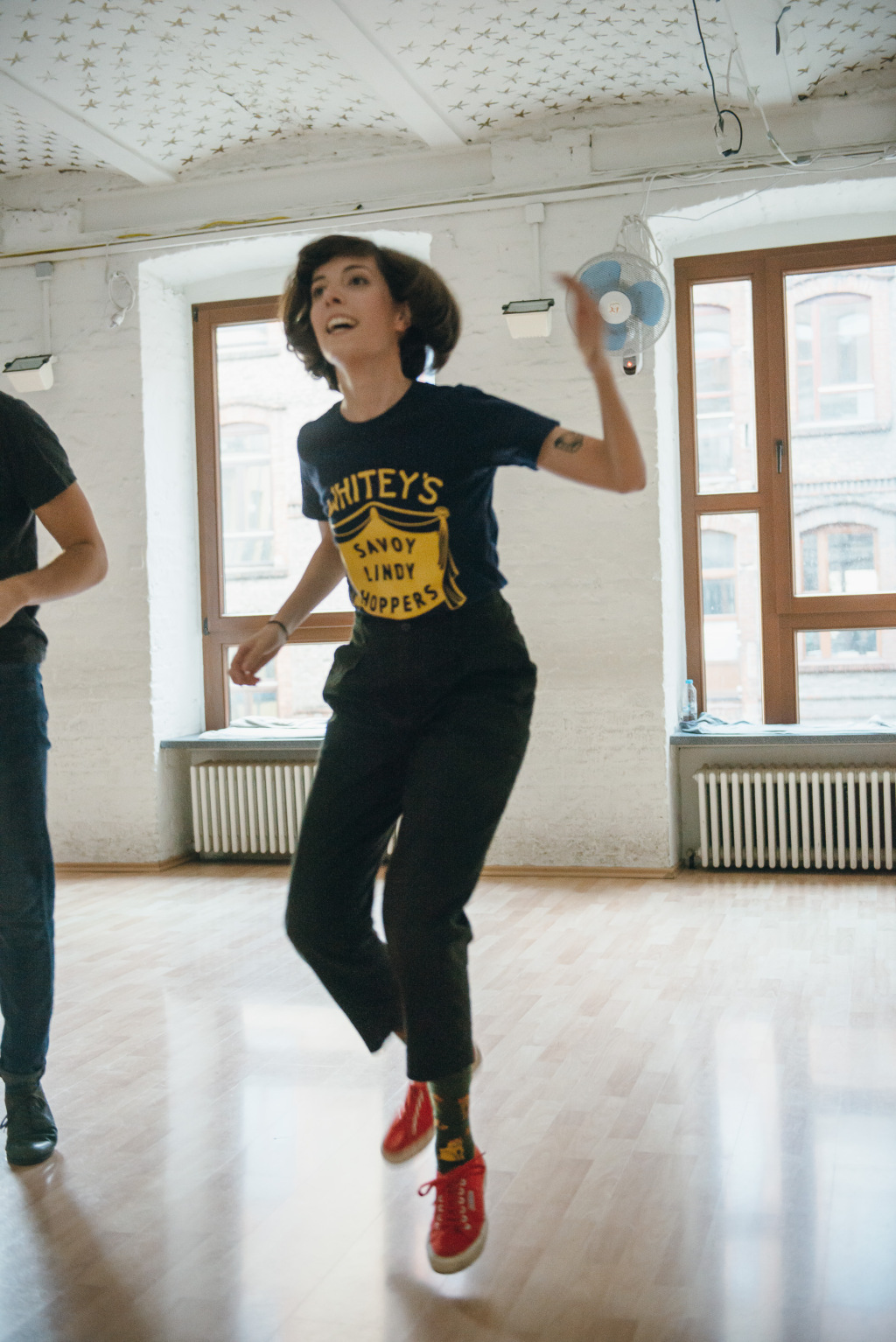
Her love for swing dance
We live in an era where everyone enjoys books and movies, but art still feels distant and difficult. If you understand how a creator sees the world, though, the work becomes so much richer than a single image. Pinzle, an art subscription service, introduces one artist each month with exactly this in mind. We visit globally recognized artists, document their lifestyles in video and magazines, and produce large-format artworks of selected pieces. We want to bring art closer to people who've kept their distance — whether because it felt irrelevant or too expensive.
Carmen Reyna's 'Busy Hands'
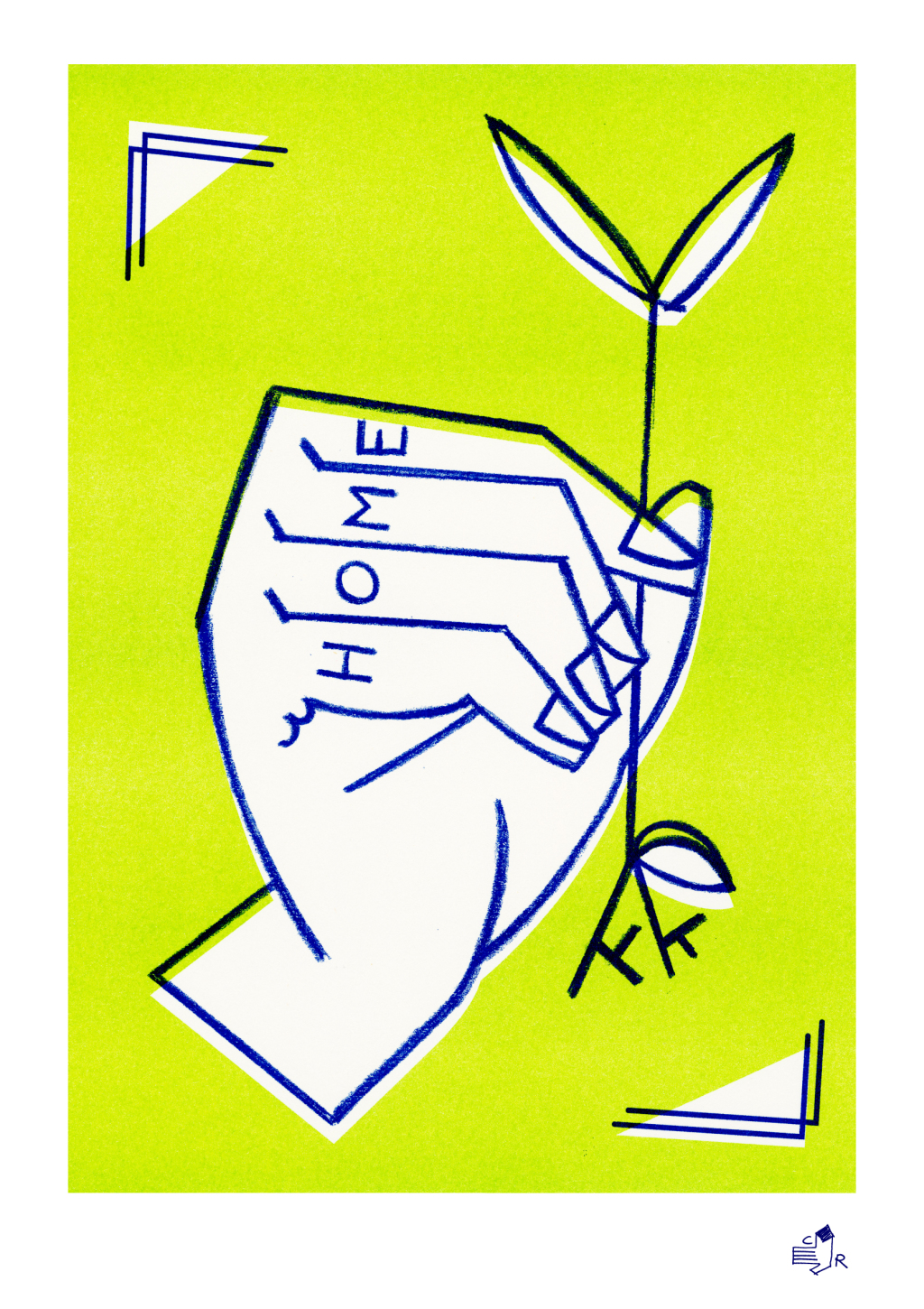
Carmen Reyna's illustration Busy Hands grabs your attention with the four letters H-O-M-E inked across the knuckles. Home is the most private, intimate space — but also the best medium for expressing the owner's taste and personality. Just like hand gestures can convey subtle emotional shifts, a full language, sometimes the person themselves. Maybe this piece fully captures Carmen's posture — constantly trying new things, searching for the best way to express herself.
Every flower has its own scent. Each of us carries stories only we can tell.
What's your unique way of expressing yours?
[Series Index]
(Tokyo Edition) 2018.08 Modest Home, Bannai Taku 2018.09 Most Japanese Tatami, Machiyama Kotaro 2018.10 Master's Studio, Kiuchi Tatsuro
(Paris Edition) 2018.11 Filled With Love, Séverin Assous 2018.12 Cozy Nest, Vincent Mahé 2019.01 Playground Built With Daughter, Tom Haugomat 2019.02 Hip & Trendy, Akadtré Studio
(Berlin Edition) 2019.03 Source of Inspiration Bethanien, Michela Picchi 2019.04 Smoke-Filled, Guillaume Kashima 2019.05 Berlin University of the Arts, Carmen Reyna 2019.06 Form and Space, Clemens Behr