Foreign workers can be a great fit for Korean hotels—but visa missteps trigger immigration penalties and labor law violations. Attorney Choi explains the permits, visa types, and payroll rules you actually need to know.
05. Managing Foreign Employees in the Hospitality Industry
Writer: Choi Chang-gyun, Labor Attorney, Seocho Labor Law Firm
Editor: ONDA Manager Somora
Seocho Labor Law Firm
Seocho Labor Law Firm specializes in hospitality employment law. We currently manage labor affairs for numerous accommodation businesses and provide training for hospitality franchise headquarters (including Yanolja). Our mission: help build workplaces where people thrive.
We believe happy workplaces create happy lives. That's why we launched this series — to equip hospitality professionals with the employment law knowledge they need.
Contact Us
Website: www.노무법인서초.com
Blog: https://blog.naver.com/cpla7582
Phone: 02-6053-5482
Address: 5F Platinum Tower, 398 Seocho-daero, Seocho-gu, Seoul
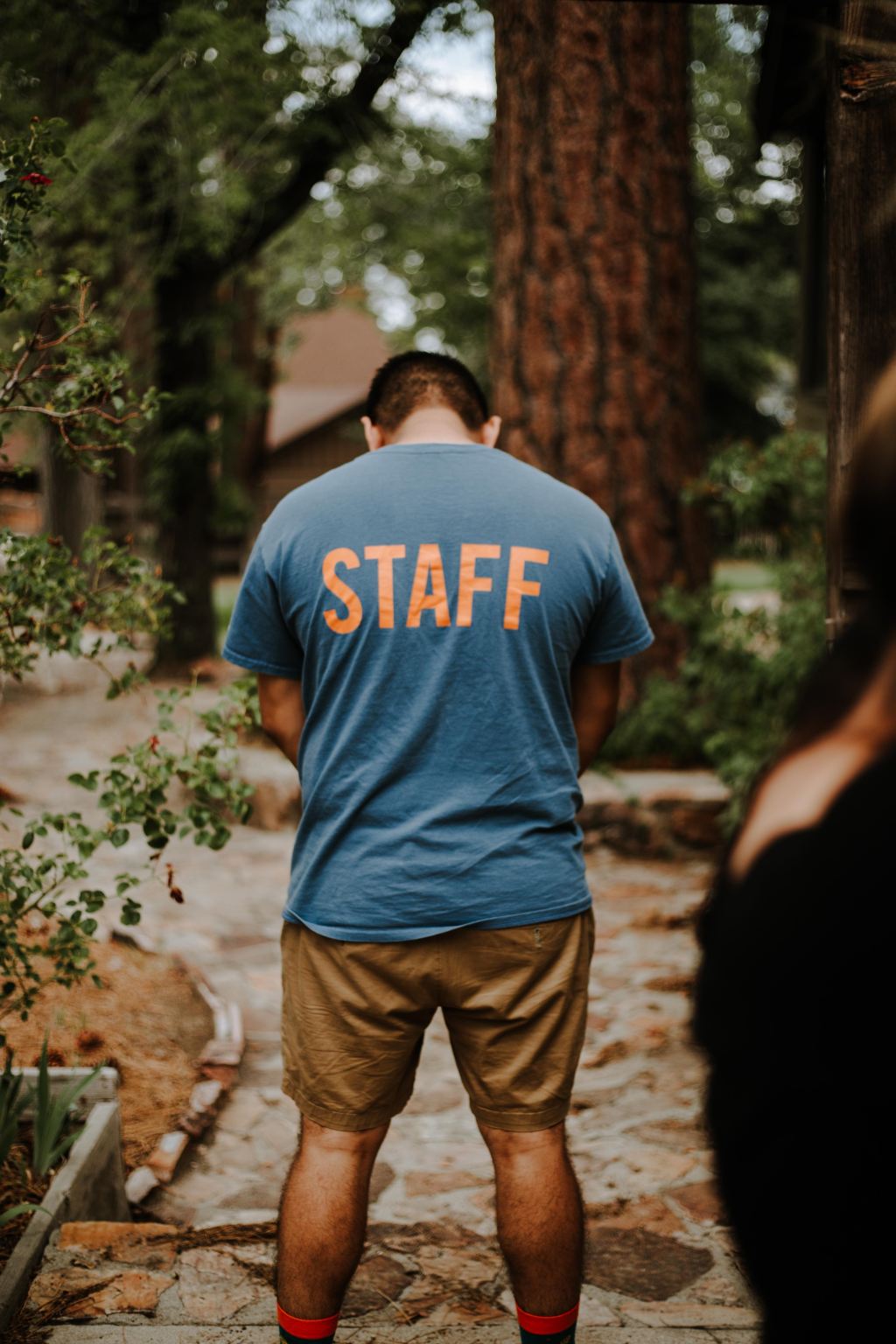
Photo by Omar Lopez on Unsplash
How to Manage Foreign Employees in Hospitality
Hi, I'm Labor Attorney Choi Chang-gyun. When advising hospitality clients, I regularly field questions about hiring and managing foreign workers.
Accommodations often provide room and board — which makes them attractive workplaces for foreign employees. Guesthouses and other properties catering to international travelers are especially open to hiring non-Korean staff.
But if you hire foreign workers without doing your homework, you risk serious legal trouble under both Immigration Control Law and Labor Standards Act. So in this November issue, I'll walk you through what to watch out for when managing foreign employees.
1. Check if the Worker Is Legally Eligible
Foreign workers' visa type determines whether they can work, and whether special employment permits are required. The first thing you need to verify: Is this person's visa valid for employment? Is it still in date? Do you need to file any notifications?
The main visa types that matter in hospitality are listed in Table 1 below.
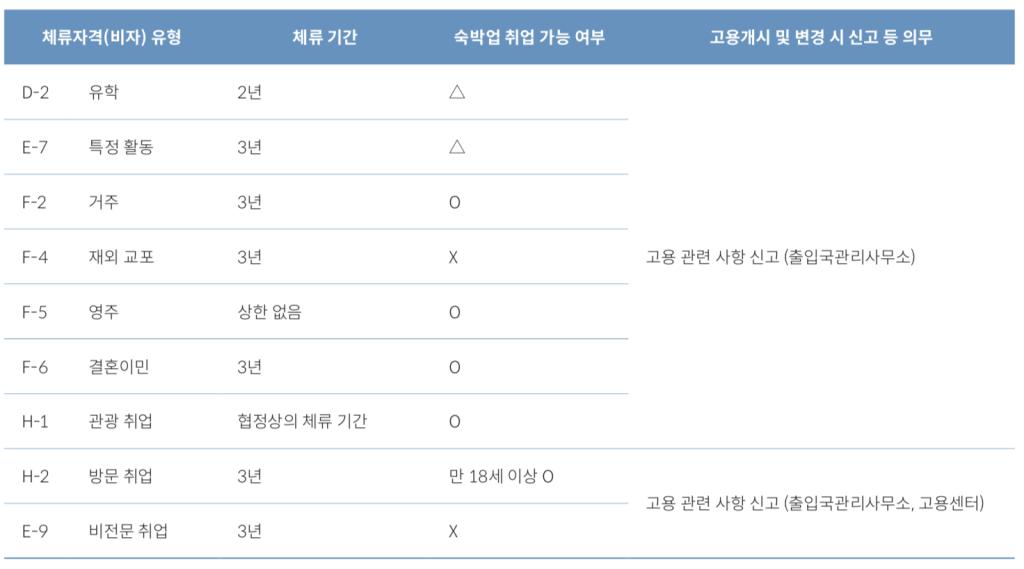
(Table 1) Key visa types for hospitality employment
Here's the key distinction: H-2 (Working Visit) visa holders fall under the Act on Foreign Workers' Employment (administered by the Ministry of Employment and Labor). All other visas fall under Immigration Control Law (administered by the Ministry of Justice).
So for non-H-2 visas, you'll work with the Immigration Office. For H-2 visas, you'll work with the Ministry of Employment and Labor.
2. Complete the Special Employment Process (H-2 Visa Holders)
If you're hiring someone with an H-2 visa, you must complete a special employment procedure at your local Employment Center. The steps are shown in Table 2 below.
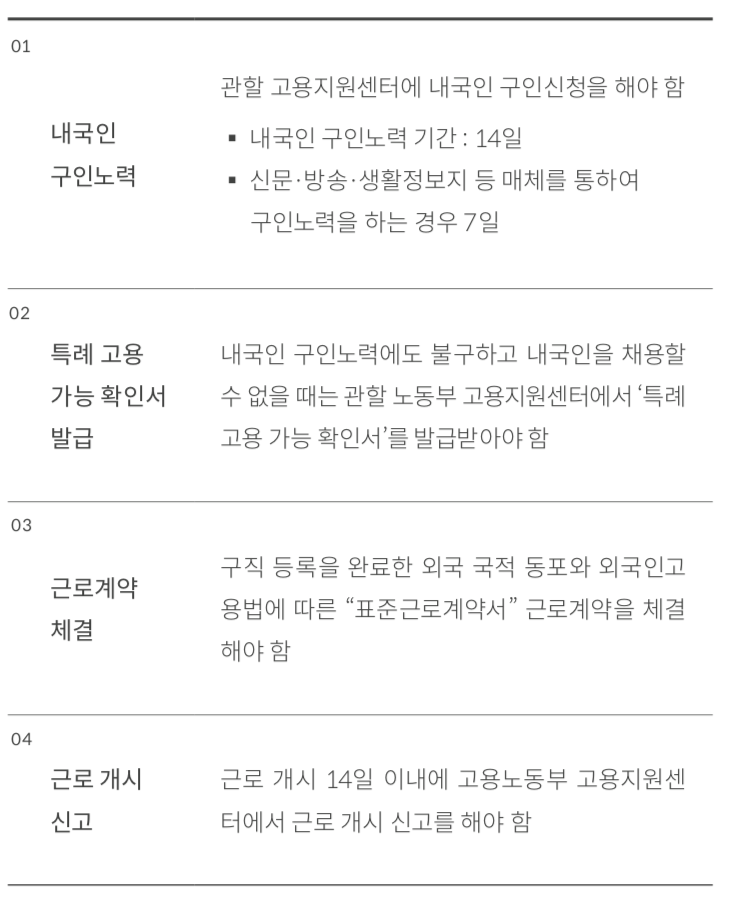
(Table 2) Special employment process for H-2 visa holders
3. Enroll in Foreign Worker Insurance (H-2 Visa Holders)
When hiring H-2 visa workers, you're required to purchase foreign worker insurance. The Act on Foreign Workers' Employment mandates four types: departure guarantee insurance, surety insurance, return cost insurance, and accident insurance. Employers must purchase departure guarantee insurance and surety insurance. Failure to do so carries a fine of up to ₩5 million.
4. Social Insurance for Foreign Workers (All Work-Eligible Visas)
Foreign workers must be enrolled in Korea's four major insurance programs (National Health Insurance, Workers' Compensation, Employment Insurance, National Pension). Health insurance and workers' comp are mandatory for everyone. Employment Insurance depends on visa status; National Pension depends on country of origin.
Employment Insurance is mandatory for F-2 (residence), F-5 (permanent residence), and F-6 (marriage migrant) visa holders. National Pension is mandatory for workers from Indonesia, the Philippines, Sri Lanka, Thailand, and Kyrgyzstan.
That's the rundown on managing foreign workers in hospitality. Once hired, foreign employees have the same legal status as Korean workers. That means you need a written employment contract, you must pay at least minimum wage, and severance pay applies.
This holds true even for undocumented workers. I've seen employers get reported to the Labor Office because they misunderstood this — or get caught by Immigration for employing workers without valid status. Double-check everything to avoid legal trouble.
Next installment: Social insurance management in hospitality. Thanks for reading.
📖 Series Index
01. Hospitality Labor Dispute Channels
02. Labor Standards Act Coverage in Hospitality
03. Employment Contract Best Practices
05. Managing Foreign Employees
-
Social Insurance Management
-
Mandatory Legal Training
-
Days Off and Leave Management
-
Working Hours Management
-
Wage Management (1)
-
Wage Management (2)
-
Termination and Retirement Management