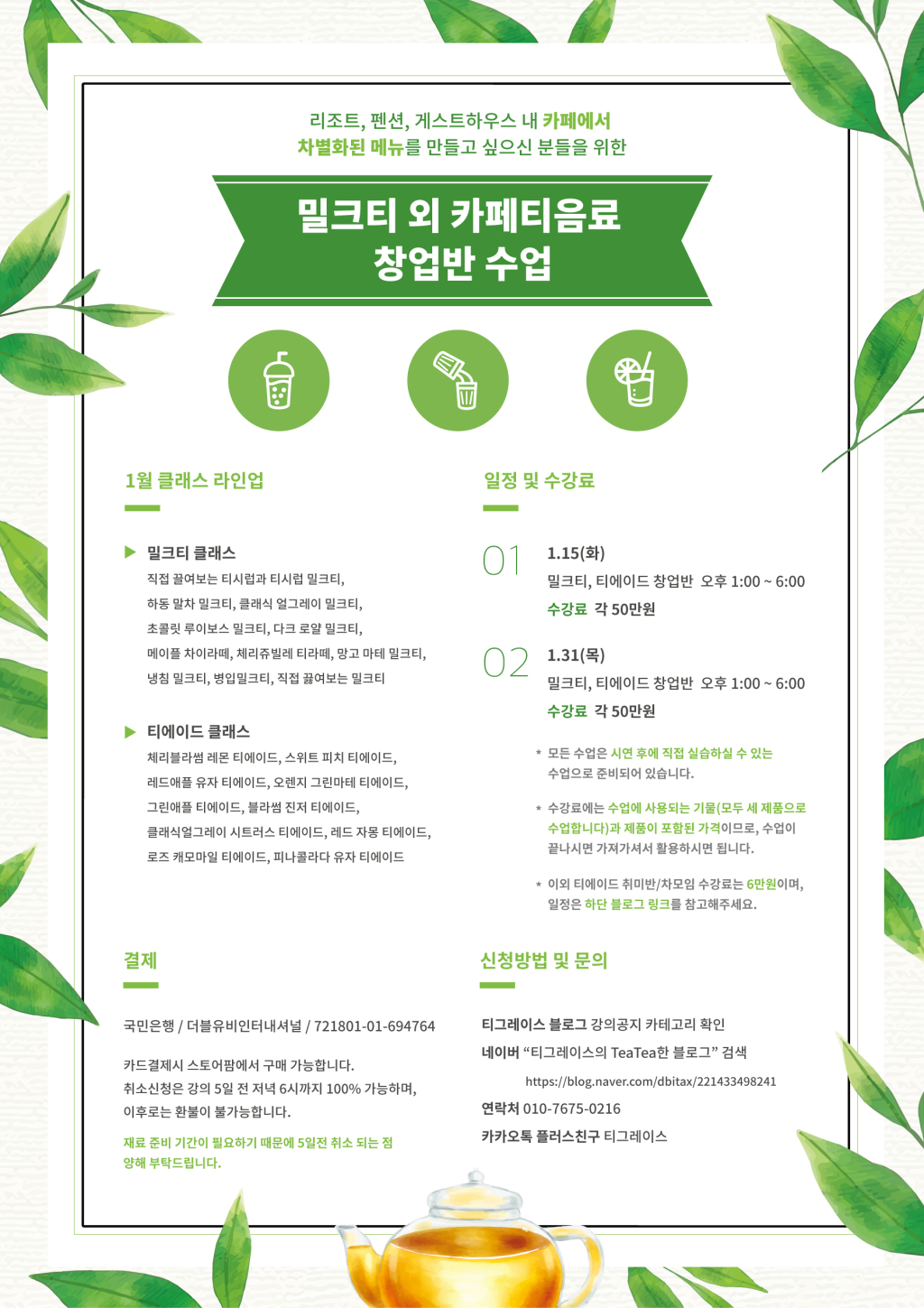
Tea sommelier Lim Eun-hye breaks down flash chilling vs. cold brewing for hotel iced tea service. Cherry Jubilee demo included, plus why brewing method matters for guest experience.
05. Black Tea Stories (3) — How to Brew the Perfect Cup
By Tea Sommelier Lim Eun-hye (Brand Manager, Tea Grace)
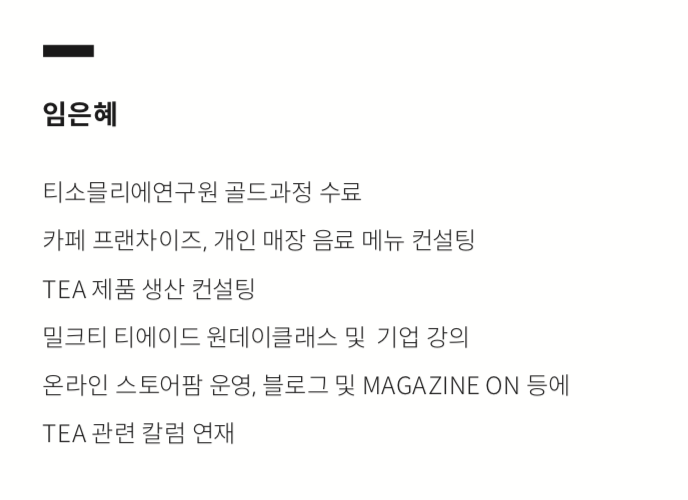
About the Editor Lim Eun-hye
- Tea Sommelier Institute Gold Course graduate
- Beverage menu consultant for café franchises and independent shops
- TEA product production consultant
- Milk tea & tea-ade one-day classes and corporate workshops
- Online store operator, columnist for blogs and MAGAZINE ON
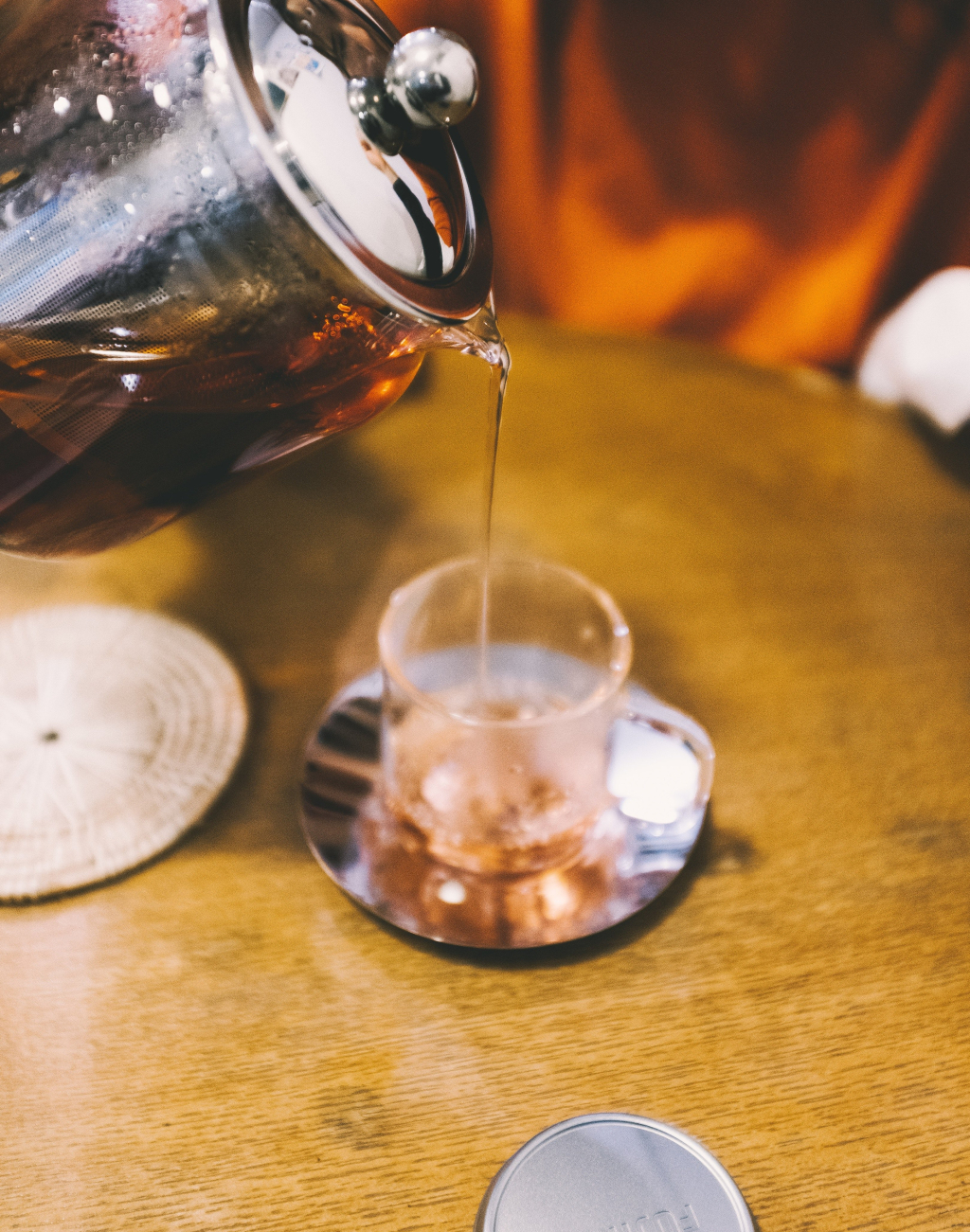
Photo by Bundo Kim on Unsplash
Hello, this is Tea Grace. Did you have a good Christmas and New Year? Korea's tea market peaks in winter and slows in summer, so I've been quite busy. With all the year-end gatherings and parties, I hope you've been drinking black tea to help with those hangovers. If you don't remember what makes black tea so beneficial, check out last month's Magazine ON — I covered its health benefits and product details in depth.
Today, I'll walk you through "how to brew delicious black tea" — the topic I didn't get to fully cover last time.
How to Make Delicious Iced Tea
Let's start with iced tea. There are two main methods: flash chilling (brewing hot and cooling rapidly with ice) and cold brewing (steeping in cold water over time).
Flash chilling is exactly what it sounds like — using ice to cool hot tea quickly. I'll demonstrate using Cherry Jubilee Black Tea as an example.
Cherry Jubilee Black Tea is a black tea base blended with figs and cherries, giving it a sweet cherry aroma. Flavored black teas like this are especially appealing as iced tea — it yields a clear yellow or amber brew. By the way, since black tea helps with alertness, it's perfect as an afternoon pick-me-up, hot or iced.
To make 600mL of iced Cherry Jubilee Black Tea using flash chilling, you'll need 300g of ice and 300mL of hot brewed tea.
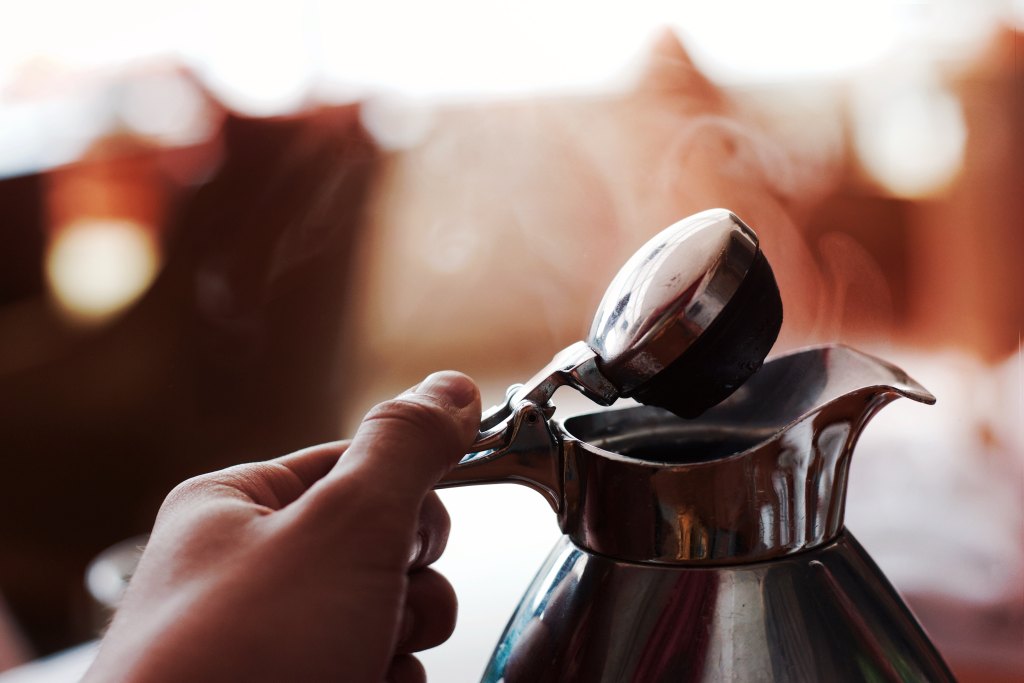
Whether or not you properly preheat your teapot makes a huge difference in aroma, so please don't skip this step. (Photo by Tim Arterbury on Unsplash)
Here's a small but crucial tip: always warm your teapot first. This prevents the water temperature from dropping when you pour, and it dramatically affects the tea's aroma.
In cafés, some place the teapot on top of the espresso machine to warm it. At home, you can pour hot water into the teapot, let it sit for two minutes, then discard.
In cold winter weather, teapots cool quickly, so preheating before brewing makes a real difference. This applies to all teas — herbal, fruit, rooibos — everything benefits from a preheated pot. Once the teapot is warm, preheat your cups the same way.

'Cherry Jubilee Black Tea' — black tea base blended with figs and cherries for a sweet cherry aroma
Once the teapot and cups are warm, weigh your tea leaves. Place the teapot on a scale and add leaves directly into it while measuring. Without a scale, 2–3 teaspoons works, but I almost always use a scale for precision.
A scale accurate to 0.01g is ideal, though 0.1g works fine. Just like cooking, precise measurement matters — the ratio of leaves to water determines flavor and aroma.
Before adding hot water, smell the dry leaves and note their aroma. Pre- and post-brewing aromas can differ dramatically, especially with flavored teas. I've been captivated by the scent of wet leaves before — I highly recommend this step.
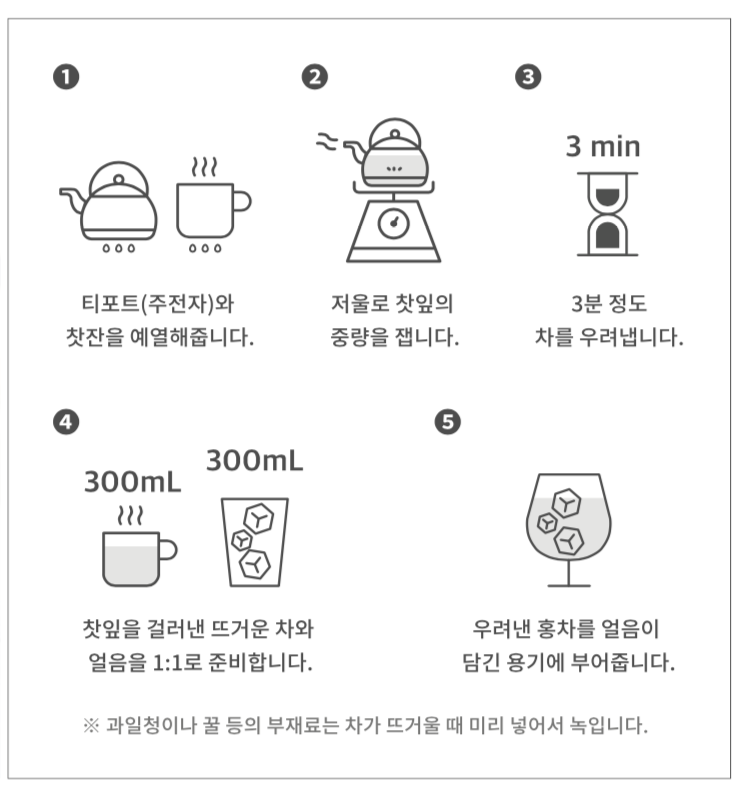
'Flash chilling' — brewing hot tea and rapidly cooling with ice
For black tea, I generally recommend 3g per cup, but that's not a hard rule — 1g or 2g is fine too. I'll explain below, but steeping for about 3 minutes extracts the full range of flavors, which is why 3 minutes is standard. That said, 4 or 5+ minutes is perfectly acceptable based on personal preference. Midway through brewing, stir the pot with a bar spoon to help the leaves unfurl. When brewed properly, Cherry Jubilee releases sweet cherry and fig aromas.
So how do you turn this into iced tea? It's simple. After 3 minutes, strain out the leaves. Then combine the hot tea and ice in a 1:1 ratio. If you used 300mL of water, prepare 300g of ice. Mixing hot liquid with ice at this ratio yields perfectly chilled iced tea. If you want to add fruit syrup or honey, do it while the tea is still hot — sweeteners don't dissolve well in cold liquid. Pour the hot tea over the ice, let the ice melt completely, and you've got refreshing iced tea at the perfect drinking temperature. Easy, right?
Now let's talk about cold brewing. This method steeps tea slowly in cold liquid. Cold-brewed iced tea takes longer than flash chilling but is even simpler — and yields a softer, rounder flavor profile. It's like the tea is halfway between pure water and full-strength hot tea. Tea extracts at any temperature, but lower temps produce gentler flavors, while higher temps yield stronger, bolder brews.
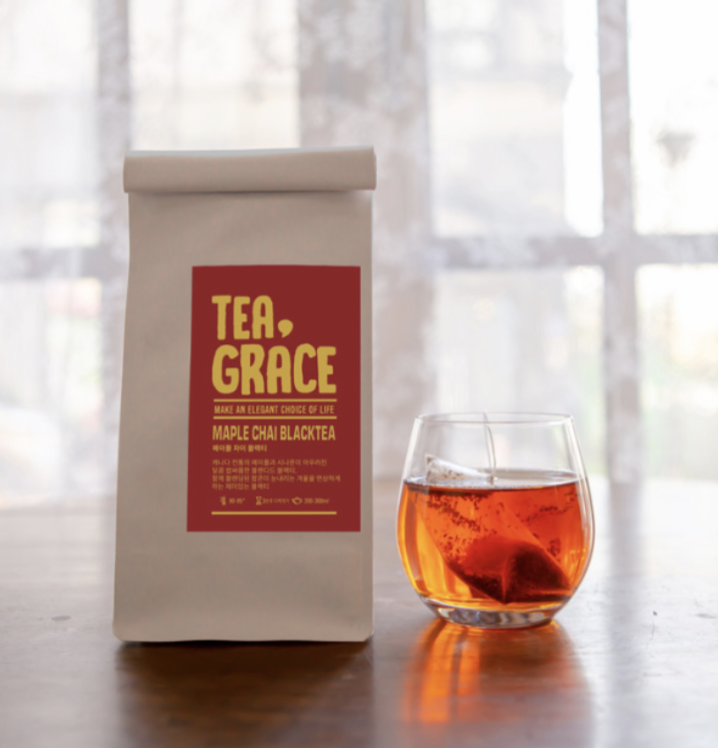
'Maple Chai Black Tea' — blended with cinnamon pieces and sweet Canadian maple flavor for a bittersweet complexity
For cold brewing, I'll use Maple Chai Black Tea, a Christmas blend, as our example. It's incredibly simple — just follow along.
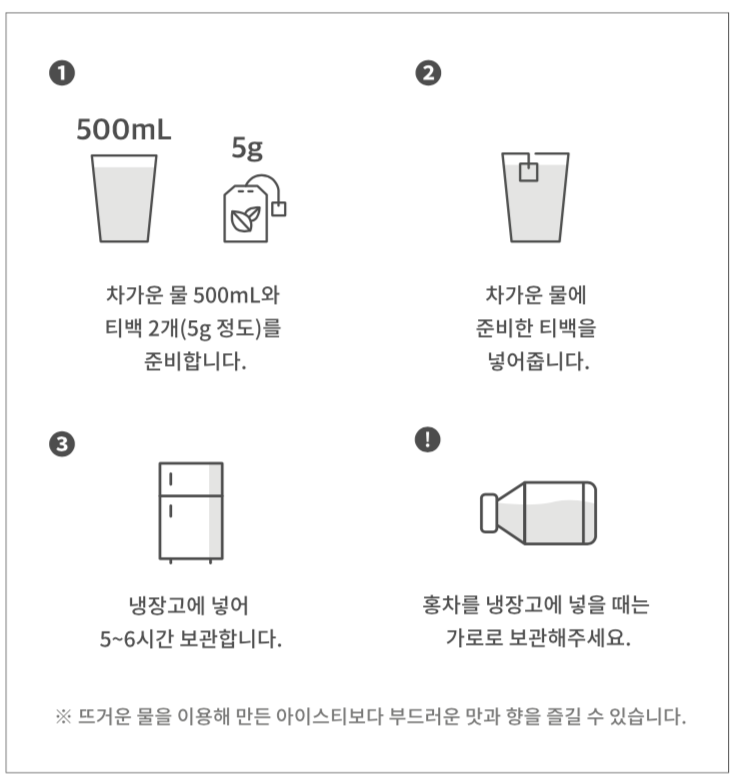
Prepare 500mL of cold water and 2 tea bags (about 5g) of Tea Grace Maple Chai Black Tea. Drop the tea bags into the cold water, refrigerate, and wait 5–6 hours. That's it — cold-brewed iced tea is ready.
'Cold brewing' — steeping leaves in cold water over time
If hot water extracts 100% of the tea's flavor, cold water extracts less intensely — which is why cold brew tastes so smooth. If you want a mellow, light black tea, try cold brewing for a delicate, clear cup. When cold brewing in the fridge, store the container horizontally (not upright).
How to Brew Delicious Straight Tea
Finally, let's cover straight tea — the classic hot preparation most people think of when they picture black tea. The brewing method is the same as what we covered earlier for the hot tea portion of flash chilling.
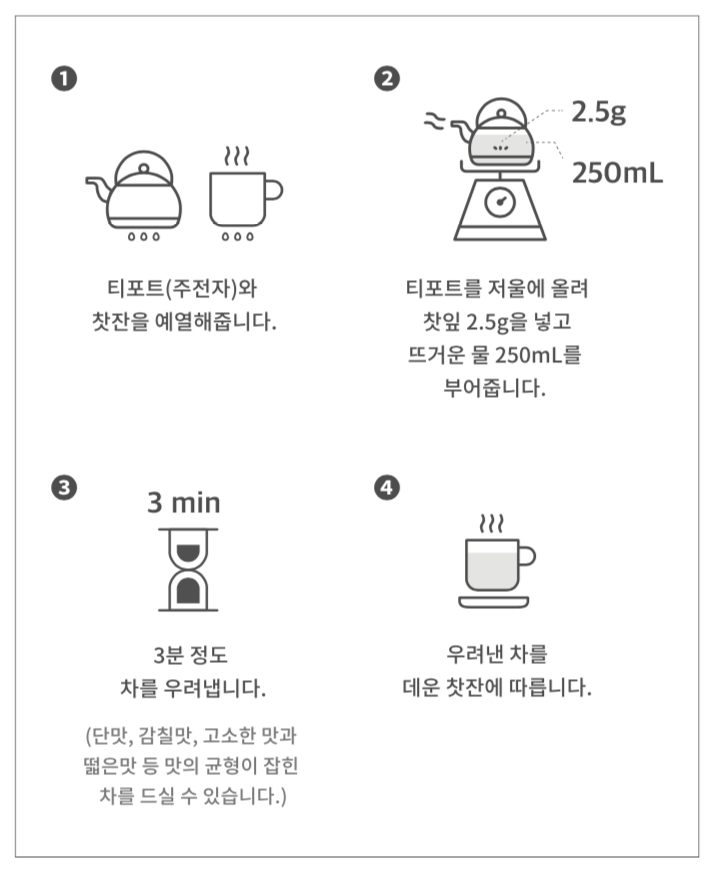
As with iced tea, weigh your leaves. This is basic but critical — consistent weight means consistent flavor. And use boiling water, not lukewarm. The hotter the water, the more energy it has to extract flavor and aroma from the leaves. Water below 60°C extracts only water-soluble components, so proper temperature is essential for full flavor and fragrance.
Preheat the teapot (otherwise the water cools too quickly), and preheat your cups as well. Place the teapot on the scale, add 2.5g of tea, and pour 250mL of boiling water.
Tea steeped for just 1 minute misses certain flavors. Two minutes doesn't release all the aromas. Around the 3-minute mark, the tea's sweetness, umami, nuttiness, and astringency balance out. You can steep for 1 minute if you prefer, but at 3 minutes you'll taste the full character of the leaves. Steeping for 4, 5, 10, or 20 minutes makes the tea progressively stronger — if you don't like bold tea, strain the leaves after 3 minutes. For Korean palates, I generally recommend 3–5 minutes.
Brewing straight tea
Pour the brewed tea into your warmed cup. Honestly, the 3-minute guideline is just a framework — a general reference point for enjoying black tea. Brew it lighter or stronger based on your preference. When you're new to tea, your taste window is narrow, so 3 minutes hits the sweet spot — not too astringent, not too weak, but balanced and flavorful.
Until you get comfortable brewing tea, use a timer to stay within that "strike zone" of flavor. Once you've built some muscle memory, you won't need a clock — you'll develop your own internal standard, and whether you brew light or strong, it'll taste good.
Today we explored various methods for brewing delicious black tea. Next time, we'll dive into black teas from different countries. Wishing you a warm and happy new year with a cup of hot tea in hand.
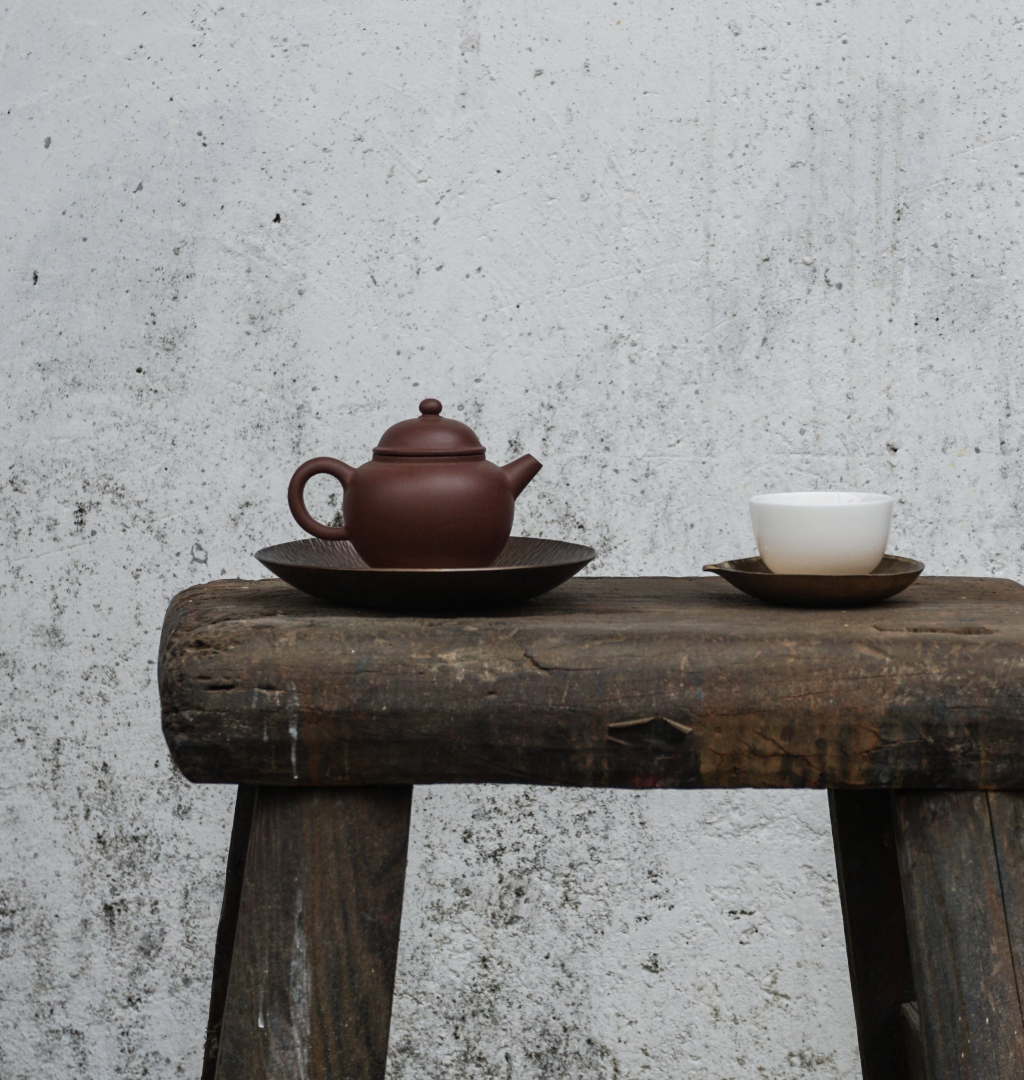
Photo by 五玄土 ORIENTO on Unsplash
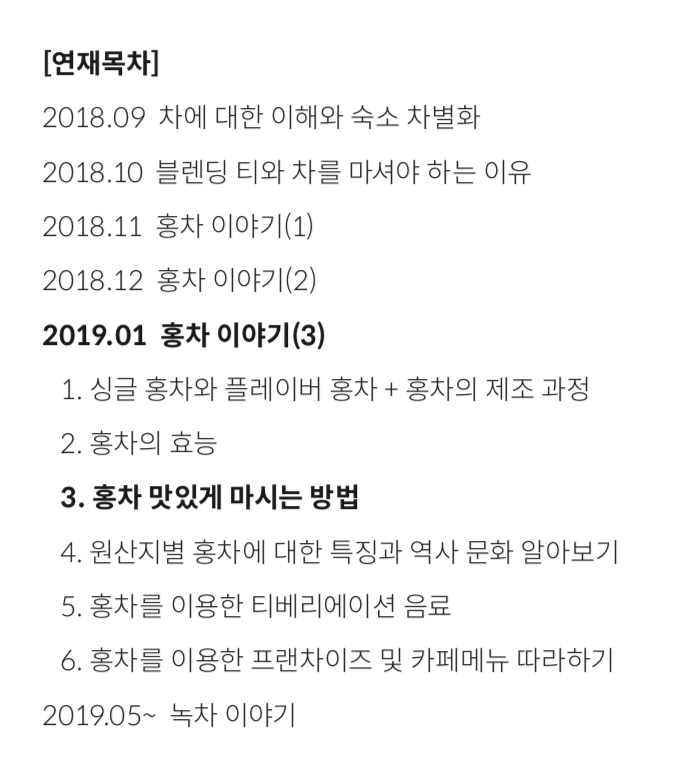
[Series Index]
2018. 09 Understanding Tea and Differentiating Your Property
2018. 10 Blended Teas and Why You Should Drink Them
2018. 11 Black Tea Stories (1)
2018. 12 Black Tea Stories (2)
2019. 01 Black Tea Stories (3)
-
02 Black Tea Stories (4)
-
03 Black Tea Stories (5)
-
04 Black Tea Stories (6)
-
05~ Green Tea Stories