Japanese green tea isn't just matcha lattes. Uji, Kyoto's tea heartland, produces sencha, gyokuro, and ceremonial-grade matcha that hotel F&B teams barely scratch the surface of.
13. Japanese Green Tea and Matcha
Writer: Lim Eun-hye, Tea Sommelier (Brand Manager, Tea Grace)
Editor: Somora, ONDA
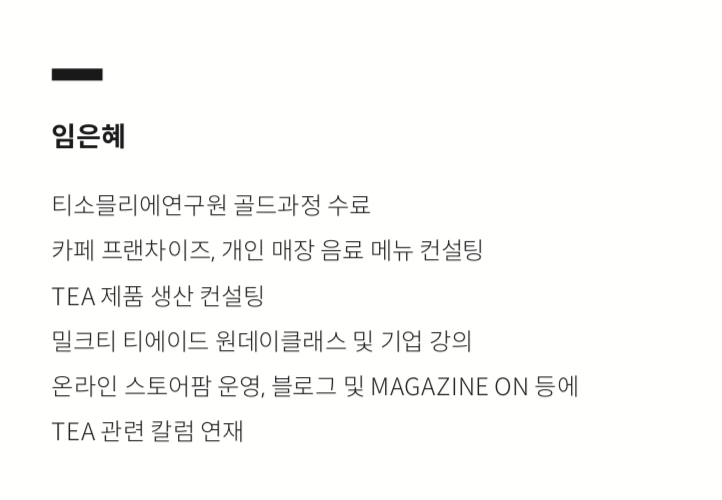
About the Writer Lim Eun-hye - Completed Gold Course at Tea Sommelier Institute - Beverage menu consultant for café franchises and independent shops - TEA product development consultant - Teaches one-day milk tea / tea-ade workshops and corporate seminars - Runs an online store and writes tea columns for blogs and MAGAZINE ON
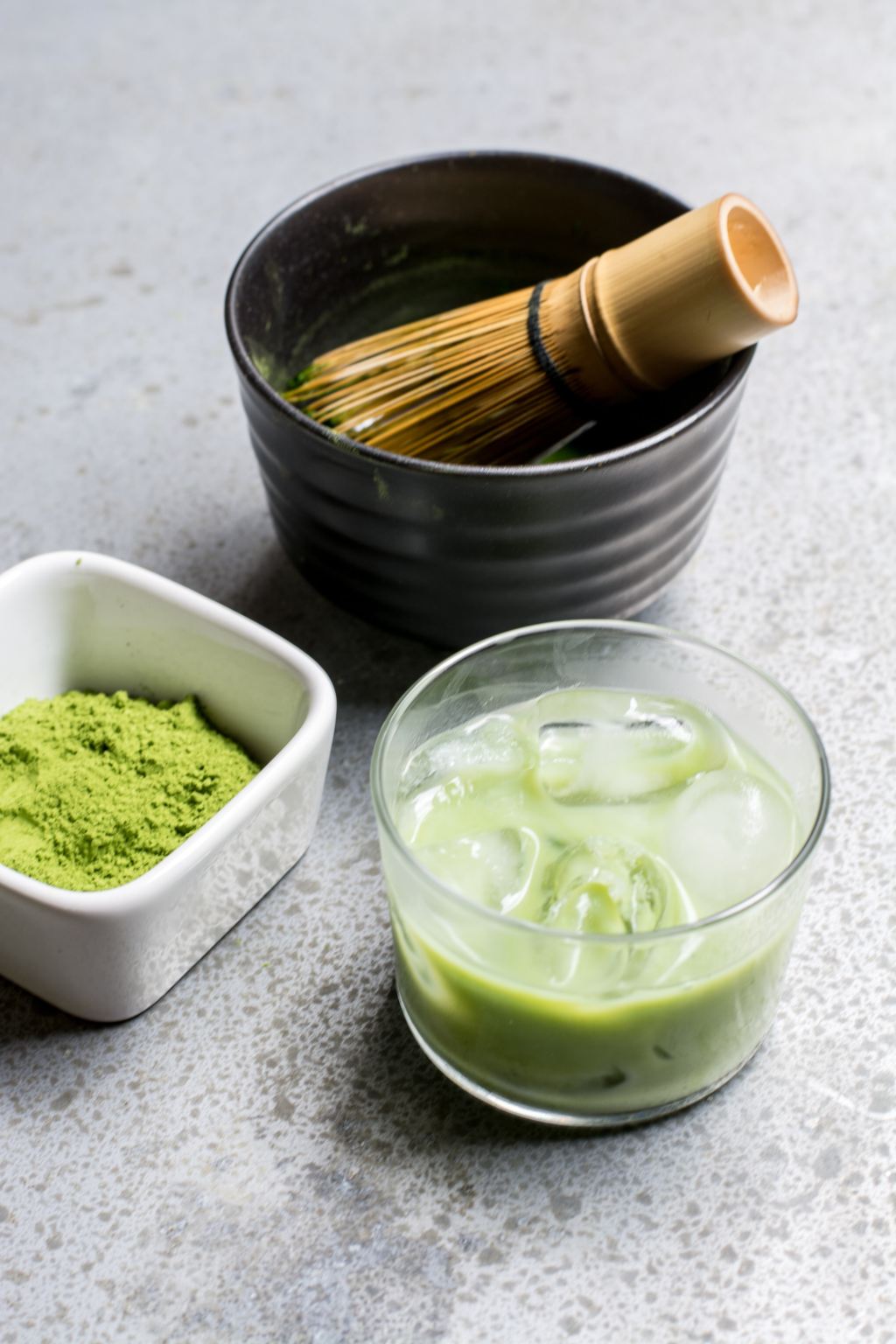
Photo by Alice Pasqual on Unsplash
Hello, MAGAZINE ON readers! I'm Tea Grace, a tea sommelier and instructor. Last issue, I introduced Korean green tea and how to brew it perfectly—remember? This time we're crossing borders: Japanese green tea. Japan is famous for matcha desserts, matcha beverages, all things matcha. Today we'll dive deep into Japanese green tea and matcha culture.
Tea professionals often take study trips to Japan. While Japan is famous for green tea nationwide, the most visited region is Uji, right next to Kyoto. Uji is Japan's largest tea-producing area, and its green tea village is a fascinating tourist destination.
Remember last summer's brutal heat wave? I didn't realize Japanese summers were that hot—I went to Uji in peak summer. Honestly, I barely remember how I survived. The heat was unbearable. But even so, I hauled back a suitcase full of tea. Let me share what I learned about Uji green tea—and survival tips for your trip.
What's Special About Kyoto's Uji?
Why do so many tea students and buyers flock to Uji? Uji is a city in southern Kyoto Prefecture. When people say "Kyoto," they usually mean Kyoto City and surrounding areas (including Uji). Urban Kyoto is prosperous—tourist hub, industrial center, Osaka bedroom community. Rural Kyoto—places like Maizuru on the northern coast and mountain villages—is a different story: underdeveloped, classic Japanese countryside. The gap between urban and rural Kyoto is significant.
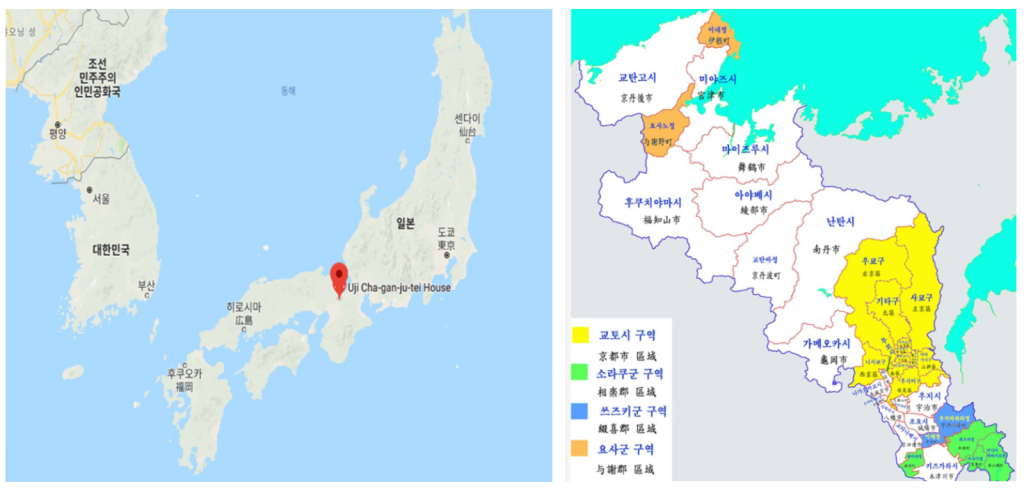
Kyoto Uji, famous for Japanese tea production
Uji, Up Close
Uji is landlocked, but Kyoto Prefecture extends north to Maizuru on the Sea of Japan coast.
Population-wise, Kyoto City accounts for more than half of Kyoto Prefecture's residents. Add in southern satellite cities like Uji, and the disparity between Kyoto's urban and rural areas is stark. But here's the thing: this rural belt is Japan's green tea heartland.
Full Name: Kyoto Yamashiro
Uji belongs to a rural region properly called Kyoto Yamashiro—the southern part of Kyoto Prefecture, between Kyoto City and Nara Prefecture. The Uji River and Kizu River flow through the Yamashiro Basin, irrigating gentle farmland with a mild climate. Perfect for tea cultivation. Rolling hills are blanketed with tea fields producing Japan's most famous green tea.
Now, let me share some Uji travel and tea shopping tips!
1. Never go to Uji in summer. Seriously.
I had specific reasons for going to Uji in summer:
1) I wanted to teach a class on Japanese tea when I returned.
2) I needed ultra-premium green tea you can only buy in Japan.
3) I can't use cheap tea for educational purposes.
4) I want my students to experience the finest tea anywhere.
But at over 40°C (104°F), Uji is unbearable. Unless you're tea-obsessed or have a mission, do not go in summer. Uji's average summer temperature hits 32°C (90°F). If you're planning a tea tour or independent trip, avoid summer at all costs.
That long skirt saved me from the sun. I'd worn shorts initially, but my legs got so sunburned they hurt—I had to change into long clothes. Every time I wear that skirt, I think of Uji. My legs nearly cooked.
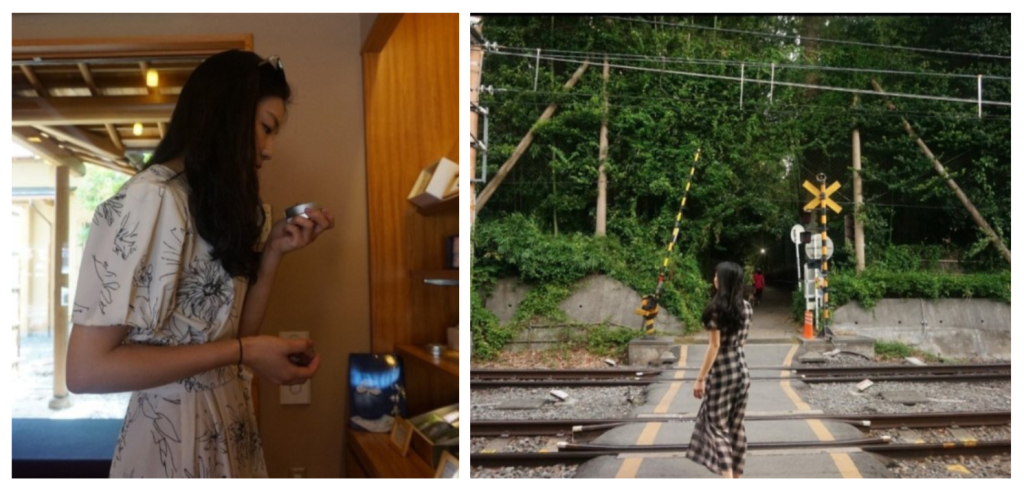
Every time I wear that skirt, I think of Uji. My legs nearly cooked.
2. First stop in Uji Green Tea Village: green tea ice cream!
From Kyoto Station, take the JR line to Uji Station. You'll find a tourist information center there. Follow the road, cross a bridge, and the very first tea shop before the bridge is a must-visit. They sell green tea ice cream, Japanese tea, matcha, green tea beverages, desserts—everything. I arrived in summer, dying of heat, so I needed ice cream before exploring the village.
And oh my god. Uji green tea ice cream is the best in the world. I'm dead serious. No words can describe it. The rich, deep green tea flavor is intoxicating. You have to taste it to understand.
If you go to Uji, stop here for green tea ice cream first. You won't regret it.
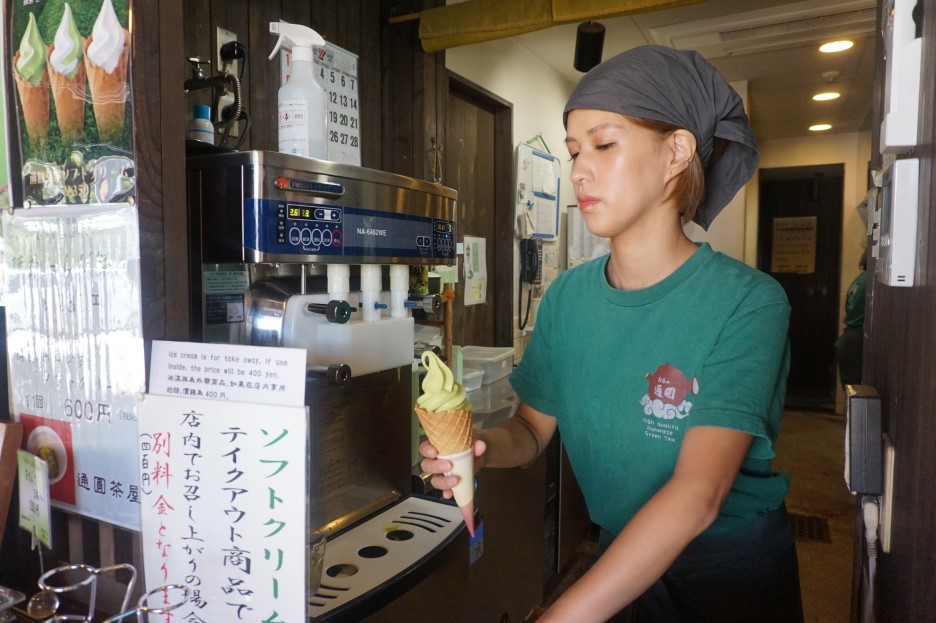
If you go to Uji, stop here for green tea ice cream first. You won't regret it.
3. Japanese green tea and matcha have dedicated tea refrigerators!
Tea absorbs odors. That's why coffee grounds or used tea bags eliminate fridge smells. If you store tea in a regular fridge, it'll absorb food odors and lose its flavor and aroma. So delicate, high-quality green tea and matcha get stored in dedicated tea refrigerators. In Japan, that usually means matcha and gyokuro (jade dew tea).
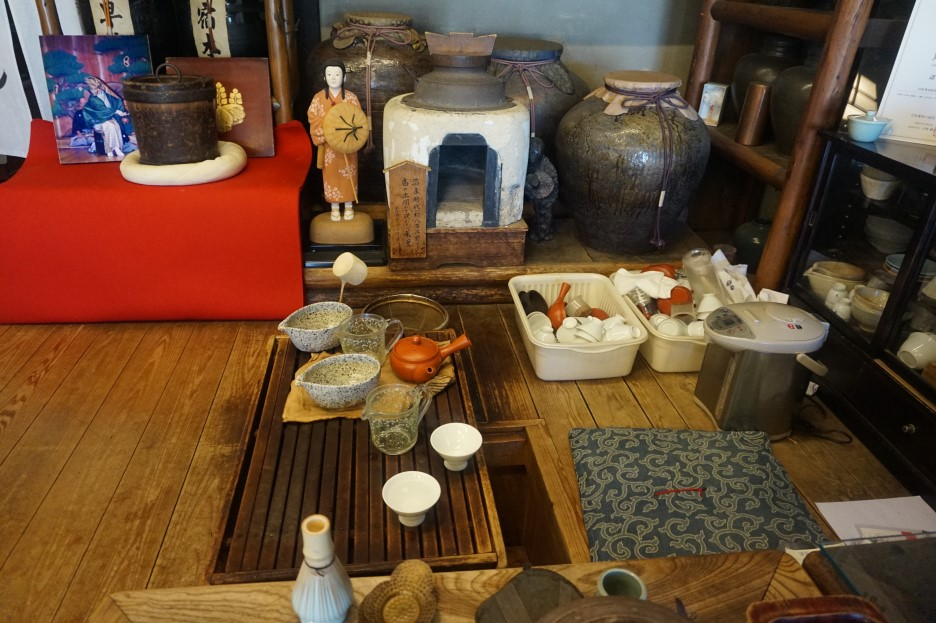
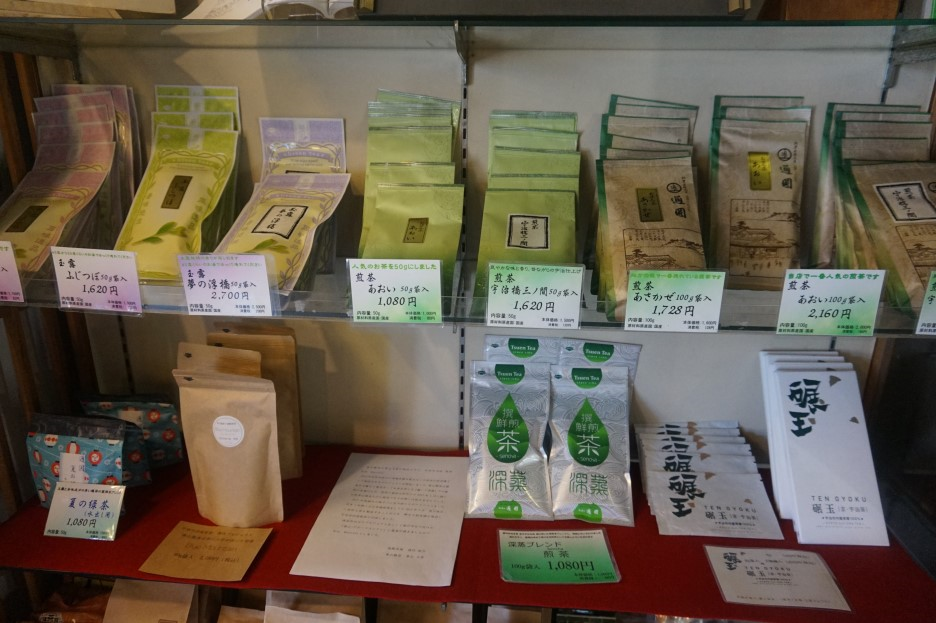
If you buy premium tea in Japan, don't just toss it in your regular fridge when you get home. Store it in a cool place or vacuum-seal it in a clean fridge separately. Otherwise, your expensive tea will absorb fridge odors and you'll have to throw it out. What a waste.
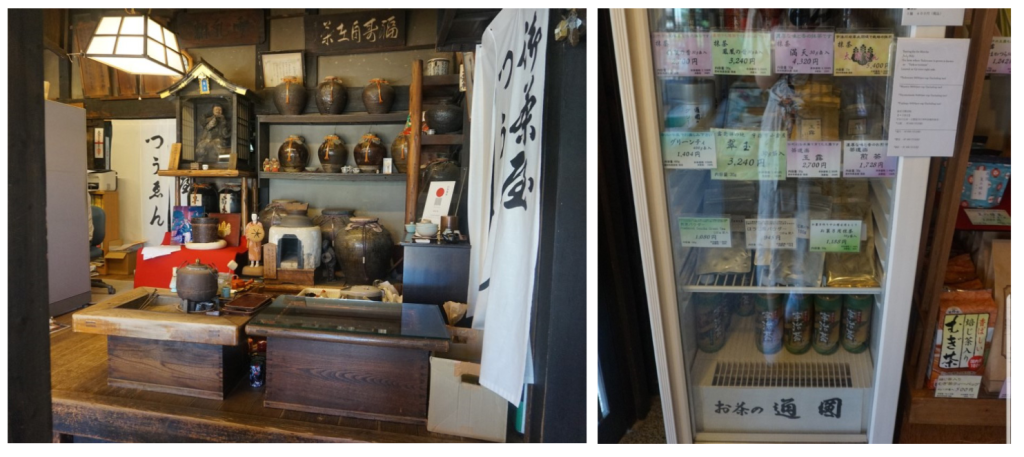
Delicate green tea and matcha are stored in dedicated tea refrigerators.
4. Always taste before you buy!
In Japan, tea shops let you sample tea before purchase. Not every tea—but staff are friendly and will try to accommodate you. I always recommend tasting first. I sampled matcha—prices vary wildly. I tested the most expensive matcha and a mid-range one. The pricier the matcha, the sweeter it tasted. Cheaper matcha was more bitter.
Choose based on purpose. If you're drinking straight matcha whisked with water, you want sweetness, not bitterness. If you're making matcha lattes with milk, overly sweet matcha just tastes like green milk—you need bitterness for balance.
I needed two types for teaching. Comparative tasting helps students learn faster, so I bought ultra-premium sweet matcha and mid-grade beverage matcha. I also stock low-grade matcha at home, so students in my matcha classes taste high, mid, and low grades. I offer low-grade tastings too—watching students' nervous faces before trying it is hilarious. Oh, and when buying tea in Japan, bring your passport for tax-free shopping if you're buying in bulk!
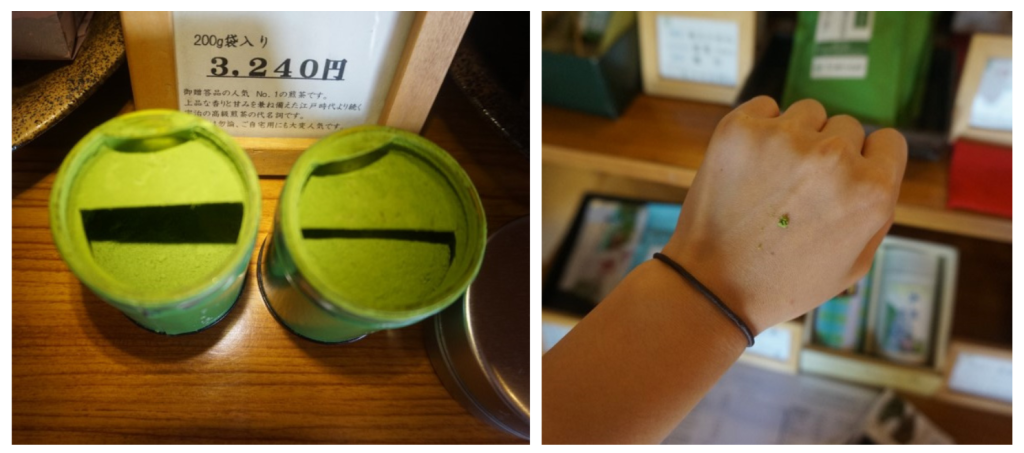
In Japan, tea shops let you sample tea before purchase.
Classifying Japanese Green Tea
Let's look at Japanese green tea varieties. They're categorized by cultivation method, drying process, and production technique—which determines price. There are many types, but here are the main ones:
<Japanese Green Tea Types>
Sencha, hojicha, genmaicha, matcha, gyokuro, kukicha, bancha, etc.
▪ Sencha
Made from young leaves grown without shade cover, steamed, hand-rolled, and dried. Similar to common Korean green tea. Sencha has a fresh aroma and elegant astringency. It's Japan's most popular everyday green tea.
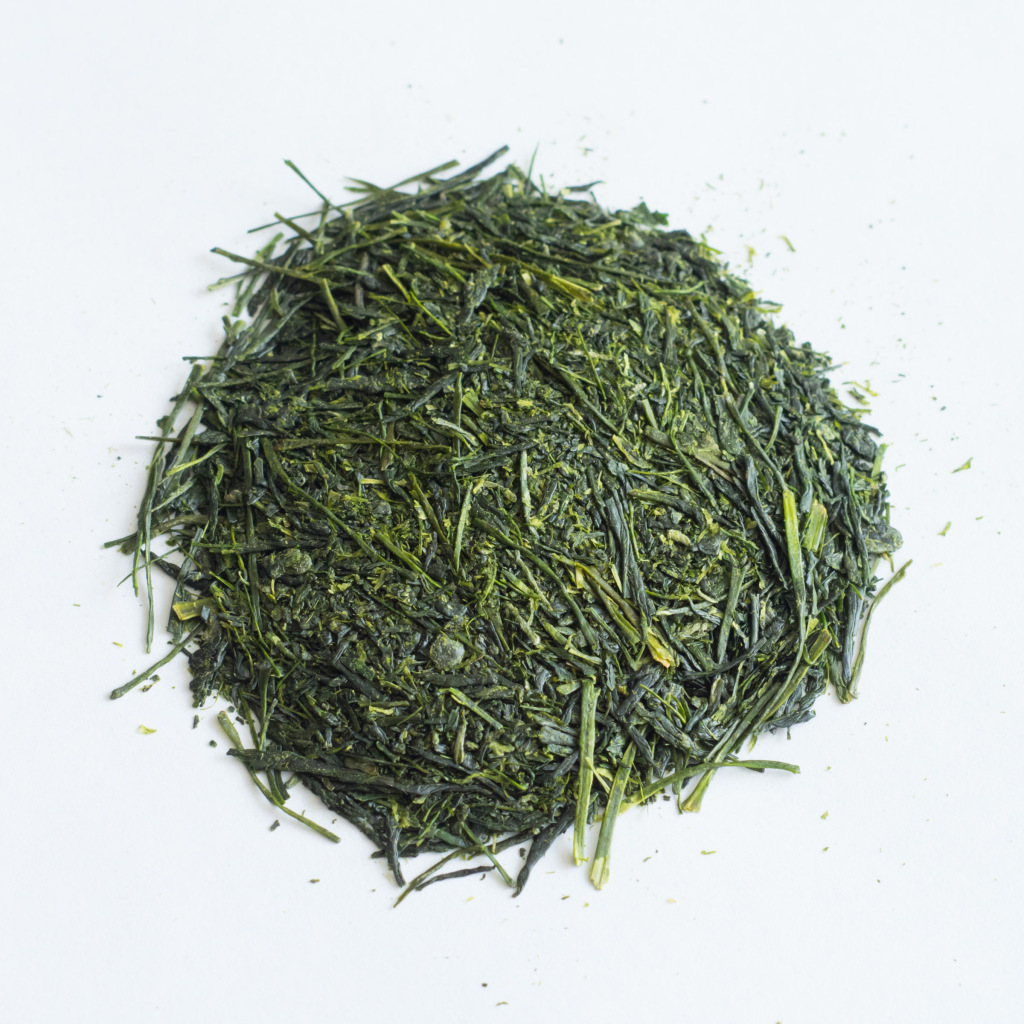
Source: https://commons.wikimedia.org/wiki/File:2017_Kagoshima_sencha.jpg
▪ Hojicha
Bancha or sencha roasted over high heat to bring out a nutty aroma.
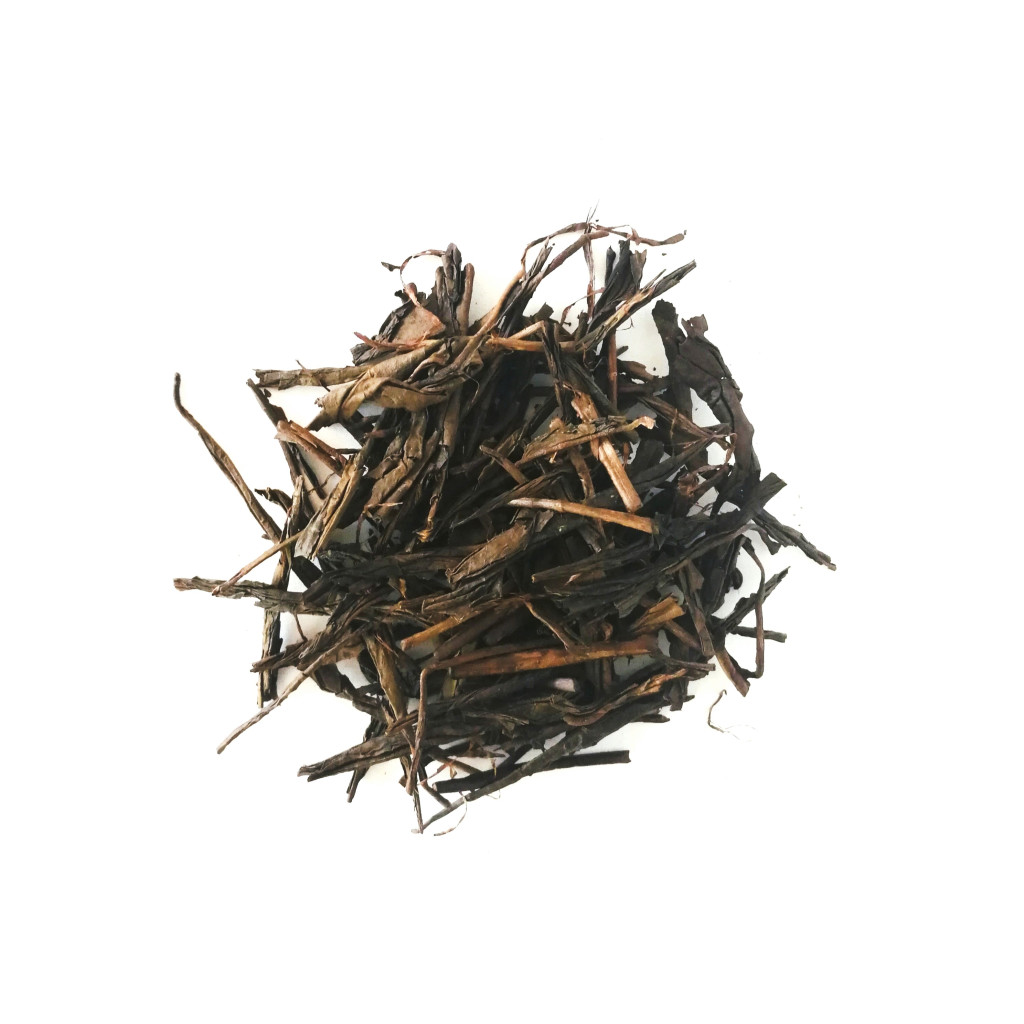
Source: https://commons.wikimedia.org/wiki/File:Hojicha_Dark_Roast.jpg
▪ Genmaicha
Green tea mixed with steamed and dried rice or brown rice for a savory flavor and aroma. Lower in caffeine and tannins than other teas—great for children, seniors, and patients.
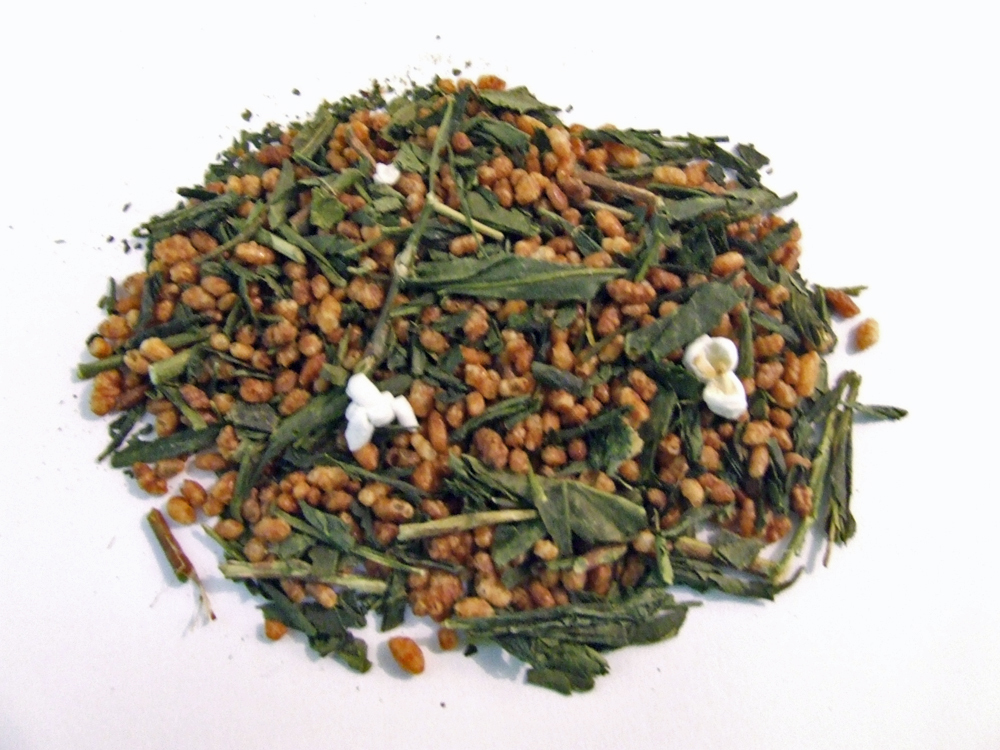
Source: https://commons.wikimedia.org/wiki/File:Genmaicha.JPG
▪ Gyokuro (Jade Dew)
Made from shade-grown, well-nourished tea leaves. Japan's most premium and expensive green tea. Strong aroma, minimal astringency, deep-colored liquor.
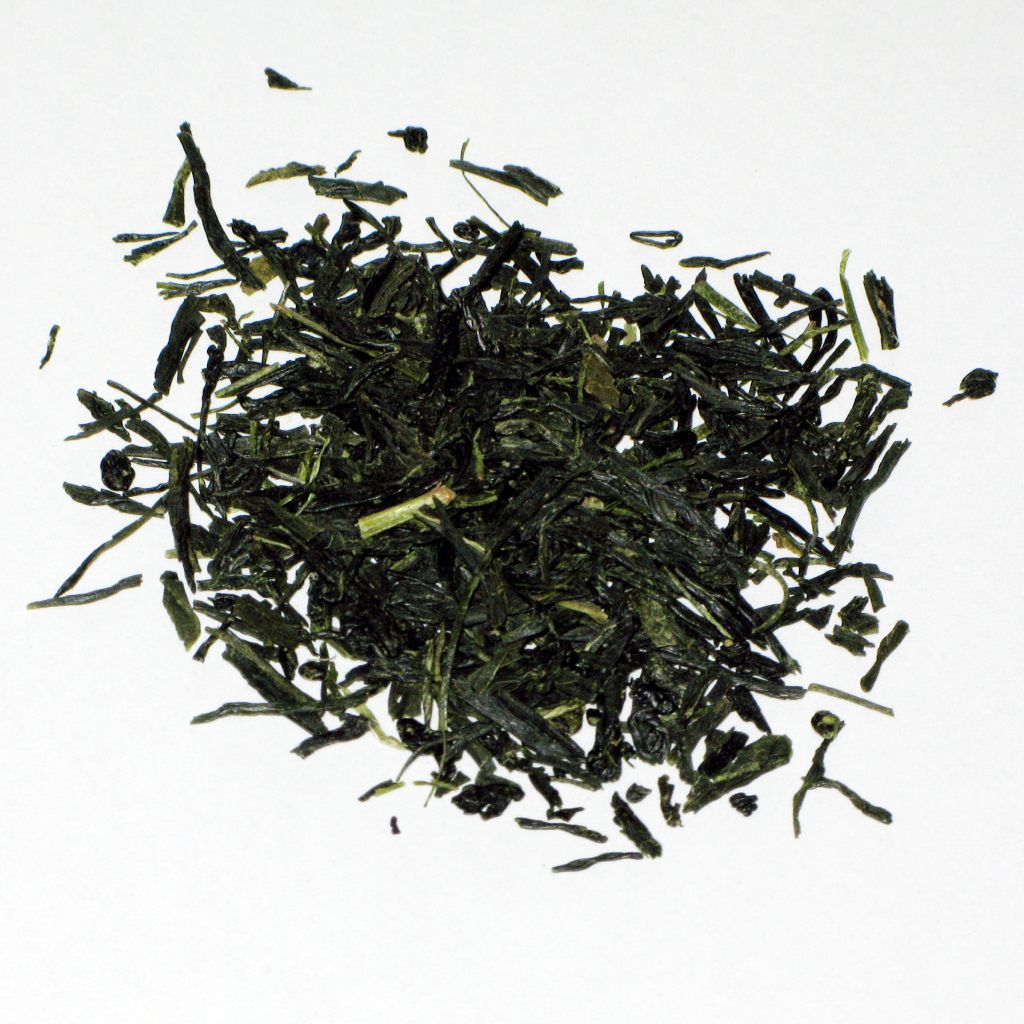
Source: https://commons.wikimedia.org/wiki/File:Gyokuro_img_0067.jpg
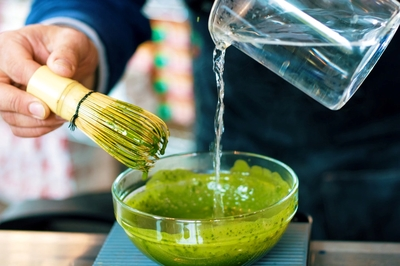
▪ Matcha
Shade-grown green tea, steam-processed, then stone-ground into powder. Using a millstone is the traditional Japanese method for making powdered green tea.
Bancha is mid-to-low-grade green tea made from leftover leaves after producing sencha. Kukicha is made from tea stems left over from making sencha, gyokuro, and matcha—a unique tea.
Tip Recap
1. Bring your passport for tax-free shopping at tea stores.
2. In Japan, you can sample tea before buying. Taste first!
3. First stop in Uji Green Tea Village: grab a green tea ice cream.
4. Never, ever go in summer. Seriously. You'll get burned.
5. If you don't speak Japanese, study some English—it helps with communication.
6. Study Japanese tea basics before you go—it'll help you spot quality tea.
Today we explored Japanese green tea and shopping tips for Japan. Next issue: fun green tea variation recipes. Thank you!
[Series Index]
2018.09 Understanding Tea and Differentiating Your Property
2018.10 Blended Tea and Why You Should Drink Tea
2019.03 Hiatus
2019.04 Black Tea Story (4) – 2
2019.05 Black Tea Story (4) – 3
2019.10 Green Tea Story (3)
2019.11 Green Tea Story (4)
2019.12 Green Tea Story (5)
2020.01~ Herbal Tea Story