Revenue Management isn't just about setting room rates
Everything About Revenue Management (Part 2)
6 Core Strategies for Revenue Management
That Actually Drive Results
In Part 1, we covered what Revenue Management means and why it matters for hotels. Now let's look at practical RM strategies you can test at your property.
6 Strategies for Successful Revenue Management
*Adapted from strategies outlined by Cloudbeds, a global hospitality solutions provider.
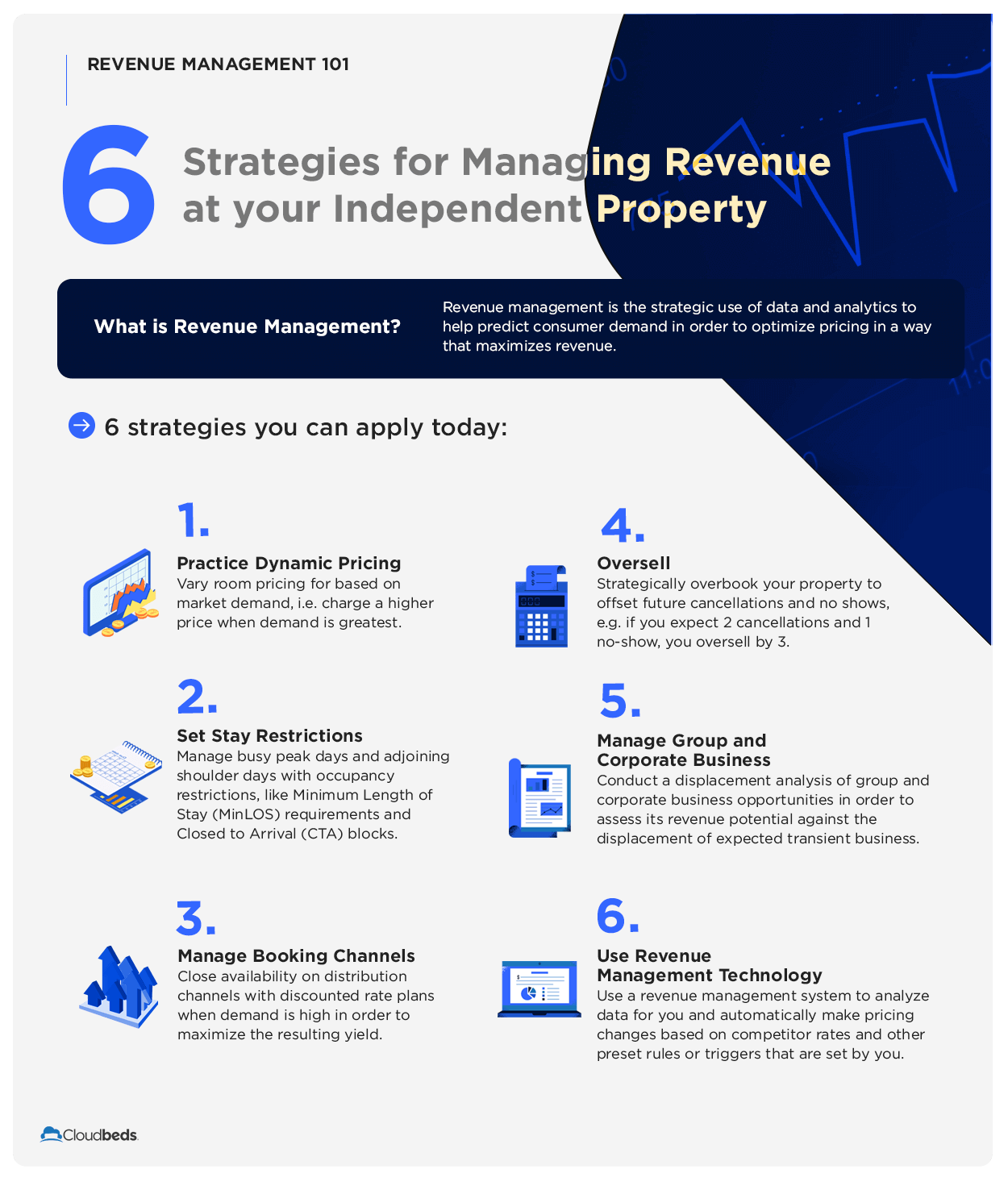
1. Dynamic Pricing
The most well-known RM tactic: adjusting rates based on supply and demand. When demand rises, you raise prices.
"You need to constantly check occupancy and pricing at nearby properties and adjust accordingly. Track which rates convert best. Demand can spike or crater overnight — even outside peak and off-peak seasons. I checked competitor rates religiously. (Laughs)
That said, don't blindly follow competitor pricing. If your occupancy and ADR are strong but a nearby hotel drops their rate, don't follow them down — you'll trash your pricing structure. Or even if occupancy looks high, you might have sold most inventory at lower rates early on. So before you discount the last few rooms, think about your revenue mix.
In other words: keep building data. Keep validating it. Don't lock into one pricing policy. Try building rate grids tied to occupancy bands. Test small increments — say, ₩1,000 adjustments. Experimentation beats theory every time." (Myrrine, ONDA Global Team)
2. Set Stay Restrictions
You can drive higher revenue without touching rates — just control length of stay. Common tactics include MinLOS (minimum length of stay), which protects occupancy on shoulder dates around high-demand weekends or holidays, and CTA (Closed to arrival), which limits check-ins on certain dates so you can preserve inventory for higher-value group or corporate bookings.
3. Manage Booking Channels
Bookings come from everywhere: OTAs, corporate contracts, direct bookings via your website. To maximize revenue, you need a differentiated pricing strategy per channel.
The easiest approach: audit all channels, then rank them into 3–4 tiers based on profitability (considering margin, discount depth, etc.). When demand surges, close the lowest-margin channels. Stay flexible as conditions change.
4. Managing Groups & Corporate Business
Does group business automatically mean higher revenue? Not always. You need to compare: what would those same rooms generate if sold to leisure travelers at higher BAR rates?
"Inbound tour groups and corporate blocks usually come at steep discounts versus online retail rates. You get occupancy, but profitability suffers. Plus, corporate bookings have long lead times. If they cancel close to arrival, you're stuck trying to fill a huge block of rooms via OTA at the last minute." (Myrrine, ONDA Global Team)
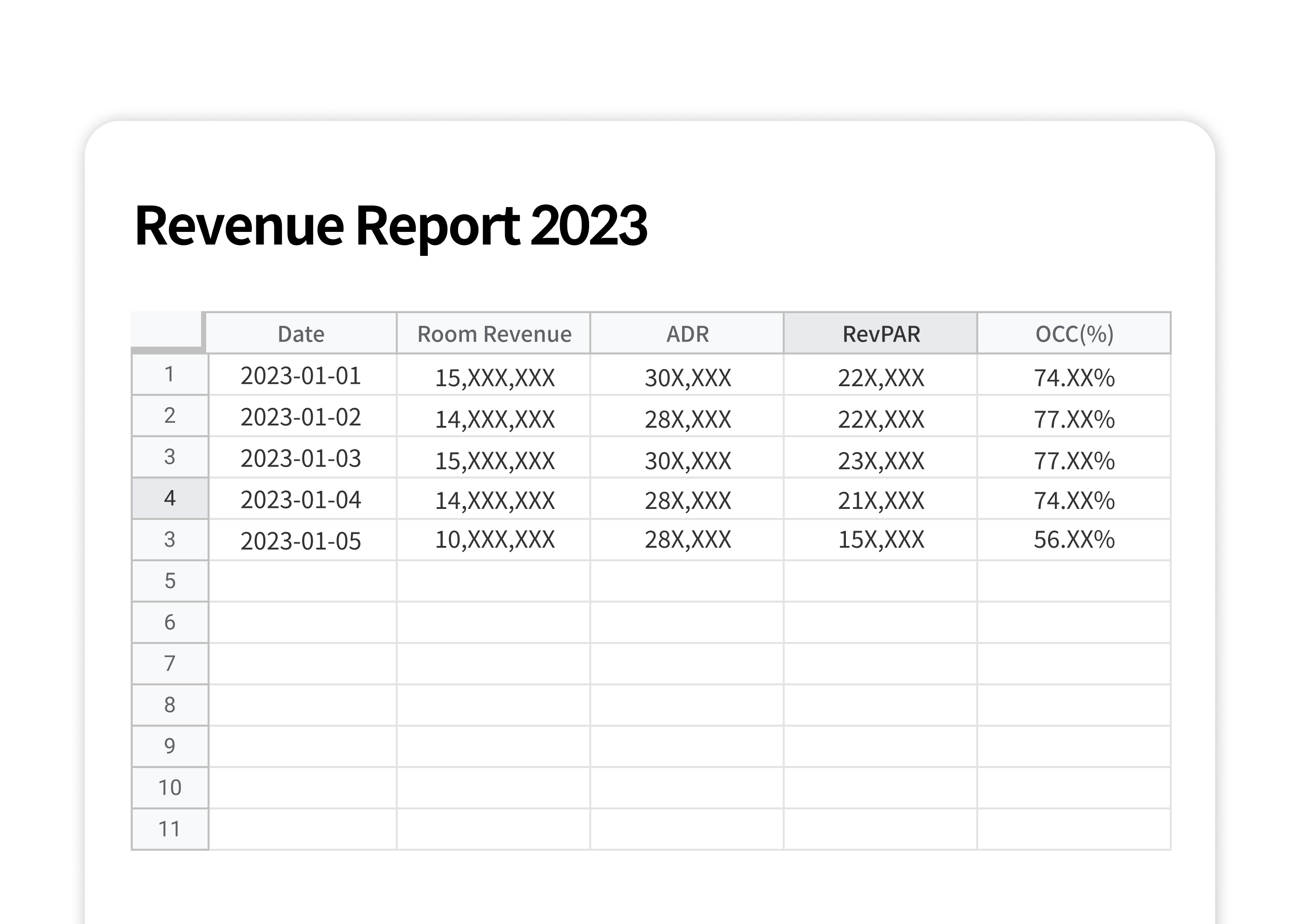
Revenue Management performance is typically measured using ADR¹ and RevPAR². But RevPAR can look great while GOPPAR is negative. That's why you also need to track TrevPAR³ and GOPPAR⁴.
Ideally you want both occupancy and profitability. But that's rare. At the end of the day, you have to decide: which matters more to your property?
- ADR (Average Daily Rate)
- RevPAR (Revenue Per Available Room)
- TrevPAR (Total Revenue per Available Room)
- GOPPAR (Gross Operating Profit per Available Room)
5. RMS (Revenue Management System)
As mentioned in Part 1, large global hotel chains already run their own RMS platforms to forecast demand and optimize pricing algorithmically. But building a proprietary system isn't realistic for most properties — so many turn to third-party RMS providers like OTA Insight or IDEAS.
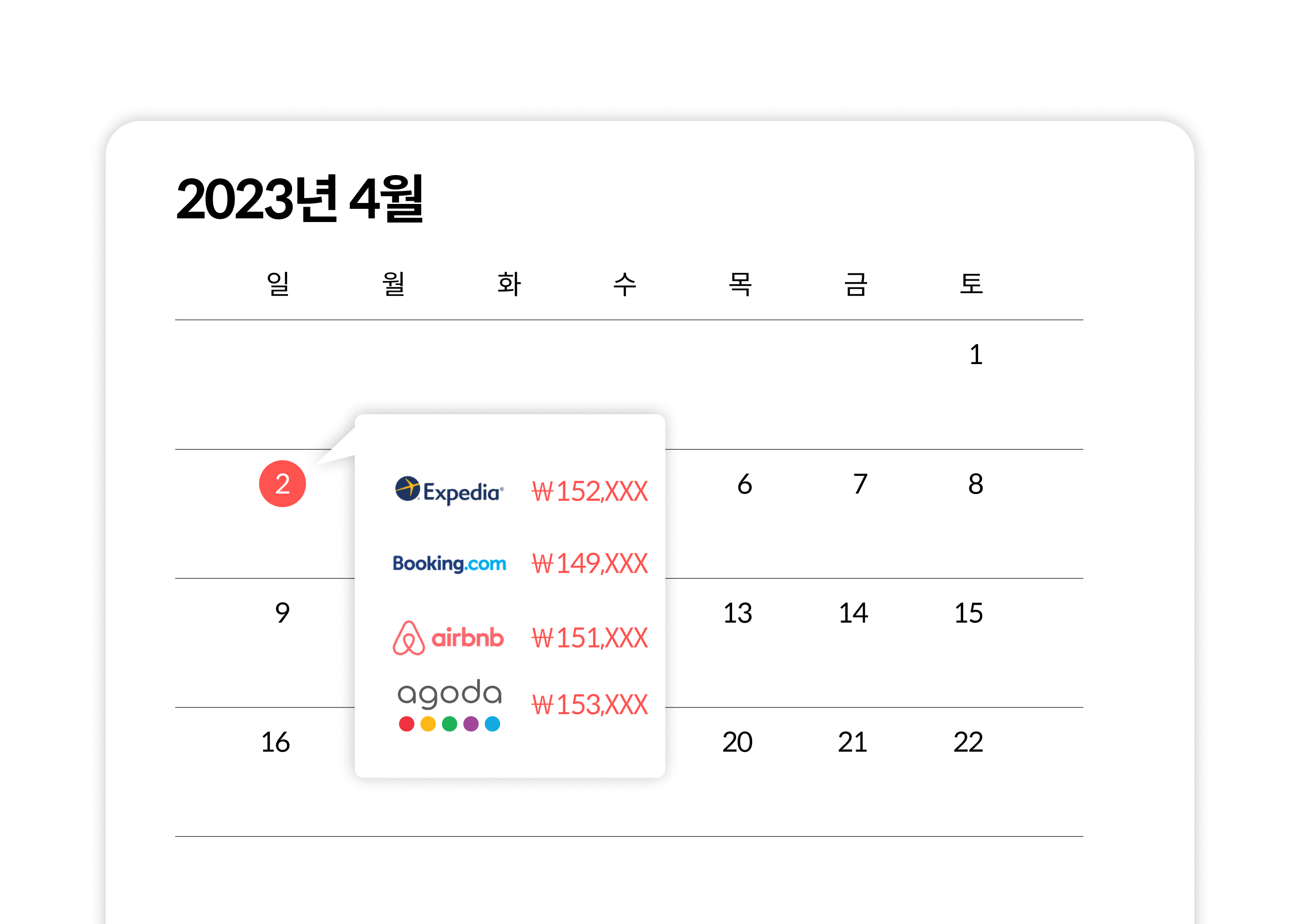
"The biggest RMS benefit is time savings. When I worked at a hotel, we used an RMS and it was a game-changer. Before that, I had to log into each OTA separately and manually check competitor rates. With RMS, I just selected the properties and channels I wanted to track — and boom, all the rates in one view. It even flagged public holidays and long weekends by country, which was huge for demand forecasting.
That said, there were small discrepancies. For instance, the rate shown in RMS might differ slightly from what you see on Agoda after applying membership discounts. So if you want pinpoint accuracy, you still have to spot-check. But for analyzing demand trends and market positioning, the time saved is absolutely worth it." (Myrrine, ONDA Global Team)
6. Direct Booking
We've emphasized the importance of D2C (Direct to Customer) before. Beyond collecting guest data for personalized service, direct bookings also maximize profit from an RM standpoint — no commission paid to intermediaries.
Of course, OTAs are still essential for reaching new guests. But if you incentivize direct bookings on your website, you can convert one-time guests into loyal repeat customers — and that loyalty drives long-term profitability.
💡 Other RM levers worth exploring: adopting SaaS-based PMS (Property Management System) to cut costs and improve operational efficiency; and reputation management across social media and review platforms — both impact total revenue, which is what RM ultimately cares about.
What Changed After COVID
The pandemic was a period of extreme volatility. Demand shifted day to day. Booking patterns changed overnight.
If pre-COVID RM leaned heavily on historical data, post-COVID demands real-time monitoring and agile forecasting.
Online distribution also exploded. ONDA internal data shows hotel online transaction volume surged over 150% in 2022 compared to 2021.
"With online sales growing so fast post-COVID, pricing strategy across digital channels became mission-critical.
Live commerce and TV home shopping sales are another post-pandemic trend. I've seen a single one-hour home shopping slot sell nearly 9,000 room nights. But flash discounts like that lead to high cancellation rates. And home shopping takes a hefty commission. So again: you're weighing profitability against volume." (Myrrine, ONDA Global Team)
The Future Role of RM and Required Skills
Revenue Management tactics will evolve, but the core principle won't: maximizing revenue within the constraints of finite inventory and resources. What matters isn't obsessing over room rates alone — it's developing a holistic view of the entire operation.
"Above all, an RM manager needs strong data analysis and interpretation skills. You should always have key metrics running in your head." (Myrrine, ONDA Global Team)
Also, remember: sometimes corporate group business that looks unprofitable on paper can still make sense. Data doesn't capture everything — like repeat visit likelihood or ancillary revenue potential.
That's why you need close collaboration with sales and operations. In a broader sense, the RM role is about marketing the hotel as a product — not just setting prices.
Myrrine Kim
Myrrine spent six years at a five-star hotel in Seoul, working across reservations, sales, and RM. At ONDA, she brings that hands-on experience to the Global Team, where she drives online distribution and revenue growth for international properties.
References
- Cloudbeds, "Revenue Management", https://www.cloudbeds.com/articles/revenue-management-guide, accessed March 27, 2023