Part 2: Not every property qualifies for legal Airbnb operation in Korea. Learn which housing types you can — and can't — use for Foreign Tourist Urban Homestay Business.
02. Only Certain Property Types Are Allowed
Writer Suran Pi Hyun-jin
Editor ONDA Somora Manager
What Airbnb Hosts Must Know Before Starting
Airbnb is the poster child of the sharing economy. Monetizing empty space sounds simple enough. But run it wrong and you're operating an illegal lodging business. Where's the line between legal and illegal? This series breaks down Korea's Tourism Promotion Act, Foreign Tourist Urban Homestay regulations, and the taxes legal hosts need to pay. Suran explains it all in plain language.
Suran Pi Hyun-jin
After a long corporate career, Pi founded Suran Guesthouse in Seochon in 2014. She hit her goal: work 20 hours a week, earn ₩3 million a month. In 2018, she went full digital nomad — working from anywhere.
Through columns and lectures, she helps Airbnb and share-house hosts navigate the legal and tax maze.
Website: www.bnbsuran.co.kr
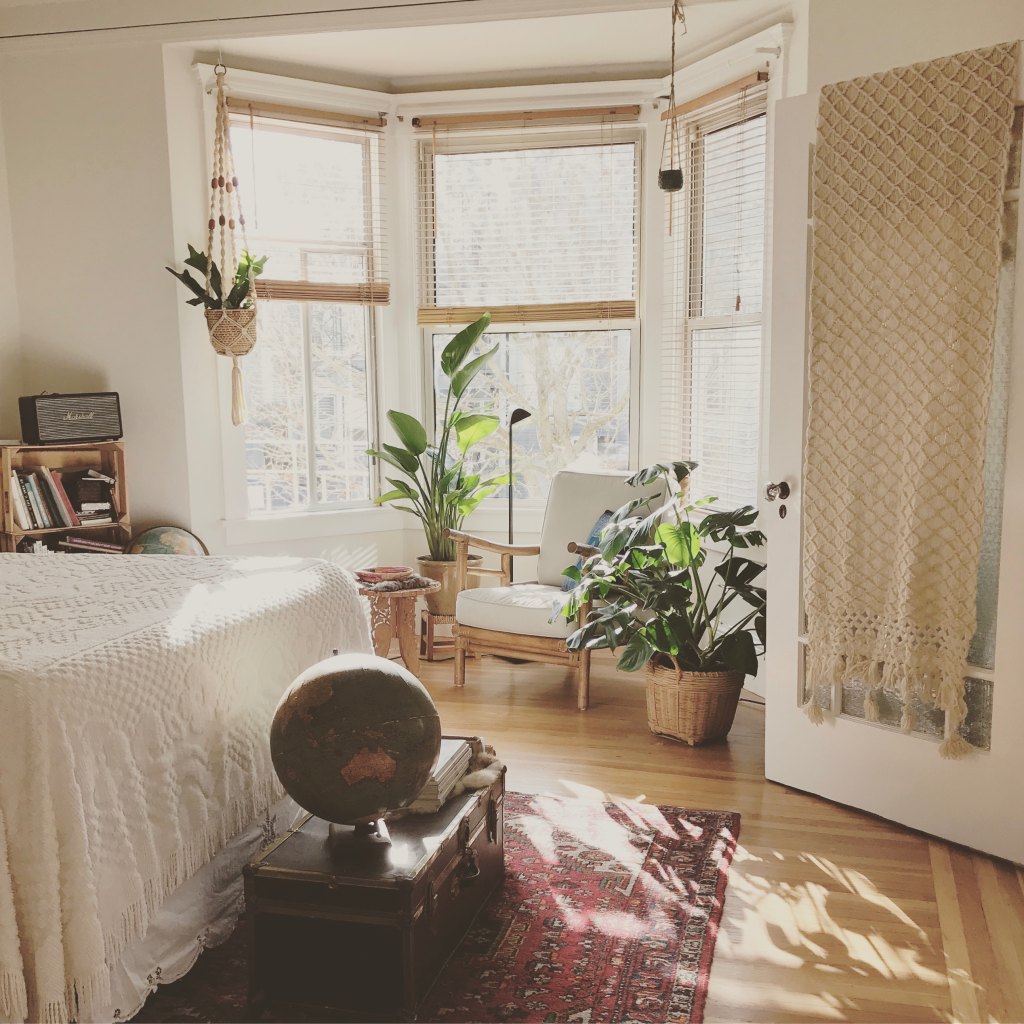
Photo by Timothy Buck on Unsplash
You Can't Just Use Any Property
Last time we covered the fundamental constraint: you can only host foreign tourists, because this business is allowed in residential zones. But that's not all. Not every property qualifies for Foreign Tourist Urban Homestay Business. The Tourism Promotion Act specifies which housing types are eligible.
Detached houses / Multi-household houses / Multi-family houses / Row houses / Apartments
Those five. That's it. No officetel. No commercial-residential buildings.
Floor area matters too. Even if your property fits one of the above categories, total floor area must be under 230㎡ (about 69 pyeong). And it can't be an illegal structure. Plenty of homes have rooftop rooms or enclosed balconies. "But I'm renting unit 201 — the owner built out the third floor, not me!" Doesn't matter. Still illegal. Always check the building registry, not just the property deed.
You also need to actually live there. Even if you own multiple homes, you can only register the one you physically reside in.
Can You Do This If You Don't Own the Place?
"I'm not the homeowner — can I still run a guesthouse (Foreign Tourist Urban Homestay)?" Yes. Absolutely. Check Article 5 of the Tourism Promotion Act Enforcement Decree:
A business where a resident of an urban area under Article 6, Paragraph 1 of the National Land Planning and Utilization Act provides lodging and meals to foreign tourists in a house where they reside, with facilities suitable for experiencing Korean household culture.
"A house where they reside." Not "a house they own." In fact, most Foreign Tourist Urban Homestay operators are renters, not owners.
How do authorities verify residency? You submit proof of address (resident registration abstract) when you apply to your district office.
But you must get the landlord's consent. Mapo-gu in Seoul requires a signed landlord consent form. You can draft a separate document, but the cleanest way is to add a clause to your lease: "The landlord consents to the tenant operating a Foreign Tourist Urban Homestay Business in this property." Some municipalities don't strictly check for consent forms, but never run this business without telling your landlord. Using the property for purposes outside the lease is grounds for termination. Legal registration and lease compliance are separate issues — violate the lease and you're out, no matter how compliant your business license is.
Tips for Finding a Property
First-time hosts struggle to find landlords willing to rent for this purpose. Most assume high turnover means property damage. Think about why newlywed couples are the dream tenant.
So how do you find a property that works?
– Show before/after photos: Convince the landlord you're upgrading their asset with your money.
– Offer to handle all repairs yourself: For monthly rentals, landlords typically cover wallpaper, flooring, plumbing, lighting, door locks. Tell them you'll do it all — you'll be spending on interiors anyway. Just make sure the lease waives the restoration clause.
– Sign a long-term lease: You won't recoup interior costs in the standard two years. Reassure the landlord you'll handle everything and lock in 5+ years if possible. Four or three years works too.
– Go direct: You need to negotiate these terms face-to-face. Try Naver Cafe 'Peter Pan' or Zigbang's direct-deal listings to reach landlords directly.
Why Are Officetels and Studio Apartments Off-Limits?
Officetels are the face of illegal Airbnb in Korea. Why can't you legally register an officetel? Simple: it's not one of the five allowed housing types. "But what about residential officetels? I registered as a rental business operator!" It's still an officetel.
What about studio apartments (one-rooms)? Even if the property deed says "multi-household house" — which is technically allowed — the district office will reject your application. Because of that phrase: "a house where they reside." Living in a property while hosting guests in the same room makes no sense, they'll argue. There's no law specifying minimum room count, but in practice you need at least a two-room unit.
And practically speaking, guests don't want to share space with the host. Would you? When traveling, you want the bathroom, living room, and kitchen to yourself — or at least limited to your group. That's why Airbnb distinguishes between "private room" and "entire place." Same square footage, different rates and booking rates. Whole-unit listings (like officetels and studios) perform far better. They're just not legal for this license.
Next time, we'll compare Urban Homestay with the increasingly relevant Rural Homestay license.
[Series Contents]
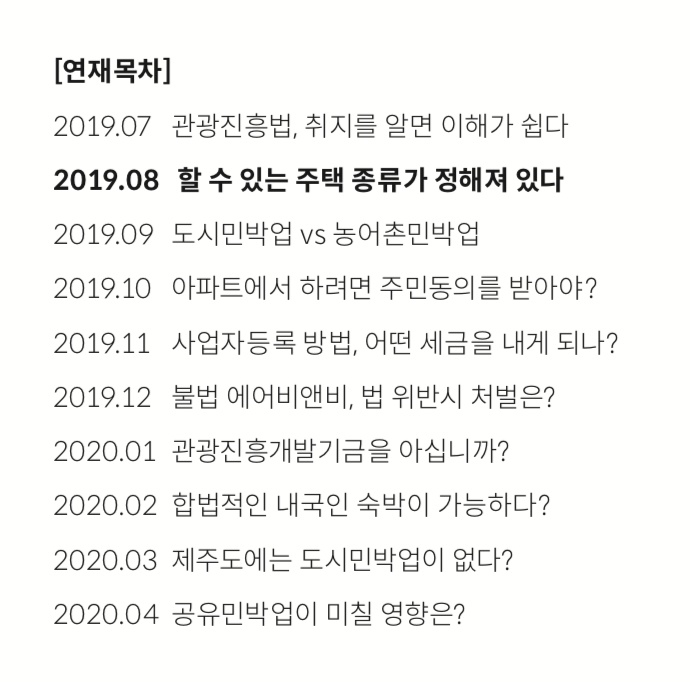
2019.07 Understanding the Tourism Promotion Act's Intent Makes Everything Clearer 2019.08 Only Certain Property Types Are Allowed 2019.09 Urban Homestay vs. Rural Homestay 2019.10 Apartment Hosting Requires Resident Consent? 2019.11 How to Register & What Taxes You'll Pay 2019.12 Illegal Airbnb: Penalties for Violations 2020.01 Do You Know About the Tourism Promotion Development Fund? 2020.02 Can You Legally Host Koreans? 2020.03 Why Jeju Has No Urban Homestay License 2020.04 What Impact Will the Shared Homestay Business Have?