Urban homestays vs. rural homestays: what's the difference, and which zones qualify for each?
03. Urban Homestays vs. Rural Homestays
Writer Suran (Pi Hyun-jin)
Editor ONDA Manager Somora
Essential Knowledge for Airbnb Entrepreneurs
Airbnb is the poster child of the sharing economy. It's the gold standard for turning idle space into income. But jump in without doing your homework and you could be running an illegal lodging operation. What's the line between legal and illegal? Tourism Promotion Act, Foreign Tourist Urban Homestay regulations, and the taxes every legitimate Airbnb operator needs to know. Suran breaks it all down.
Suran (Pi Hyun-jin)
After a long corporate career, she founded guesthouse Suran in Seoul's Seochon neighborhood in 2014. She hit her startup goal: work 20 hours a week, earn ₩3 million a month. Since 2018, she's been living as a digital nomad—working from wherever she wants.
Through columns and lectures, she delivers accurate legal and tax information to Airbnb and sharehouse entrepreneurs.
Website: www.bnbsuran.co.kr
Photo by Timothy Buck on Unsplash
We've spent the last few installments digging into Foreign Tourist Urban Homestay regulations and requirements. But if you look at Jeju, Gyeonggi-do, or other regional areas, you'll also see a different term popping up: rural homestay business.
This is one of the most common questions prospective hosts and property operators ask: what's the difference between urban homestays and rural homestays? So today we're comparing the two—what they have in common, and where they diverge.
Rural Homestays Came First
Before the Tourism Promotion Act was amended to allow homestays in urban areas, "homestay" essentially meant rural homestay. That's why so many Foreign Tourist Urban Homestay rules mirror or closely resemble rural homestay regulations. The table below offers a side-by-side comparison.
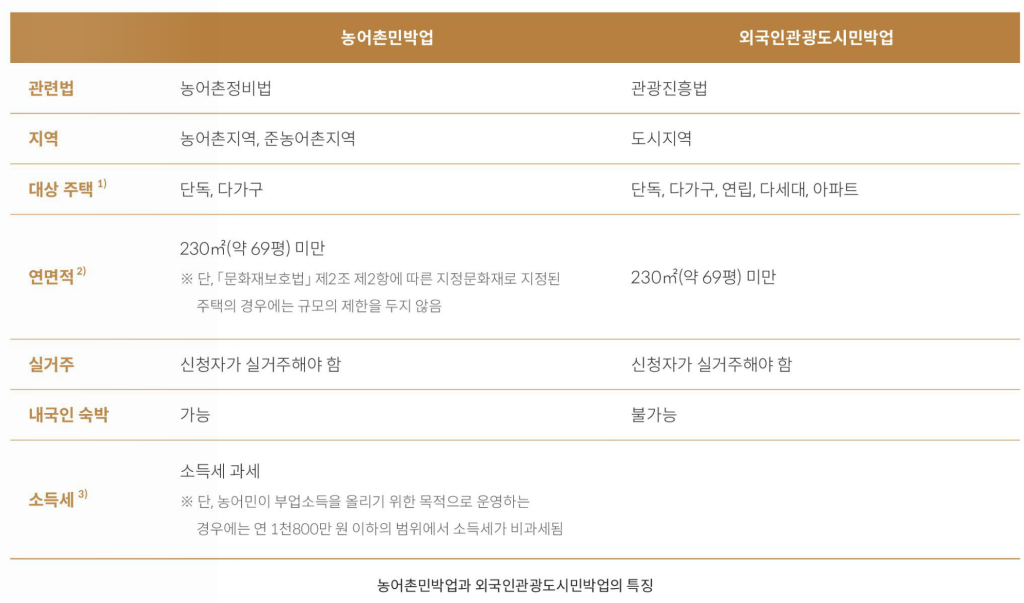
As we covered earlier, Foreign Tourist Urban Homestays are restricted to foreign guests only. Rural homestays, by contrast, can legally host domestic guests. That's a huge advantage. Imagine being able to run a legal Airbnb out of your home—or your family's country house.
Which Areas Qualify for Rural Homestays?
"There's a valley nearby, so I wanted to list my empty house on Airbnb just for the summer season. But even though this is the countryside, it doesn't qualify as a 'rural area' for rural homestay registration… And it's definitely not a place foreigners would visit."
I got this comment on my old blog. They wanted to run a legal Airbnb, checked the rural homestay rules—didn't qualify. Tried the Foreign Tourist Urban Homestay route—foreigners would never come out there. Dead end.
This person actually did their homework. They studied the Tourism Promotion Act before launching. I'd call that exemplary. Here's the thing: you can have no tall buildings, a stream running by your front door, and still not be classified as a rural or semi-rural area. So where exactly do these zones exist?
"Rural areas" refer to agricultural villages as defined in Article 3, Paragraph 5 of the Framework Act on Agriculture, Rural Communities and Food Industry, and fishing villages as defined in Article 3, Paragraph 6 of the Basic Act on Fisheries and Fishing Village Development. "Semi-rural areas" refer to non-rural zones within the jurisdiction of metropolitan city districts (gu), specifically agricultural promotion zones under the Farmland Act and development restriction zones under the Special Act on Designation and Management of Development Restriction Zones. (Rural Community Improvement Act, Article 2, Paragraphs 1 and 2)
Reading the statute doesn't help much. So here's how you can instantly find out if your property qualifies for a rural homestay permit:
Go to the Ministry of Land, Infrastructure and Transport's Land Use Regulation Information Service (http://luris.molit.go.kr) and enter your address. The system will tell you whether the location is classified as urban or rural.
In Seoul, you can run a guesthouse with foreign-only guests and make it work. But in regional areas, filling rooms without domestic travelers is nearly impossible.
So if you're planning to launch a guesthouse outside Seoul, check your property's address on the Land Use Regulation Service before you sign the lease. What looks like the middle of nowhere might technically be an urban zone—which means you'd be stuck with Foreign Tourist Urban Homestay rules and a foreigner-only guest policy.
Today we compared rural homestays and Foreign Tourist Urban Homestays. Next time, we'll tackle apartment buildings: Can you run an Airbnb if you get resident consent? And can you even get an urban homestay permit in an apartment complex?
[Series Index]
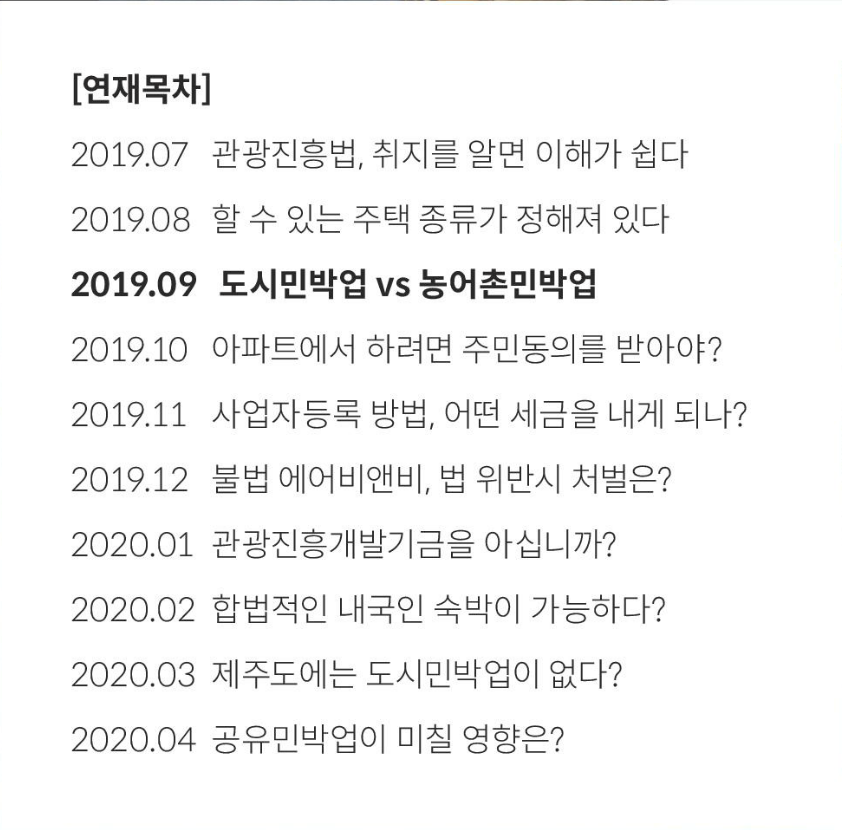
July 2019: Understand the Intent Behind the Tourism Promotion Act August 2019: Not All Housing Types Qualify September 2019: Urban Homestays vs. Rural Homestays October 2019: Do You Need Resident Consent in Apartments? November 2019: How to Register Your Business and What Taxes You'll Pay December 2019: Illegal Airbnbs—What Happens If You Break the Law? January 2020: Do You Know About the Tourism Development Fund? February 2020: Is Legal Domestic Guest Accommodation Possible? March 2020: Why Jeju Doesn't Have Urban Homestays April 2020: What Impact Will Shared Homestay Regulations Have?
View Full Magazine Issue <<
Subscribe to the Magazine <<
⚠️ All rights reserved. Cite this piece as 'ONDA (온다)' when quoting.