If you want to operate a foreign tourist urban homestay in an apartment, do you need resident consent? Understanding the regulations and how to navigate neighbor approval.
04. Do You Need Resident Consent to Operate in an Apartment?
Writer Suran
Editor ONDA Manager Somora
Essential knowledge for Airbnb entrepreneurs
Airbnb is hailed as one of the sharing economy's biggest success stories. It's seen as the most effective way to monetize unused space. But jump in without doing your homework and you could find yourself running an illegal accommodation, facing crackdowns. Where's the line between legal and illegal? Understanding the Tourism Promotion Act, foreign tourist urban homestay regulations, and the taxes every legitimate Airbnb operator must know — Suran breaks it all down.
Suran
After a long career in corporate life, she founded Guesthouse Suran in Seochon in 2014. She achieved her startup goal: work 20 hours a week, earn ₩3 million a month. Since 2018, she's been living as a digital nomad, working from wherever she wants.
Through columns and lectures, she delivers accurate legal and tax information to Airbnb and share house entrepreneurs.
Website: www.bnbsuran.co.kr

Photo by chuttersnap on Unsplash
What is resident consent?
Do I need resident consent to operate a foreign tourist urban homestay in an apartment?
This question pops up regularly on my blog. The answer is YES. When you visit a district office or city hall to get approval to operate a foreign tourist urban homestay in an apartment, officials will tell you to get resident consent from that apartment complex.
But here's the surprising part: dig through the Tourism Promotion Act, its enforcement decree, and enforcement regulations — you won't find a single mention of apartment resident consent for foreign tourist urban homestay registration. So what gives officials the authority to demand resident consent?
The answer lies in the 'Foreign Tourist Urban Homestay Business' Administrative Guidelines document posted on the Ministry of Culture, Sports and Tourism website (http://www.mcst.go.kr). Think of it as a civil servant manual that fills in the details not spelled out in the law.
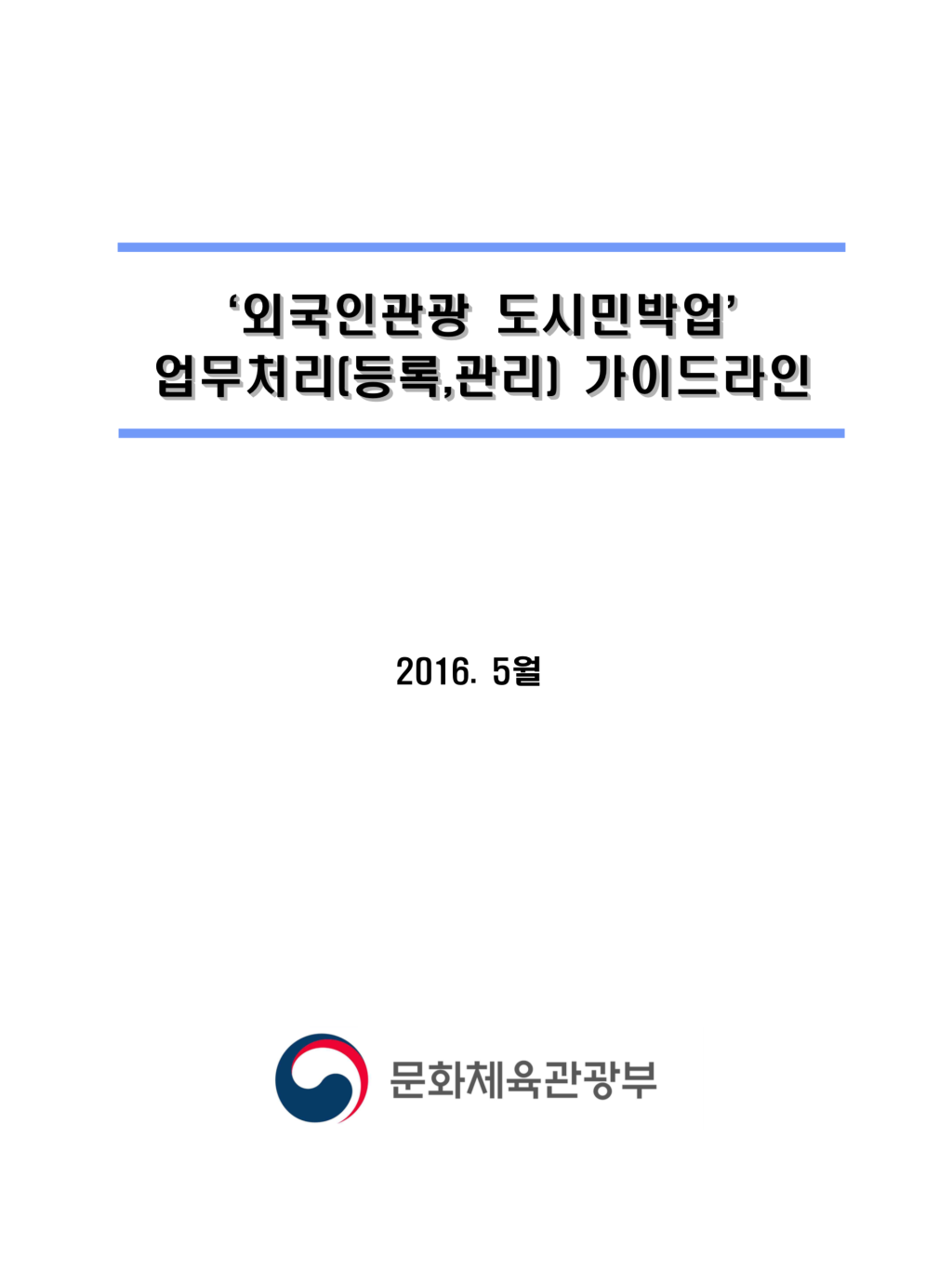
Foreign Tourist Urban Homestay Business Administrative Guidelines (Ministry of Culture, Sports and Tourism)
Let's see how apartment resident consent is defined in this document:
(Additional verification and measures for multi-unit housing) Check whether the management regulations require consent for certain resident activities. If operating a foreign tourist urban homestay falls under those activities, attach the relevant consent form.
Translation: Check if your apartment complex's multi-unit housing management regulations mention resident consent. If they do, get the consent according to those rules. The document helpfully provides an example using Seoul City's Multi-Unit Housing Management Regulation Guidelines.
Example: According to Article 56 (Property Management Entity's Consent Standards), Item 6 of [Seoul City Multi-Unit Housing Management Regulation Guidelines], anyone wishing to use their unit as a daycare center, dormitory, or study room must obtain majority consent from residents on the same hallway (for hallway-type buildings) or corridor floor (for corridor-type buildings), and must obtain consent from directly affected adjacent units (including directly above and below).
Following this example, hallway-type buildings need consent from residents on that hallway, while corridor-type apartments need majority consent from residents on that corridor floor. Plus, the units directly above and below must also consent.
A friend living near Gongdeok Station in Mapo-gu lives in a corridor-type apartment with eight units per floor. She obtained consent from four units on her floor plus the units directly above and below — six households total — before applying for her foreign tourist urban homestay license.
But don't think "Great, I'll just get consent this way and I'm good to go!" The example above is specifically based on Seoul City's Multi-Unit Housing Management Regulation Guidelines.
What if you're not in Seoul? What if you're in Seoul but live in a standalone apartment building with no management regulations?
In those cases, the responsible official will tell you how to handle resident consent. Call your district or city office's 'Tourism Division' or 'Culture, Tourism & Sports Division' and ask to speak with the foreign tourist urban homestay coordinator. Make sure to confirm which regulations apply to your building.
Get consent from ALL residents?
If you're in a Seoul apartment complex, does the example from the <Foreign Tourist Urban Homestay Business Administrative Guidelines> always apply as written? Unfortunately, no. Consent requirements vary by district.
Take Jongno-gu, for example. When I called to inquire, they said I needed 'consent from all households in the same building.' Not just my elevator line — the entire building. When I said "That basically means don't do it!" the response was "That's why no one does it."
When I first started my foreign tourist urban homestay in 2014, regulations weren't this strict. As noise complaints and other issues keep piling up from apartment-based operations, enforcement keeps tightening. In Jongno-gu, you need full household consent not just for apartments but for villas too. Quite different from the Mapo-gu example I mentioned earlier.
What about outside Seoul? Someone near Gimhae Airport in Busan called their district office and was told to "check your apartment's management regulations and follow those." In a new apartment complex in Gyeonggi-do where move-ins were still sparse, one operator easily solved the consent issue by just getting a stamp from the management office director.
The takeaway here: do your homework upfront. What worked for someone you know might not apply to your area or the current regulations. If you buy or lease a property and then look into consent requirements, it's too late. Always check with your local government official first!
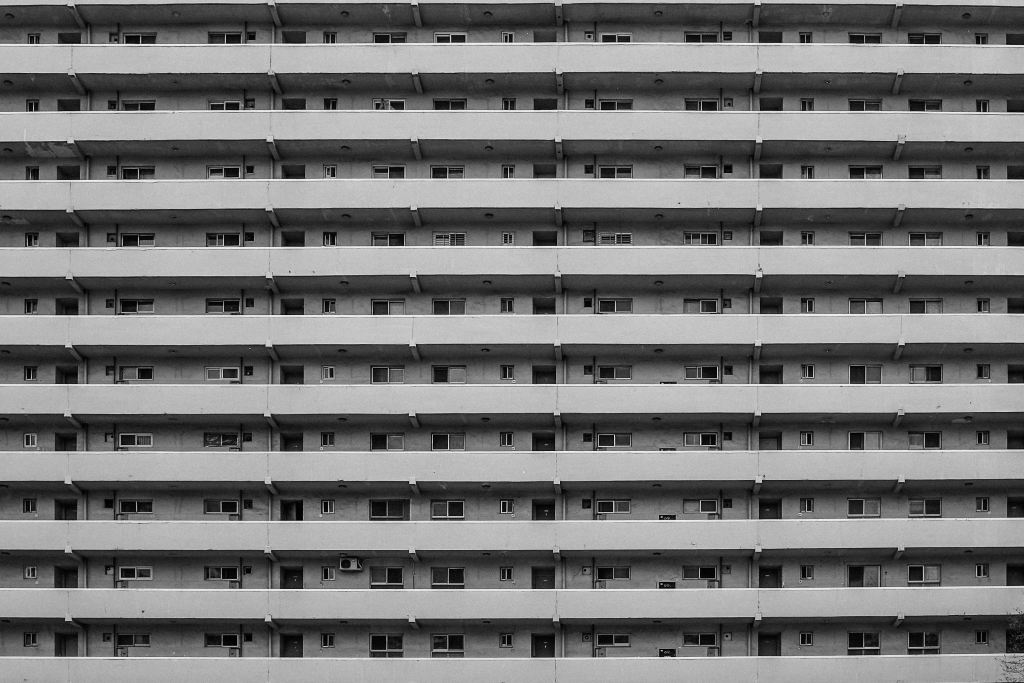
Check your apartment's multi-unit housing management regulations for resident consent requirements and obtain consent accordingly.
How do you actually get resident consent?
This is the fourth installment in this series on the Tourism Promotion Act and foreign tourist urban homestays. By now, readers should know all five housing types eligible for foreign tourist urban homestays: detached houses, row houses, multi-family houses, multi-household houses, and apartments. Of these five, all except detached houses require some form of resident consent.
Whether getting consent will be easy or hard — you won't know until you try. Some people bought expensive hotel bakery cakes and made the rounds to neighbors' doors. Others just knocked on doors and asked for signatures and wrapped it up easily.
Some approached it as a young person trying to start something and politely asked for help. Some distributed business cards to every household, telling neighbors to call anytime — middle of the night, crack of dawn — if the foreign guests caused even the slightest inconvenience, promising to rush over immediately. Don't psych yourself out thinking "Who'd want foreigners doing homestays in their apartment?" and give up before you even try.
The Ministry of Culture, Sports and Tourism guidelines don't include a specific consent form template. First check with your local official and apartment management office. If there's no set format, create one with fields for unit number, name, contact info, and signature.
After getting resident consent
Don't relax just because you've secured resident consent and legally launched your foreign tourist urban homestay. The Ministry guidelines state:
(Notice of Community Living Obligations) If you violate obligations to maintain community order as stipulated in management regulations, or if litigation over damage compensation arises due to violations of duty-of-care obligations under Article 217 of the Civil Act, the fact that you are registered as a 'Foreign Tourist Urban Homestay' does not exempt you from liability. This must be explicitly communicated.
Translation: If your place repeatedly generates complaints, you can't hide behind your foreign tourist urban homestay license to escape responsibility.
The most common issue with foreign tourist urban homestays is noise complaints. Guests are usually on vacation mode and tend to stay up late talking loudly. Foreign visitors often have no idea about Korea's recycling separation rules and may toss food waste wherever. The sound of rolling suitcase wheels from a foreign tourist arriving on a dawn flight can irritate neighbors. You need to understand and accommodate this.
One operator I know regularly brings food to their neighbors. Watermelon in summer, tangerines in winter, even fish-shaped pastries. On recycling days, they even bundle up newspapers left out by neighbors. If you want to smoothly operate a foreign tourist urban homestay in multi-unit housing like an apartment, you need to adopt that kind of thoughtfulness.
※ I strongly recommend reading the Ministry of Culture, Sports and Tourism's <Foreign Tourist Urban Homestay Business Administrative Guidelines> from start to finish. It contains detailed criteria that officials use to decide whether to approve a foreign tourist urban homestay license — not just apartment resident consent.
If you have trouble finding the document on the ministry website, you can download it from Suran's blog.
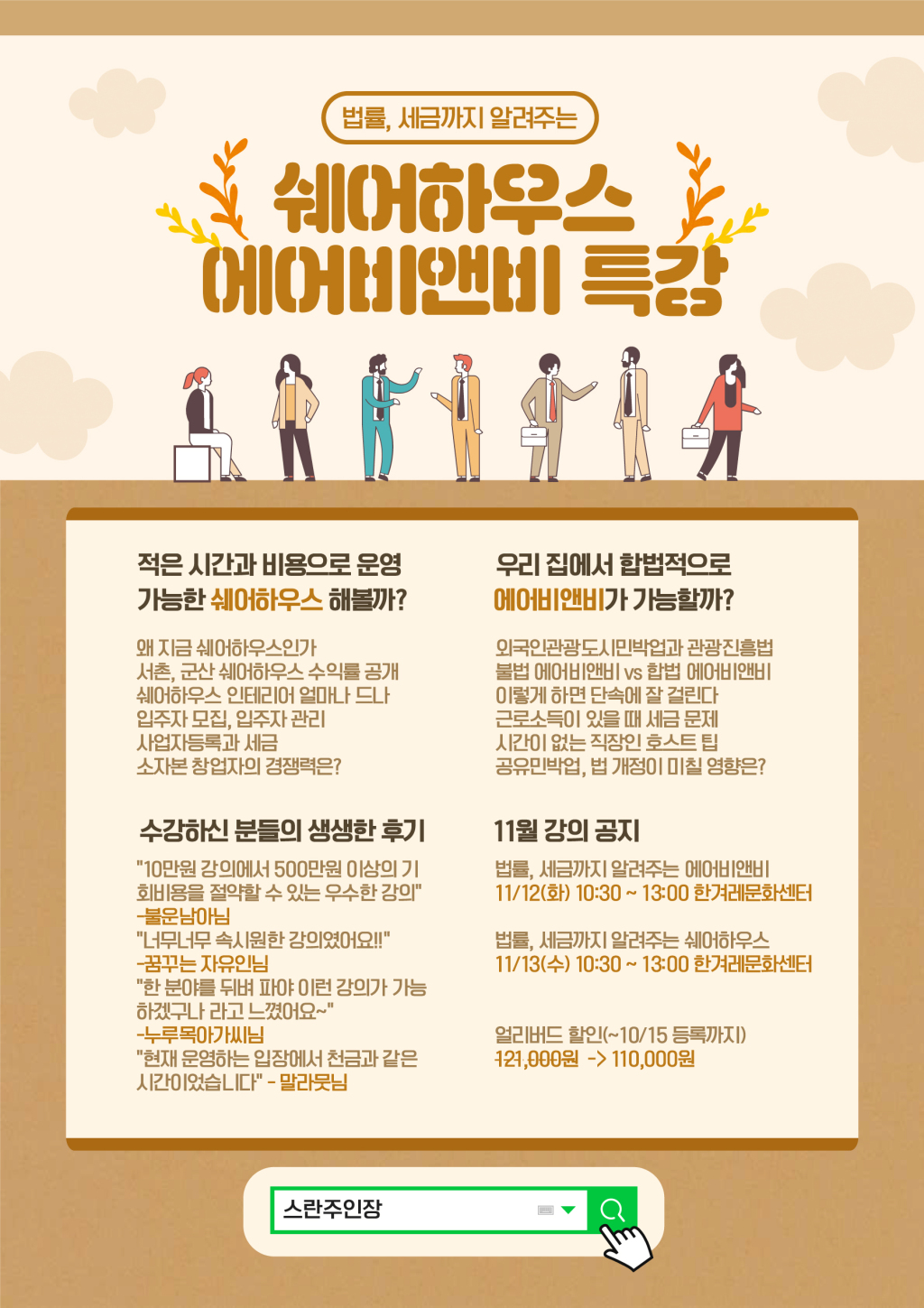
Visit www.bnbsuran.co.kr or search '스란주인장' (Suran Host) on Naver.
[Series Index]
July 2019: Understanding the Tourism Promotion Act — Know the Intent, Understand the Law Aug 2019: Eligible Housing Types Are Limited Sept 2019: Urban Homestay vs Rural Homestay Oct 2019: Do You Need Resident Consent to Operate in an Apartment? Nov 2019: Business Registration Methods, What Taxes Will You Pay? Dec 2019: Illegal Airbnb Operations — Penalties for Violations? Jan 2020: Do You Know About the Tourism Promotion Development Fund? Feb 2020: Is Legal Domestic Guest Accommodation Possible? Mar 2020: Why Jeju Island Doesn't Have Urban Homestays? Apr 2020: What Impact Will Shared Homestay Business Have?
View Full Magazine Issue <<
Subscribe to Magazine <<
⚠️ All rights reserved. Cite this piece as 'ONDA (온다)' when quoting.