Running an Airbnb in Korea without proper registration isn't just risky—it's expensive. Fines, back taxes, and legal trouble stack up fast. Here's what happens when enforcement catches up.
06. Illegal Airbnb: What Happens When You Break the Law?
Writer Suran
Editor ONDA Somora Manager
What Every Airbnb Entrepreneur Needs to Know
Airbnb stands as the shared economy's biggest success story—a brilliant way to monetize idle space. But dive in without homework and you'll find yourself on the wrong side of enforcement. Where's the line between legal and illegal? The Tourism Promotion Act, foreign tourist urban homestay regulations, taxes every legit Airbnb host must pay—Suran breaks it all down in plain language.
Suran
After years in corporate life, I launched Guesthouse Suran in Seoul's Seochon neighborhood in 2014. Hit my startup goal: work 20 hours a week, make ₩3 million a month. Started living the digital nomad life in 2018—work wherever, whenever.
Through columns and lectures, I share accurate legal and tax info with Airbnb and sharehouse entrepreneurs.
Website: www.bnbsuran.co.kr
What Punishment Do Illegal Airbnb Hosts Face?
From the early Airbnb boom to now, you see news stories about illegal Airbnb crackdowns constantly. If you're interested in foreign tourist urban homestays, you've probably followed these headlines closely.
But what actually defines illegal Airbnb? And what happens if your spot gets busted?
Let's look at some real cases:
"Seoul Central District Court fined B (34) ₩700,000 last month for running an Airbnb lodging business in an officetel without notifying the district office." [Financial News, October 18, 2015]
"Seoul Western District Court (Judge Kang Hee-kyung) sentenced freelancer Park (34, female) to a ₩1.5 million fine for violating the Public Health Control Act. Park had previously been punished in 2016 for running an illegal Airbnb lodging business." [Herald Economy, January 19, 2018]
"Seoul Western District Court (Judge Park Yong-geun) sentenced Park (50, female) to four months in prison, suspended for two years, for violating the Public Health Control Act. Park provided 13 officetel units as guest rooms, earning ₩75 million in total." [Accommodation Magazine, September 6, 2019]
Even these snippets make it clear: unregistered urban homestay operations are illegal. Unregistered lodging violates the Public Health Control Act, not the Tourism Promotion Act—punishable by up to one year in prison or a ₩10 million fine. As the articles show, penalties are getting stiffer every year.
Penalties Under the Tourism Promotion Act
What about the Tourism Promotion Act? A few years ago, it had no penalty provisions for foreign tourist urban homestays. But after a March 22, 2016 revision, penalty surcharges based on violation type were added. Here are the violations and fines under Article 34(1):
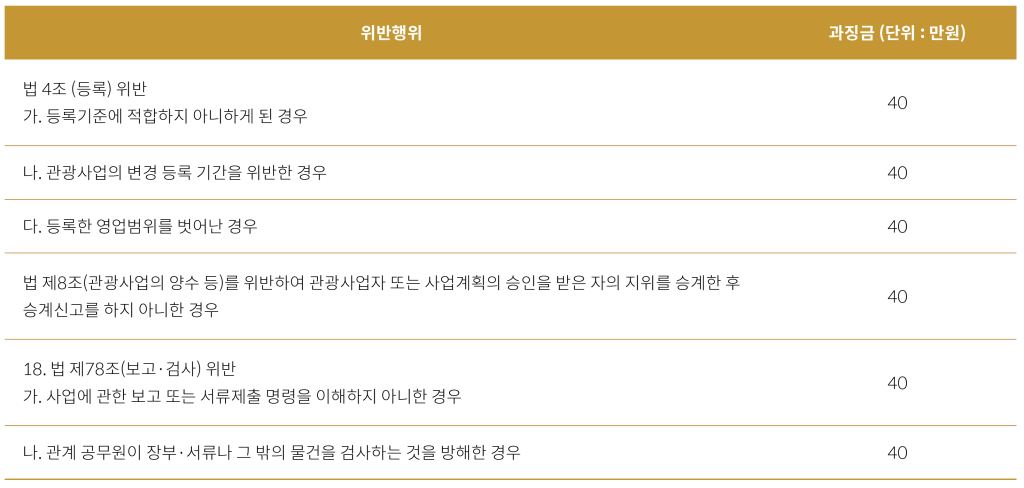
Penalty surcharge standards by violation type
Bottom line: ₩400,000 fine. Tourist hotels can face surcharges up to ₩12 million for violations. Foreign tourist urban homestays get lighter penalties because they're small-scale operations. Much lighter than Public Health Control Act violations we saw earlier.
But Tourism Promotion Act penalties get serious after three strikes. Check out the administrative disposition standards revised August 2, 2016:
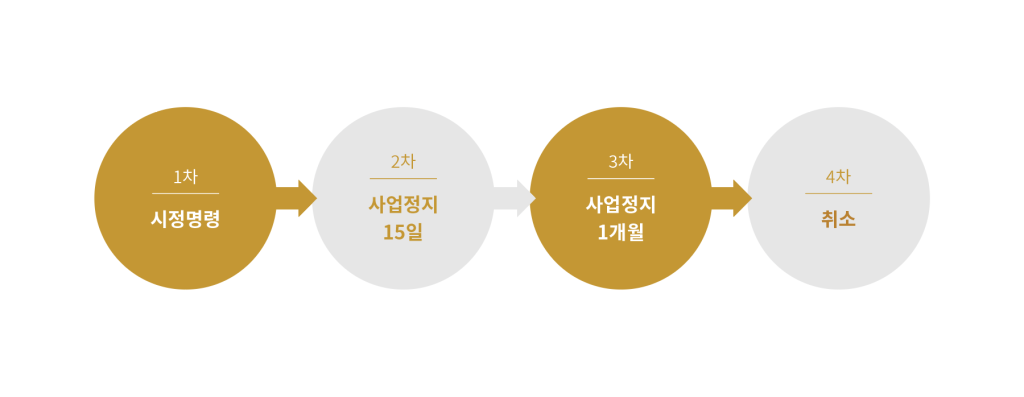
Administrative disposition standards for illegal Airbnb
First offense: corrective order. Second offense: 15-day suspension. Third: 1-month suspension. In severe cases, your foreign tourist urban homestay registration gets revoked entirely. That means game over—run your operation by the rules or face losing your business.
What Counts as a Violation?
The classic example: running lodging operations in a place or room not registered for foreign tourist urban homestay business. When a registered homestay does well, hosts often rent the unit next door and run both. Problem is, district officials know this playbook.
Getting registered as a foreign tourist urban homestay doesn't mean you're home free. Stay sharp.
Watch out especially for annual inspections by district officials (1–2 times a year). Say you reported operating one room, but a foreign guest emerges from another room during inspection. Or you registered the first floor only, but a guest drags a suitcase upstairs. That's trouble.
District officials (unlike tourism police, who show up 1–2 minutes after they call) coordinate inspection schedules in advance. Factor this in when you book your inspection slot. Some areas and inspectors do light walkthroughs (I've heard of cases where submitting interior photos by email sufficed). Others nitpick every regulation. Your inspector might change from last year.
Assume you'll meet the strict type. Prepare thoroughly. Know the Tourism Promotion Act and foreign tourist urban homestay regulations inside out. That's why we're doing this series.
Tip
When you first register as an urban homestay operator, ask officials in advance what documents to prepare for inspection. Some districts request lodging logs—documents you can't just whip up on the spot.
Do Tourism Police Only Target Illegal Lodgings?
Many people wonder about tourism police. They're stationed in the Foreign Affairs divisions of Seoul, Busan, and Incheon Police Agencies. They speak English, Japanese, and Chinese at near-native levels. So they know exactly what to ask foreign guests who've booked unregistered accommodations.
People assume tourism police only crack down on illegal lodgings. Not true. They've visited my legally registered urban homestay twice. They found no violations.
Who reported us? Why? I have my suspicions. Anyone can find our Airbnb listing and check the calendar to see how booked we are. Multiply nightly rate by occupied nights—instant monthly revenue estimate. Probably envy from competitors in the same industry.
Of Course Korean Guests Are Illegal Under Foreign Tourist Urban Homestay Rules!
That's why Airbnb operators must know the Tourism Promotion Act and foreign tourist urban homestay regulations cold. Take Korean guests as an example. Readers of this column know foreign tourist urban homestays can only accommodate foreigners. But in reality, you can't run an Airbnb business in Korea while excluding Korean guests. One article reported 69% of Airbnb bookings in Korea come from domestic guests—which clearly violates foreign tourist urban homestay regulations.
Don't think "everyone else does it, so it's fine." Don't give anyone ammunition for a malicious report. Even if most of your guests are Korean, only post photos with foreign guests on your guesthouse Facebook or blog. Keep up appearances consistently.
You chose foreign tourist urban homestay registration to operate legally, yet you can't relax. Frustrating, I know. I understand why guesthouse owners say cynically, "Illegal this way, illegal that way." But it's still better than running an unregistered lodging and getting busted under the Public Health Control Act.
Is there any chance this unreasonable Tourism Promotion Act gets amended? What's happening with shared homestay business introduction? I'll cover that in the April 2020 installment of this series.
The Tourism Promotion Act and foreign tourist urban homestay rules are complex and unreasonable—many owners feel legal operation is difficult. But penalties and fines keep climbing. I want to help you run your lodging legally within the system by sharing useful information through this series.
[Series Contents]
2019.07 Understand the Intent, Master the Tourism Promotion Act 2019.08 Only Certain Housing Types Qualify 2019.09 Urban Homestays vs. Rural Homestays 2019.10 Running It in an Apartment Requires Resident Consent? 2019.11 How to Register Your Business, What Taxes Do You Pay? 2019.12 Illegal Airbnb: What Happens When You Break the Law? 2020.01 Do You Know About the Tourism Promotion Development Fund? 2020.02 Legal Korean Guest Accommodation Is Possible? 2020.03 Jeju Island Has No Urban Homestays? 2020.04 What Impact Will Shared Homestay Business Have?
View Full Magazine <<
Subscribe to the Magazine <<
⚠️ All rights reserved. Cite this piece as 'ONDA (온다)' when quoting.