Korea's condo boom defined the '80s vacation scene—until memberships lost their edge. Now hotels dominate. This series traces how Korean hospitality pivoted from membership clubs to today's tech-driven stays.
02. How Korea's Hospitality Industry Evolved
By Potluck (https://brunch.co.kr/@nicejty0)
"Please close the window. The weather is too beautiful."
These are the words of someone on their deathbed, lying there looking at the gorgeous scenery outside—reluctant to leave. It's also the title of an essay by painter Hwang Ju-ri. The day they described must have been a lot like today. The fine dust has finally cleared, and we're blessed with a spring breeze and sunshine that lift the spirits from morning on.
Today we're diving into the evolution of Korean hotels. But before hotels became the norm, condominiums were the face of vacation lodging. Let's start there.
Back in the 1970s, summer trips meant camping in tents or staying at local guesthouses. Then the 1980s ushered in the condo boom. The trailblazer? Myungsung Condo (now owned by Hanwha). Soon after came Korea Condo, Daemyung, Hanwha, Koresco—the condo golden age. Owning a condo membership was a status symbol. But today? Does anyone still buy condo memberships? Two big reasons explain the decline.
First, from the supply side (the condo developers' perspective): Selling memberships is a fantastic way to raise capital. If you sell memberships early in construction, you can fund the entire project without taking on interest-bearing loans—and pocket profit before the building is even finished. Yes, memberships are use-rights with a contract period, and you're supposed to refund the principal when it expires. But back in the high-interest era, the real value of that principal 20 years later (the typical membership term) had eroded so much that developers weren't too worried. Plus, many members just renewed.
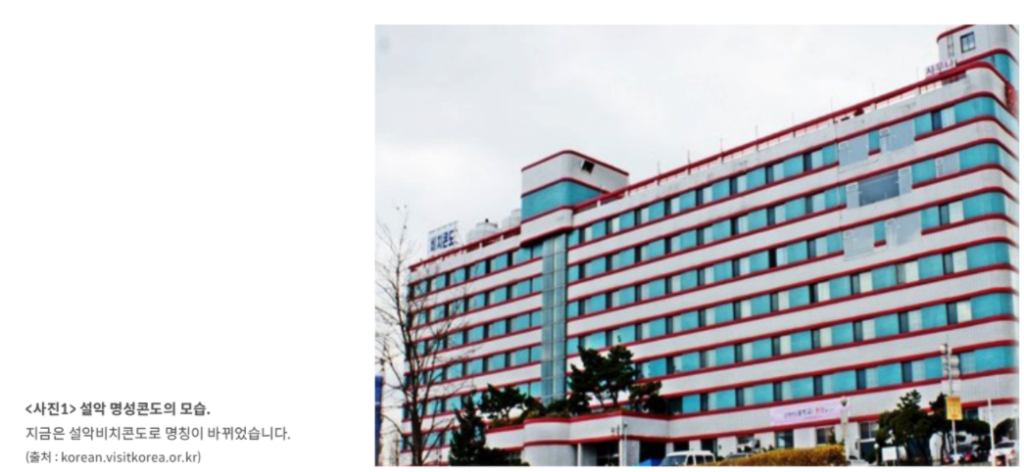
Then problems started piling up.
First, as the condo supply grew, competition heated up—and even non-members could book rooms at decent rates. The membership edge disappeared.
Second, developers sold memberships and then neglected upkeep. Facilities deteriorated, and condos lost ground to newer lodging options.
Third, the low-interest era arrived. Suddenly, refunding membership fees at contract expiration didn't mean handing back pocket change—it was a real burden. Meanwhile, as new condos opened and old membership properties aged, more and more members opted for refunds instead of renewals. That created serious cash-flow pressure for developers.
For these reasons, the condo market began its long slide. Today, aside from Daemyung, Hanwha (and E-Land), almost no one's in the condo business. Former condo guests migrated to boutique pensions, camping, and hotels.
Quick sidebar
Before we move on, a word on Daemyung and Hanwha's strategy.
First: chain networks. Both companies have properties nationwide, so buying a membership at one location gets you access to the whole portfolio.
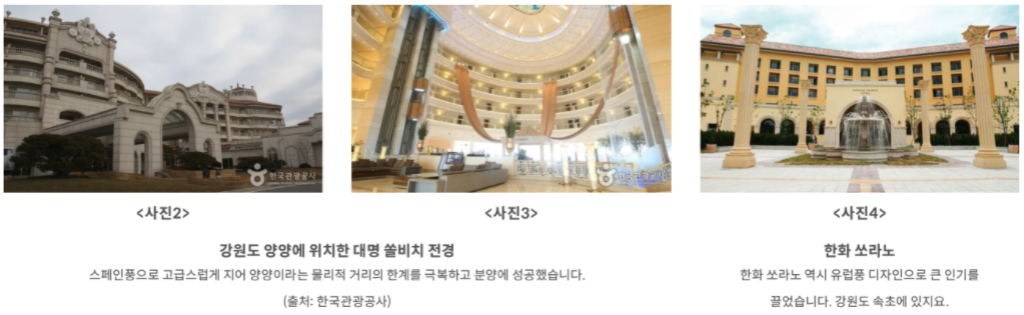
Second—and this is key—"premiumization." Condos used to feel like cookie-cutter apartments. They couldn't compete with charming boutique pensions or upscale hotels. So Daemyung launched "Sol Beach" and Hanwha launched "Sorano"—high-end condo brands. They didn't use their legacy names for the same reason Hyundai created Genesis and Toyota created Lexus: fresh branding for an upmarket play.
Now, back to hotels.
Before 2000, Korea's hotel industry was dominated by chaebol-run luxury hotels. Here's why. In the 1960s–70s, during Korea's development push, the Park Chung-hee government worked hard to attract international events—boosting Korea's global profile and jumpstarting tourism. But hosting global conferences requires something specific: hotels with convention facilities. So the government passed special legislation to incentivize the development of luxury convention hotels.
Still, even with legal perks, building a luxury hotel requires serious capital—not something just anyone can pull off. That's why conglomerates led the charge. Samsung's Shilla Hotel, Shinsegae's Westin Chosun, Lotte Hotel—these became the flagships. But luxury hotels are expensive to build and maintain, making profitability elusive. For conglomerates with sprawling affiliates, though, hotels served other purposes: hosting foreign buyers, holding company events, offering a convenient venue for the owner's family (especially the matriarchs). In short, hotels weren't profit centers—they were corporate accessories.
Then the industry hit an inflection point: the Korean Wave brought a surge in foreign tourists. K-pop kicked it off, then came dramas, films, cosmetics, food—Korea became a must-visit destination. Chinese tourists, in particular, skyrocketed. Japan had always sent the most visitors, but in the past 3–4 years, Chinese arrivals overtook Japanese.
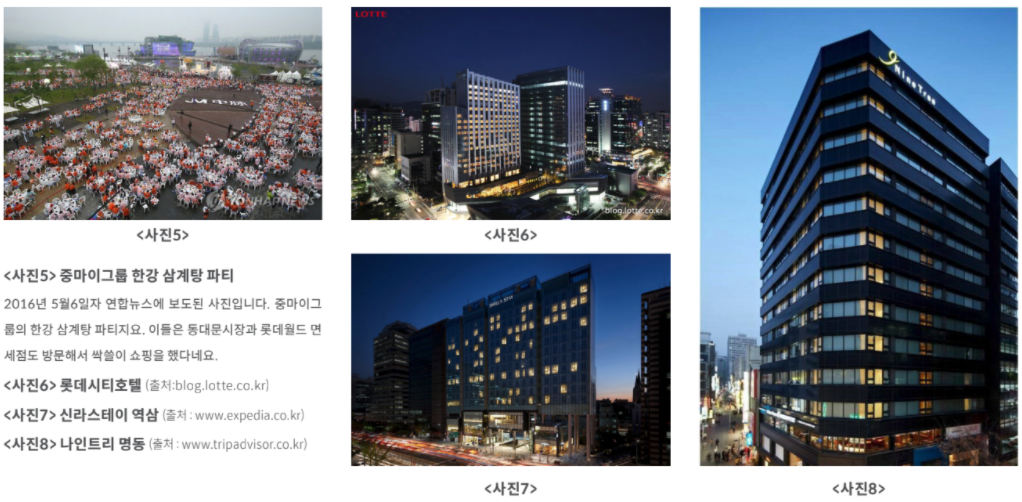
In March 2016, Aoran Group brought 6,000 employees on an incentive tour to Incheon, visiting the Wolmido filming location from My Love from the Star and throwing a fried-chicken-and-beer party. That May, Zhongmai Group brought 8,000 employees for a Descendants of the Sun OST concert on the Han River and a samgyetang feast. (Zhongmai has since sent another 1,000-person group—Korea's a favorite.) Chinese tour groups operate at staggering scale. Korea crossed the 10-million-tourist threshold.
Now think about it: All those visitors need places to stay. And do they prefer expensive luxury hotels—or mid-range and budget options? Obviously, demand surged for mid-range properties.
So from the late 2000s onward, mid-range hotel development exploded. Shilla and Lotte launched new brands—"Shilla Stay" (Gwanghwamun, Yeoksam, Jeju, Dongtan, Ulsan, Cheonan) and "Lotte City Hotel" (Mapo, Jongno, Daejeon, Ulsan, Gimpo). But running a mid-range hotel is fundamentally different from running a luxury property. Both chains went through painful trial-and-error as they scaled.
Parnas (a GS Engineering & Construction subsidiary that runs the InterContinental Seoul COEX) also jumped in with "Nine Tree," opening locations in Myeongdong and Chungmuro. International brands—Ibis, Novotel, Holiday Inn—aggressively entered the Korean market. A wave of change swept through the industry.
And capital markets started seeing hotels as real money-makers. (Unlike luxury hotels, mid-range properties have low overhead—just room cleaning and restocking amenities like shampoo, soap, toothbrushes.) Asset managers poured fund capital into hotels. Supply surged.
Seoul once had so few hotel rooms that the government offered floor-area-ratio incentives (basically, permission to build taller). Now we're hearing warnings of oversupply. The THAAD missile-defense dispute with China—and the resulting drop in Chinese tourists—didn't help.
Like any market, the hotel sector will eventually find equilibrium between supply and demand. That's it for today.
[Series Index]
2018.03 The Origin and History of Hotels
2018.04 How Korea's Hospitality Industry Evolved
2018.05 Characteristics of the Hotel Industry
2018.06 Quick Guide to Hotel Terminology
2018.07 Key Functions and Facilities of Hotels
2018.08 Hotel Operating Models
2018.09 Understanding Hotel Brands
2018.10 Lodging Development/Operations Success Stories (1)
2018.11 Lodging Development/Operations Success Stories (2)
2018.12 Lodging Development/Operations Success Stories (3)
2019.01 Lodging Development/Operations Success Stories (4)