Understanding hotel brands: Why Four Seasons opening in Seoul mattered, how global hotel companies stack up, and what luxury vs. budget branding really means.
07. On Hotel Brands
By Potluck (https://brunch.co.kr/@nicejty0)

Four Seasons Seoul, right in the heart of Gwanghwamun (Source: Four Seasons Hotels and Resorts website)
On October 1, 2015, Four Seasons opened in Gwanghwamun. A real luxury brand had finally landed in Korea. Four Seasons Hotels & Resorts — founded in 1961 — now operates 92 hotels and resorts across 38 countries.
Today, let's talk about hotel brands. Which ones do you like? Marriott, InterContinental, Walkerhill, Hilton, Sheraton… there are so many. Let's dig into what they really mean.
1. Why do brands matter?
I mentioned Four Seasons above. I haven't stayed there yet, but I can already picture it: classical interiors, mahogany-esque furniture in the lobby and bar, spacious and luxurious rooms. I can visualize all this because of the "Four Seasons" brand.
Brands signal a hotel's concept and service standard. When you travel somewhere unfamiliar, seeing a brand you recognize means you know what to expect.
Brands also relate to personal safety. For example, attacking a Marriott property is effectively attacking the U.S. — so in risky destinations, travelers gravitate toward well-known global brands.
2. Understanding hotel companies
You've probably heard of Marriott or InterContinental. But Accor or Starwood? Maybe not. That's because Marriott and InterContinental are both corporate names and hotel brand names. Accor and Starwood are parent companies that own multiple brands — Novotel/ibis (Accor), Sheraton/Westin (Starwood) — but don't operate hotels under their own corporate name.
A few years ago, the global ranking by hotel count and room inventory looked like this: IHG (InterContinental), Marriott, Hilton, Wyndham, Accor, Starwood. Then in March 2016, Marriott acquired Starwood for ₩16.7 trillion, becoming the world's largest hotel company.
3. Mapping global hotel brands by tier
Let's organize these top companies' brands by grade. Hotel star ratings vary by country — a "deluxe" hotel in one market might be standard elsewhere. So I've standardized them my own way and laid out the brand hierarchy:
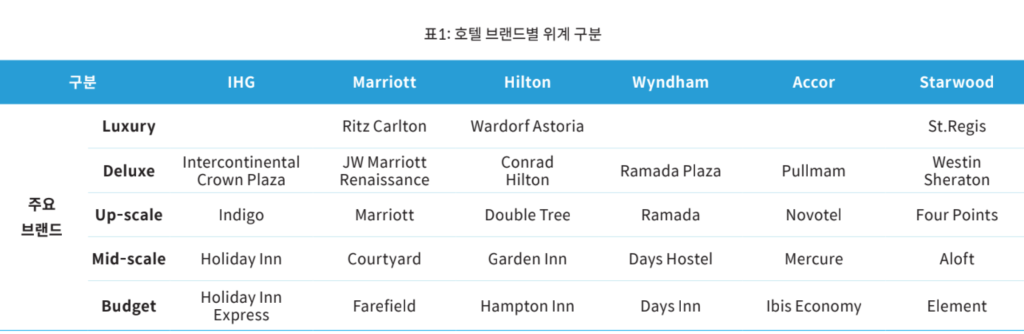
Luxury is the top tier — think six-star hotels (legally five-star is the max, but these transcend that). Deluxe is five-star. Upscale is 4–5 star (in Korea, four-star hotels are still classified as "special-grade"). Mid-scale covers business hotels at 3–4 stars. Budget is the most affordable: 1–2 stars.
Luxury hotels are often historic landmarks. St. Regis, Waldorf Astoria, Ritz-Carlton — even the names come from their founders.
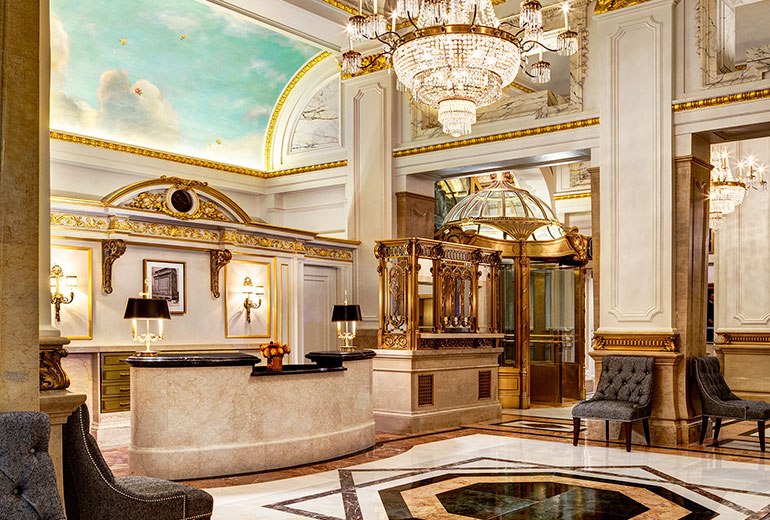
St. Regis New York's opulent lobby (Source: starwoodhotels.com)
Were these storied properties always part of global chains? Of course not. Global hotel companies acquired them to fill out their luxury lineup.
In Korea, the old Ritz-Carlton in Yeoksam-dong (now Le Méridien) wasn't managed well and lost its luster. But globally, it's an elite brand.
While we're on the subject of undervalued brands: Wyndham's Ramada is classified as a four-star upscale hotel internationally. In Korea, the brand was slapped onto condo-hotels, diluting its reputation.
This tier breakdown might look like a ranking, but luxury/deluxe brands aren't necessarily more profitable than mid-scale or budget ones. In fact, lower-tier brands often deliver better ROI.

Waldorf Astoria New York. Countless VIPs have stayed here.
Beyond grade, hotel companies also organize brands by format: residence-style, resort, boutique, and more.
Maybe next time we can explore hotel brands from a concept lens rather than a grade lens.
Summer heat is finally letting up. Stay happy! ^^
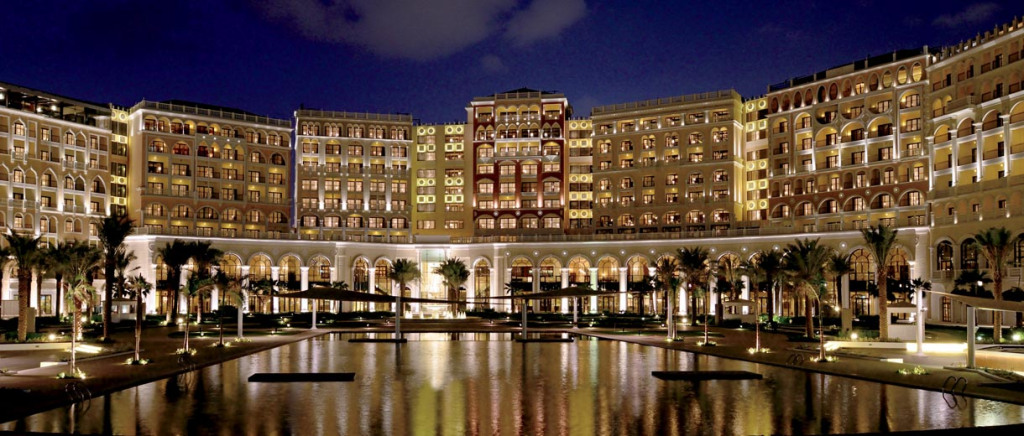
Ritz-Carlton Abu Dhabi. Is this heaven? (Source: Wikipedia)
[Series Index]
2018.03 The Origins and History of Hotels
2018.04 The Evolution of Korea's Accommodation Industry
2018.05 Characteristics of the Hotel Industry
2018.07 Key Hotel Functions and Facilities
2018.08 Hotel Operating Models
2018.09 On Hotel Brands
2018.10 Success Stories in Accommodation Development/Operations (1)
2018.11 Success Stories in Accommodation Development/Operations (2)
2018.12 Success Stories in Accommodation Development/Operations (3)
2019.01 Success Stories in Accommodation Development/Operations (4)