The necessity of digital transformation in the hotel industry
Introduction: Defining Digital Transformation and Why It Matters
Digital transformation typically unfolds in three stages. Simply put: if you're working on computers, you're at stage 1. If you're taking bookings through your website or OTAs, you're at stage 2. If you're building entirely new digital-based business models, you're at stage 3 — meaning your transformation is on track for the current era.
Let's break it down:
Stage 1 is Digitization — converting handwritten records and analog data into digital format.
Stage 2 is Digitalization — using digital technology to improve customer experience and operational efficiency. This includes online booking systems, automated check-in/check-out, and optimizing internal processes.
Stage 3 is Digital Transformation — leveraging digital technology to create new revenue models or fundamentally change your existing revenue structure. For example, hotels can offer data-driven personalized packages or use subscription models to build customer loyalty. The key difference between Stage 2 and Stage 3 lies in whether you're transforming your revenue model.
Why Hotels Must Embrace Digital Transformation
Labor Shortage: In the hotel industry, digital transformation is essential for reducing labor costs and addressing staffing challenges. Automated systems boost operational efficiency and reduce repetitive tasks, easing the burden on your team.
Rising Digital Expectations: More customers prefer digital tools and services. To stay competitive, hotels must deliver digitalized customer experiences that meet these evolving expectations.
Reference: Start DT 2 Months Early, Get 2 Years Ahead
Before we dive deeper, let's run a quick self-assessment. How digitally transformed is your hotel? The more X's you check, the more work you have ahead of you.
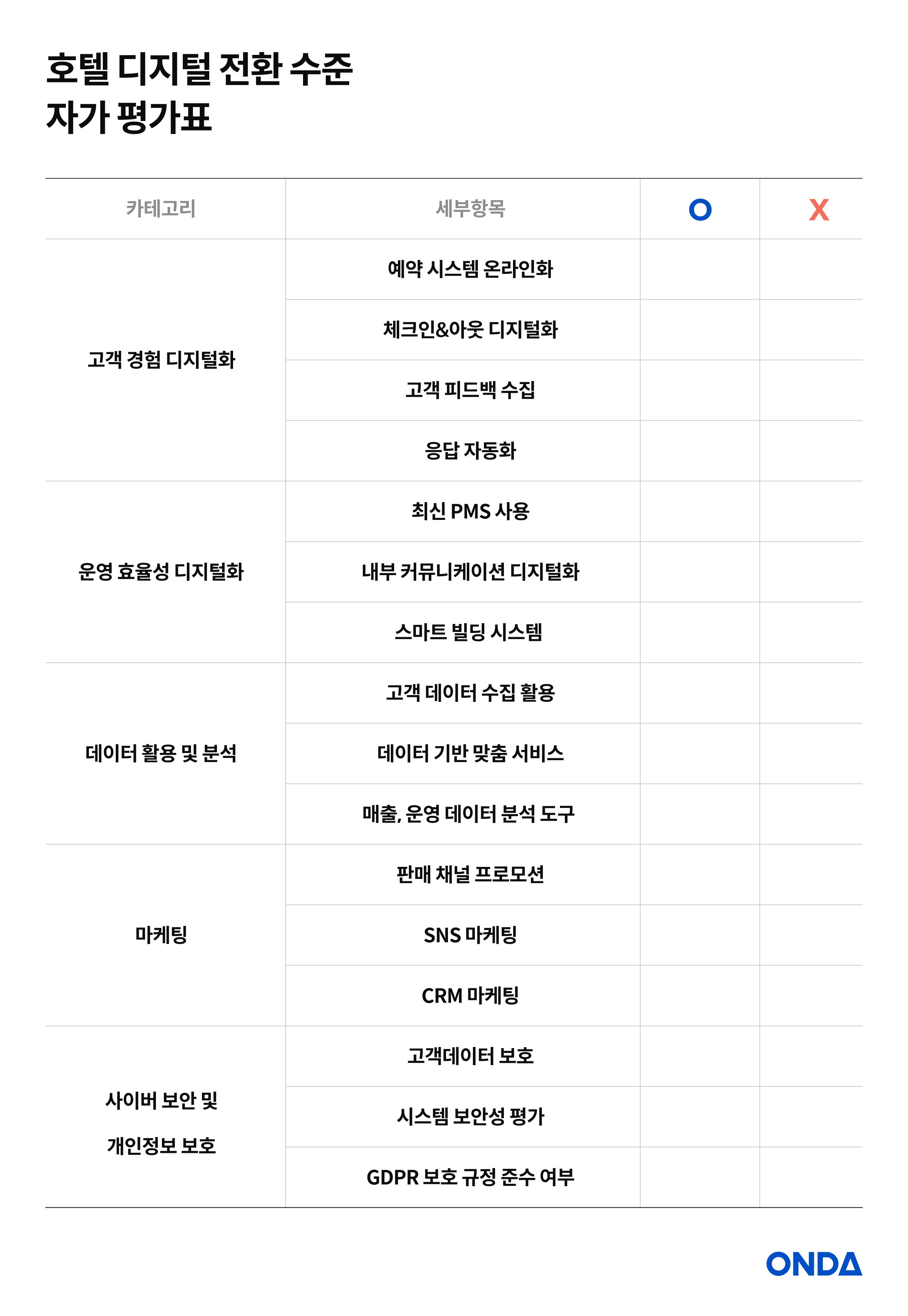
Stage 1: Digitizing the Guest Experience
-
Bring reservations online: Make it easy for guests to book rooms online. A hotel management system (PMS) that integrates your booking engine and channel manager is critical. This prevents double bookings across channels and enables efficient operations. ONDA supports seamless booking management through this integrated approach. Convenient online booking elevates guest satisfaction and streamlines the reservation process.
-
Digitize check-in and check-out: Let guests check in and out quickly via mobile. Kiosks or mobile check-in reduce front desk congestion and improve the guest experience.
-
Automate feedback collection and responses: Build a system that collects guest feedback digitally, analyzes it automatically, and responds promptly. This helps you understand and address guest needs faster.
Stage 2: Digitizing Operations
-
Use a modern PMS: To manage room status and inventory efficiently, adopt a modern Property Management System. Consider upgrading from legacy systems to platforms like ONDA. These systems connect with various channel managers, giving you real-time booking visibility and streamlining operations. This dramatically boosts operational efficiency by enabling real-time resource tracking and management.
-
Staff scheduling and internal communication systems: Manage employee schedules digitally and use internal communication tools for smooth team collaboration. This improves workforce management efficiency and reduces operational confusion.
-
Smart building and energy management systems: Implement smart building management systems to monitor and reduce energy consumption efficiently. These systems cut costs while delivering positive environmental impact.
Stage 3: Data Utilization and Analysis
-
Collect and use guest data: When collecting guest preferences and behavior data, comply with local regulations — inform guests and obtain consent. Use this data to deliver personalized services.
-
Offer data-driven personalized services: Analyze guest data to create tailored packages for individual preferences. For example, offer spa discounts to guests who've used spa services before.
-
Leverage sales and operations analytics: Analyze revenue and operational data to support management decisions. This helps you plan low-season strategies or spot new opportunities.
Stage 4: Marketing
-
Channel promotions: Actively participate in promotions run by major OTAs or e-commerce platforms to offer guests extra benefits and drive bookings.
-
Social media marketing: Use social media to promote hotel events and offers. Based on ONDA's experience, driving positive reviews on major OTAs is most important for domestic guests in Korea. Managing your Naver blog and Naver presence is also essential for search visibility. Additionally, actively using Instagram strengthens customer engagement and builds brand image. Robust social media activity raises brand awareness and attracts more guests.
-
CRM marketing: CRM marketing using acquired guest data is also important. For example, send special discount coupons to repeat guests or offer personalized promotions for anniversaries to boost loyalty. Data-driven email campaigns or SMS can continuously strengthen customer relationships.
Stage 5: Cybersecurity and Privacy Protection
-
Security measures to protect guest data: Implement strong encryption and security solutions to protect guest personal information. Maintaining guest trust is paramount.
-
Assess digital system security: Regularly evaluate and update the security of digital systems used in your hotel. This minimizes the risk of cyberattacks.
-
Comply with privacy regulations like GDPR: Adhere to privacy regulations such as GDPR to manage guest data securely and prevent legal issues.
Conclusion: Strengthening Competitiveness Through Digital Transformation
Digital transformation maximizes hotel operational efficiency and guest experience, providing long-term competitive advantage. Automation and data-driven operations reduce labor costs and increase guest satisfaction.
Digital transformation isn't just about adopting technology — it means transforming your entire business model. It requires adopting cutting-edge technology, training staff, and changing organizational culture. Partnering with companies like ONDA is an effective way to drive this forward.