Today, accommodation products sell across countless online channels. ONDA data shows hotels connected to 31+ channels get 43% more bookings than those with 15 or fewer. So which channels are rising, and what makes each one unique?
Hello from Weekly ON, your hospitality newsletter. Where do you book your stays? These days, accommodation products are sold across a dizzying number of online channels. ONDA data shows hotels connected to 31+ channels get 43% more bookings than those with 15 or fewer. So which channels are rising, and what makes each one unique?
⚠️ All rights reserved. Cite this piece as 'ONDA (온다)' when quoting.
In this issue
🏨 Which online sales channel fits your property?
💡 'Swiftonomics' — the power of enter-tourism
⌨️ #SingleUsePlasticBan #MOCTRegulatoryReform #HotelTechInvestment #JanuaryBorderCrossings #HotelWorkshops
🏨 Industry Story
Which online sales channel
fits your property?
ONDA distributes over 4,000 rooms per day across more than 50 online sales channels. With that many channels comes a lot of diversity — and what works on one platform often flops on another.
For Weekly ON readers, it's worth understanding which channels align with your property so you can make the most of them. Let's break down nine major categories of domestic accommodation sales channels.
1. Korean OTAs (Online Travel Agencies)
OTAs specialize in online travel services — accommodation, flights, car rentals, and more.
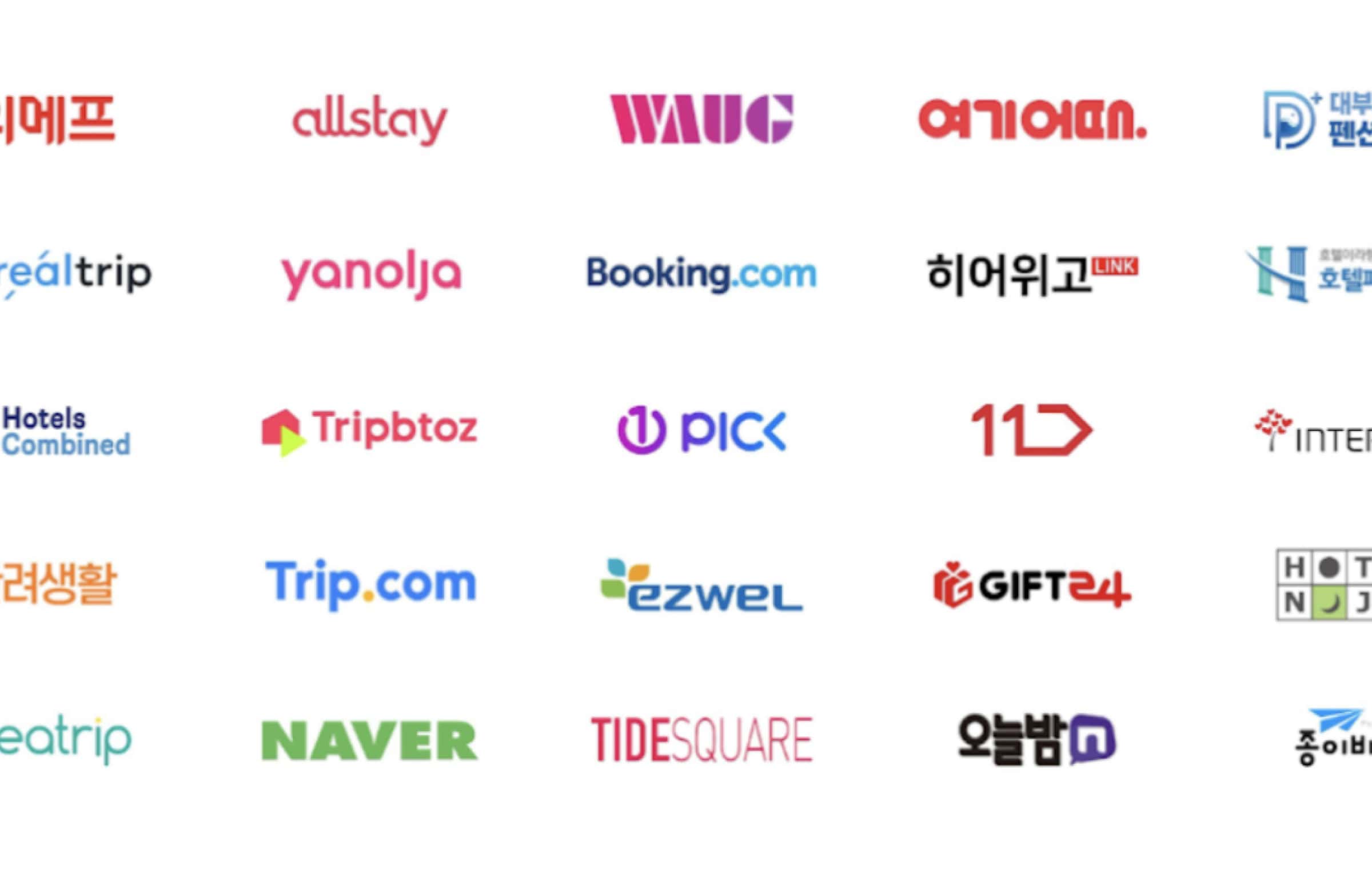
Korea's first online travel product sale dates back to 1999, when Interpark launched. Today, the household names are Yanolja, Yeogi Eottae, and MyRealTrip.
As travel-focused online marketplaces, these are the baseline channels to consider when selling rooms. They're also where customers go first for convenience.
2. Global OTAs (Online Travel Agencies)
Think Booking.com, Expedia, Agoda, and the like.
These platforms were originally used for international travel, but customers who became familiar with them abroad are now booking domestic stays on the same sites. In other words, global OTAs are becoming just as important as local ones.
In the broader sense, Airbnb — known primarily as a home-sharing platform — also counts as a global OTA.
3. Metasearch
Metasearch engines let users compare prices across multiple OTAs and hotel sites in one place. It's like using Naver Shopping to compare prices across different retailers. After finding the best rate on metasearch, users click through to the booking site.
Leading global services include Trivago and Kayak. Domestic examples include 11Street and Naver Hotels.
4. Search engines & portals
Did you know you can sell accommodations on portals through ONDA? Major search engines and portals like Naver and Google actually move a lot of bookings — especially when integrated with map services, which let users explore properties in a specific area visually.
Beyond these, accommodation products are also sold through e-commerce platforms, vertical commerce sites, closed marketplaces, and more.
Which channels are trending, and what are their strengths? Find out below!
👉9 Online Distribution Channels You Need to Know
💡Hospitality Trend
'Swiftonomics'
The power of enter-tourism
Global pop star Taylor Swift has become an economic force. Wherever her tour goes, local economies boom — hence the term 'Swiftonomics' (Swift + Economics). So just how big is Taylor Swift's impact on hotels and tourism?
CNBC reported that Taylor Swift is single-handedly boosting U.S. hotel revenue. Her tour hit 20 U.S. cities last year. During concert dates, Philadelphia hotels saw their highest post-COVID revenue, and Chicago broke its all-time record for booked rooms.
This year, her tour continues across Asia — Japan, Singapore, and beyond. In Singapore, flight and hotel demand around concert dates jumped roughly 30%. A famous Singapore hotel launched a Taylor Swift package priced at over ₩50 million. It sold out.
Skyscanner named "enter-tourism" — the fusion of tourism and entertainment (concerts, fan meetings, dramas, etc.) — as a top 2024 travel trend. Travelers are more excited than ever about unique cultural experiences. With a major K-pop concert scheduled for October in Korea, it's a period worth watching closely.
Read the full story below!
👉Full story
📬 ONDA News

ONDA partners with UAE's Seed Group — Middle East expansion underway
ONDA is establishing a joint venture with UAE-based Seed Group to enter the Middle East hotel market.
Leveraging Seed Group's regional network, ONDA plans to expand supply of PMS, CRS, and other operations solutions to hotels across the MENA (Middle East and North Africa) region.
From Korea to Southeast Asia, Taiwan, and now the Middle East — ONDA is driving digital transformation across the global hotel industry.
👉Learn more
⌨️ Keyword News
1️⃣ Single-use plastic ban 👉[full story]
TL;DR: Ban on complimentary single-use amenities at hotels takes effect Feb 29
The story: Starting Feb 29, the revised Resource Recycling Act prohibits hotels with 50+ rooms from providing complimentary single-use items like toothbrushes. Violators face fines of up to ₩3 million.
The response? Major hotels have been preparing since last year — switching to refillable dispensers or eco-friendly products. An increasing number are also installing amenity vending machines for items like toothbrushes, toothpaste, and razors.
2️⃣ Regulatory reform from MOCT 👉[full story]
TL;DR: Ministry of Culture, Sports and Tourism unveils 2024 regulatory reform roadmap
The story: MOCT announced five core directions and 20 initiatives aimed at removing growth-limiting regulations in culture, sports, and tourism industries.
For tourism? Key initiatives include formalizing short-term rental systems for locals (urban home-sharing), streamlining penalties for compliant small businesses, reforming hotel rating systems, and simplifying tourism business registration procedures.
3️⃣ Hotel tech investment 👉[full story]
TL;DR: Chain hotels ramp up tech investment for direct bookings
The story: Domestic hotel chains are investing heavily in direct booking — upgrading official websites, integrating reservation/payment/settlement systems, and strengthening connectivity with back-end tools.
Why? Direct bookings reduce OTA dependence and commission costs. They also enable better customer data collection for CRM, giving hotels more control over the guest relationship.
4️⃣ January border crossings 👉[full story]
TL;DR: Korean outbound travelers hit 95% of pre-COVID levels in January
The story: In January 2024, Korean outbound travelers reached ~2.77 million, recovering to 95% of 2019 levels. Japan dominated outbound travel, accounting for roughly 31% of all departures.
And inbound? After consistently topping 1 million per month in H2 2023, inbound visitors dropped to ~880,000 in January. Chinese tourists led the pack, followed by Japan, Taiwan, the U.S., and the Philippines.
5️⃣ Hotel workshops 👉[full story]
TL;DR: Hotels compete with differentiated one-day classes
The story: Korean hotels are launching one-day workshops in cooking, wine, childbirth, art, horseback riding, and more — catering to guests seeking unique experiences.
Why? According to a Klook survey, 9 out of 10 Gen Z and Millennial travelers in Asia-Pacific prioritize unique experiences. In Korea, 76% said they're willing to pay extra for special activities.