Travel companies are racing to adopt AI. Soon you'll be able to plan entire trips through conversation alone. We tested AI travel chatbots to see how far they've come — and where they still fall short.
Hi there, it's Weekly ON, your hospitality industry newsletter. Travel companies are racing to adopt AI. Soon you'll be able to plan entire trips through conversation alone. So we tested AI travel chatbots to see how far they've come — and where they still fall short.
⚠️ All rights reserved. Cite this piece as 'ONDA (온다)' when quoting.
In This Issue
🏨 How far can paid AI chatbots actually plan your trip?
💡 Which travel apps do foreign tourists use in Korea?
⌨️ #TouristDemographics #OTAMemberships #ChineseTourists #PremiumTravel #HotelAmenitiesOnResale
🏨 Industry Story
How Far Can Paid AI Chatbots
Actually Plan Your Trip?
By now, most of you are familiar with generative AI services like ChatGPT. Surveys show over 70% of office workers have tried ChatGPT at least once.
But have you heard of GPTs? GPTs are custom ChatGPT bots tailored for specific use cases. Think of it as ChatGPT's app store. The catch? Only paid subscribers can access them.
So do you really need a custom GPT? For general use cases — current events, coding, translation — the free version of ChatGPT or Naver's Cue: work just fine.
But there's one area where general-purpose AI hits a wall: requests that require constantly updated, real-time information.
Travel planning is the perfect example. I'm planning an ambitious trip to Southeast Asia with my one-year-old twins. When I asked ChatGPT for help, here's what I got:
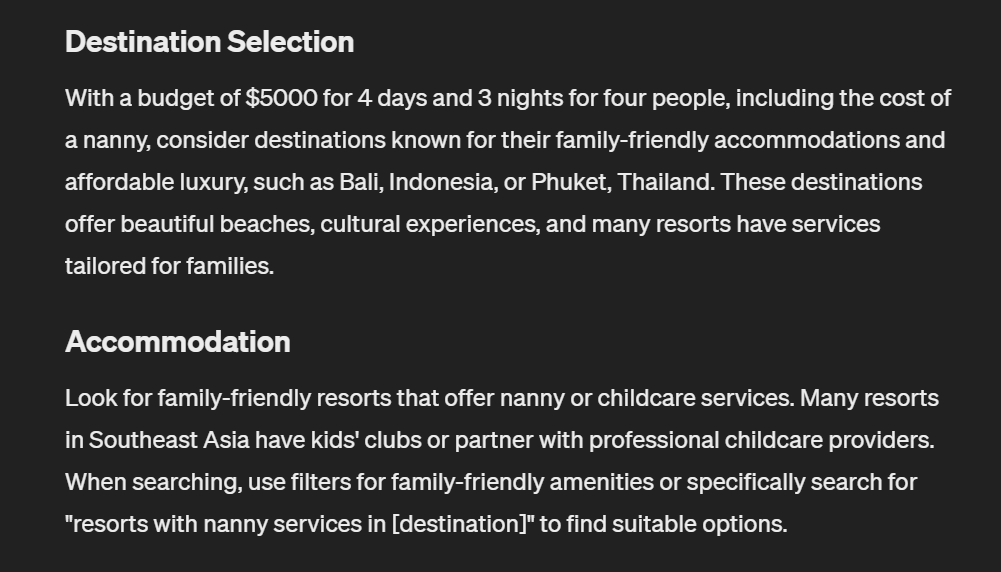
No matter how many times I asked, the answers stayed at a generic, surface level. So how did the custom GPTs perform?
One company taking AI seriously is Priceline. Searching the GPT Store, I found that KAYAK (a Priceline subsidiary) had a highly rated travel bot.
I asked the same question. The answer was far more specific. First, it pinpointed Bali as a top recommendation — citing beautiful beaches and family-friendly infrastructure. Then it suggested concrete activities: cultural experiences, water sports, safaris.
What stood out was the interaction. The bot asked me follow-up questions, offering to recommend hotels with babysitting services if I shared my travel dates. Once I did, it returned detailed hotel listings with pricing, ratings, and links directly to KAYAK.
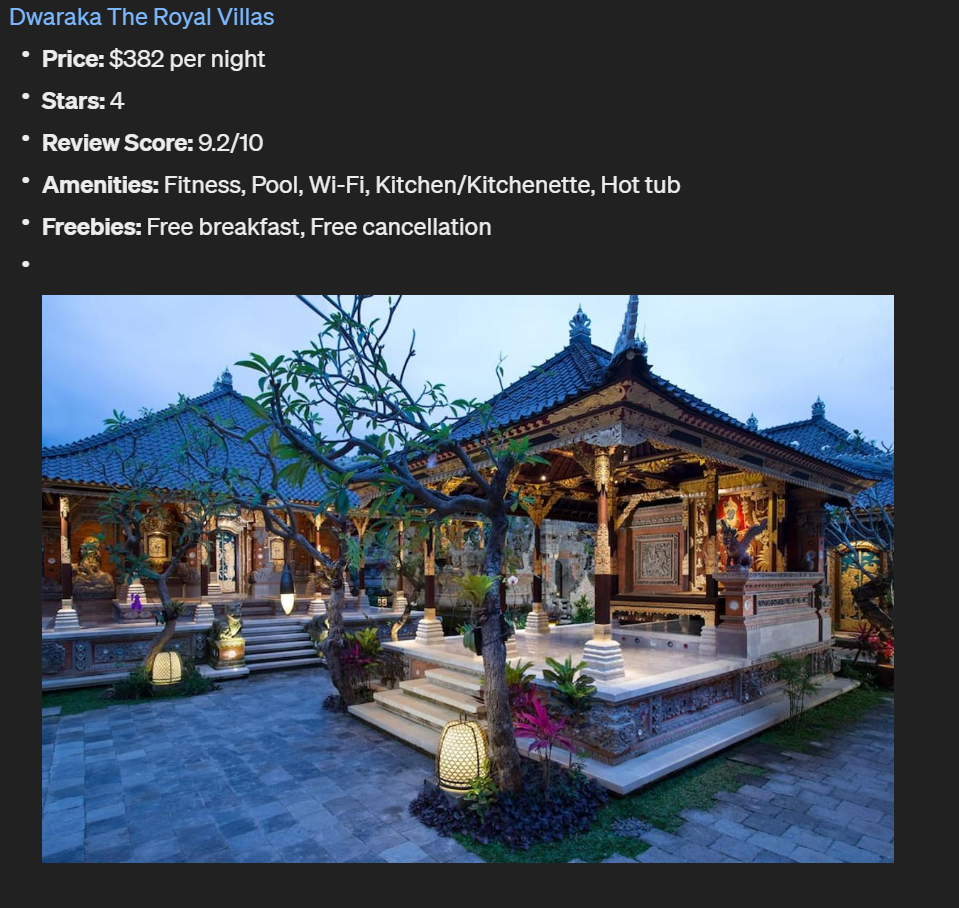
It even recommended flights once I gave it departure dates. At this point, I felt like I could plan the entire trip inside the chatbot. The more specific your input, the sharper the output.
The downside? KAYAK only recommends from its own inventory — so no cross-platform price comparison.
To compare quality, I also tried "Travel Guide," the most popular travel GPT in the store. How did it stack up?
👉Read the full comparison
💡 Hospitality Trends
Which Travel Apps Do
Foreign Tourists Use in Korea?
Inbound tourism to Korea is shifting toward independent travel. As online travel agencies (OTAs) grow, more travelers are booking trips on their own rather than through tour groups. For accommodation providers, the most important touchpoint is the booking app tourists use before arrival. So which platforms do foreign visitors prefer?
According to the Korea Tourism Organization's 'Travel App Trends & Usage Report,' 8 out of 10 foreign tourists (82.6%) use global OTAs when planning trips to Korea.
Preferences vary by nationality. Chinese tourists favor Trip.com Group's Ctrip and Qunar. Japanese travelers lean toward Agoda, Booking.com, and HIS. Southeast Asian and Taiwanese/Hong Kong tourists show a strong preference for Agoda. North American and European tourists primarily use Booking.com alongside Airbnb.
As independent travel grows, bookings through online platforms will only increase. Understanding which OTAs your target market uses — and listing your property there — is critical.
Read the full report below!
👉View the full report
⌨️ Keyword News
1️⃣ Tourist Demographics 👉[Full story]
TL;DR: 1 in 3 foreign tourists visiting Korea is under 30
The story: 35.6% of foreign tourists who visited Korea last year were 30 or younger. The trend holds across Asia, Europe, the Americas, and Oceania.
Why? Travelers in their 20s made up the largest share at 25.3%. Growing interest in K-content is driving young travelers to Korea in search of unique cultural experiences.
2️⃣ OTA Memberships 👉[Full story]
TL;DR: Korean OTAs revamp loyalty programs, boost perks
The story: Yanolja, Yeogi Eottae, and MyRealTrip are overhauling their membership programs and adding new benefits. The goal: lock in loyal customers and reduce churn.
Global OTAs? Last year, Expedia unified loyalty points across its brands (Expedia, Hotels.com, Vrbo). The program is set to launch in Korea next year.
3️⃣ Chinese Tourist Recovery 👉[Full story]
TL;DR: Chinese arrivals to Korea hit 71% of pre-pandemic levels
The story: Chinese tourism is bouncing back fast. In January, 280,000 Chinese tourists visited Korea — 71% of 2019 levels and the largest inbound segment.
Outlook? February numbers (which include Lunar New Year) are expected to exceed 300,000. Analysts predict continued growth as Chinese overseas travel demand surges post-holiday.
4️⃣ Premium Travel Packages 👉[Full story]
TL;DR: Korean outbound travelers at 95% of pre-pandemic levels in January
The story: Major Korean travel agencies like Hanatour and Modetour are launching or expanding premium travel brands. They're aiming to grow the share of high-margin luxury packages.
Demand? Last year, premium packages accounted for 57% of Hanatour's total revenue — six times higher than in 2019.
5️⃣ Hotel Amenities on Resale 👉[Full story]
TL;DR: Luxury hotel amenities being resold on secondhand platforms
The story: Used hotel amenities — shampoo, body wash, toothbrushes, even slippers — are being sold on Korean secondhand marketplaces.
Why now? Starting March 29, hotels with 50+ rooms will be banned from offering free single-use toiletries. Major hotels are switching to refillable bulk dispensers.